Black Mirror #58: Kh-101 upgrades, Geran internals, low-cost decoys, and other Russian miltech developments
A review of Russia’s military-industrial complex activities during the first week of May
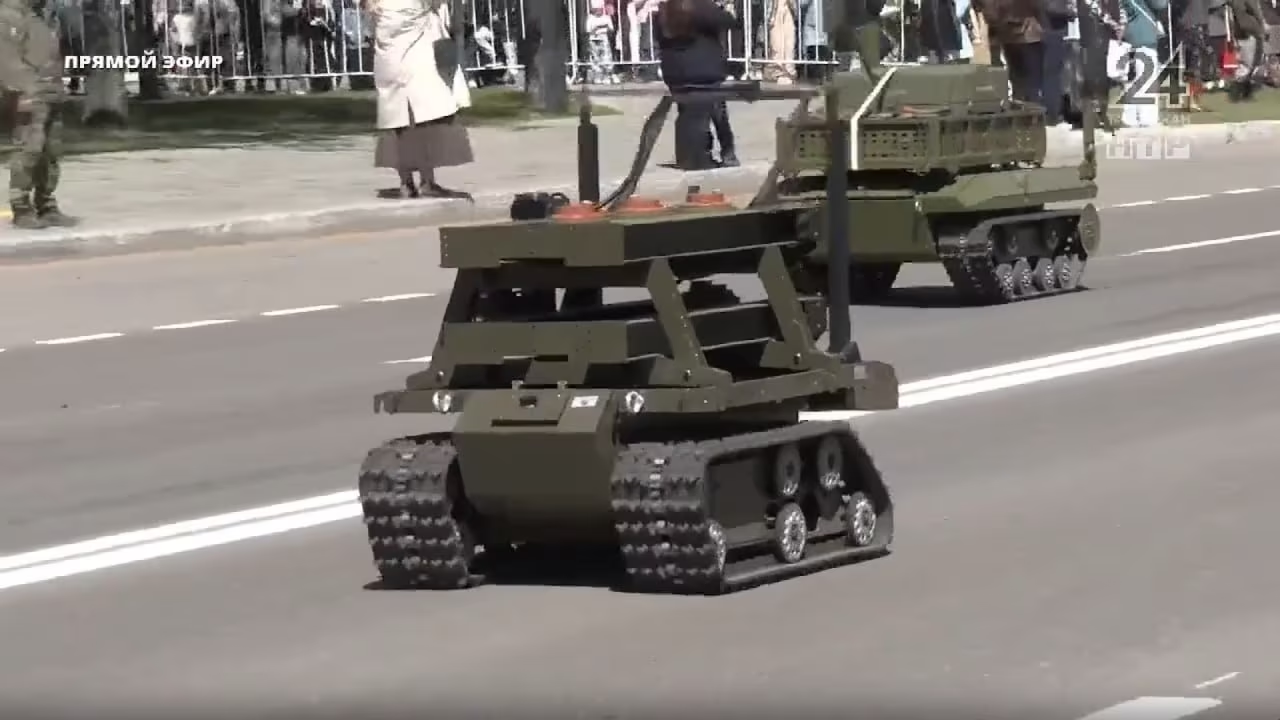
Russian Bogomol unmanned ground system at the parade in Tatarstan
Last week, Russian forces demonstratively launched the jet-powered Geran-5 strike UAV with a claimed speed of up to 600 km/h, showcased upgraded electronic warfare systems designed for anti-drone operations, and debuted several new UGVs during a parade in Tatarstan. These and other developments within Russia’s defence-industrial complex are analysed in Defender Media’s weekly Black Mirror review.
Geran-2 range reaches 1,800 km, while Geran-5 hits 600 km/h
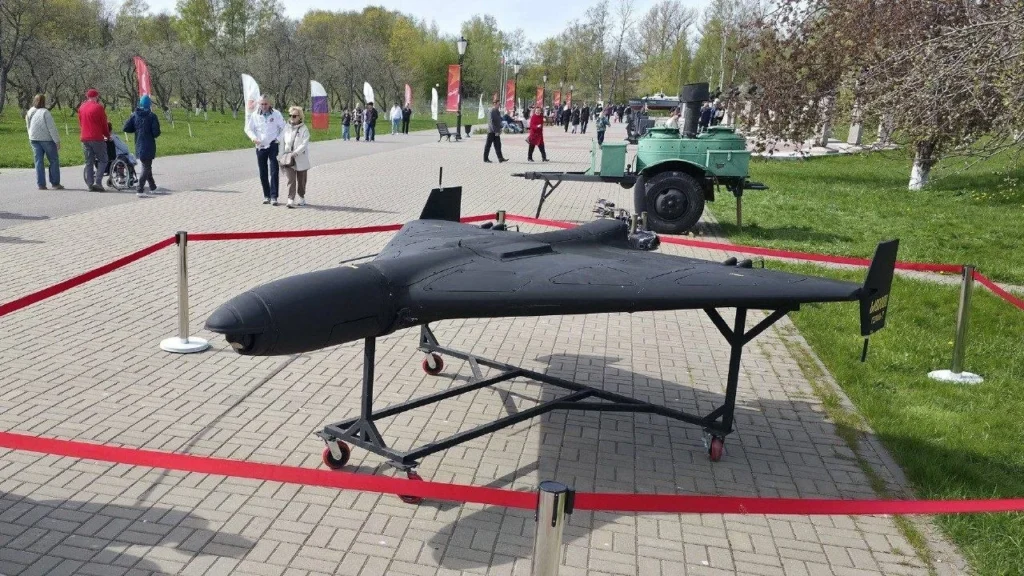
In Kronstadt, Russia exhibited a Geran-2 kamikaze strike drone bearing the serial number Ы80000. According to exhibition specifications, the airframe weighs 140–155 kg excluding fuel, rising to 200–250 kg when fully fuelled.
The maximum speed of the Geran-2 is cited at 190 km/h, with a cruising speed of 180 km/h. Its operational range is estimated at 1,800 kilometres.
The Russian Ministry of Defence also released its first footage showing the launch of the jet-powered Geran-5 drone. In the video, the aircraft launches from an extended rail system, after which a launch trolley separates from the drone.
According to previously disclosed data, the Geran-5 is approximately six metres long with a 5.5-metre wingspan, capable of delivering a 90 kg warhead to ranges of up to 1,000 kilometres.
Military correspondent Yevgeny Poddubny stated that the drone’s maximum speed reaches 600 km/h, with a service ceiling of 6,000 metres. While Geran-2 drones are typically launched from improvised platforms such as pickup truck beds, the Geran-5 requires a dedicated launch rail approximately 80 metres in length.
Production of Gerans in Alabuga continues to expand
Military blogger Boris Rozhin reported that the production facility in Alabuga, where Geran drones are manufactured, continues to scale up. According to him, new large-scale construction sites have emerged in the southern sector of the complex, while air defence assets around the facility have also been reinforced.
Rozhin claims this expansion signals a transition from research and development work to the mass production of high-speed strike systems such as the Geran-4 and Geran-5. There is also speculation that Russia may scale back Geran-2 production in favour of these jet-powered variants.
Ukraine’s Ministry of Defence identifies four stages of Kh-101 modernisation
The Ukrainian Ministry of Defence stated that Russia has modernised the Kh-101 strategic cruise missile at least four times since the start of the full-scale invasion. The primary objectives of these upgrades were reportedly to circumvent Ukrainian air defences and to intensify strikes against civilian infrastructure.
At the onset of the invasion, the Kh-101 featured a unitary high-explosive fragmentation warhead weighing approximately 480 kg, a range of up to 2,500 km, and a guidance suite comprising inertial navigation, satellite correction, and an electro-optical terrain contour matching guidance system.
The first major upgrade involved the installation of a tandem warhead. Part of the fuel tank volume was repurposed to accommodate a second warhead, increasing the total payload to approximately 800 kg.
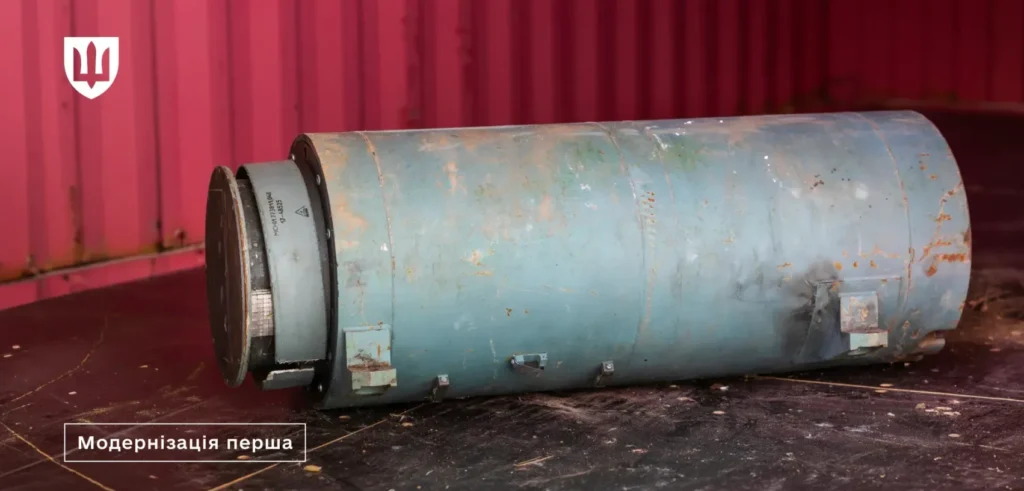
The second modification introduced cluster warheads containing spherical submunitions. Some featuring zirconium elements designed to cause persistent fires after dispersal.
The third stage focused on the guidance system, where engineers updated the algorithms of the electro-optical terrain contour matching system to improve reference point recognition during the terminal flight phase.
The fourth upgrade involved the integration of the SP-504 onboard electronic protection suite, featuring active and passive countermeasure systems. The suite can generate false radar signatures and automatically deploy thermal flares and chaff decoys.
The Ministry of Defence also noted that Russia’s Tu-95MS and Tu-160 strategic bombers are rapidly depleting their airframe service life due to intensive use. Consequently, Tu-95MS aircraft often carry only two missiles instead of their standard six. Analysis of missile debris suggests that components are manufactured several months in advance, while final assembly occurs just one to two weeks before launch.
BM-35 drones utilised as heavy FPV systems
According to Serhii Beskrestnov, an advisor to Ukraine’s Minister of Defence, Russian forces are employing the BM-35 drone as a heavy FPV-style strike platform against stationary targets. The drone features a twin-piston internal combustion engine mounted in the forward section of the fuselage and carries a payload of up to five kilograms.
“Earlier, BM-35 drones were deployed in significant numbers, but their use subsequently declined due to high technical failure rates. Data suggests over half failed to reach their targets due to propeller failure, engine seizure or engine shutdown mid-flight,” Beskrestnov noted.
The BM-35 is operated via a Radiomaster transmitter and FPV goggles or a monitor. Video signals are transmitted in the 3000–3700 MHz band and received by two square patch antennas. Due to the reliance on line-of-sight radio communication, operators must position control antennas on elevated terrain or rooftops at least 15 km from the contact line.
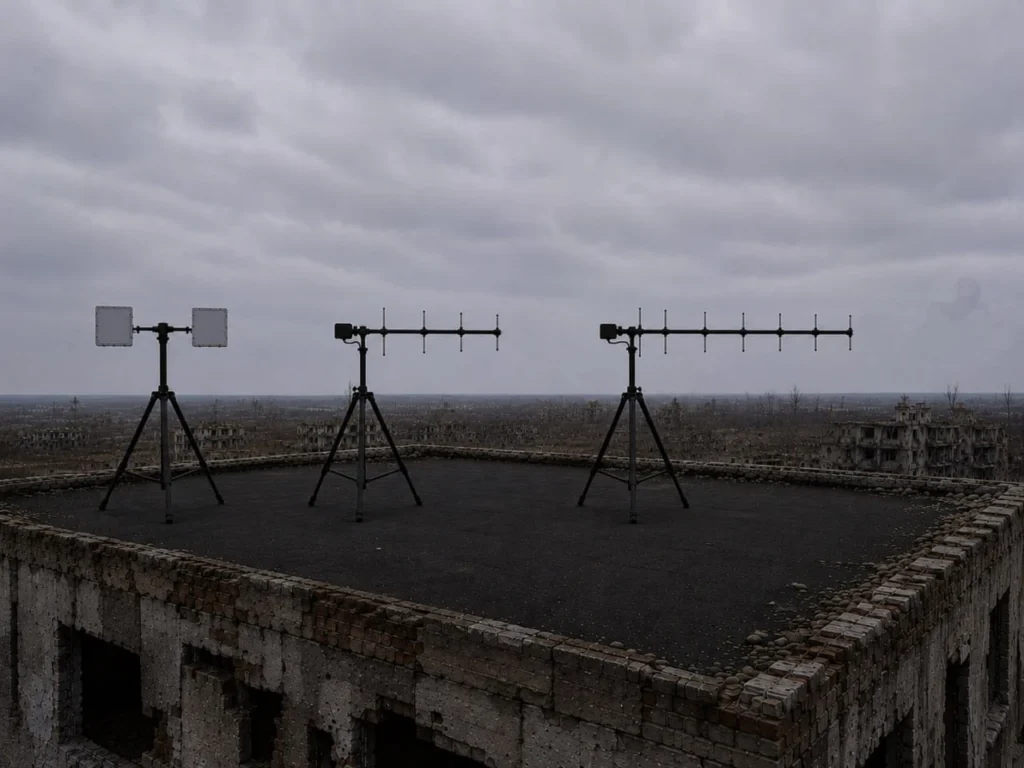
The attack profile involves diving onto the target from altitude. Due to control limitations, the BM-35 is poorly suited for moving targets; as it nears the ground, it accelerates beyond 200 km/h and loses effective manoeuvrability.
Bogomol and Muravey UGVs debuted at Tatarstan parade
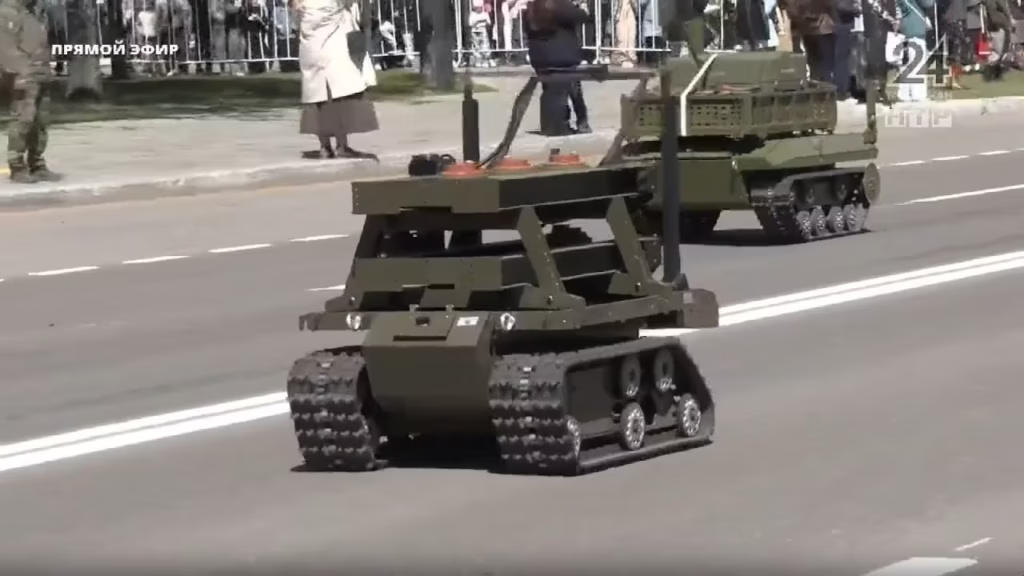
The May 9 parade in Nizhnekamsk featured the Bogomol B3, Bogomol V5 and Muravey unmanned ground systems. The column included tracked robotic platforms in both combat and transport configurations.
The Bogomol B3 is equipped with a 30 mm automatic grenade launcher and is intended for fire support and engaging personnel and lightly armoured vehicles. The Bogomol V5 performs transport and combat support tasks, including cargo delivery and casualty evacuation. The systems can also be utilised for remote mining operations and deploying smoke screens.
The Muravey robotic platform is used to deliver ammunition and support units operating in difficult or mined terrain.
Russian laser air defence remains experimental due to cooling limitations
Russian forces have reportedly begun deploying experimental LaserBuzz laser-based air defence systems against drones. However, the Russian television channel REN TV acknowledged significant technical constraints.
The primary hurdle is the requirement for cooling the installation after every shot. Unlike conventional air defence systems, laser weapons cannot maintain sustained fire against large numbers of targets. Furthermore, effectiveness degrades sharply in rain, fog or heavy smoke, as atmospheric interference reduces both range and targeting accuracy.
While Russian sources claim a 32-megawatt laser can neutralise targets at up to four kilometres by focusing multiple beams, they admit these systems remain occasional experimental platforms. Current testing has achieved an engagement range of up to 1.5 kilometres.
Russia plans to deploy “Darwin” net system against naval drones
The company Systems of Mechanical Protection has announced plans to use the Darwin protective net against uncrewed surface vessels.
The system acts as a passive barrier made from high-strength synthetic material designed to wrap around the hull of a naval drone and block its propeller. Unlike boom barriers, Darwin is not designed to withstand direct impact but to disable the drone’s ability to manoeuvre.
The system is intended for use in ports, at bridge crossings and in waters containing hazardous cargoes, where barriers mounted on floating pontoons create a protective buffer around anchorages.
Decoy drones with Lüneburg lenses used to saturate air defences
Russia has intensified the deployment of low-cost decoy drones designed to mimic the radar signature of “Geran”-type strike drones. The core component is a Lüneburg lens, which makes a compact drone appear as a much larger aerial target on radar.
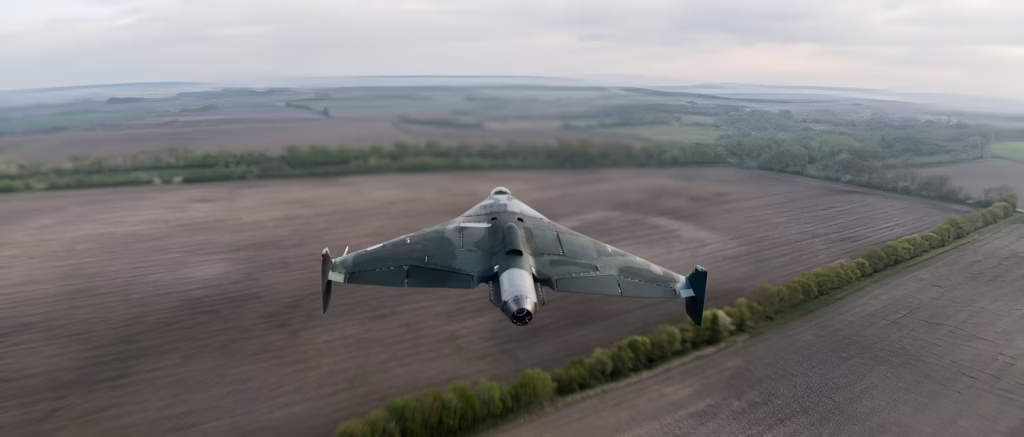
These decoys are constructed from plywood and foam plastic, carrying no warhead and utilising inexpensive model aircraft engines. The goal is to complicate target identification for air defence operators. In some instances, decoys reportedly constitute around 50% of an entire drone group.
SERP-FPV electronic warfare system for convoy and armour protection
The Roselektronika holding has unveiled the SERP-FPV mobile electronic warfare system designed to counter mass FPV drone attacks.
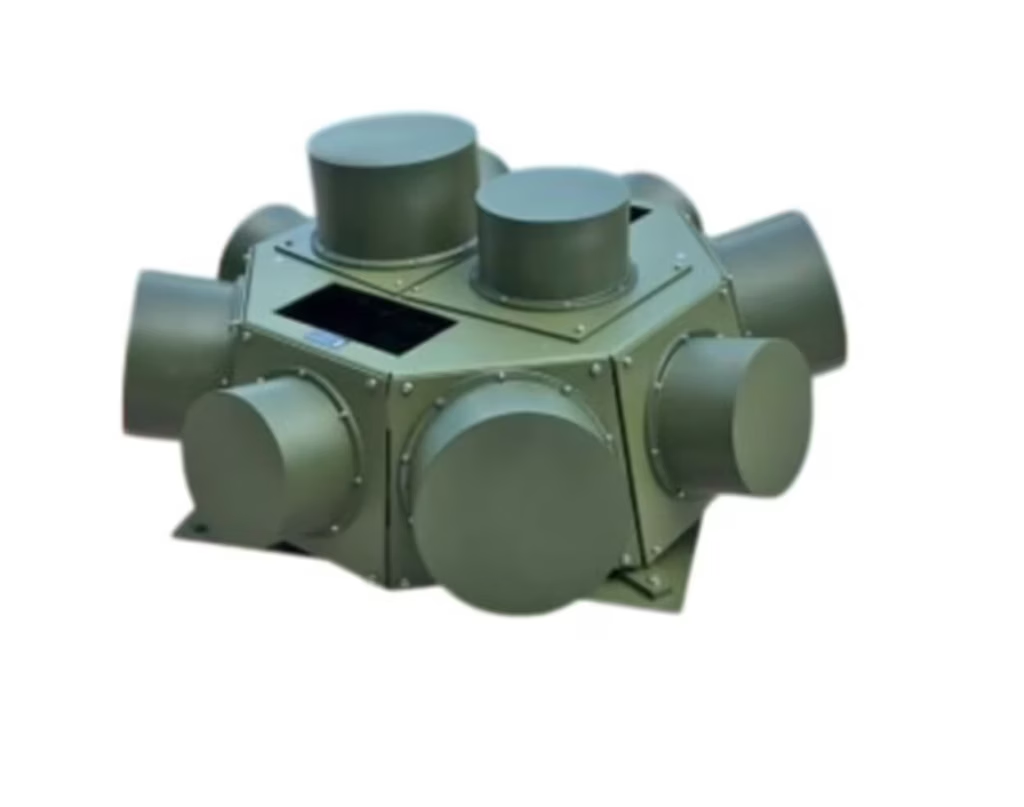
The system is designed to protect moving targets, including armoured vehicles, transport convoys and field headquarters, and can operate without stopping the vehicle. It provides full azimuth coverage, suppressing control and video transmission channels most commonly used by FPV operators.
According to the developers, the SERP-FPV forces drones to lose control, land or return to their launch point.
Reading now
1
SkyFall officially unveils Thor Hammer mid-strike and announces 1,000+ km version
2
Pentagon to hold Drone Dominance trials for bomber drones, with UFORCE, Gurzuf Defence, Grim Tech and others taking part
3

Terra Drone acquires 50% of Ukrainian Kurin Technologies for $3.5 million
4
British-Ukrainian Occam Industries raises €3.8m. The funds will go towards scaling drone autonomy software
5

Frontline Robotics CBDO Mykyta Rozhkov: Ukraine and Norway are working on an autonomous system to protect maritime infrastructure
By submitting this form, you give Defender Media consent to the processing of personal data.
Надсилаючи цю форму, ви надаєте Defender Media згоду на обробку персональних даних.

Latest news
1

Nataliia Mykolska to become VP of Growth and Affairs at Sine Engineering
2
Black Mirror #79: What’s inside Geran-4, unmanned tanks, balloon barrages and more of a new russian miltech
3

6,000 lives saved by replacing people with robots. “Makar” on the ground strike drone unit NC13 and its role in Operation Vivaldi
4

M-Fly and Dwarf Engineering announce partnership: what it involves
5