Sting 2.0 and updated Bullet. How interceptor drone manufacturers are preparing to counter jet-powered Shaheds
Modernised interceptors will receive better specifications but their price will also increase
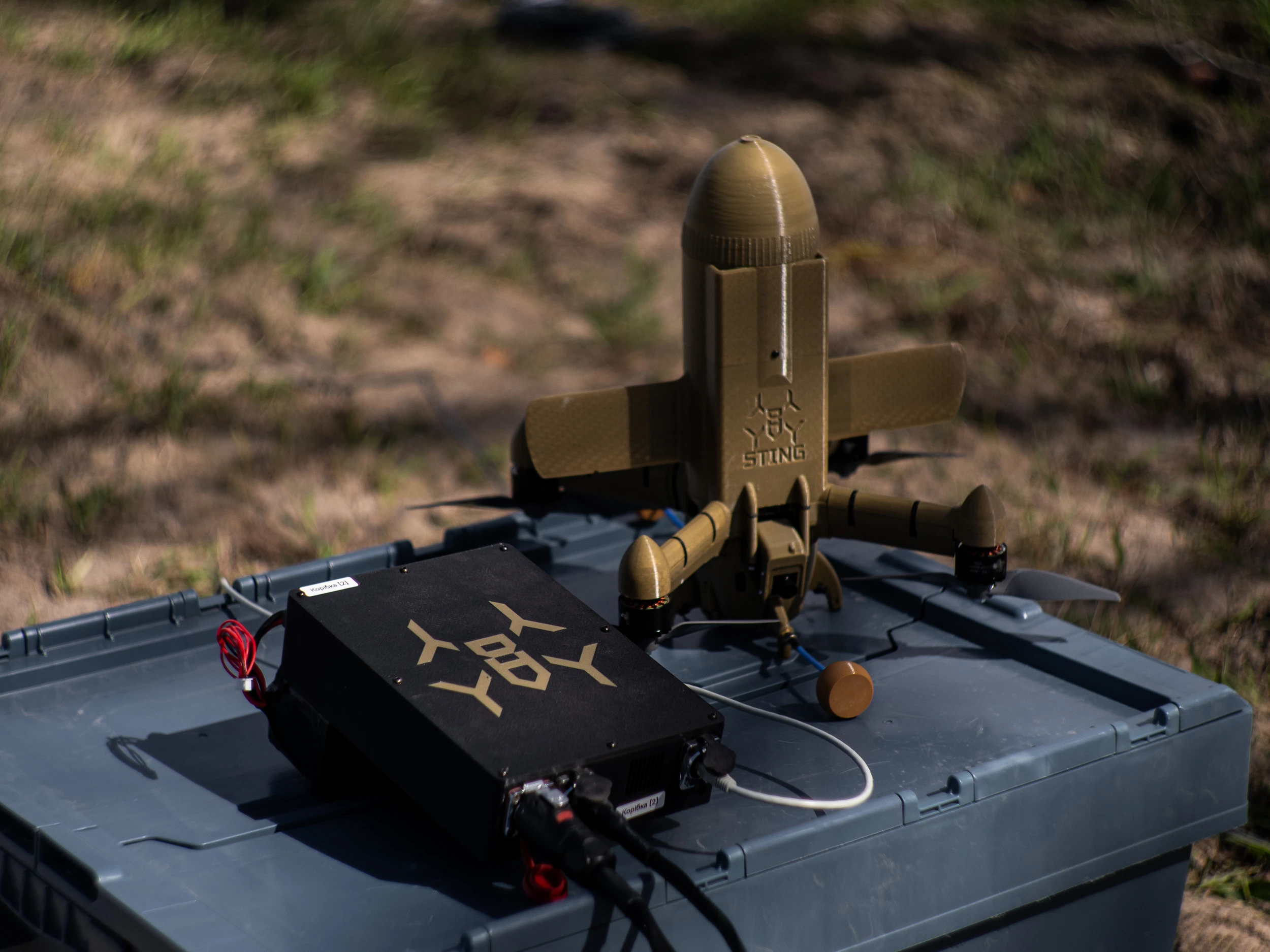
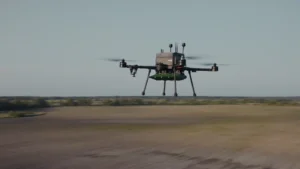
Sting interceptor drone (Photo: Wild Hornets)
Russians plan to increase the share of jet-powered strike drones to 50%, Commander-in-Chief of the Armed Forces of Ukraine Oleksandr Syrskyi said in early June 2026. According to monitoring channels, Russia used more jet-powered drones than usual during its large-scale attack on Ukraine on 2 July. One such drone reportedly struck a Nova Poshta terminal in Zaporizhzhia.
Russia’s shift towards jet-powered deep-strike drones is a response to the success of Ukrainian interceptor drones, which are destroying thousands of enemy UAVs every month. The main difficulty in shooting down jet-powered drones is their speed, which reaches 500-600 km/h in the enemy’s newest Gerans. Ukrainian manufacturers are already preparing for this challenge and improving their interceptors.
For example, the modified Bullet from General Cherry will use a kinetic booster. The next generation of interceptor is also being prepared by Wild Hornets – the developers of the popular Sting.
Defender Media spoke with drone manufacturers and military personnel about the challenges posed by jet-powered Shaheds and what they plan to counter them with.
The number is growing, but there was previously no mass simultaneous use
In May 2026, interceptor drone operators destroyed more than 3,500 Russian UAVs of various types. The mass-produced Shahed-136 (Geran-2) regularly becomes a target for Ukrainian pilots – it is against this backdrop that Russia is modernising its drones to make them a harder target.
The number of jet-powered Shaheds launched at Ukraine has increased several times since the beginning of the year, say Wild Hornets. They are now recorded almost daily, but, according to pilots, there was previously no large-scale simultaneous use.
The overall increase in numbers is also confirmed by adviser to the Minister of Defence Serhii Beskrestnov. At the same time, the commander of the 1030th Anti-Aircraft Missile Regiment “Aquila”, Maksym Zaichenko, said in a comment that launches had previously been more experimental in nature.
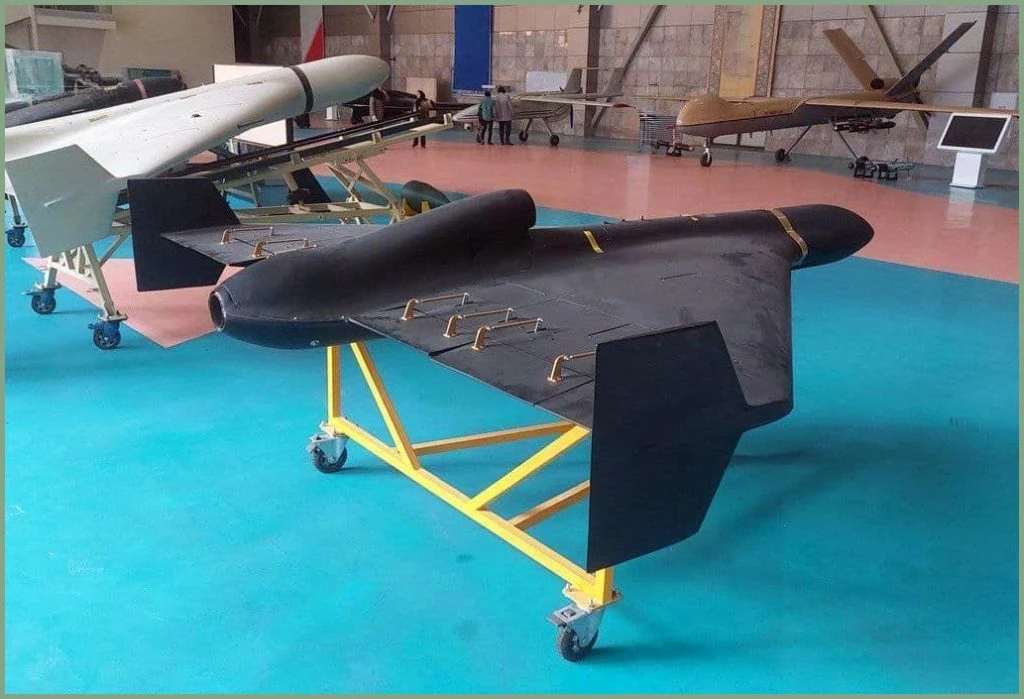
General Cherry reports that the Russians have contracted for 25,000 such drones. “This will make up approximately 30-35% of the total number of Shaheds that Russia attacks with. Possibly more,” they add.
Commander-in-Chief of the Armed Forces of Ukraine Syrskyi stated on 4 June that the Russians plan to increase the share of jet-powered strike drones to 50%. Scaling up jet-powered drones is also an attempt by Russia to reduce the cost of its air attack assets, believes Anatolii Khrapchynskyi, an Air Force officer in the reserve. “It is looking for a cheaper solution that will match the profile of a cruise missile,” he adds.
Standard Shaheds will nevertheless remain in use, Khrapchynskyi predicts. In particular, they are easier to use for reconnaissance, as they develop lower speeds. Serhii Beskrestnov believes that in future 80-90% of Shaheds will be jet-powered – they will be used for strikes on the rear, while standard ones will be launched into border areas.
Which modifications of the Shahed are the Russians using
To date, the piston-engine Shahed has received three turbojet modifications, which have higher speeds and have already attacked Ukraine.
Geran-3 uses a Chinese Telefly JT80 turbojet engine. Thanks to it, the drone can reach speeds of 300 to 370 km/h, and its range is up to 1,000 km. The Russians have already used these drones to attack, in particular, Kharkiv.
In May 2026, the enemy began combat use of the next version – Geran-4. According to the Defence Intelligence of Ukraine, the drone has a new airframe with improved aerodynamic performance, a reinforced structure, and a turbojet engine with increased thrust.
This version uses the Chinese Telefly LX-WP-160 and Telefly TF-TJ2000A. Thanks to them, it can accelerate to 500 km/h.
At the beginning of 2026, during combined attacks, the Russians for the first time used another modification of the drone – Geran-5. This drone also has a turbojet engine and can reach speeds of up to 600 km/h. Its flight range is up to 1,000 km. This drone has components similar to those of the other versions but has a different external appearance.
Besides the Shaheds themselves, the Russians also use the Banderol – a rocket-drone with a jet engine.

How jet-powered drones are currently being countered
Although high speed is often cited as the biggest obstacle to shooting down jet-powered UAVs, even these UAVs are sometimes destroyed by existing interceptor drones.
Zaichenko of the 1030th Anti-Aircraft Missile Regiment explains that, in some cases, jet-powered Shaheds have to reduce speed because, at high speeds, they consume a lot of fuel. Accordingly, they remain vulnerable to interceptor drones and anti-aircraft missiles operated by the 3rd Army Corps, of which the Aquila regiment is part.
The manufacturer of Sting has video confirmation of the downing of around 50 jet-powered Shaheds: “According to our estimates, around 70% of confirmed downings of jet-powered Shaheds by multicopter-type interceptors are accounted for by Sting.”
Military personnel periodically share videos of downed jet-powered UAVs on social media. Defender Media also received such a recording from the manufacturer of the Litavr interceptor, the company F-Drones:
Beskrestnov believes that interceptor drones will remain the main weapon against jet-powered drones. However, the declared speed of the Geran-4 and Geran-5 exceeds the maximum values that existing interceptors can reach. That is why companies have taken up the modernisation of their products.
What response are Ukrainian interceptor manufacturers preparing
Wild Hornets, which developed one of the most mass-produced interceptor drones, Sting, are already working on its new version. It has been named Sting 2.0. Work on it began at the start of 2026, and this version is currently in combat testing, the manufacturer told Defender Media.
“Intercepting jet-powered Shaheds requires greater speed, but this affects the drone’s time in the air. Sting 2.0 will definitely be significantly faster, but it is important, together with pilots, to find a balance between the necessary speed and range,” Wild Hornets comment.
The new interceptor will also receive an automatic target detection function. According to pilots who use the Sting, detecting a UAV is more difficult than destroying it. Terminal guidance will be added to its functionality later.
Meanwhile, the manufacturer regards these technologies as assistants rather than replacements for operators. AI-based solutions are developed by the company’s own division.
Sting 2.0 is expected to be around 30% more expensive than the standard version. The modernised Bullet, on which General Cherry is currently working, will likewise carry a higher price. It will nevertheless remain cheaper than the targets it destroys.
At present, the drone can reach a speed of 310 km/h, climb to an altitude of up to 6 km and stay airborne for up to 25 minutes. For its modernisation, the company has announced cooperation with the R&D/IP centre STRIX.
The updated Bullet will use a kinetic booster to bring the drone to the required altitude and speed. In doing so, the interceptor will retain the full battery charge needed to down a jet-powered UAV.
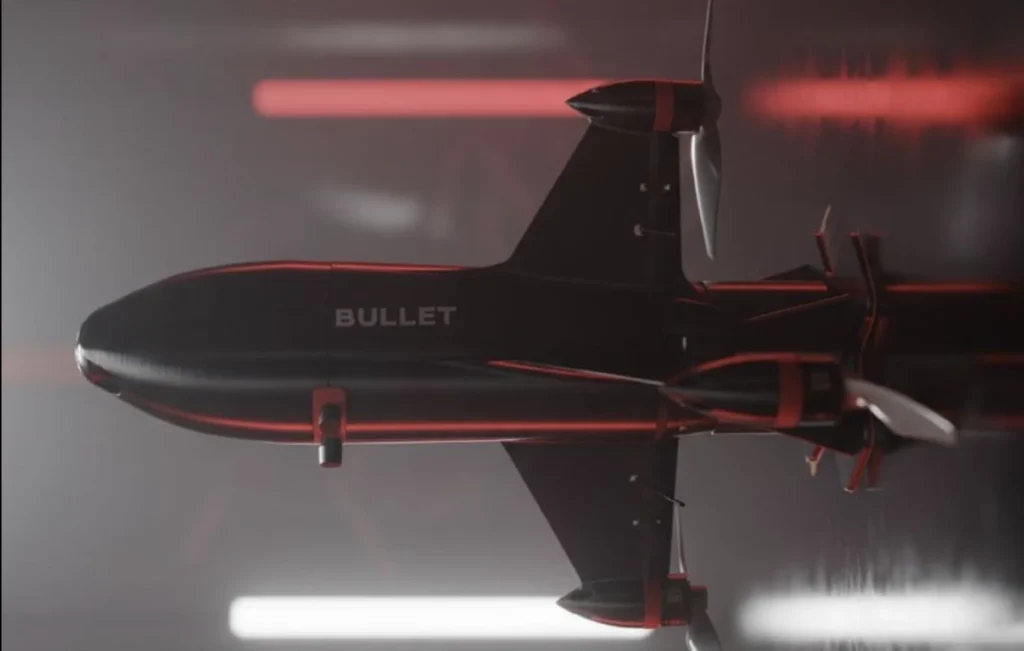
Currently, the project is in the fine-tuning and testing stage under various conditions. The manufacturer does not disclose detailed specifications but says the new modification involves increasing speed, adapting control systems, and optimising the design to engage targets at high speed.
Skyfall, which developed the popular P1-Sun, is also increasing the speed of its drone, Business Insider writes. The manufacturer plans to increase it to ~400 km/h, but the company provides no further details.
Anatolii Khrapchynskyi adds that, in addition to creating high-speed interceptors, Ukraine needs a high-quality radar system capable of detecting targets at low altitudes. “Most aerial interceptions actually happen in pursuit mode. Once we build this system, we will be able to get quality coordinates and tracking of targets, handing them over from sector to sector,” he says. This would allow operators to direct interceptors straight to the enemy UAV’s meeting point.
Reading now
1
SkyFall officially unveils Thor Hammer mid-strike and announces 1,000+ km version
2
Pentagon to hold Drone Dominance trials for bomber drones, with UFORCE, Gurzuf Defence, Grim Tech and others taking part
3
British-Ukrainian Occam Industries raises €3.8m. The funds will go towards scaling drone autonomy software
4
Terra Drone acquires 50% of Ukrainian Kurin Technologies for $3.5 million
5

Frontline Robotics CBDO Mykyta Rozhkov: Ukraine and Norway are working on an autonomous system to protect maritime infrastructure
By submitting this form, you give Defender Media consent to the processing of personal data.
Надсилаючи цю форму, ви надаєте Defender Media згоду на обробку персональних даних.

Latest news
1
Ukraine’s Defence Forces hit a record number of Russian air defence systems and radars in September
2

Nataliia Mykolska to become VP of Growth and Affairs at Sine Engineering
3
Black Mirror #79: What’s inside Geran-4, unmanned tanks, balloon barrages and more of a new russian miltech
4

6,000 lives saved by replacing people with robots. “Makar” on the ground strike drone unit NC13 and its role in Operation Vivaldi
5