Naval drones became a game-changer in the Black Sea. Now European countries are waiting for a chance to buy them
Unmanned surface vessels have evolved from kamikaze drones into full-fledged combat platforms capable of shooting down aircrafts and Shahed drones, as well as striking enemy positions on land
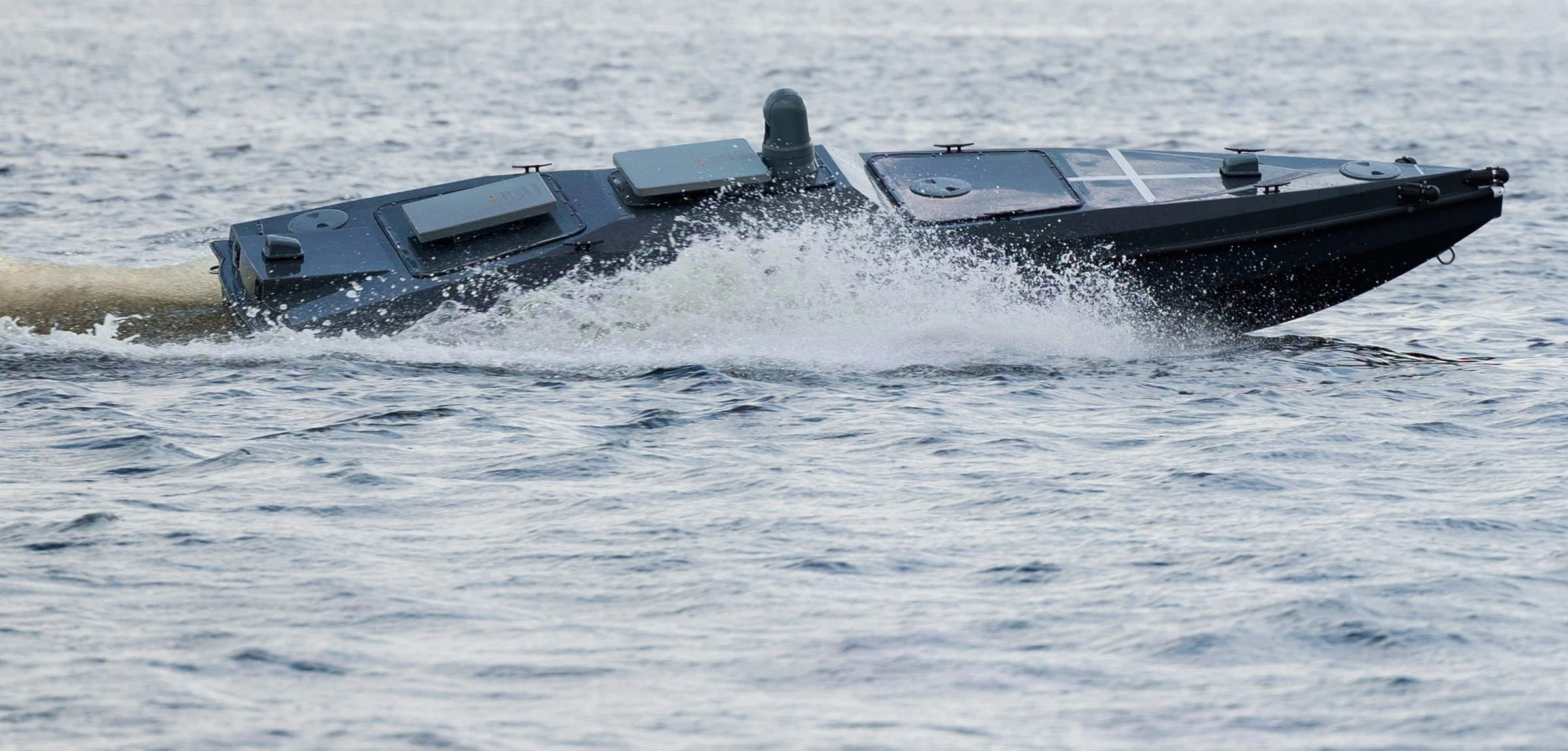
DIH Naval Forge Demo Day (Photo: DIH)
News about the success of Ukrainian sea drones has appeared regularly since the segment emerged in 2022. These systems helped Ukraine push Russia’s fleet out of the Black Sea and are now being used to strike vessels belonging to Moscow’s shadow oil fleet and attack enemy military positions.
Given these results, it is hardly surprising that the technology has attracted the attention of Ukraine’s allies. Kyiv now openly says that sea drones are among the categories of unmanned systems it is prepared to export due to excess production capacity. European countries increasingly view them as a potential alternative to expensive and vulnerable conventional naval fleets.
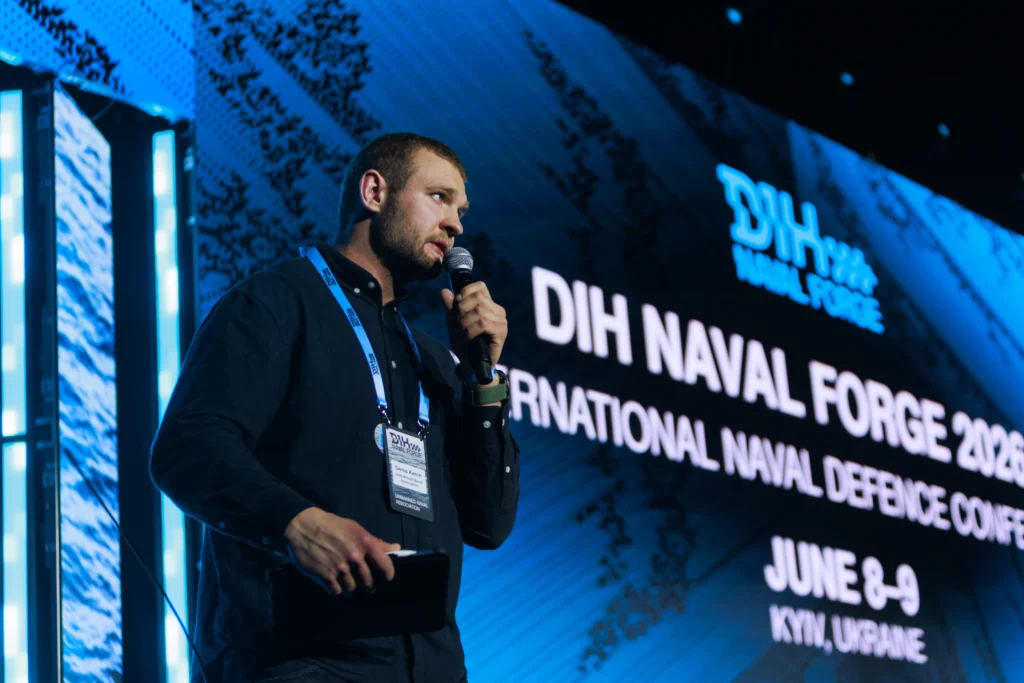
The market itself remains relatively unexplored. We spoke with Denys Kanin, director of the Association of Sea Drones, to better understand the industry’s leading manufacturers, end users and future prospects.
How Ukraine’s sea drone sector was born
The driving force behind the creation of Ukraine’s sea drones is widely considered to be Ivan Lukashevych, a brigadier general in the Security Service of Ukraine’s military counterintelligence department known by the callsign “Hunter”. The project was developed jointly by the Security Service of Ukraine (SBU), the Ukrainian Navy and the military intelligence agency HUR.
In September 2022, the team carried out the first sea drone operation against Russia’s Black Sea Fleet. While the mission did not achieve its intended objectives, Ukraine followed it a month later with a combined attack involving aerial drones and USVs against Sevastopol Bay. Two large Russian warships suffered significant damage.
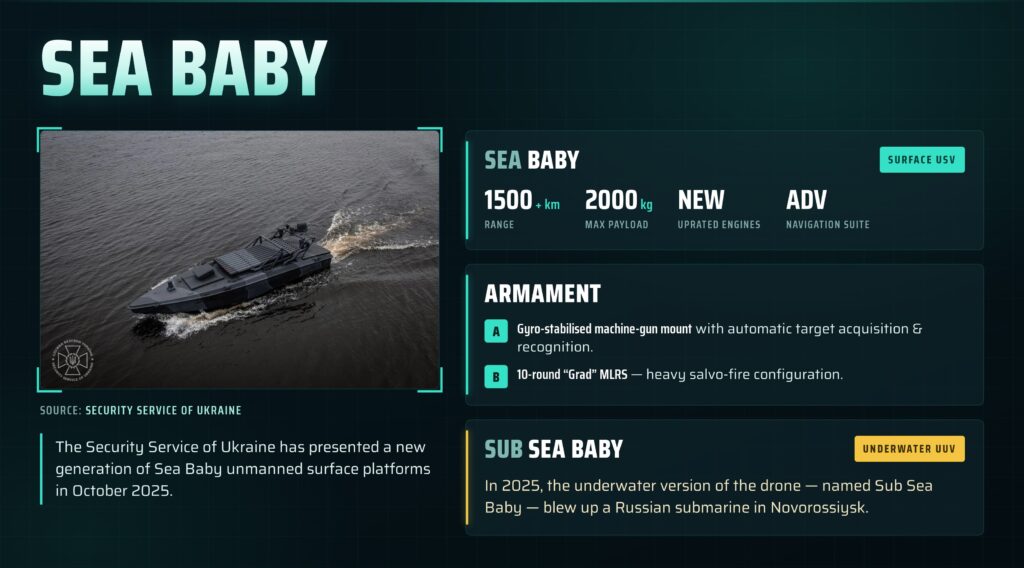
Sea drones subsequently struck a number of Russian vessels and, in 2023, damaged the Crimean Bridge linking the occupied peninsula with Russia. The operation was carried out using the Sea Baby drone developed by the SBU.
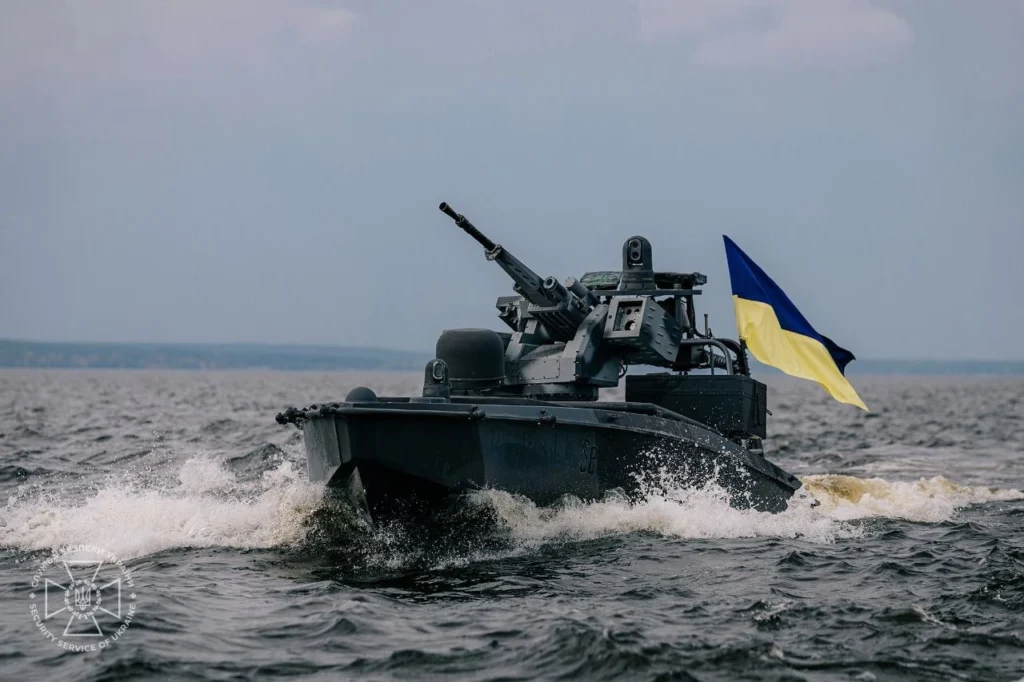
By 2023, the constant threat posed by Ukrainian sea drones forced Russia to relocate much of its Black Sea Fleet to Novorossiysk, approximately 400 km further to the East. As later events would show, Ukrainian drones were capable of reaching targets there as well.
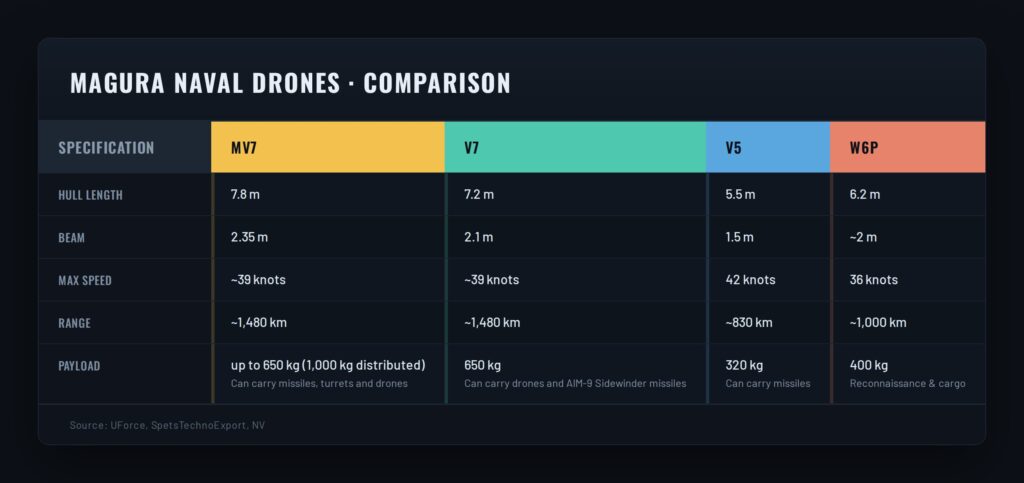
Mr. Kanin notes that Sea Baby is not currently a commercial product, as it remains an internal programme of the Security Service of Ukraine. By contrast, he describes Magura, developed by UForce in cooperation with HUR, as one of the leading candidates for future exports.
Defence tech company UForce is headquartered in the United Kingdom and has Ukrainian roots. Its leadership includes serial entrepreneur Oleh Rohynskyi, former Ukrainian Prime Minister Oleksii Honcharuk and former UK Defence Secretary Ben Wallace. Earlier this year, the company raised $50 million in funding and is now valued at approximately $1 billion.
Using Magura drones, Ukrainian intelligence introduced swarm attack tactics. Throughout 2024, these operations resulted in the sinking of the Russian missile corvette Ivanovets, landing ship Caesar Kunikov and patrol vessel Sergey Kotov.
Magura drones were later used not only against naval targets but also against aircraft. In 2025, Ukrainian operators achieved a world first by shooting down two Su-30 fighter jets using weapons launched from a sea drone. Earlier, a Sea Baby drone had also downed a Russian Mi-8 helicopter using a 12.7mm machine gun.
As a result, sea drones have evolved from expendable kamikaze systems into fully fledged combat platforms. They are now used as carriers not only for missiles but also for FPV drones and interceptor drones. In 2026, Ukraine’s Unmanned Systems Forces shot down a Shahed drone for the first time using an interceptor launched from an USV.
Sea Baby has also been fitted with a Grad multiple-launch rocket system, which has been used against Russian positions on the Kinburn Spit. The Security Service of Ukraine has additionally documented the first successful combat use of the underwater variant, Sub Sea Baby, which was employed in an attack on the Russian submarine Varshavyanka.
Having largely driven Russia’s warships from the Black Sea, Ukrainian sea drones have increasingly turned their attention to the shadow oil fleet that Moscow uses to circumvent sanctions. Tankers have been struck in the Black Sea and reportedly in the Mediterranean as well. Ukraine rarely claims responsibility for such operations. However, in April 2026, the Ukrainian Navy announced that two USVs had successfully attacked the sanctioned vessel MARQUISE while it was drifting 210 kilometres from Tuapse, which is 170 km south to Novorossiysk.
How many companies produce sea drones and who uses them
Ukraine currently has between 20 and 25 companies producing surface and underwater drones. Kanin gives an approximate figure because some smaller manufacturers do not operate continuously due to a lack of orders. The number rises to between 25 and 30 if systems designed exclusively for maritime use are included, such as launchers for R-73 and AIM-9 missiles.
Most production is concentrated in two companies: UForce, which manufactures the Magura family of drones, and another unnamed manufacturer. Another major player is Military Armored Company HUB, which developed the Katran sea drone.
Details of Katran were first revealed by Mykhailo Fedorov in March 2025. The platform can be equipped with torpedoes, a minigun, machine guns, man-portable air-defence missiles and other weapons. As a result, it can engage maritime, ground and aerial targets while also conducting reconnaissance missions. The drone has a range of more than 1,000 kilometres.
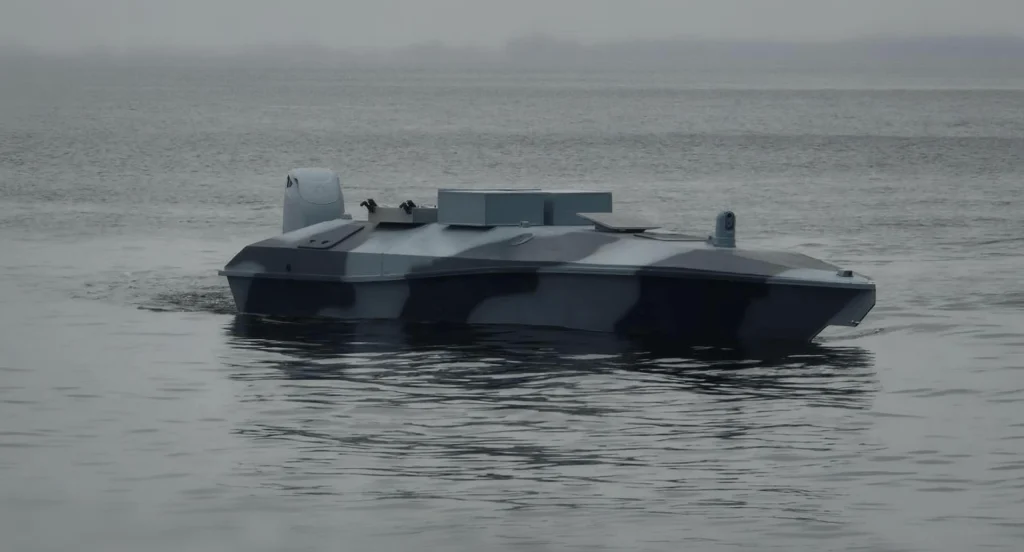
Kanin also highlights Naval Industries, the developer of the Dolphin drone. It was from this platform that the Nemesis Brigade launched an interceptor that shot down a Russian Shahed drone in April 2026. Although the company only entered serial production in 2025, it is now rapidly expanding manufacturing capacity.
One of the best-known underwater drone manufacturers is Toloka. The company’s product line includes autonomous underwater vehicles ranging from 2.5 metres to 12 metres in length. These systems can be used for logistics and reconnaissance missions, while some variants are suitable for strike operations.
In early May 2026, Toloka secured investment from NETWORK.VC DEFENSE, which will be used to develop new technologies, scale production and expand into foreign markets.
“Many people think the market is already saturated and divided between established players. In reality, new companies continue to emerge, operate and achieve success. We are also seeing new end users appear, such as the sea drone divisions within the Unmanned Systems Forces,” Kanin says.
According to him, the Unmanned Systems Forces are likely to become the largest users of sea drones in the near future. The 412th Nemesis Brigade has already established a USV division, while similar units are being formed within other brigades.
Historically, HUR and the SBU have been among the most active operators of sea drones, although they now communicate less publicly about their successes.
The Ukrainian Navy remains another major user and is simultaneously working on countermeasures against Russian USVs. Special Operations Forces also conduct targeted maritime operations.
How are preparations for exports progressing
Speaking about arms exports, HUR chief Kyrylo Budanov has previously argued that only systems available in sufficient surplus should be exported, with sea drones being one such category. According to Kanin, the surplus exists not because of a shortage of targets, but because of insufficient funding to procure larger numbers of drones.
“If we take the standard trio — Magura, Sargan and Sea Baby — prices start at around $250,000 per unit,” he says. The Ukrainian government cannot afford to purchase large quantities of these systems, while manufacturers have already expanded production capacity and are ready to build more.
For allied countries, the appeal of sea drones lies partly in their ability to reduce the cost of maintaining naval forces. Unlike warships, sea drones require minimal crews and maintenance while costing only a fraction of a conventional vessel. By comparison, the US Congress has estimated that a next-generation destroyer could cost around $4.4 billion.
Countries have also taken note of the growing vulnerability of traditional fleets, where a relatively inexpensive drone can destroy a vessel worth many times more
Interest in Ukrainian sea drones is strongest among Northern European nations, including Denmark, Norway, Sweden, Finland, Latvia, Lithuania, Estonia and the United Kingdom. There is also interest from the United States and Germany.
Potential applications under consideration include sea-based short-range air defence systems, patrol vessels equipped with radar systems, and drones designed to counter illegal migration and drug trafficking.
Several companies are currently obtaining export licences. These plans include both direct sales and joint production arrangements under which Ukraine would receive a share of the manufactured drones in exchange for technology and expertise.
What comes next for the sector
“We will definitely see torpedo-armed variants in one form or another,” Kanin predicts. Ukraine has so far avoided using torpedoes due to their high cost, but local developers are actively searching for cheaper alternatives. At present, sea drones are already being used as launch platforms for missiles and deep-strike operations.
Kanin also expects continued growth in the underwater drone segment. Besides Toloka, several other Ukrainian companies are developing capabilities in this field.
At the same time, underwater systems remain significantly more complex and expensive than surface drones. An inertial navigation system capable of operating underwater can cost between $150,000 and $200,000 on its own.
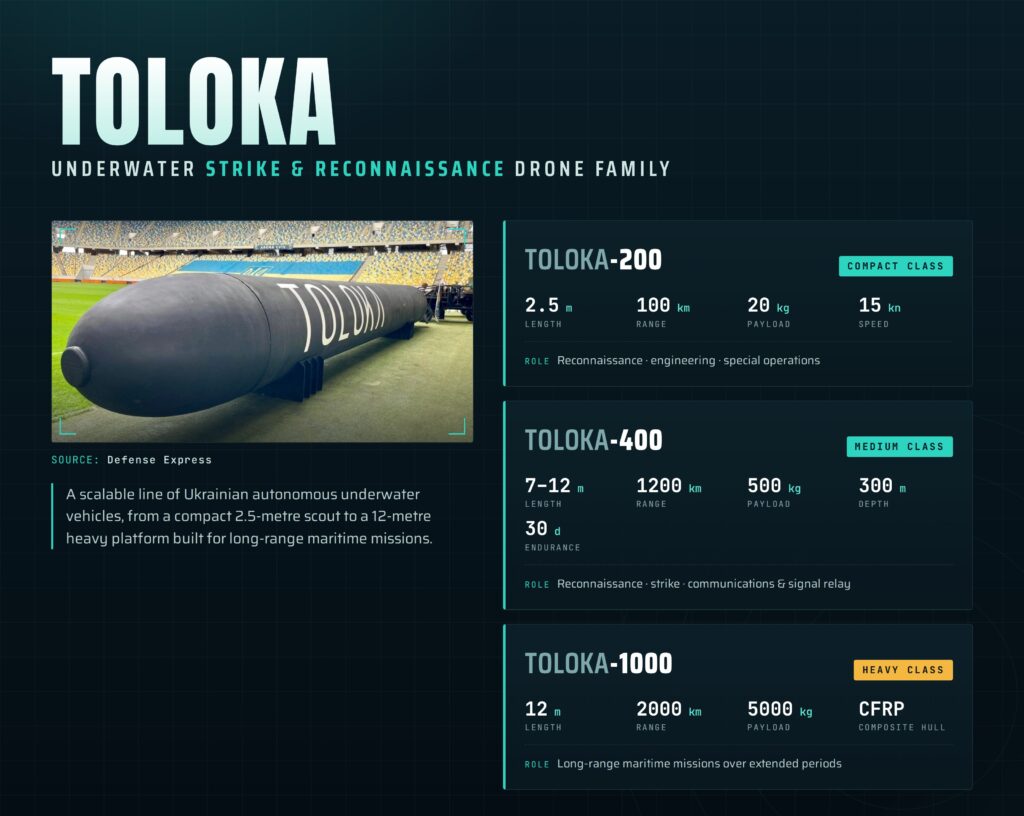
Interest from international partners is equally strong. “In almost every request we receive from allied countries, Toloka is mentioned alongside Magura and Sea Baby,” Kanin says.
In the longer term, sea drones may also find civilian applications. Instead of hiring armed security teams to protect merchant vessels from piracy, shipping companies could deploy autonomous systems for defence. Although, as Kanin notes, pirates will likely begin using sea drones as well. The only question is who gets there first.
Reading now
1
SkyFall officially unveils Thor Hammer mid-strike and announces 1,000+ km version
2
Pentagon to hold Drone Dominance trials for bomber drones, with UFORCE, Gurzuf Defence, Grim Tech and others taking part
3
British-Ukrainian Occam Industries raises €3.8m. The funds will go towards scaling drone autonomy software
4

Terra Drone acquires 50% of Ukrainian Kurin Technologies for $3.5 million
5

Frontline Robotics CBDO Mykyta Rozhkov: Ukraine and Norway are working on an autonomous system to protect maritime infrastructure
By submitting this form, you give Defender Media consent to the processing of personal data.
Надсилаючи цю форму, ви надаєте Defender Media згоду на обробку персональних даних.

Latest news
1
Ukraine’s Defence Forces hit a record number of Russian air defence systems and radars in September
2
Nataliia Mykolska to become VP of Growth and Affairs at Sine Engineering
3
Black Mirror #79: What’s inside Geran-4, unmanned tanks, balloon barrages and more of a new russian miltech
4

6,000 lives saved by replacing people with robots. “Makar” on the ground strike drone unit NC13 and its role in Operation Vivaldi
5