Black Mirror #64: The Banderol cruise missile, Volna Kupol Garant against Starlink, and other Russian miltech developments
A review of developments in Russia’s defence industry during the third week of June
Last week, Russian sources discussed the operational deployment of the Banderol missile-drone, updated variants of the Gerbera and Skat reconnaissance UAVs, and the reported use of the Volna Kupol Garant EW system against Ukrainian drones utilising Starlink satellite communications. More on these and other developments in Russia’s defence-industrial sector can be found in Defender Media’s weekly Black Mirror review.
New jet-powered drone spotted in southern Ukraine
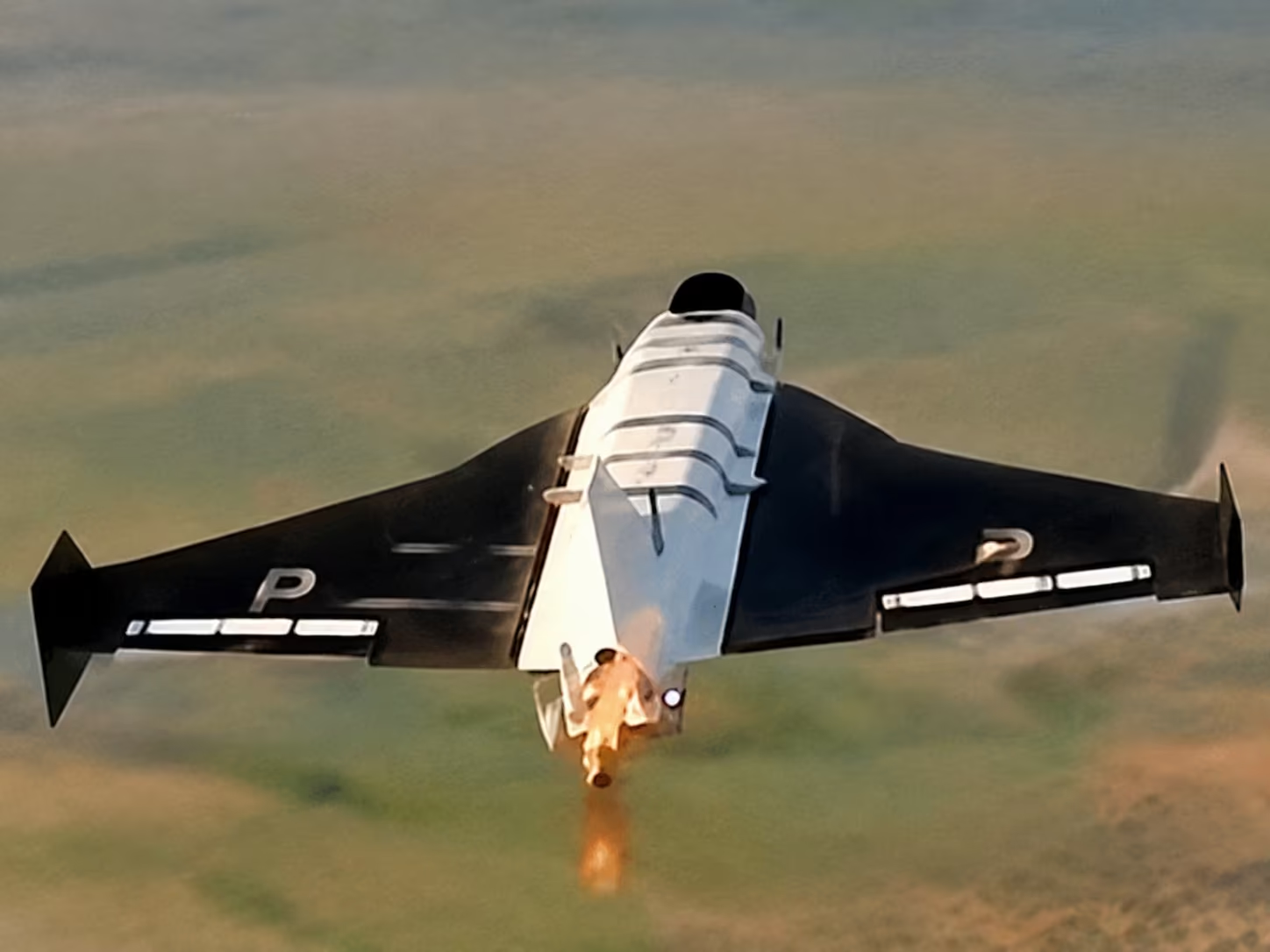
Ukrainian forces operating in southern Ukraine have recorded the deployment of a new, serially produced Russian strike UAV. According to Serhii Beskrestnov, adviser to Ukraine’s Minister of Defence, the system belongs to a class of low-cost jet-powered drones optimised for mass production.
The UAV utilises an analogue video link operating at 3.3 GHz and is reportedly capable of flying up to 100 kilometres. To date, strikes involving the system have been recorded at distances of 30–40 kilometres from the front line.
The drone’s cruising speed is approximately 260 km/h, with bursts up to 300 km/h. Its warhead is estimated to weigh between four and five kilograms.
Russians deploy new EW system against Starlink
Russian forces continue to experiment with electronic warfare systems designed to disrupt the Starlink satellite communications network, Beskrestnov reports.
Against the backdrop of Ukrainian strikes on Russian logistics infrastructure, specialised EW systems targeting Starlink have once again been observed in operation. Ukrainian units recently destroyed one such system.
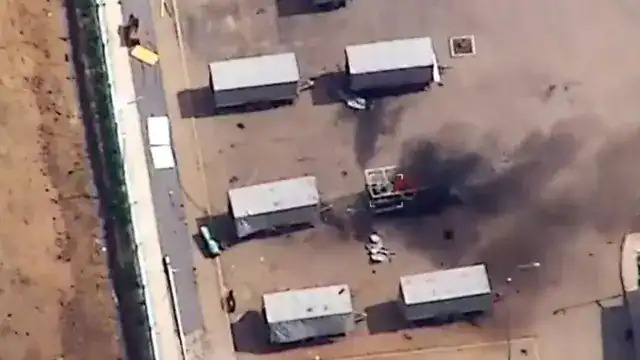
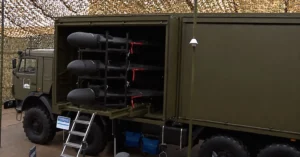
The Volna Kupol Garant electronic warfare system is produced by the Simferopol-based company Russian Dome. The complex employs an array of satellite antennas that generate powerful interference within the frequency bands used by Starlink terminals to communicate with satellites.
A single system is said to provide coverage over an area of roughly 20 square kilometres. The complex is mounted on six trailers, each carrying two antennas, and can operate via either onboard generators or external power sources.
Russia unveils four-engine version of the Molniya-2 loitering munition
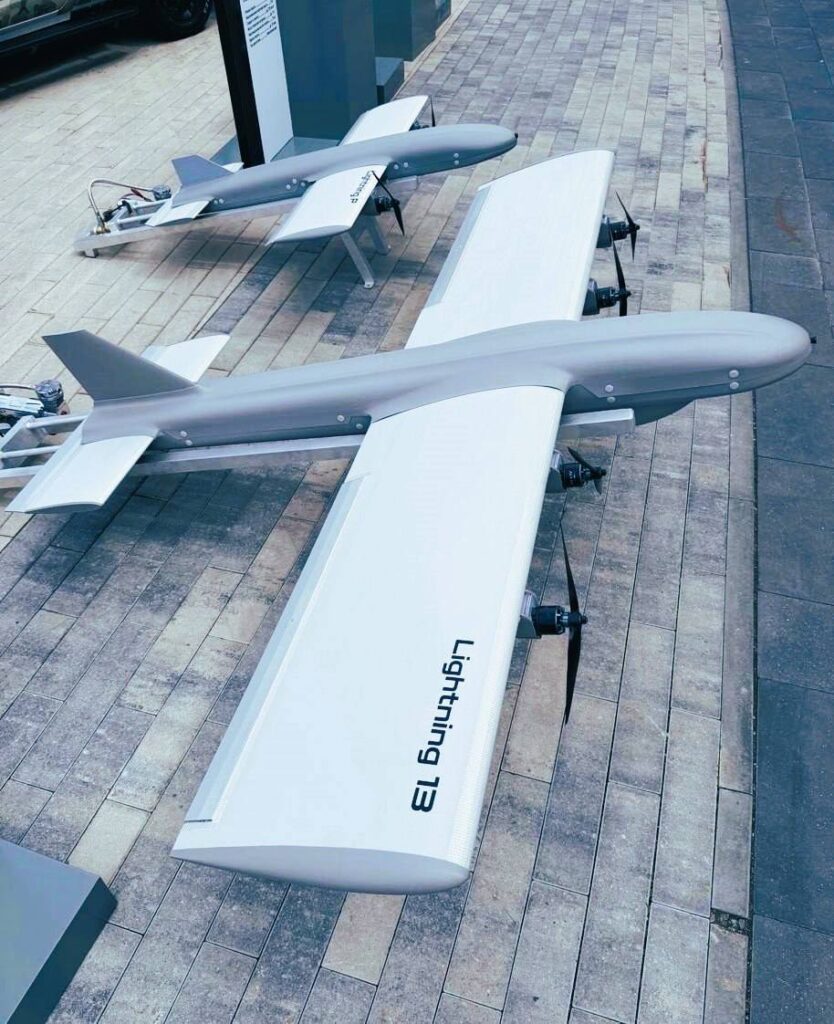
Russian developers have presented a new version of the Molniya-2 loitering munition designated Lightning 13. The principal modification is the integration of four engines instead of two.
According to available information, the UAV will be manufactured in both standard and budget variants. While the overall concept remains unchanged, the most notable upgrade is an increase in warhead capacity to 13 kilograms.
Sibiryachok-5 completes electronic warfare resistance trials
Russia has unveiled a new quadcopter known as the Sibiryachok-5, positioned as an analogue to the DJI Mavic family of UAVs.
According to Rostec, the drone maintained operational capability during tests conducted under heavy radio-frequency interference and also “demonstrated resilience in adverse weather conditions, including freezing rain”. In the event of signal loss, the aircraft automatically switches to a visual odometry system, maintains its position, and returns to its launch point autonomously.
Declared specifications include an endurance of up to 90 minutes, a control range of up to 28 kilometres, an operating altitude of up to one kilometre, and a payload capacity of up to four kilograms. The UAV is also equipped with a laser rangefinder, a camera offering 160x optical zoom, and a night-vision module.
Rostec demonstrates the Spasatel-R1 uncrewed surface vessel
Rostec has presented the Spasatel-R1 uncrewed surface vessel. The craft is marketed as a multi-purpose civilian platform for search-and-rescue operations, environmental monitoring, inspection of distressed vessels, cargo delivery, and data relay missions.
The company also states that the platform can be deployed to monitor water areas and inspect hydraulic infrastructure.
According to published specifications, the Spasatel-R1 is equipped with twin engines and can reach speeds of up to 55 knots. It features an operational range of up to 350 nautical miles. The system is capable of operating in temperatures ranging from –2°C to +55°C, sea states of up to three on the Beaufort scale, and wind speeds of up to 15 metres per second.
Russians upgrade the Gerbera loitering munition
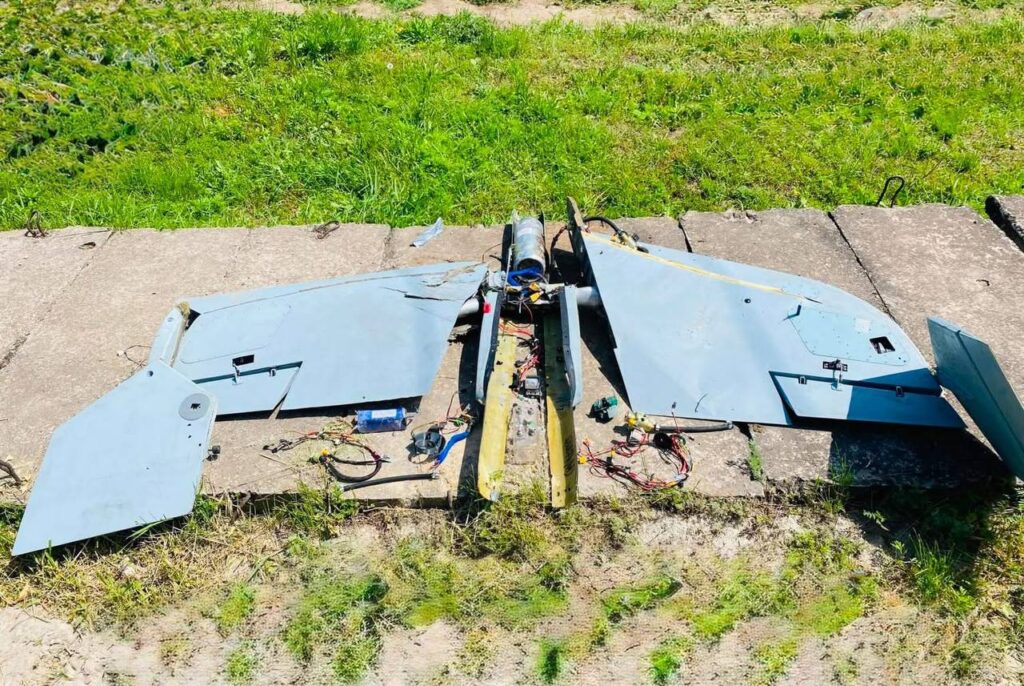
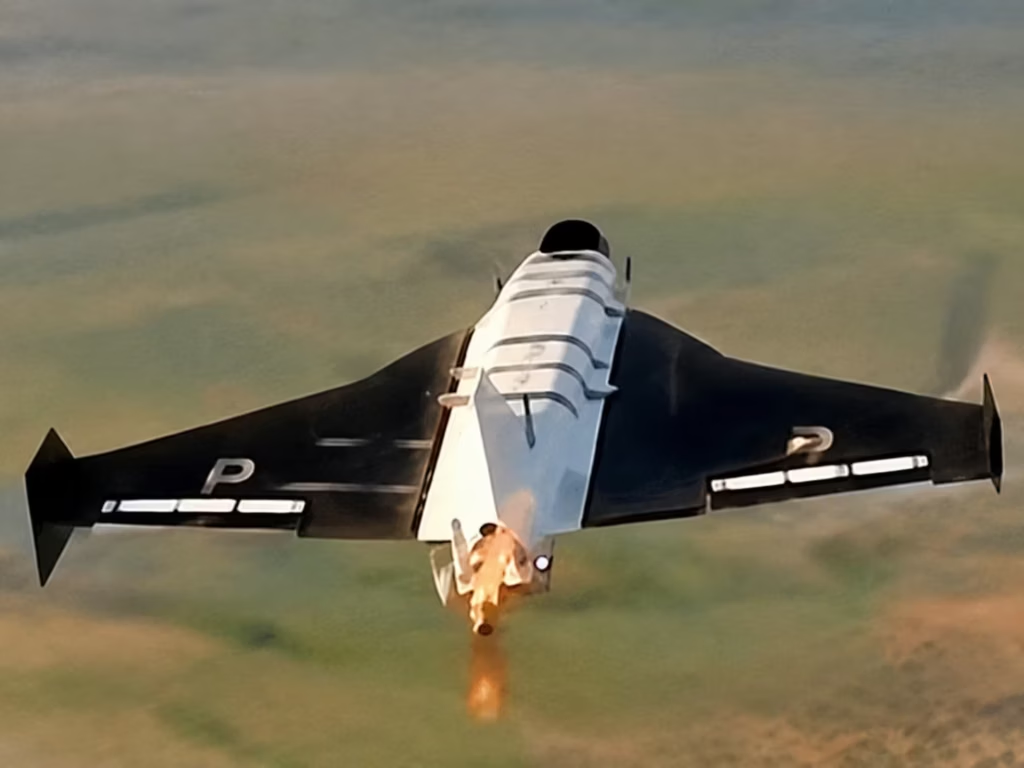
A new version of the Gerbera-2 loitering munition features a revised aerodynamic configuration. The redesigned wing incorporates vertical stabilisers, while the fuselage design remains unchanged.
Technical specifications of the new variant have not yet been disclosed. Analysts note that such modifications to wing geometry are generally intended to improve flight stability and handling characteristics.\
Kalashnikov Modernises the Skat-350M UAV Complex
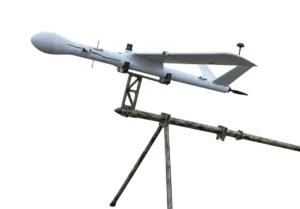
The Kalashnikov Group has announced the modernisation of the Skat-350M UAV complex, developed on the basis of the Supercam S350 platform. The upgrade reportedly includes enhancements to the aircraft’s aerodynamic characteristics and the modernisation of its ground control segment.
The Skat-350M has a maximum take-off weight of 15 kg, a wingspan of 3.2 metres, and an endurance of up to four hours. Operating speed ranges from 72 to 120 km/h, while the control and video transmission range is stated to be between 70 and 100 kilometres. Deployment time is approximately 15 minutes.
The UAV can be equipped with interchangeable optical and infrared surveillance payloads. The system is also reported to feature optical navigation, allowing operation in the absence of GNSS signals. Launch is conducted via catapult, while recovery is performed by parachute in either automatic or semi-automatic mode.
Russians use the Banderol missile-drone during an attack on Kyiv
Russian forces employed the Banderol missile-drone during a large-scale aerial attack on Kyiv on the night of 15 June. The system is a hybrid of a cruise missile and a loitering munition, designed to be relatively inexpensive and suitable for serial production.
According to Ukrainian military intelligence, the missile is approximately five metres long, has a fuselage diameter of 30 centimetres, and features folding wings. Cruising speed is estimated at 520–560 km/h, with a maximum of 650 km/h. Its operational range is assessed at around 500 kilometres.
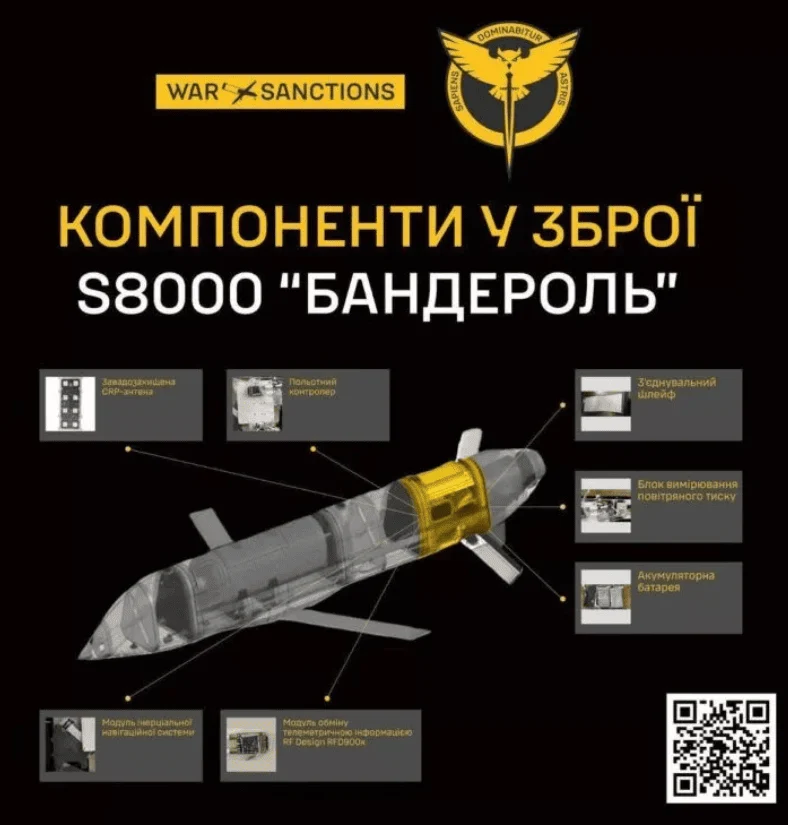
The Banderol is powered by a Chinese-made Swiwin SW800Pro turbojet engine and carries a high-explosive fragmentation warhead weighing more than 110 kilograms. The primary launch platform is reportedly the Orion UAV, although integration with Mi-28N attack helicopters is ongoing.
According to Ukraine’s Defence Intelligence Directorate, production of the missile has been organised at the Kronstadt enterprise. Investigators have identified a significant number of foreign-made components within the system, including electronics, navigation modules, and control-system elements manufactured by companies in China, Australia, Japan, South Korea, the United States, and Switzerland.
Reading now
1
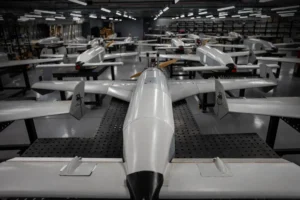
SkyFall officially unveils Thor Hammer mid-strike and announces 1,000+ km version
2
Pentagon to hold Drone Dominance trials for bomber drones, with UFORCE, Gurzuf Defence, Grim Tech and others taking part
3

Terra Drone acquires 50% of Ukrainian Kurin Technologies for $3.5 million
4
British-Ukrainian Occam Industries raises €3.8m. The funds will go towards scaling drone autonomy software
5

Frontline Robotics CBDO Mykyta Rozhkov: Ukraine and Norway are working on an autonomous system to protect maritime infrastructure
By submitting this form, you give Defender Media consent to the processing of personal data.
Надсилаючи цю форму, ви надаєте Defender Media згоду на обробку персональних даних.

Latest news
1
Black Mirror #79: What’s inside Geran-4, unmanned tanks, balloon barrages and more of a new russian miltech
2

6,000 lives saved by replacing people with robots. “Makar” on the ground strike drone unit NC13 and its role in Operation Vivaldi
3

M-Fly and Dwarf Engineering announce partnership: what it involves
4
Quantum Frontline Industries signs new contract with Ukraine’s National Guard to supply Linza and Zoom drones in 2027
5