Black Mirror #52: ring-wing drones, Geran minelayers, 16 new satellites, and other novelties of Russian miltech
A review of new developments in Russia’s military-industrial complex during the last week of March

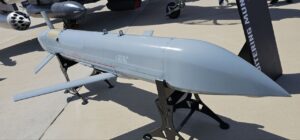
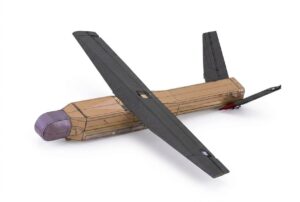
Knyaz Vladimir Sviatoslavovich featuring a ring-wing design
Over the last week of March, Russia launched the first batch of Rassvet communications satellites, unveiled a ring-wing drone, and updated the previously known Skat 350M and Orlan-10 models. These and other developments from the Russian defence industry are covered in Defender Media’s weekly review, Black Mirror.
Rassvet communications satellites by Bureau 1440 deployed into operational orbit
The Russian Federation reported the deployment of sixteen satellites from the Rassvet low-Earth orbit (LEO) communications constellation, developed by Bureau 1440, into their target orbits. The spacecraft separated from the launch vehicle and were transitioned to the control of the mission control centre. Following onboard systems checks, the satellites are expected to move to their designated orbital slots.

The constellation operates in LEO across the Ku- and Ka-bands, providing data transmission speeds of up to 1 Gbps with latency under 70 ms. By the end of 2027, 292 satellites are scheduled for deployment as part of a programme that envisages a total of 383 satellites, including spares.
Previous missions, Rassvet-1 (June 2023) and Rassvet-2 (May 2024), each deployed three satellites, including units equipped with inter-satellite laser links capable of speeds up to 10 Gbps.
Geran-2 drones adapted for cluster munitions
Geran-2 strike drones have been modified to carry cluster munitions. The munitions are housed in wing-mounted containers, with each aircraft capable of carrying up to eight units. KPTM-3 cassettes are utilised, equipped with PTM-3 anti-tank mines.
The PTM-3 features a magnetic influence fuze that activates as heavy vehicles pass, triggering a shaped charge. The design includes a self-destruct mechanism to neutralise the mine if it fails to detonate within a preset period.
Loitering munition with ring-wing design
The Ushkuynik Scientific and Production Centre presented the Knyaz Vladimir Sviatoslavovich loitering munition, featuring a ring-wing configuration. This design connects the wingtips, suppressing wingtip vortices and enhancing the aircraft’s aerodynamic efficiency.

Additional lift is generated by the downward airflow within the closed-loop structure. According to available data, the warhead can weigh up to 3 kg and has an expected operational range exceeding 50 km. The device has reportedly undergone testing and is compatible with fibre-optic FPV drones.
Skat 350M reconnaissance UAV fitted with optical navigation
Skat 350M reconnaissance drones are now equipped with an optical navigation system, enabling missions in GNSS-denied environments. If satellite navigation is lost, the UAV continues along its pre-programmed route. A variant featuring an HD infrared camera and a night-vision module has also been introduced.
BM-21 Grad MLRS receives an anti-drone protection suite
BM-21 Grad multiple-rocket launch systems have been modernised, with anti-drone cages installed on the superstructure. Metal frameworks have been fitted over the launch rails and cabin, with three electronic warfare (EW) modules mounted on the roof.

A patent has also been filed for a new protective design for tanks against top-down attacks. Engineers from the A. V. Khrulev Military Academy developed a frame with pivoting rods to which a net is attached, supplemented by weighted chains around the perimeter. Upon the approach of a munition, the chains trigger a standoff detonation, while the net mitigates the impact or deflects the projectile’s trajectory. The system can be deployed into a combat position within minutes and quickly stowed.

LazerBuzz laser system integrated with radar
The LazerBuzz anti-drone laser system has been integrated with a radar station as part of the Posokh project. The system is designed to neutralise UAVs using directed energy. It is reported to be capable of engaging targets at ranges up to 1 km; tests allegedly confirmed successful hits on manoeuvring drones travelling at speeds of 130–140 km/h.
Optimised fibre winding for Knyaz Vandal Novgorodsky FPV drone
The Ushkuynik Scientific and Production Centre has upgraded the Knyaz Vandal Novgorodsky fibre-optic FPV drone. According to the manufacturer, the use of new fibre types and winding techniques has improved system efficiency by approximately 5%. The update reduces the risk of cable breakage during flight, increasing mission reliability.
Lis-2 interceptor drone fitted with automatic target acquisition
The Lis-2 unmanned interceptor has been equipped with an automatic target acquisition system. This allows the drone to track and engage aerial targets without continuous operator input.
The drone can be launched from any flat horizontal surface. While exact technical specifications remain classified, similar drones in this class can reach speeds of 200–230 km/h and operate at ranges of up to 5 km.
Artemida-10 FPV drone: 25 km range and 3 kg payload
The Artemida FPV drone features high-capacity batteries and a payload capacity of up to 3 kg. Its operational range reaches 25 km when using the Hermes communications system, with a flight time of up to 45 minutes (unladen).

The drone is deployed from “droneports” — carriers designed for multiple units. A single operator can manage several drones simultaneously. It is claimed that the drone is suitable for ambushes; once a target is detected within 500 m, it can transition to an autonomous terminal engagement phase. Artemida-10 was first showcased in autumn 2025, and as of late February, it was reported to be entering serial production.
Improved anti-UAV munition for under-barrel grenade launchers
The Novosibirsk State Technical University has upgraded a munition for under-barrel grenade launchers designed to intercept low-flying UAVs. The munition deploys a high-strength mesh in mid-air. The new design features a safety-and-arming mechanism with a latch and stop, securing the detonator before firing to prevent accidental activation.

Post-launch, a pyrotechnic delay element ensures the net deploys at a precise moment. The casing then separates, and weights expand radially, unrolling the threads to instantly form a net in the air.
Reading now
1

70+ vacancies in Ukrainian defence tech at Ukrspecsystems, Strix Air, DoD Solution and other industry leaders
2

Swarmer acquires Ukrainian UGV and UAV manufacturer Ratel Robotics for $224m – and this is just the beginning
3
Ukrainian Skyeton secures $10.6M US army contract
4

Vluchnyk develops interceptor planned for production in Sweden and other countries: what attracted investors and what the team is working on
5

Canadian General Dynamics signs agreements with Ukrainian GreenTech
By submitting this form, you give Defender Media consent to the processing of personal data.
Надсилаючи цю форму, ви надаєте Defender Media згоду на обробку персональних даних.

Latest news
1
Roboneers has codified the strike SabLynx PRO MK19 UGV
2
Black Mirror #77: Expansion of Alabuga, Geran-4 Seeker teardown, and other Russian miltech developments
3

TENCORE unveils vehicle recovery module for TerMIT UGV
4

Danish funds Myriad Defence and Final Frontier merge to invest €100m in Nordic and Ukrainian startups
5