Black Mirror #59: updated Gerbera, a drone mothership for three interceptor types, and other news of Russian miltech
A review of Russia’s military-industrial complex activities during the second week of May

Interceptor drones configured for the Russian “Stribog” system
Last week, Russian forces deployed upgraded Gerbera UAVs featuring enhanced communication suites and updated software, tested a new FPV control system, and equipped the Molniya with a larger high-explosive fragmentation payload. These and other developments within the Russian defence-industrial complex are analysed in the weekly Defender Media review Black Mirror.
12-element CRPA Kometa antennas integrated onto Gerbera UAVs
On Russian Gerbera unmanned aerial vehicles, 12-element Kometa controlled reception pattern antennas (CRPA) have been integrated to provide resilience against satellite navigation electronic countermeasures (ECM). This was reported by Serhii Beskrestnov, an advisor to Ukraine’s Minister of Defence.
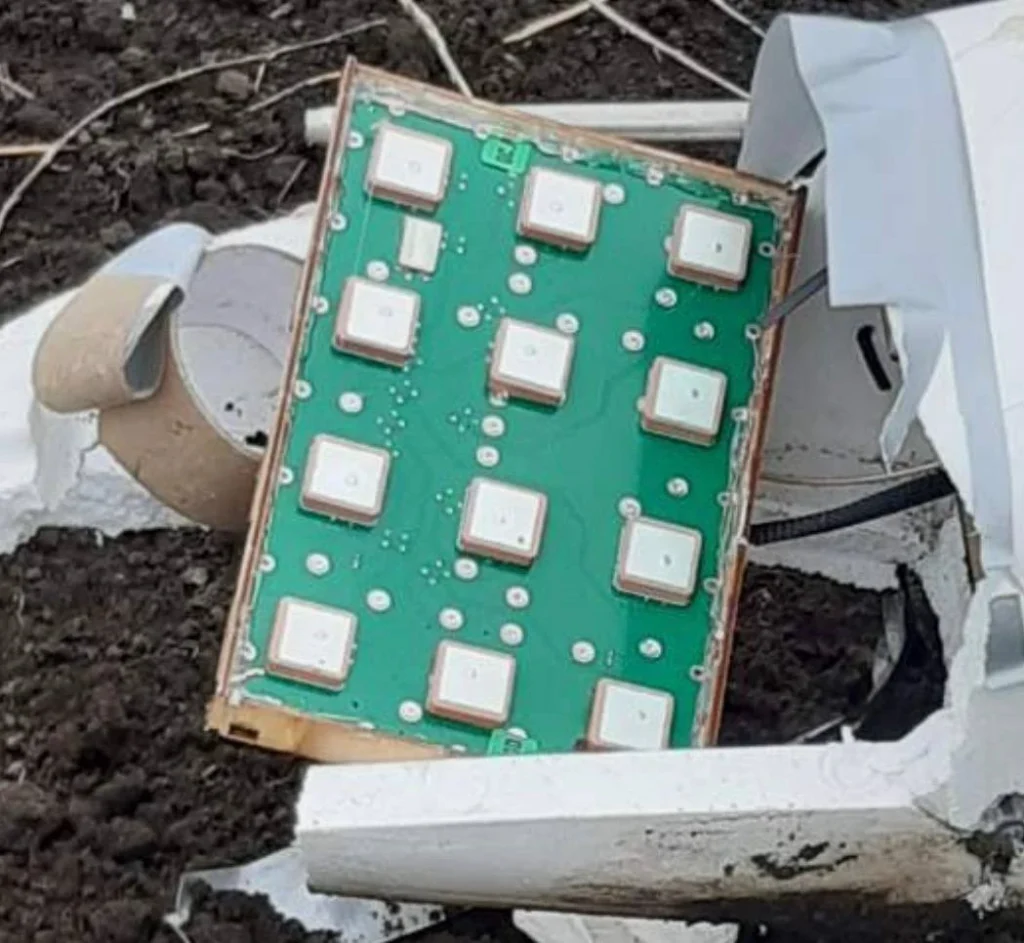
Previously, Gerbera platforms were predominantly utilised as decoys to saturate air defences, MESH communication relays, reconnaissance assets, and vectors for propaganda materials. Due to these auxiliary roles, they were long equipped with less secure navigation systems. According to Beskrestnov’s observations, the platforms were initially deployed without protected satellite navigation, and subsequently retrofitted with four-element Iranian-manufactured CRPA antennas.
The integration of 12-element antennas is linked to expanded production capacity at JSC VNIIIR-Progress in Cheboksary.
Modified anti-drone rounds developed to counter FPV platforms
To counter UAVs, Russian entities are manufacturing new small-arms ammunition, where the cartridge casing has been consolidated into a single plastic body designed to streamline ammunition preparation in combat environments.
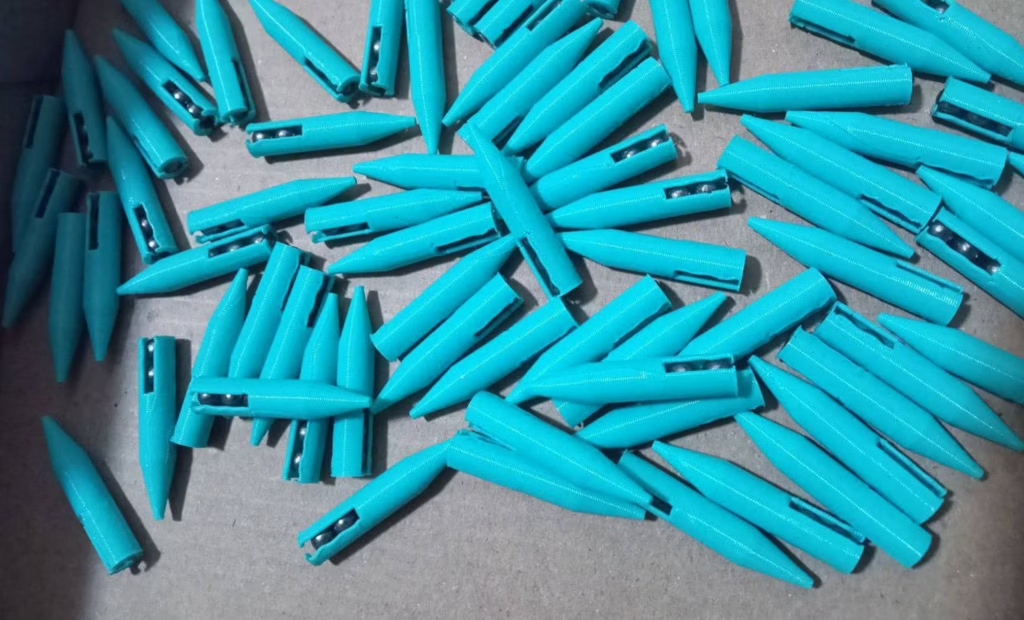
Reports indicate that the ammunition underwent trials at various ranges under both semi-automatic and automatic fire regimes, as well as alternating between anti-drone and standard rounds. According to the stated results, target engagement effectiveness at 25–30 metres “approaches maximum levels”.
The developers note that producing such rounds via 3D printing is being explored as a method to adapt service small arms for counter-UAS operations.
Russian sources report operational deployment of the Kuznechyk UAV control system
Russian observers have reported the deployment of the Kuznechyk FPV drone control system. The system supports two communication bands ranging from 27 MHz to 6.5 GHz and interfaces via the external “Nit” module.
A key feature of the system is its ability to operate across one or two frequency bands simultaneously. The transmitter board allows for the installation of two transmission modules with automatic selection of the active command link. The system utilizes the CRSF protocol and can function as a relay.
Russian sources also highlight integration with MESH relays to extend stable control ranges under heavy electronic warfare conditions.
Gerbera receives configuration featuring MESH relays
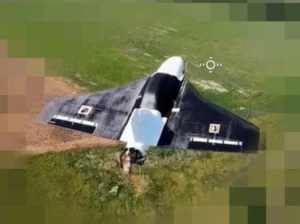
Russian Gerbera drones have received a variant equipped with MESH relays for data transmission under electronic warfare suppression. According to published technical data, the new configuration utilises a mesh network topology in which each node simultaneously receives and amplifies the signal. This is intended to facilitate telemetry and video transmission via secure routes independent of satellite channels.
The developers claim the system automatically reroutes data paths if a specific node is neutralised or suppressed by electronic warfare.
Additionally, updated flight control software includes new guidance algorithms allowing Gerbera and Geran drones to execute sharp evasive manoeuvres, changing altitude and vector on the terminal segment prior to striking a target.
ORG-1 munition observed on Molniya-2 UAVs
The deployment of the ORG-1 munition, configured with a high-explosive fragmentation warhead, has been documented on Russian Molniya-2 type drones. Upon detonation, the casing, which features pre-formed fragmentation grooves, shatters into controlled-shape fragments.
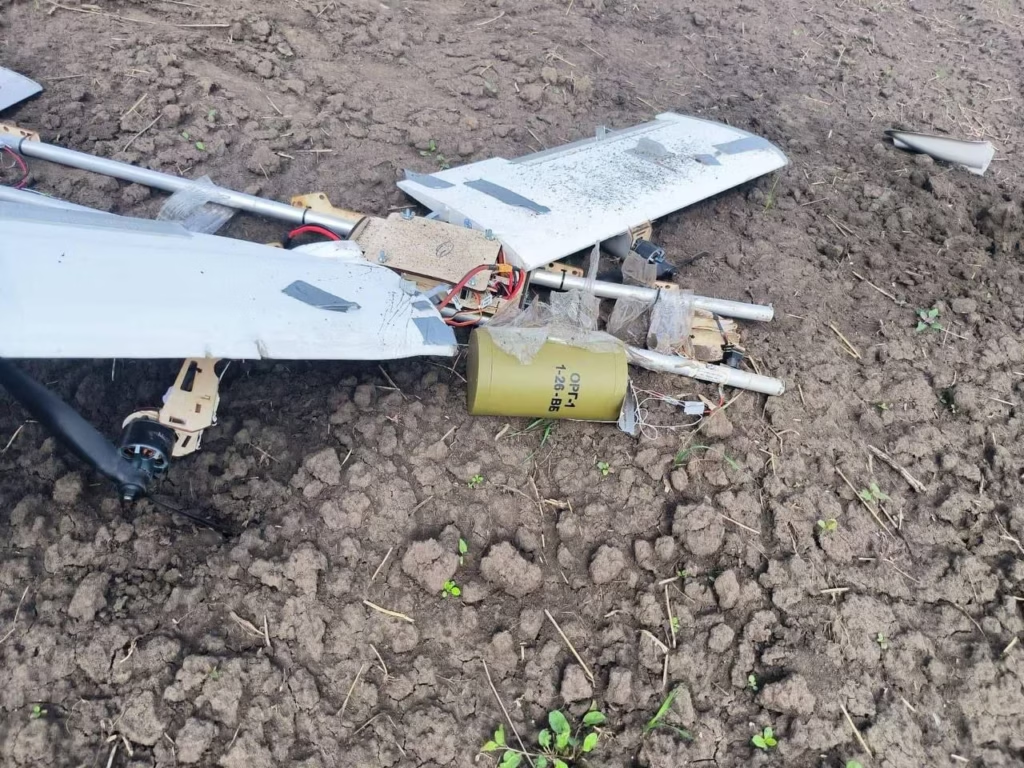
Reports indicate that the munition utilises a cast TNT main charge, with detonation initiated via a booster charge.
A notable feature of the ORG-1 is the option to utilise different initiation systems, including a mechanical impact fuze or an electronic module featuring an electric detonator. The electronic variant allows for the programming of detonation timing or burst altitude.
Rostov startup unveils the Svarog 1.0 uncrewed surface vessel
The Rostov-based company Svarog has unveiled the Svarog 1.0 uncrewed surface vessel (USV), positioned as a drone carrier and multifunctional naval platform. According to the developers, the platform boasts an operational range of up to 500 kilometres and is controlled via satellite communications.
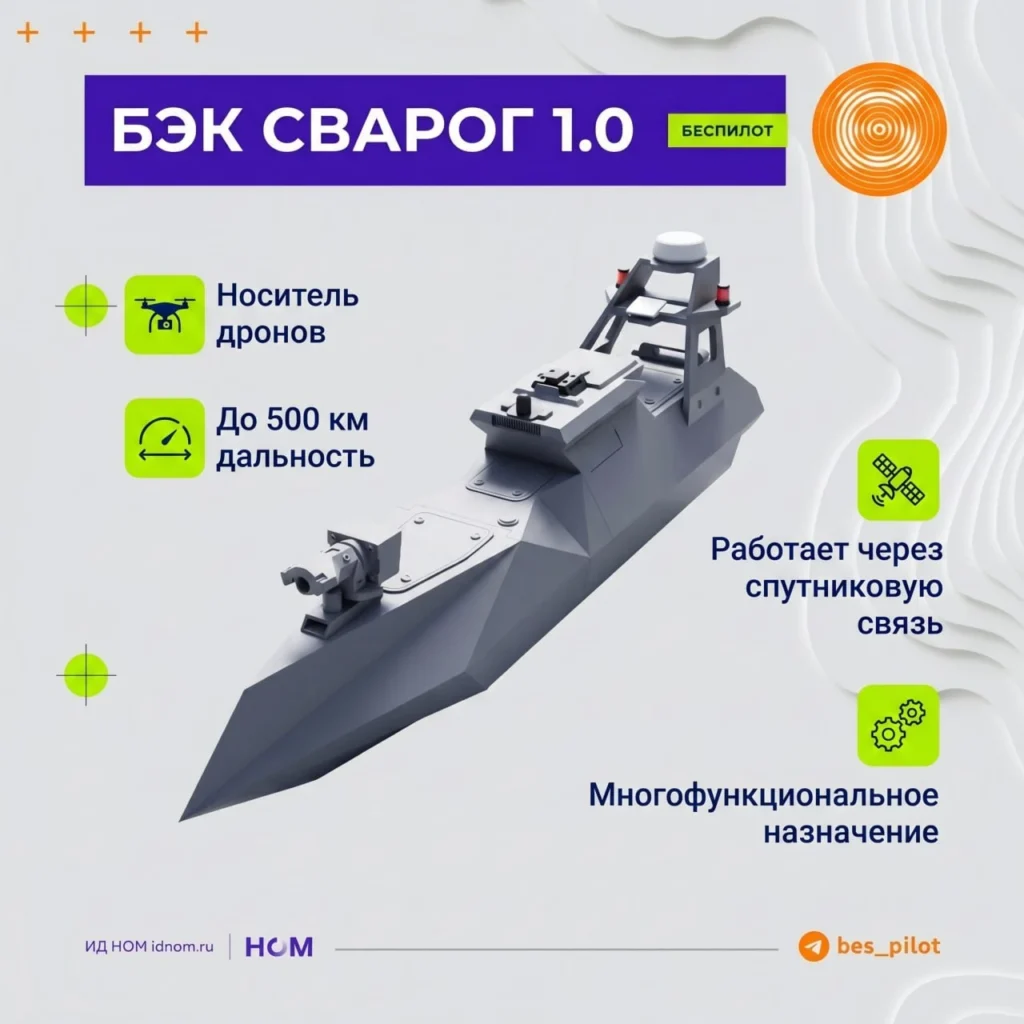
Stated mission profiles include UAV transport, logistics resupply, and kinetic strike options, including one-way kamikaze-mode operations against surface targets. At present, technical specifications remain unverified beyond developer assertions, as trials are still ongoing.
Interceptor drones showcased for the Stribog anti-drone system
Russian operators have demonstrated three types of interceptor drones compatible with the “Stribog” anti-drone system, which functions as an airborne mothership platform.
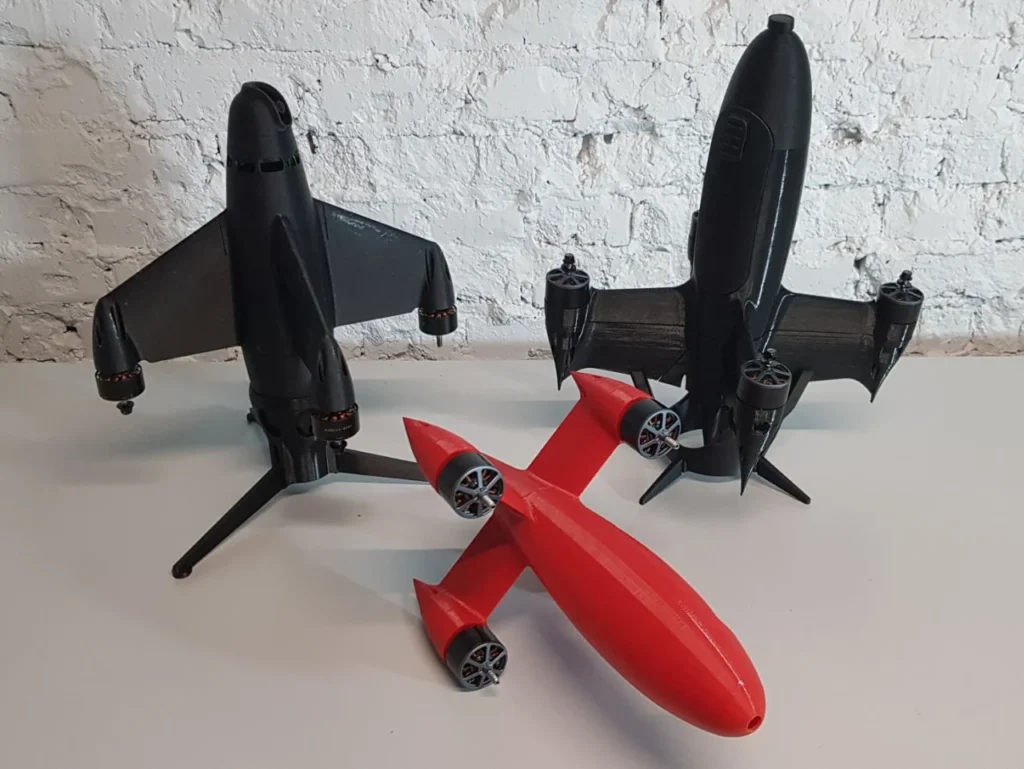
The system is engineered to counter UAVs, unmanned ground vehicles, uncrewed surface vessels, and other targets, including manned aircraft. Reported interception methodologies include warhead detonation, kinetic interception, liquid spray for optical blinding, and net deployment. Detailed technical specifications of the host platform have not been disclosed.
Russian media document operational deployment of the Krot-2 UGV
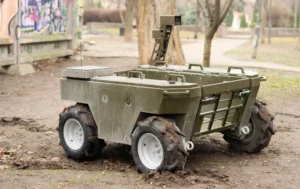
The Russian Krot-2 unmanned ground vehicle (UGV) executes logistics functions within the combat zone. It features a payload capacity of 120 kg and transports water, rations, and other vital supplies, and can also be configured for casualty evacuation. According to Russian military personnel, the Krot-2 has an operational range of up to 20 km, with its movement monitored and directed from the air via an overwatching drone.
Rostec showcases “civilian” UAV lineup in Kazan
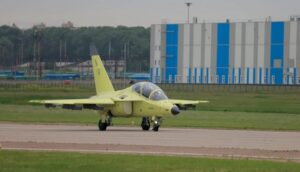
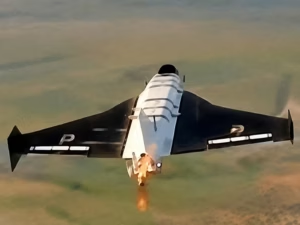
The state corporation Rostec presented the civilian drones Fellow, Lightning P (Molniya), and Delta Turbo at the KazanForum 2026 exhibition in Kazan.
The Fellow UAV is positioned as a short-range reconnaissance platform with an operational radius of up to 30 kilometres. It is equipped with night-vision capabilities, a hybrid x160 zoom optical system, and an automated target-tracking function.
The Lightning P is described as a high-speed UAV featuring a maximum speed of up to 270 km/h and a range of up to 60 kilometres. It is marketed for the oil and gas sector and infrastructure perimeter security.
The Delta Turbo is equipped with a turbojet propulsion system. According to stated specifications, it can attain speeds of up to 260 km/h, cover ranges of up to 200 kilometres, and maintain an airborne endurance of up to 45 minutes.
Reading now
1

Ukraine’s Roboneers is launching a joint venture with ARX Robotics to produce tens of thousands of UGVs per year
2
Ukraine’s Phantom Defense unveils integrated counter-UAS ecosystem at Eurosatory 2026
3
Naval drones became a game-changer in the Black Sea. Now European countries are waiting for a chance to buy them
4
Sting 2.0 and updated Bullet. How interceptor drone manufacturers are preparing to counter jet-powered Shaheds
5

7 July events: The month’s key defence tech gatherings in Europe and beyond
By submitting this form, you give Defender Media consent to the processing of personal data.
Надсилаючи цю форму, ви надаєте Defender Media згоду на обробку персональних даних.

Latest news
1
Dorozvidka #67: New Drone Deals, Operation Art-Auchan, FP-1 in Omsk, and Anubis and Behemoth over the Azov Sea
2

State Bureau of Investigation raids Vyriy Industries founder Oleksii Babenko
3
F-Drones unveils ‘the first fully autonomous interceptor drone’
4
Ukraine’s Ministry of Defence has codified the Lynx+ UGV from Roboneers
5