Black Mirror #57: spread of MESH networks, cruise missiles, interceptor drones, and other news of Russian miltech
An overview of Russian military-industrial complex developments for the final week of April

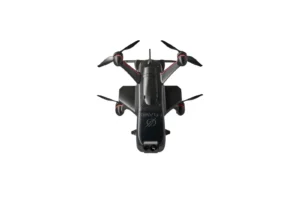
Russian interceptor UAV "Bolt"
Over the past week, Russia has unveiled a range of military-industrial developments, including its first anti-aircraft interceptor drone similar to Ukraine’s Sting systems, a new cruise missile incorporating components from global manufacturers, and a series of upgraded systems adapted to evolving battlefield conditions. Additionally, manufacturers of drones and ground robotic systems are reportedly taking pride in remaining excluded from international sanctions lists, according to an analytical report by StateWatch. Read more on the latest developments in the Russian military-industrial complex in the Black Mirror weekly review.
MESH-controlled UAVs expand operational range
Remote control and reconnaissance operations using Shahed and Gerbera UAVs equipped with MESH modems are becoming increasingly widespread, according to Serhii Beskrestnov, adviser to the Minister of Defence. UAV flights utilising such systems are being detected deeper within rear territories.
Available data suggest that the operational range of controlled Shahed UAVs extends from the north as far as Kyiv, from the west to Poltava, and from the south to Dnipro, Kryvyi Rih, Odesa, and Mykolaiv.
MESH technology enables the formation of a relay chain of UAVs equipped with radio modems, through which signals are transmitted mid-air. The ground infrastructure includes long-range antennas installed on elevated structures and masts. Communication with a single UAV can reach up to 220 km; however, this requires the aircraft to operate at high altitudes due to the Earth’s curvature.
According to Beskrestnov’s observations, Russian forces typically employ chains of several UAVs: some operate at high altitudes as relays, transmitting signals to others flying lower for strike missions. The number of relays is usually limited to two or three due to increasing latency and reduced transmission speeds. During attacks, UAVs also tend to operate in proximity to one another to form a more resilient radio signal that is less susceptible to jamming.
Molniya UAV uses point-to-point MESH modem configuration
A configuration of the Molniya UAV equipped with a MESH modem operating in “point-to-point” mode has been identified. The onboard modem operates in the 1300–1500 MHz frequency range, using two vertical antennas with 2 dBi gain and a dual-channel output power of 2 W per channel. Under these parameters, the control range can reach up to 50 km.
The ground control station uses a handheld MESH radio unit XK-F357 of Chinese manufacture, operating at 10 W per channel. A directional antenna operating in the same frequency range with 12 dBi gain is used, connected in dual polarisation (vertical and horizontal). The antenna is mounted on a servo-driven rotating mechanism, likely manually controlled.
It is noted that the ground station can be effectively suppressed by electronic warfare systems, provided they generate interference across the entire 1300–1500 MHz band, utilise a directional antenna, and are deployed at a height of at least 70 metres.
Parodiya UAV decoys used in Kyiv region attack
During last week’s UAV attack on the Kyiv region, the use of Parodiya decoy UAVs was recorded following a several-month hiatus.

These systems were deployed to saturate and confuse air defence networks. Residents reported hearing characteristic UAV-like engine sounds across multiple areas.
Russian ground robotics sector largely remains outside sanctions
Russia has developed a robust ground robotics sector, much of which remains untouched by international sanctions, according to Defence Blog, citing StateWatch.
At least 32 models of ground robotic systems are reportedly in use by Russian armed forces, with 29 already in serial production. As of 2025, the sector includes 563 companies, a 21.5% increase compared to 2021.
Among the manufacturers mentioned are NRTK Kaps (Courier platform), Digital Development Agency (Varan), Gumich-RTK (Impulse-M), and the Omsk Armoured Engineering Institute (Omich).
As of March 2026, only about half of these manufacturers are subject to US or EU sanctions. Around 90% of electronic components are sourced from China and may be declared as civilian goods in customs documentation.
New camera systems for UAVs with AI-based object recognition
The “Rusel” holding, under Rostec, has presented a new line of camera systems for ground, aerial, and naval UAVs. The product family includes seven models varying in weight, size, and detection range.
The systems are based on a gyrostabilised two-axis platform ensuring image stability during movement. They operate in the visible spectrum, while some variants include infrared channels for night surveillance with standard video output. Two variants incorporate neural networks capable of automated object-type recognition.

Stribog anti-drone system based on UAV mothership concept
A Russian Stribog anti-drone system has been developed using a UAV mothership concept carrying interceptor drones. The system is designed to engage UAVs, unmanned ground systems (UGVs), unmanned surface vessels (USVs), amphibious platforms, and potentially crewed aircraft.
Interception methods include explosive detonation, kinetic impact, optical disruption using aerosol dispersion, and net deployment.
The system operates in manual, semi-automated, and fully automated modes. Deployment platforms include mobile systems (vehicles, armoured platforms, vessels, and robotic systems) as well as fixed installations.
The mothership can be based on multirotor or VTOL UAVs, powered either electrically or via hybrid systems. It can operate autonomously or in a tethered “quasi-mast” mode. Interceptor UAVs may be configured as fixed-wing, multirotor, or delta-wing aircraft.
Klin loitering munition integrates machine vision and foreign components
According to Ukraine’s Defence Intelligence (HUR), the War & Sanctions portal published a 3D model of the Russian loitering munition Klin.
The UAV features a delta-wing fuselage with a length of 1.6 metres and a wingspan of 1.9 metres. It is powered by a Chinese brushless motor (Scorpion F-4225-500KV V2) and two 6S Li-AFB batteries.

A key feature is machine vision-based target acquisition using an NVIDIA Jetson TX2 module (USA). The flight controller is a Cube Orange (Australia), navigation is provided by a Holybro F9P module (China) with RTK mode, and communications utilise a LoRa modem based on the Ra-01H module (China). Other components originate from US, Swiss, Taiwanese, and South Korean manufacturers.
The system can carry a 5 kg cumulative or high-explosive warhead and reaches speeds of up to 300 km/h during its terminal attack phase. Variants reportedly include maritime and land versions, using radar or lidar for detonation.
High-power GaN power management module for heavy UAVs
Russian company CSKY has introduced a GaN PMU power management module for heavy UAVs with payloads exceeding 12–15 kg.
The system is based on an STM32F4 microcontroller and uses gallium nitride converters providing 12 V (10 A) and 5 V (3 A) outputs. It supports currents exceeding 200 A and uses the DroneCAN protocol for integration with flight controllers.
The module is intended as a core energy distribution system for UAV electronics, including navigation, telemetry, and payload systems.
Bolt interceptor drone integrated into air defence network
A Russian interceptor UAV named Bolt has been developed and tested. It operates as an integral part of the Ploshchad-PVO air defence network.
The drone launches automatically from a transport container upon receiving radar data, navigates to the target area, and uses an optical homing system to engage targets. It can destroy threats either kinetically or by using a dedicated warhead.
Upgraded “Kub-2-2” UAV features structural and navigation changes
Kalashnikov Concern has introduced the Kub-2-2 upgraded loitering munition. Structural changes include a lengthened tail fin, likely improving aerodynamic stability and operational range.
Navigation and targeting systems have also been modified, potentially incorporating improved electro-optical modules or enhanced satellite guidance accuracy.

Lampochka-N proximity munition with magnetic sensor
A serial proximity-fused fragmentation munition, Lampochka-N, has been developed. It features a circular fragmentation pattern and a star-notched steel casing for optimised lethality.
The system uses a MAG-2 magnetic sensor, with some units configurable for alternative non-contact sensors. It contains two 75 g TNT charges, providing an effective lethal radius of up to 15–18 metres and a continuous damage radius of up to 10 metres.

Banderol missile blends cruise missile and drone characteristics
Schematics of a system referred to as Banderol have appeared in open sources. The system is believed to reach speeds of 450–500 km/h.
The design combines elements of a cruise missile and a jet-powered UAV, featuring a compact fuselage and likely a small turbojet engine. Estimated dimensions include a length of around 5 metres, a wingspan of approximately 2.2 metres, and a fuel capacity of 50–65 kg.

The guidance system is based on a Kometa-M8 eight-channel GNSS receiver (GLONASS/GPS).
Shturmovik ground UAV uses fibre-optic communication
Russian company Dron Force Aero is testing a ground-based unmanned vehicle, Shturmovik, capable of transporting up to 20 kg over distances of up to 30 km.
The system uses a fibre-optic communication line resistant to electronic warfare. In the event of cable damage, a backup digital channel is activated.

The platform is designed for high terrain adaptability and can be deployed in ambush roles alongside infantry units.
Programmable airburst combat module without radar guidance
The Central Research Institute Burevestnik has developed a remotely controlled combat module for counter-UAV operations using programmable airburst munitions.

The system calculates firing parameters and detonates shells mid-air to create a directed fragmentation cloud, improving effectiveness against small and fast-moving targets.
The module supports weapons up to 30 mm calibre and includes automated targeting, ammunition feed, and a remote operator console. It does not rely on radar or laser rangefinders, thereby reducing detectability and improving survivability.
Reading now
1
F-Drones launches FPV drone simulator, Ukrainians to get free access on August 24
2
Rise Technologies unveils Nakande digital communications system for drones
3

200+ new vacancies in defence innovation: Jobs at TAF Industries, Airlogix and other leading industry companies
4
Ukraine’s Defence Ministry codifies first jet-powered Alexa Spatium interceptor drone
5

European defence giant Leonardo opens a subsidiary in Ukraine
By submitting this form, you give Defender Media consent to the processing of personal data.
Надсилаючи цю форму, ви надаєте Defender Media згоду на обробку персональних даних.

Latest news
1

The Rada abolishes VAT and import duties on weapons components and buggies: details of the new laws
2
Brave1 has revealed how many Ukrainian companies are developing jet-powered interceptor drones
3
Mavka Technology has unveiled the MAVKA 4K evacuation and logistics UGV
4

Chernohorenko proposes customs “green lanes” for defence components
5