Black Mirror #67: Orion as a carrier of Banderol missiles, fibre-optic Molniya, and other new Russian miltech developments
An overview of developments in the Russian defence industry during the second week of July.
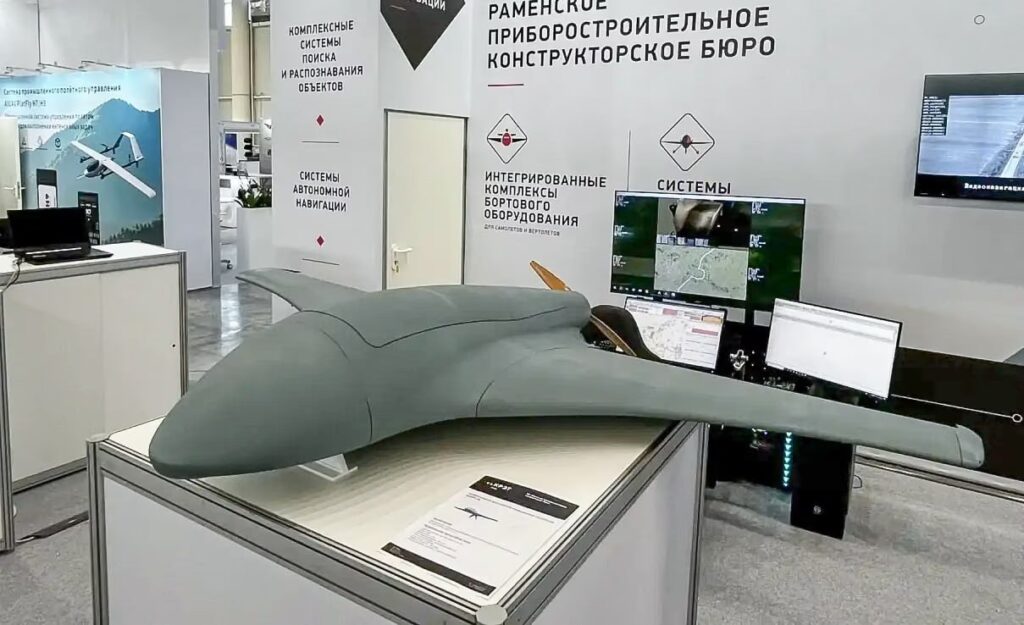
New Russian Delta-T-M drone
Last week, Russia unveiled several new UAVs designed for both reconnaissance and strikes against Ukrainian territory. One of the most significant developments was the adaptation of the Orion fixed-wing UAV to launch Banderol missile drones. In addition, the Russian military equipped the Molniya with fibre-optic control and presented the concept of new interceptor. More on these and other developments in the Russian defence industry can be found in Defender Media’s weekly Black Mirror review.
K-8 Dvushka UAV observed in combat use
The K-8 Dvushka Russian fixed-wing UAV, first unveiled in 2024, has now been observed in use on the battlefield.
The UAV is designed for strike missions and logistics. It has a maximum flight speed of up to 150 km/h and can carry up to 5 kg of explosives or other payloads.
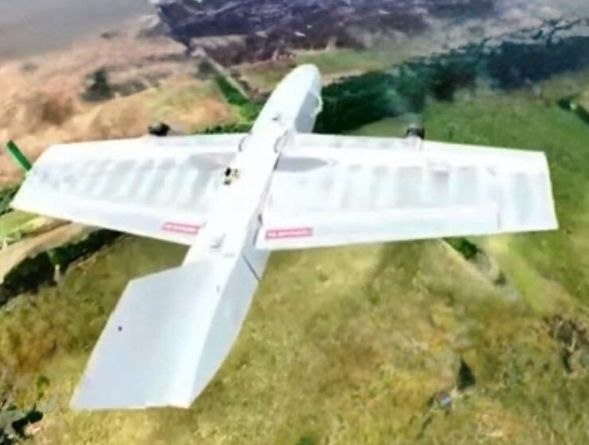
Among its stated features are hand-launch capability, minimal pre-flight preparation time, and the ability to operate in winds of up to 20 m/s. The system was developed by the Russian company Veles Logistik from Novorossiysk.
Russia confirms Banderol missile launched from Orion UAV
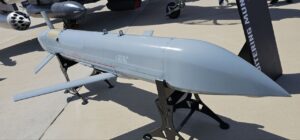
Russia has officially confirmed for the first time that the Orion long-range reconnaissance UAV has become a carrier for the compact Banderol cruise missile.
According to available information, the Orion can carry a single such missile. The Banderol features a warhead weighing between 110 and 150 kg and can reach speeds of up to 650 km/h.
Lis interceptor receives an automatic target tracking system
The Russian Lis interceptor UAV has received an artificial intelligence system that provides automatic target tracking and prolonged tracking of airborne targets. According to Russian military statements, once a target has been acquired, the operator confirms tracking, after which pursuit proceeds automatically.
The automatic acquisition system allows the UAV to track actively manoeuvring targets for up to 30 minutes while continuously adjusting its flight path. AI algorithms maintain target tracking even during abrupt changes in the target’s course and altitude. If the target attempts to evade, the UAV automatically recalculates its route and continues the pursuit.
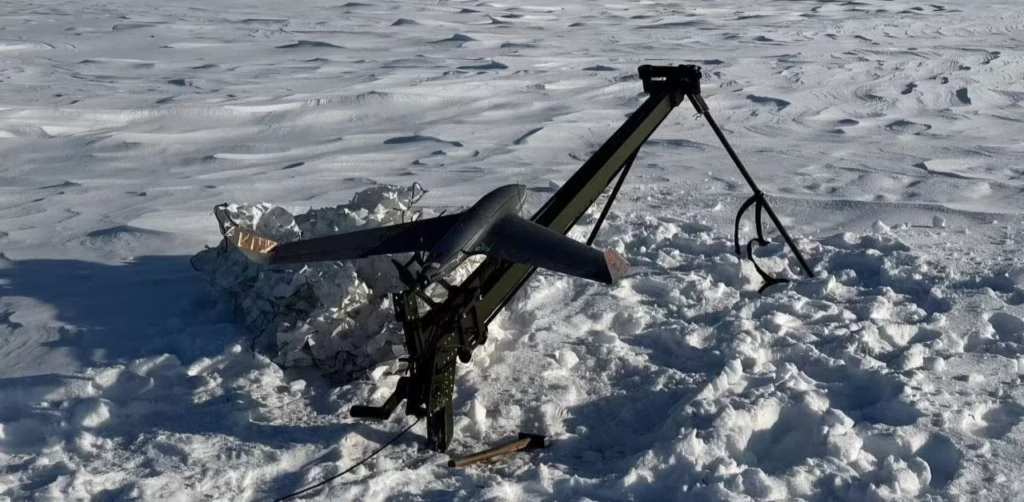
The Lis is a compact fixed-wing UAV equipped with an automatic target acquisition system, artificial intelligence elements, and a warhead weighing approximately one kilogram. It was first reported in April this year, when it was stated to have a speed of up to 200–230 km/h and an operational range of up to 5 km.
Zavarukha acoustic reconnaissance system
The Zavarukha acoustic reconnaissance system, developed by NPO Alfa, has entered operational use in the combat zone.
According to the developers, the system is intended for counter-battery warfare and the detection of enemy firing positions. Its microphone array measures less than one metre across. According to the stated specifications, the system can detect targets at distances of up to 27 km. At ranges exceeding 20 km, the stated error does not exceed 400 metres, while at a distance of 12 km it is up to 150 metres.
The system operates in passive mode and can function autonomously for up to five days on battery power.
NPO Alfa also claims that Zavarukha is approximately 60 times cheaper than the Penicillin and AZK-7M systems, and does not require a vehicle chassis or a large operating crew.
Malyutka interceptor drone
The company Peredovye Aviatsionnye Sistemy has introduced a new interceptor drone, the Malyutka. Its stated flight range is up to 12 km, maximum speed up to 250 km/h, and loitering speed 140 km/h.
The UAV is equipped with a 300-gram warhead housed in a dedicated compartment. It destroys targets using fragmentation rather than kinetic impact. The system automatically acquires targets at distances of up to one kilometre.
Fibre-optic Molniya
The Alfa Design Bureau has developed a fibre-optic controlled version of the Molniya UAV. According to the manufacturer, its operational range reaches up to 50 km while retaining the payload capacity of the original Molniya of between 6.5 and 8 kg.
Thanks to its high-quality video feed, the UAV can fly at low altitudes while avoiding obstacles. Plans have also been announced to begin serial production of these drones.
A new Molniya variant – the UN-001 UAV
The UN-001 fixed-wing UAV, based on the Molniya platform, was first demonstrated at one of the Moscow Military District training grounds.
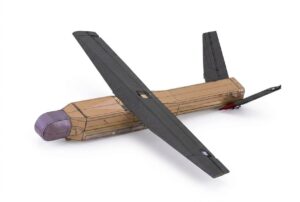
Unlike the original Molniya, which is regarded as expendable due to its plastic fuselage and lack of landing gear, the UN-001 can perform up to 150 hard landings, losing only its propeller in the process. The UAV’s fuselage is made of polyurethane foam, and its maximum speed reaches 150 km/h.
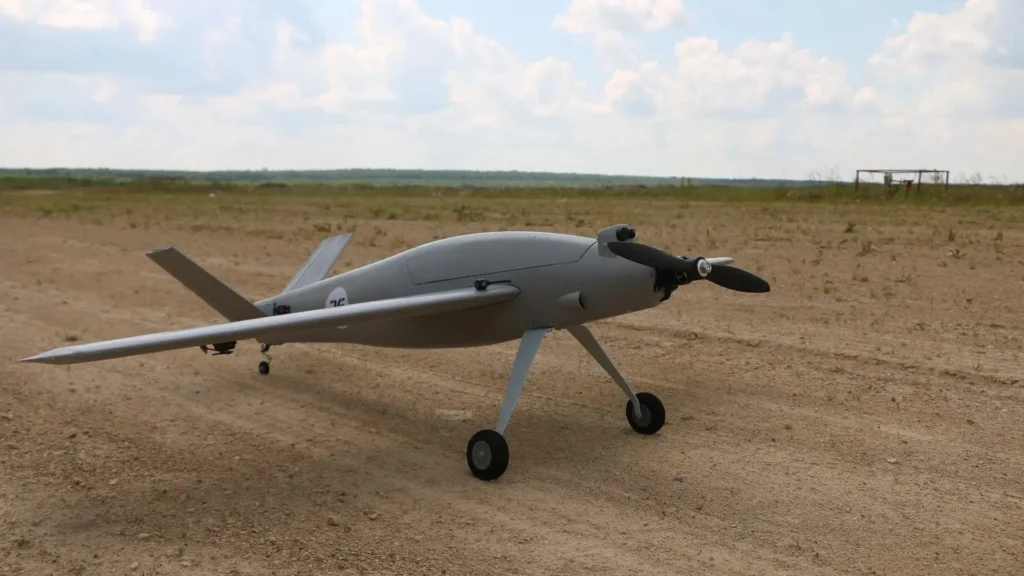
Three configuration options are available, along with the possibility of installing alternative engines and wings upon request. Its stated applications include reconnaissance, air defence, and training.
Kinetic missile for counter-UAV missions
Engineers at MKB Fakel have developed a guided surface-to-air missile intended to destroy mini-UAVs, kamikaze drones, reconnaissance UAVs, and uncrewed surface vessels. The new design is expected to be 20–35 times lighter than existing very short-range surface-to-air missiles.
Targets are destroyed through direct kinetic impact. The missile uses its fuselage, primary and auxiliary wings, and propellers for interception. To improve manoeuvrability, the designers adopted an X-shaped aerodynamic configuration with additional wings and individually controlled electric motors.
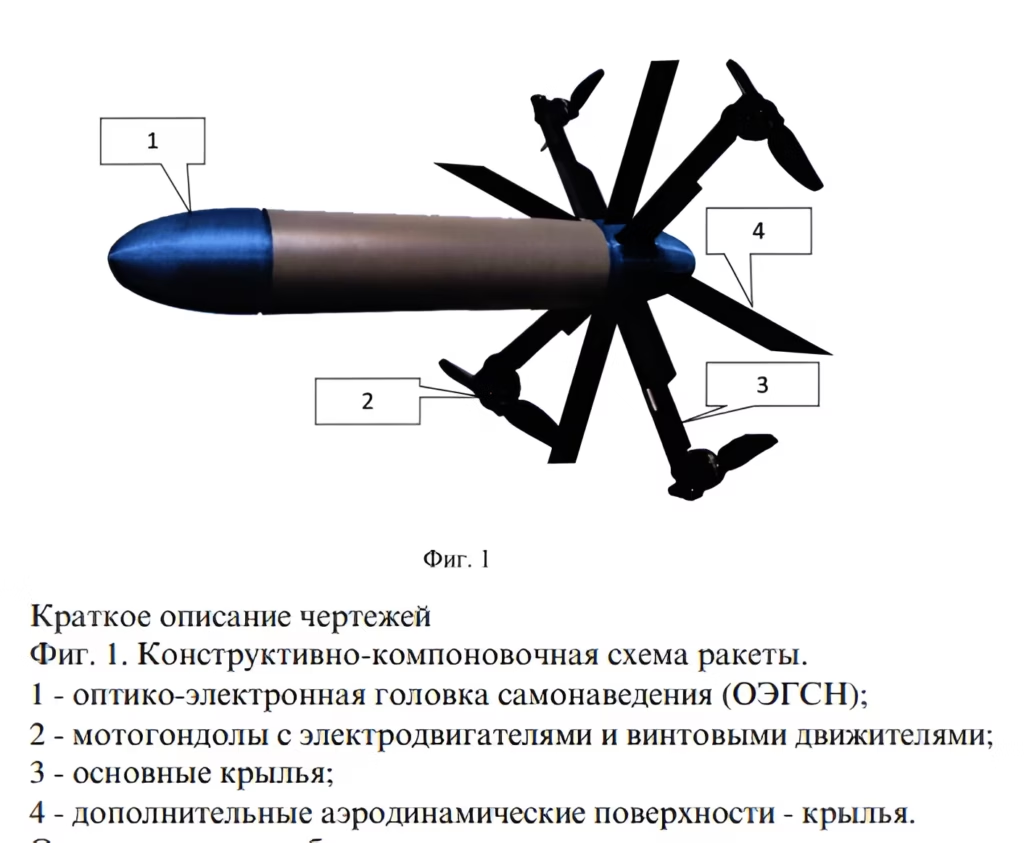
According to the developers, the absence of an explosive warhead allows such missiles to be manufactured at facilities that do not hold licences for handling explosive materials.
Obereg-MIMO remote antenna for UAV operators
The company Gagaring has developed a new directional remote antenna system, the Obereg-MIMO, allowing UAV operators to work from shelter. The antenna is deployed outside the shelter while control is carried out through a cable. The basic version allows the antenna to be positioned up to 22 metres away, while a dual-channel amplifier extends this distance to 42 metres.
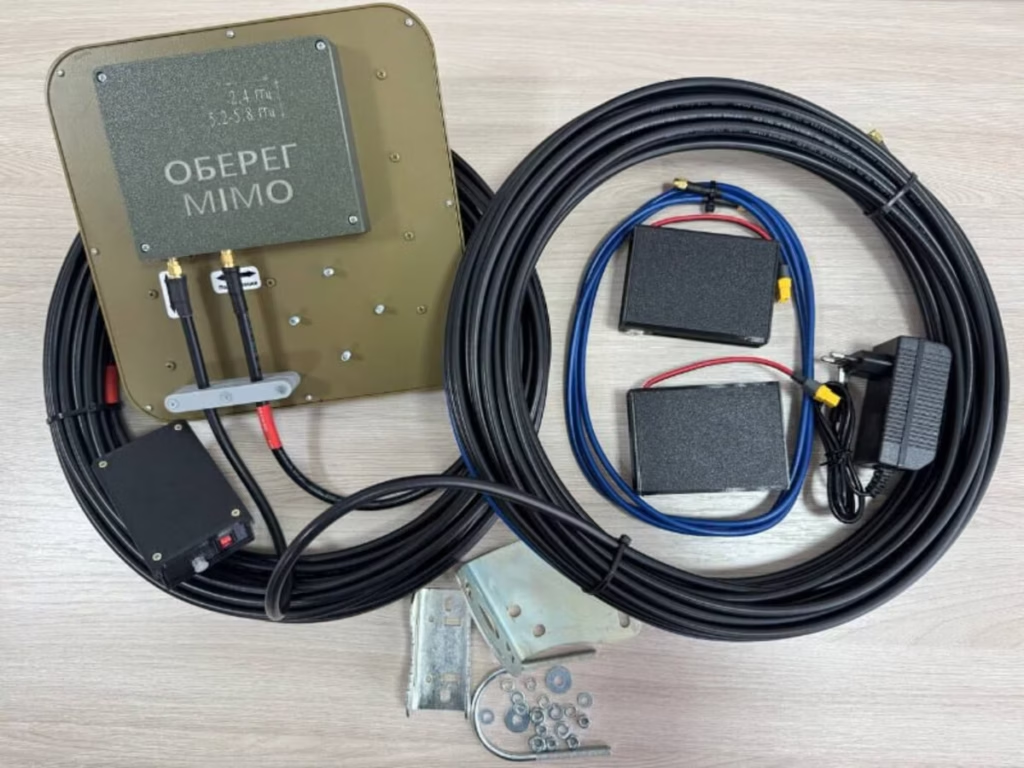
The Obereg-MIMO supports the 2.4 GHz and 5.8 GHz frequency bands. MIMO technology uses two amplification channels and two signal polarisations — horizontal and vertical.
Its stated operational range is between 6 and 10 km depending on terrain, operating conditions, and the level of electronic warfare interference. The amplifier delivers up to 2 W in the 2.4 GHz band and up to 3 W in the 5.15–5.85 GHz band. Antenna gain reaches 11 dBi at 2.4 GHz and 14 dBi at 5.8 GHz.
Delta-T-M turbojet UAV enters serial production
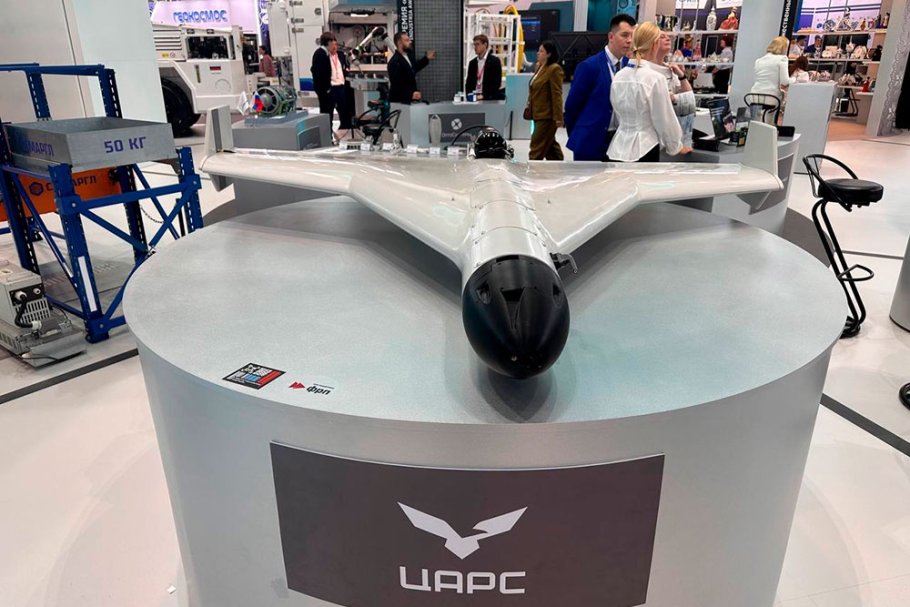
The serial-production Delta-T-M turbojet UAV was unveiled for the first time at Innoprom-2026. The UAV is powered by a turbojet engine and reaches speeds of up to 400 km/h. Endurance is approximately 40 minutes per sortie.
Launch is performed from a catapult, while recovery is by parachute. The onboard equipment includes a thermal imaging camera, an optical camera, and an intelligent machine vision system. The algorithms provide automatic tracking of detected objects.
New Saturn UAV family
At the Drone Expo exhibition in Kazan, the KRET holding presented the new Saturn-30 and Saturn-10 family of civilian UAVs.
The Saturn-30 has a take-off weight of 30 kg, reaches speeds of up to 180 km/h, climbs to altitudes of up to 3,000 metres, and remains airborne for up to one hour. Its maximum payload is 7 kg.
The Saturn-10 weighs 10 kg and has an endurance of up to 30 minutes. It is equipped with an electro-optical system capable of automatically detecting, recognising, and tracking objects.
Slon heavy quadcopter
The Slon heavy quadcopter, developed by the Groza Group of Companies, was presented at the Drone Expo exhibition. Its optimal payload is 50 kg. In this configuration, the UAV can complete a total flight distance of 12 km, deliver its cargo, and return.
Maximum payload capacity is 80 kg, although the flight range is reduced to 6 km in that configuration.
The UAV uses a frequency-hopping spread spectrum (FHSS) system, increasing resistance to radio interference. If communication with the operator is lost, the onboard software automatically returns the aircraft to its launch point.
Multi-layer protection system against UAVs
The Voronezh-based Sozvezdie concern has developed a new multi-layer protection system for mobile communications nodes and tanks against UAVs. The design provides for the deployment of a protective dome above the vehicle without interfering with antenna operation.
The first layer of protection consists of a metal frame with mesh screens positioned around the vehicle. It is intended to intercept FPV drones and loitering munitions.
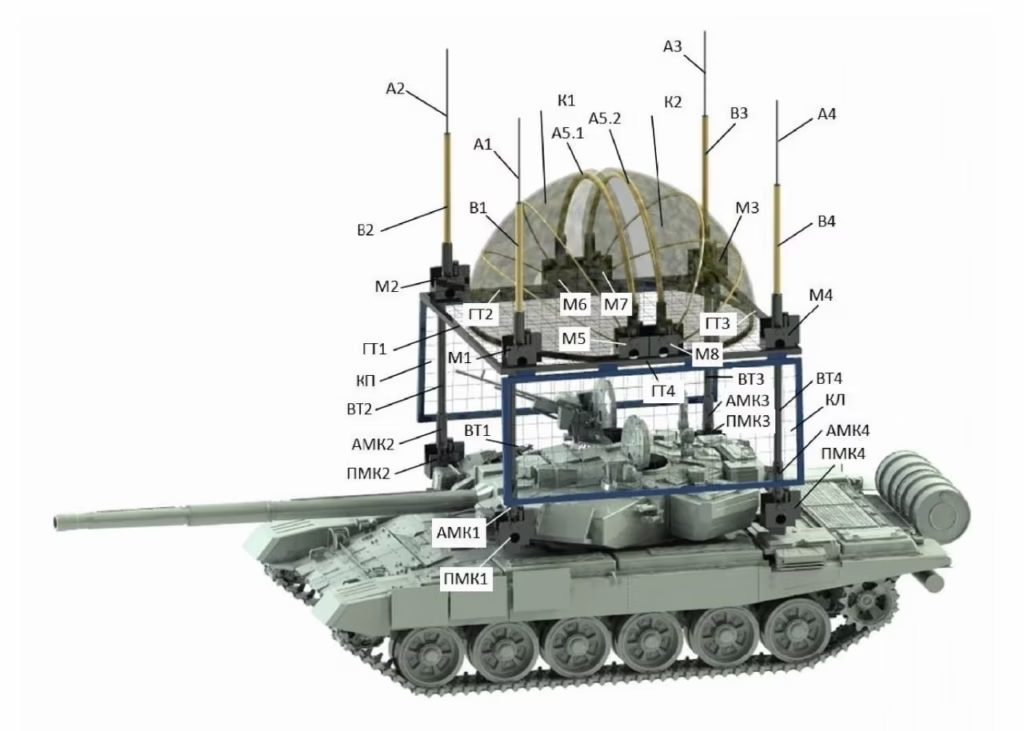
The second layer consists of a radio-transparent hemispherical dome. It is formed by specialised frame antennas and protective covers raised by hydraulic manipulators. The system can deploy either the full dome or only part of it, depending on operational requirements.
All operations are performed remotely from inside the vehicle, eliminating the need for the crew to leave the protected compartment.
Reading now
1
Ukrainian Skyeton secures $10.6M US army contract
2
Canadian General Dynamics signs agreements with Ukrainian GreenTech
3
The Pentagon has announced the results of Drone Dominance Gauntlet II – announced Ukrainian companies did not make the top 5
4
Korven Systems project: How Teletactica co-founder is building an autopilot for interceptor drones
5
Ukrainian SkyFall again among winners of US Drone Dominance Program
By submitting this form, you give Defender Media consent to the processing of personal data.
Надсилаючи цю форму, ви надаєте Defender Media згоду на обробку персональних даних.

Latest news
1
12 British defence companies to gain access to Ukrainian AI platform Avengers Labs
2

Defence tech startup Zmiyar takes second place at IT Arena Startup Competition 2026
3

Mykhailo Fedorov launches ‘Army of Robots’ project to bring together venture fund, own companies and R&D for frontline robotics
4

Pentagon uses Ukrainian Unwave’s EW to test UAVs in Drone Dominance programme: details of cooperation
5