PG Robotics upgrades Lucky Strike drone: what has changed
The key upgrade is optical navigation which determines the drone’s position using imagery from a downward-facing camera

PG Robotics Lucky Strike-2.1 drone
Ukrainian company PG Robotics has unveiled the Lucky Strike-2.1, an upgraded version of its serially produced Lucky Strike-2 strike-and-reconnaissance drone. As Defender Media learned from the manufacturer, the main upgrades include a new computing platform, the Salamandra optical navigation module, an updated powertrain, and an upgraded battery pack.
Salamandra optical navigation system, rather than relying on satellite navigation signals, determines the drone’s position using imagery from a downward-facing camera. This enables the UAV to proceed with its mission, maintain its position, and automatically return to its launch point even in the event of a complete loss of GPS signals.
The communications system has also been upgraded. The Lucky Strike-2.1 is equipped with a digital communications link featuring automatic frequency-hopping to transmit video, telemetry, and control commands.
According to PG Robotics, all three drone variants — Day Optical, Day Digital, and Day Night — have been refined based on combat experience and feedback from frontline military units.
The stated specifications of the Lucky Strike-2.1 include a flight range of up to 15 km, a top speed of up to 80 km/h, and a payload capacity of up to 3 kg. The drone can remain airborne for up to 40 minutes without a payload, or approximately 20 minutes with a combat payload, while operating at ranges of up to 10 km. The design also allows the platform to drop up to three munitions during a single sortie.
The company stated that the system is currently in the final stage of codification.
Reading now
1
SkyFall officially unveils Thor Hammer mid-strike and announces 1,000+ km version
2

260+ vacancies in Ukrainian defence technology at BlueBird Tech, Sine Engineering, Buntar Aerospace and more
3
British-Ukrainian Occam Industries raises €3.8m. The funds will go towards scaling drone autonomy software
4
Terra Drone acquires 50% of Ukrainian Kurin Technologies for $3.5 million
5

Autonomous interceptor drones need radars to work. Why is there still a lack of them
By submitting this form, you give Defender Media consent to the processing of personal data.
Надсилаючи цю форму, ви надаєте Defender Media згоду на обробку персональних даних.

Latest news
1
Tencore launches an ecosystem to bring together UGVs and components from several manufacturers
2

Defense companies may see staff deferrals cut from 100% to 85%
3
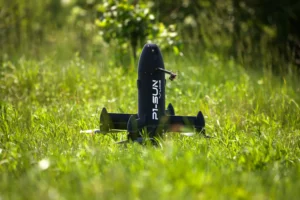
Japan signs contract with Ukrainian company SkyFall to procure interceptor drones
4
260+ vacancies in Ukrainian defence technology at BlueBird Tech, Sine Engineering, Buntar Aerospace and more
5