Black Mirror #4. “Strannik”, “Yamshchik”, “Varan”, IFF systems for UAVs, and other updates in Russian miltech
Weekly review of Russian warfare technology developments

Source: Internet
Defender continues its “Black Mirror” series, spotlighting the latest Russian military tech innovations. This weekly digest is designed to help Ukrainian innovators and their allies understand the challenges they must prepare to face.
Like Ukraine, Russian developers are now focusing heavily on unmanned technologies. In particular, they are developing multiple UAV collision-avoidance systems and improving ground drone capabilities—one of the key trends expected in the Russia–Ukraine war in 2025. Full details are in Black Mirror #4.
New drones from the “Arkhangel” project
The Russian project Arkhangel has unveiled several new developments. The ground drone Strannik can travel up to 15 km, deliver cargo, lay mines, and distribute Wi-Fi. It can carry loads of up to 100 kg and operates via satellite communication.
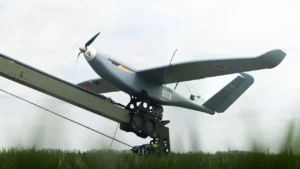
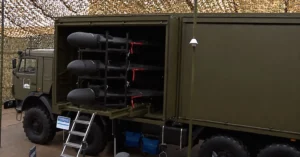
In addition, a missile from Arkhangel has been incorporated into a new system for countering unmanned surface vehicles (USVs). It was presented at a defence event in Kronstadt focused on the development of naval drones. This drone-missile is launched from an aircraft, conducts reconnaissance, and strikes targets with guided missiles. The missile has a speed of up to 345 km/h—significantly faster than any USV.
Russian drones are learning to avoid collisions
At the “Alferyevo” airfield near Moscow, Russia tested a drone collision avoidance technology called the Detect-And-Avoid System (DAA). This system is reportedly similar to the Traffic Collision Avoidance System (TCAS) used in manned aviation to prevent mid-air collisions. However, Russian sources are not yet calling their DAA a finished or fully successful product.
Several companies participated in the experiment (Radar MMS, Turing Flying Machines, Dart-Aero, and BAS Glory Air) and achieved varying levels of success.
Rostec begins testing an IFF system for drones
Russia’s state-owned conglomerate Rostec, via its subsidiary Rosell, is also working on a similar technology. Their equipment automatically identifies friendly drones at altitudes up to 5 km and distances up to 100 km from the radio transponder. The first production batch is expected in 2025.
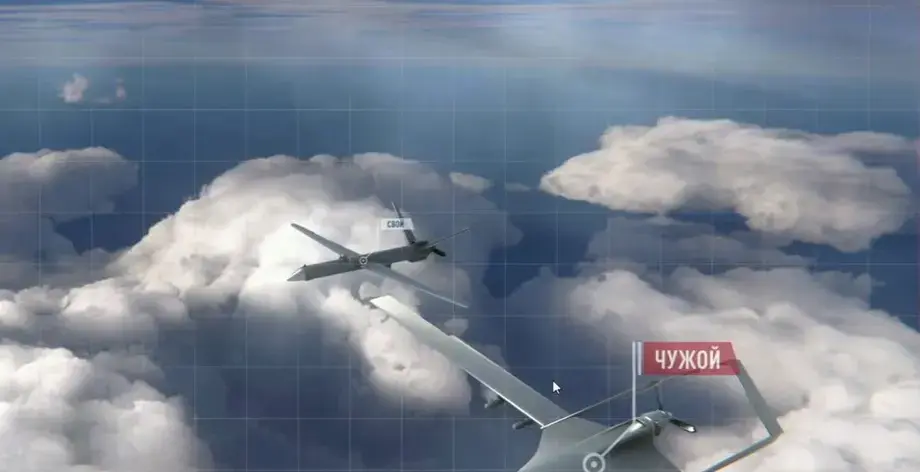
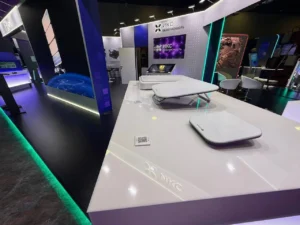
A key element of this IFF system is a radar-based identifier that is installed on the drone. The transponder is compact (under 90 grams) and low-power, making it suitable for integration into most UAVs, including quadcopters. For example, testing is being conducted on the Geodesia-401 quadcopter from Geoscan.
Ground drone “Yamshchik” with anti-UAV defence system
Russian developers have created the ground-based unmanned complex Yamshchik, equipped with a secure communication module and an onboard anti-drone countermeasure unit.
Yamshchik can traverse rough terrain up to 5 km. With the use of an aerial relay and enhanced battery or an additional power source, it can carry out missions up to 20 km away. The platform can transport up to 300 kg of cargo. For passive aerial drone defence, the Yamshchik can be fitted with a remote-controlled jamming unit called Shtora K-12 Molot.
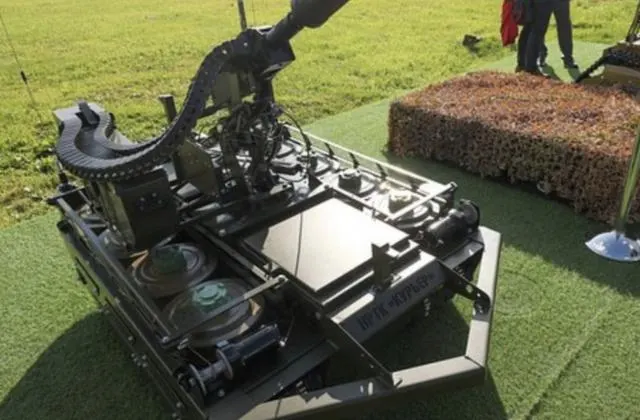
Tracked “Varan” UGV
Russian media report that their forces have begun receiving the UGV system Varan. This multifunctional tracked platform can carry loads of up to 1.5 tons and is used for transporting ammunition, evacuating the wounded, and remote demining.
One of Varan‘s standout features is its “follow me” function, allowing the platform to autonomously follow a soldier without constant remote control. The operator simply clips on a carabiner or places the control unit in a pocket, and the drone follows.
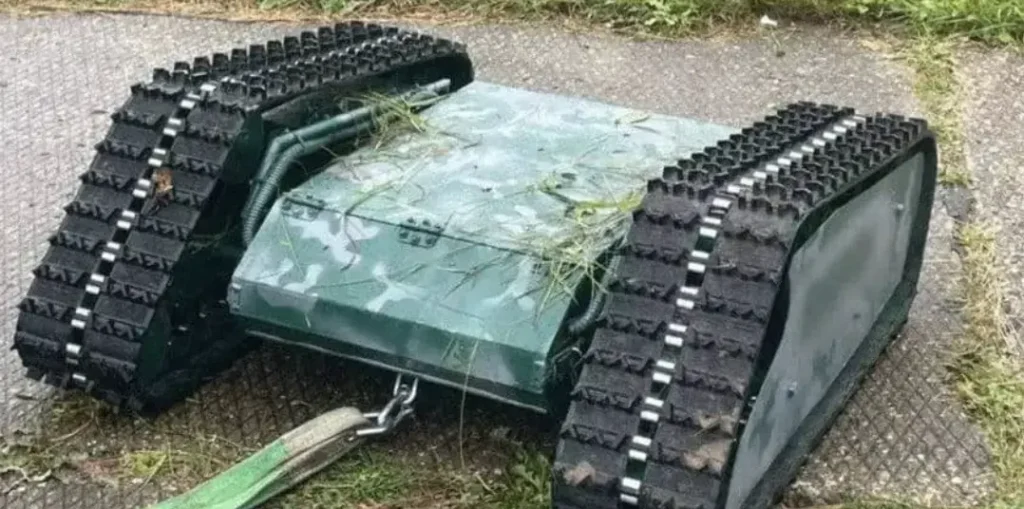
Varan is highly versatile and can be fitted with various equipment — such as electronic warfare systems, SIGINT devices, machine guns, or turrets. It can also be used in assault operations and for territory demining.
Reading now
1
SkyFall officially unveils Thor Hammer mid-strike and announces 1,000+ km version
2

260+ vacancies in Ukrainian defence technology at BlueBird Tech, Sine Engineering, Buntar Aerospace and more
3
British-Ukrainian Occam Industries raises €3.8m. The funds will go towards scaling drone autonomy software
4
Terra Drone acquires 50% of Ukrainian Kurin Technologies for $3.5 million
5

Autonomous interceptor drones need radars to work. Why is there still a lack of them
By submitting this form, you give Defender Media consent to the processing of personal data.
Надсилаючи цю форму, ви надаєте Defender Media згоду на обробку персональних даних.

Latest news
1
Black Mirror #80: Rassvet terminals, high-speed jet-powered interceptors, Kinzhal upgrades and other developments in Russian miltech
2
Phantom Defense acquires net-launcher developer KARAKURT to integrate its technology into own ecosystem
3

Acoustic sensor developer Zvook raises investment from new Czech fund managed by DEPO Ventures
4

Denmark to hold first-ever Danish Defense Tech Week in four cities: what to expect
5