Deborah Fairlamb on Swarmer’s IPO, Green Flag’s latest investments, and launching a new $60 million fund
The big interview with General Founding Partner at Green Flag Ventures

Deborah Fairlamb, a founding partner at Green Flag Ventures, photographed by Yurii Stefanyak for Ukraïner
“Wall Street-trained investor turned Ukraine operator,” reads Deborah Fairlamb’s introduction on the Green Flag Ventures website. For more than a decade, she has been active in Ukraine’s startup ecosystem. Following the start of the full-scale invasion, she co-founded a venture fund with Justin Zeefe, focused on investing in Ukrainian defence tech.
Today, Green Flag Ventures is one of the most active investment funds in the Ukrainian market, with a strong portfolio that includes Swarmer, HIMERA, Teletactica, Falcons, and Kara Dag Technologies, along with several other promising projects.
For the special project Rewiring European Defense Tech, Defender Media spoke with Deborah about the Swarmer IPO, the latest additions to the fund’s portfolio, the value of Ukrainian military experience as an exportable product, and the role of EDTH in shaping Europe’s defence tech ecosystem.
You’ve invested in Swarmer twice, right?
We invested in the Seed round in the summer of ’24, and then we reinvested in the Series A last September.
How do you feel about the IPO and their performance in the first days and weeks of trading?
I spent over a decade on Wall Street, so I know early trading is typically volatile. However, Wall Street’s uptake has been extraordinary. It took us all by surprise—nobody expected this level of momentum this early.
The timing was incredible. If you look at the positive global press Ukraine has received regarding its drone and air defence capabilities, the market was ready for a Ukrainian company to come forward. It’s also the first time a Ukrainian defence tech startup has gone public in the United States, which was a major driver of interest. Combined with the fact that the U.S. defence tech sector is doing exceptionally well right now, all of these pieces hitting at the same time really propelled the IPO.
Do you agree with comments saying Swarmer was hugely underpriced?
I don’t really have any specific thoughts on that, because we had no influence whatsoever in setting the price. Whenever a stock goes public, the underwriter sets the price. I didn’t have visibility into the process they used, so I can’t comment on it beyond saying we were extremely pleased with the uptake and interest.
Yes, you can argue that perhaps there was money left on the table. But if you look at it from the other side, this was a Ukrainian defence tech company going public for the very first time. There was no way to know how the market would react. It could be argued that the lower price point is exactly what attracted investors—there was greater interest because it was priced attractively rather than prohibitively high, as many U.S. defence tech stocks are.
What are Green Flag’s plans with Swarmer shares?
As a fund, everything is managed collectively. All early investors have a 180-day lock-up, so we cannot do anything with those shares until that period expires. We will then act in accordance with our Limited Partner agreement.
How do you feel this IPO will affect the Ukrainian defence tech market overall?
I think it’s extremely important for a couple of reasons. One of our core theses when we started Green Flag was that the Ukrainian ecosystem was full of talent, but lacked capital and access to markets. Our goal was to provide that capital and help connect them. Swarmer is the ultimate validation of that thesis: when Ukrainian companies have enough capital to reach further markets, there is tremendous interest.
The combination of Ukrainian brains, technology, and experience, together with the depth of capital available in the U.S., is a brilliant match. For the broader ecosystem, this has broken a psychological barrier. Ukrainian companies now see that a startup founded only three years ago has accomplished this through hard work, a good product, and a strong team. It gives people a visualisation of how they can move their own companies forward.
Secondly, this has made people across global capital markets sit up and say, ‘Holy cow, there’s a lot of stuff there we probably have not been paying attention to.’ I expect a lot more interest in Ukrainian tech going forward. This is important not just for additional funding, but because defence tech companies in the United States and Europe are now ‘on notice.’ Seeing the massive uptake for a Ukrainian company opens doors for joint ventures and partnerships. Ultimately, it raised the visibility and credibility of the entire sector, providing proof of the strength and capabilities of Ukrainian defence tech to the world.
Some ecosystem players are saying that a pre-revenue company on NASDAQ, without a known application in military units, is putting the reputation of the whole Ukrainian defence tech ecosystem at risk…
I’ve actually heard that from some people before, and quite frankly, to me, it’s coming from people who don’t have insight into what’s actually happening. So let’s break those risks apart.
The first one is that they are largely pre-revenue. We knew going into the IPO that they were pre-revenue. And, quite frankly, when you have a product with tremendous potential, going public pre-revenue is not standard in the United States, but it is certainly not unusual. So Swarmer being pre-revenue in and of itself is not a big deal.
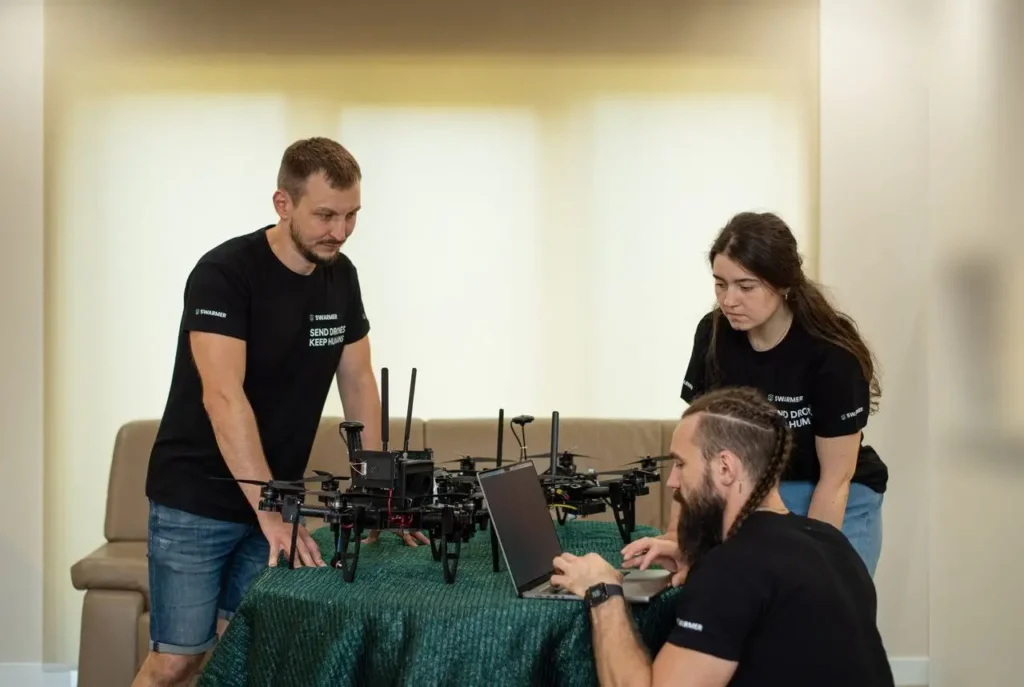
There are two other pieces to that. One is that they have $16 million or so in contracts that will be executed within this year. And so they will very much have the revenue at that point.
The other thing—and this sort of is a secondary question—I know a lot of people said, “Well, how did they do 100,000 missions if they have no revenue?” Well, what people are overlooking is essentially the entire R&D and development process of how things work in Ukraine. You can go to any startup, ask them how many times they have flown missions, run missions, done testing on UGVs, UAVs, whatever, and you get answers in the hundreds or in the thousands. And so, from that perspective, it’s a question that reflects a misunderstanding of how tech is continuously developed in Ukraine.
Let’s move to other companies from your portfolio. Recently, you announced two investments, including MaXon Systems. What do you like about the team and their product?
When we look at investments, we make strategic decisions to diversify our portfolio. MaXon was interesting, first, because we didn’t have anything in the interceptor category. We actually started talking to them a year ago, though it took time for everything to align. At different points, one of us was ready while the other wasn’t, but we are very pleased it finally worked out.
Over the last year, their progress has been very clear. The need for interceptors is obvious to anyone living in Ukraine, so the category was very interesting. But for us, the most important factor is the strength of the team. We don’t just invest in products; we invest in companies. You can have a great product, but without senior leadership that has the capability and confidence to build an international business and speak credibly to MoDs or investors, it won’t work.
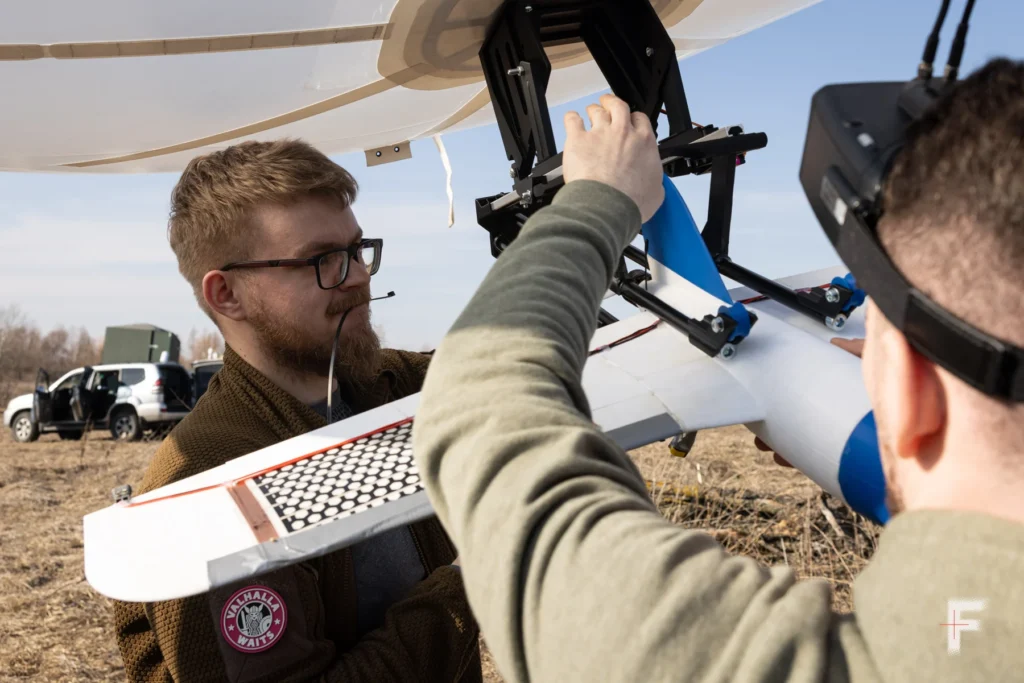
With MaXon, there is a strong focus on both the business and product sides. The core team has actually been working together since long before they started this project—they were engineers together for several years. That strong cohesiveness and high-quality technical expertise were decisive factors for us.
The second addition to your portfolio was BabAI. What about them?
BabAI is again a combination of both product and people. Their product is similar to Swarmer in that you can’t necessarily ‘see’ it—it’s not a UAV or a UGV. It is largely software-driven small hardware that is platform-agnostic. This creates a very large business opportunity because it’s not tied to a single provider.
A deciding factor for us was our due diligence process. We bring in subject matter experts (SMEs) from outside of Ukraine—people from NASA, RUSI, and other organisations—who are true experts in their specific silos. The expert we brought in to look at Babai was so enthusiastic about the product, filling a major gap in the Western market, that we actually had to tell them to stand down and wait for us to finish our process before they could start working with the company themselves.
It was the first time that had happened to us, and we ended up changing our agreements with our subject matter experts so they aren’t allowed to approach a company to offer business or investment until after we have made our own decision. We have a very clear demand signal from Western markets that what Babai has created is in very high demand.
Were these investments in your classic range, from $100,000 to a million?
A million is about where we top out. For us, it’s a matter of assessing where the company is in its growth stage, how much we think we can contribute to its growth, and the intended use of funds. We take all of these pieces into consideration. The size of the check is ultimately less important than what we think it will help the company achieve.
Do you have plans to invest in more companies this year?
We will probably make another three investments by June; our pipeline is exceptionally strong right now. Additionally, we have closed Fund 1 to new investors and are preparing to launch Fund 2, likely around June.
Before raising for the second fund, we want to deploy a significant portion of our remaining capital. While a chunk of Fund 1 is reserved for follow-on investments in our current portfolio, we still have money earmarked for new deployments. Knowing we will be able to start investing from Fund 2 in the near future gives us the incentive to put as much capital into the ecosystem as quickly as we possibly can.
The volume of Fund 1 was $20 million, right?
We came in a little under $20 million, but we are still extremely pleased with where we ended up. As for Fund 2, we are targeting about $60 million. I know that sounds like a big jump, but it reflects the reality of what is happening.
It’s twofold: first, the ecosystem is maturing. Companies are now raising Series A rounds and need larger checks. We want to be in a position where a million dollars is the low end of the checks we write, rather than the high end. It is simply a reflection of the market’s growth.
Second, we will open the geographic range for the second fund. While we will still have a strong preference for Ukrainian-founded companies, we will look at defence tech from a wider range of countries, likely including the Nordics, the Baltics, Poland, and the Czech Republic. We are seeing more opportunities for Ukrainian companies to pursue joint ventures and partnerships, and we want to help them grow. As the government continues to re-evaluate export controls and provide more clarity, we see a great opportunity to work with natural allies who share Ukraine’s defence needs.
How happy are you with your current portfolio?
I love all of our portfolio companies. They each focus on different things, but we are very deliberate when we choose to invest. We don’t do ‘spray and pray,’ and we don’t invest just because a round is about to close and we have to make a quick decision. We never invest without extensive due diligence to understand the product and how it will fit into the West.
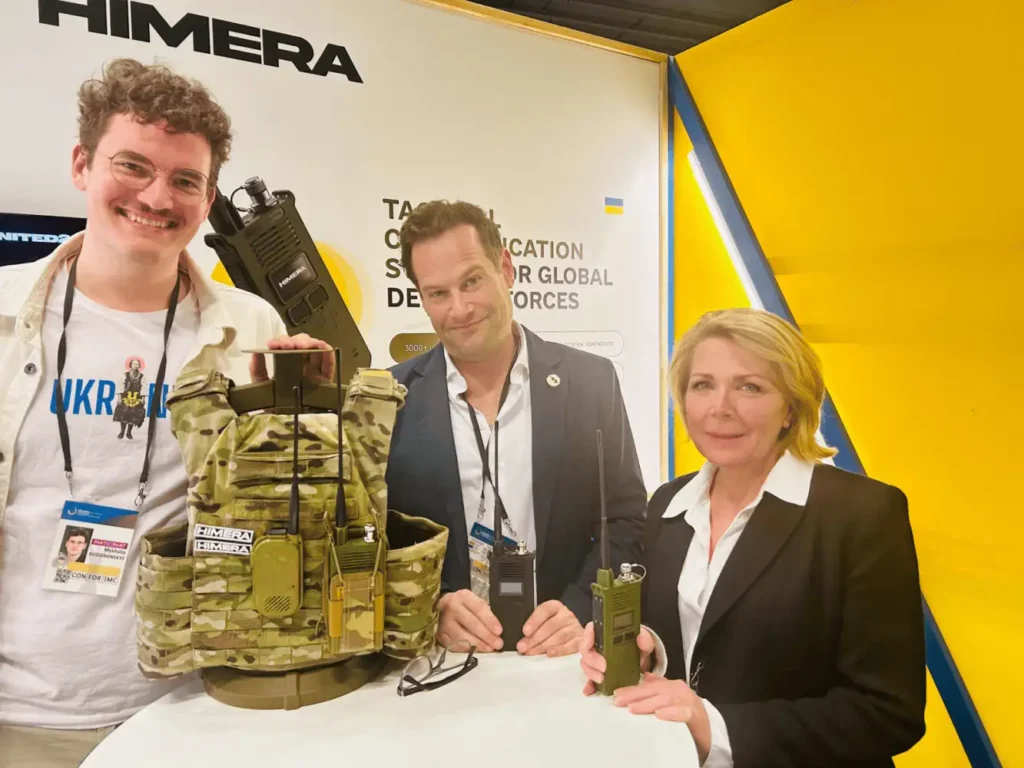
That discipline—understanding a company’s place not just within the Ukrainian market but also globally—is what has really worked for us. When you combine that with our focus on solid, serious teams that know how to scale a business, it’s a strong combination. We aren’t willing to compromise on that. We’ll take a pass rather than invest without the due diligence that confirms it is a good investment.
One of the most recent news items regarding your portfolio is that Teletactica landed a contract with the Estonian MoD. How do you feel about that and their progress in foreign markets?
Teletactica is one of those quiet companies that people aren’t necessarily paying attention to, but they continue to focus intensely on the engineering and the product. The CEO is incredibly methodical in the way he builds both the products and the company. We are quite confident in where they will grow over time.
Successes like this provide validation that this tech isn’t just working in Ukraine; MoDs in other countries are seeing it and making their own decisions. It’s a huge validation of what’s coming out of Ukraine.
With what is going on in the Middle East, there are conversations that Ukraine is missing an opportunity right now because export is not yet working as it should. Your thoughts?
There is an addiction in the West to the idea of a ‘single pill’ or a ‘single drone’ that will solve all your problems. If you look at what Ukraine has accomplished and why it has such high interception rates, it’s because it has taken the time to understand how these attacks work. They have multiple lines of defense, multiple layers of identification, exceptionally good comms, and many different forms of interceptors.
As much as I love what teams like General Cherry or Wild Hornets are doing, even they will tell you: it’s not just about the product. The product has to work in a bigger context, and soldiers have to be trained as operators. There is a narrative coming from the West that says, ‘Just send us the interceptors and save the world.’ President Zelensky is 100% right to say, ‘Wait, it’s not that fast.’ If you send drones without the support systems, they won’t do much good.
Who else is going to provide these interceptors? The U.S. and Israel have ‘the best,’ but those systems turned out to be the most expensive and the longest to produce. No one else has the experience Ukraine has. If it takes a few months to put a proper process in place while securing long-term partnerships and Middle Eastern investment to grow the industry here, that is far more important than fast sales.
There are growing discussions on Ukraine’s soldiers’ experience as a product and service. Is there a way it could be monetised?
Experience is just as important as the product. A major catalyst for me was hearing U.S. soldiers admit their units wouldn’t last two days on the front because they don’t know how to fight—or defend—against drones. You have to start with how the technology is actually used, and no one is better prepared than the Ukrainians. They have lived this and paid for it in the most ultimate way.
As for monetisation, I see two levels. First, at the government level, active-duty training for allies is less about cash and more about building strong alliances. It secures Ukraine and its neighbours. While some Western nations are hesitant, they have to move past the mentality that they know everything—drone warfare has changed the rules. If you don’t prioritise this experience, your soldiers will be the ones to pay the price.
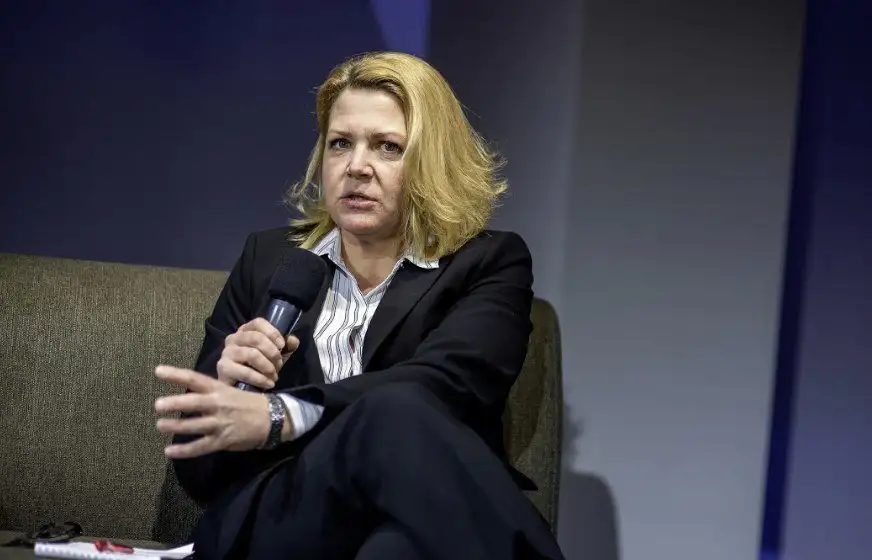
The second level is individual consulting for retired soldiers. There are more opportunities for this as partner nations realise that the power of the Ukrainian ecosystem comes not just from tech but from hard-earned knowledge. It’s a valid path, even if some in the West aren’t yet ready to acknowledge that 80 years of traditional tank doctrine is no longer valid.
My last question is about your collaboration with EDTH. How does that look?
I love what EDTH is doing. It’s a grassroots effort to build the ecosystem from the bottom up, even while many at the top remain sceptical about the changing nature of warfare. What they’ve achieved is extraordinarily important; they’ve created an environment where smaller defence tech companies can connect across European borders.
They also bring in experienced Ukrainians to provide critical feedback to international teams—from countries like Portugal or the Netherlands—giving them insights they simply couldn’t get in their home territories. I’ve mentored at four or five of their events, and each one gets better as the enthusiasm grows. While we aren’t formal partners, we absolutely support their mission. They are vital for the European defence tech ecosystem.
Reading now
1
SkyFall officially unveils Thor Hammer mid-strike and announces 1,000+ km version
2
Pentagon to hold Drone Dominance trials for bomber drones, with UFORCE, Gurzuf Defence, Grim Tech and others taking part
3
British-Ukrainian Occam Industries raises €3.8m. The funds will go towards scaling drone autonomy software
4
Terra Drone acquires 50% of Ukrainian Kurin Technologies for $3.5 million
5
Frontline Robotics CBDO Mykyta Rozhkov: Ukraine and Norway are working on an autonomous system to protect maritime infrastructure
By submitting this form, you give Defender Media consent to the processing of personal data.
Надсилаючи цю форму, ви надаєте Defender Media згоду на обробку персональних даних.

Latest news
1
Ukraine’s Defence Forces hit a record number of Russian air defence systems and radars in September
2
Nataliia Mykolska to become VP of Growth and Affairs at Sine Engineering
3
Black Mirror #79: What’s inside Geran-4, unmanned tanks, balloon barrages and more of a new russian miltech
4
6,000 lives saved by replacing people with robots. “Makar” on the ground strike drone unit NC13 and its role in Operation Vivaldi
5