How AI helps analyse drone reconnaissance data: an interview with Clarity
Flame and Alex, the founders of the startup, discuss the story behind the app’s creation, its current status, and future plans

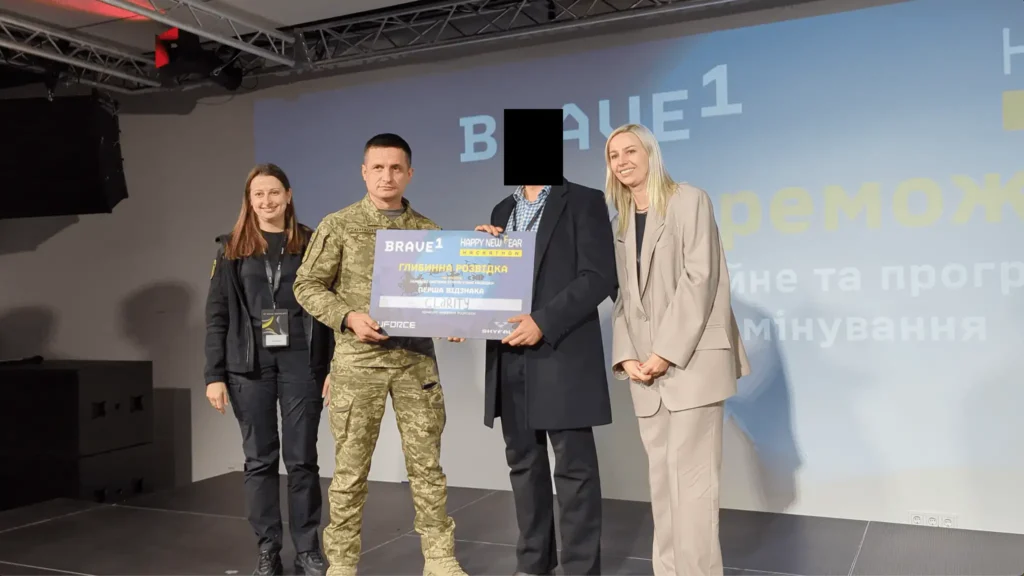
Award ceremony for the winners of the Happy New Fear Hackathon
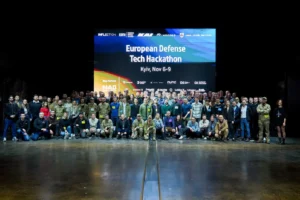
In September 2025, Mykhailo Fedorov, who at the time headed Ukraine’s Ministry of Digital Transformation, published a post about Clarity — a Ukrainian software solution for analysing photo and video data. By then, the project had already secured several wins at hackathons and other events, including the international European Defense Tech Hackathon.
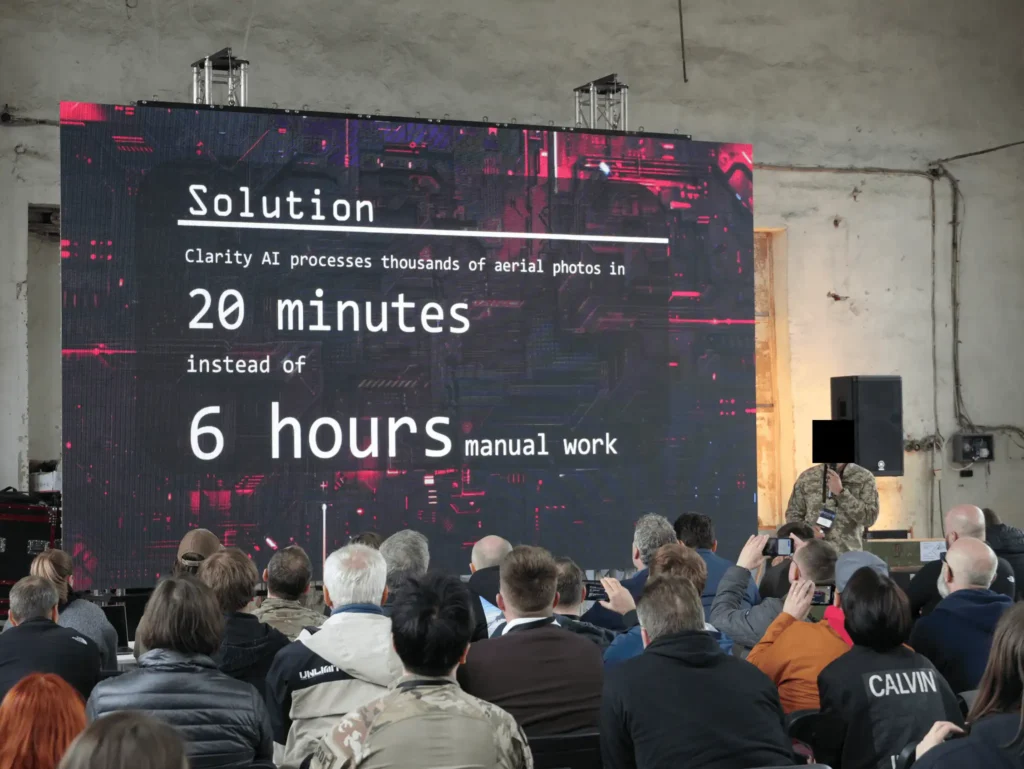
The company’s hardware and software solutions help Ukrainian troops analyse reconnaissance data collected by drones faster and more accurately. Artificial intelligence identifies clues in photos and videos that humans — especially less experienced operators — may overlook. Thanks to Clarity, mission processing time is reduced from several hours to roughly 20 minutes.
The project is currently expanding its client base and further developing the product. As part of the Rewiring European Defense Tech special project supported by European Defense Tech Hub, Defender Media spoke with Clarity founders Alex and Flame.
How was the Clarity project born?
Flame: Let me start with some context. My path in the military began in 2015, when I joined the Armed Forces of Ukraine as a volunteer with the rank of junior lieutenant. I served in the rear at one of the training grounds as an artillery and artillery reconnaissance instructor. About a year later, thanks to my background in IT, I was involved in developing the Kropyva tactical command and control system — I worked on programming the medical evacuation demo module.
After demobilisation, I returned to civilian life. Later, through the professional community, I met a colleague who became a friend, and in 2019 we founded a cybersecurity company together. We raised a small amount of investment abroad, went through a startup accelerator there, and searched for product-market fit. In 2022, we received grants from two European innovation support programmes under Horizon 2020. Everything was going well until the full-scale invasion began.
How did the start of the full-scale war change your work?
Flame: I decided to return to the Armed Forces. At first, I returned to the training ground, and later I was promoted to instructor at one of the higher military educational institutions.
The turning point came during a deployment to one of the higher-level headquarters. I witnessed a situation where a UAV operator flew past an important target without noticing it. Standing nearby was an intelligence officer who spotted the object in the video feed. The operator then returned for additional reconnaissance, the target was struck, and the officer received an award.
It turned out to be a difficult but critically important target — a truck that was part of the high-value Zhitel electronic warfare complex. The only thing distinguishing it from an ordinary truck was an antenna positioned 50 metres away.
That’s when the idea emerged — something that was obvious in hindsight: a machine can notice such details far more effectively than a human if it is trained correctly.
How did you move from the idea to implementation? Did you receive support from the military command?
Flame: We discussed it with civilian colleagues, and Lex built the first demo. We showed it to the commander of the missile forces and artillery. He liked the idea and said: “Cool thing, go build it.”
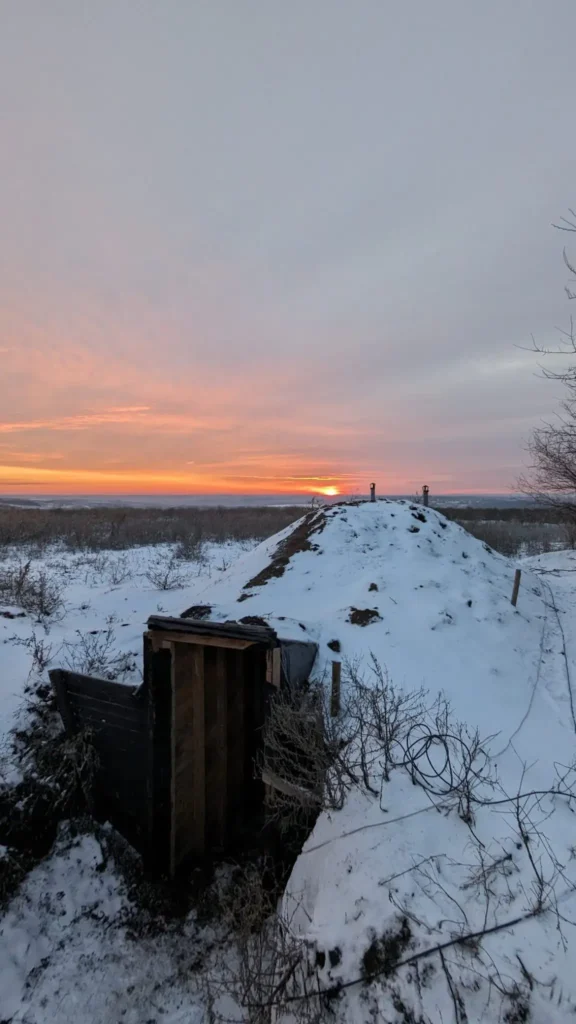
It was impossible to work on such a project in my unit because quality training of cadets requires a huge amount of time, preparation and effort from instructors. It was demotivating, but not for long. I realised this product could have a much bigger impact on the course of the war than my own service. In classes, I could train a limited number of people, but technology can scale across the entire frontline, improving military efficiency and saving lives.
So we started development in our free time, investing our own effort and money. In autumn 2023, I was deployed to Sloviansk. Paradoxically, despite combat and organisational duties, I had more free time there than in the rear. During those hours of rest, Lex, another colleague and I created the first working version. We distributed it among a small group of interested users, gathered feedback and started improving the product. We’ve been working like this for more than two years now.
What key milestones has the project gone through over those two years?
Flame: I’ll explain chronologically. We started in April 2023 with the first demo. Back then, we were collecting datasets from open sources and trying to process them based on the practical experience of users. By August 2023, we convinced the first group of military personnel to try the product and received our first real feedback.
An important milestone came in October 2023 when we completely redesigned the user interface. Previously, it was just a primitive form: specify a folder, press “Recognise”, get the result. The new version allowed users to browse photos, edit results and work with them much more conveniently.
At what point did the volunteer project begin transforming into a proper structure?
Flame: The turning point came in January 2024. We hired our first employees — annotators. These are specialists who label objects in photos and videos, essentially preparing “food” for AI algorithms.
We realised that relying purely on volunteer work was ineffective in our case. Volunteers are difficult to manage and it’s hard to maintain a stable work pace. So we moved to hiring staff. I organised a closed fundraiser among friends, we raised around $1,000, which was enough to pay annotators for the first month. After that, the project was funded entirely by the founders’ own money.
How did scaling and deployment in the military happen?
Flame: From early 2024 until September, we continuously released beta versions for units that agreed to work with us. It was a constant cycle: release — feedback — dataset expansion — improved recognition quality.
In September 2024, we reached our first hundred users. Then in December, we won the Happy New Fear Hackathon organised by Brave1, taking first place in the ready-made products category for deep reconnaissance.
I’d also like to highlight an important personal milestone. In October 2024, I was transferred to a senior role at a research institution subordinated to Ukraine’s Ministry of Defence. My command now fully supports this project, enabling me to provide scientific and technical support within my service.
When did the project transition from volunteer development to a commercial product?
Flame: The first sales happened at the beginning of 2025. It was a contract with what was then still a small Ukrainian drone manufacturer, but it confirmed the viability of the business model.
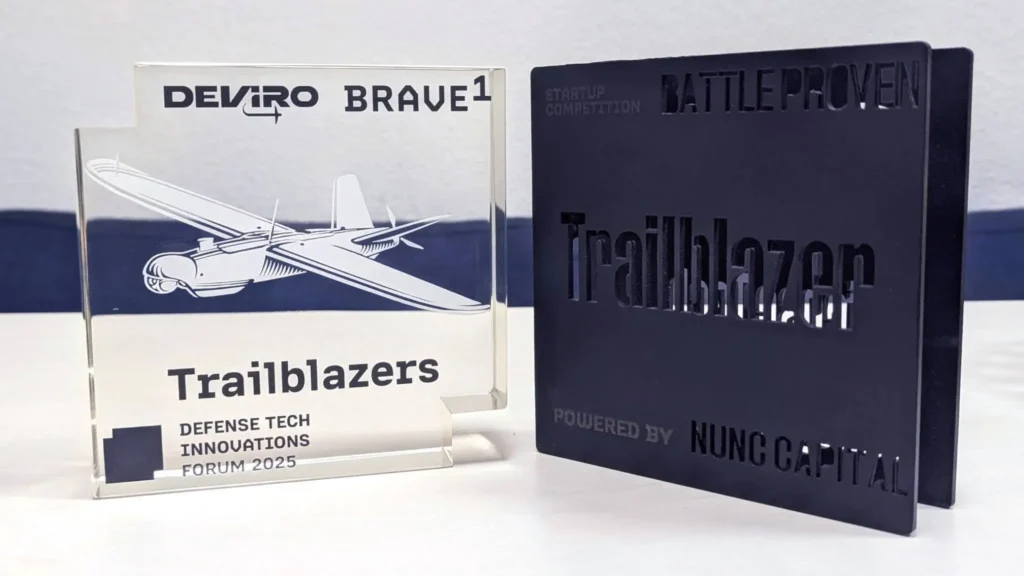
After that, events accelerated quickly. In February 2025, we won the Trailblazers category at the Defense Tech Innovation Forum in Kyiv. In spring, we won a hackathon organised by the European Defense Tech Hub together with the 3rd Assault Brigade. Around the same time, we agreed to test a new feature — object recognition in video, not just photos.
In May 2025, we signed a software licensing contract with one of Ukraine’s leading drone manufacturers.
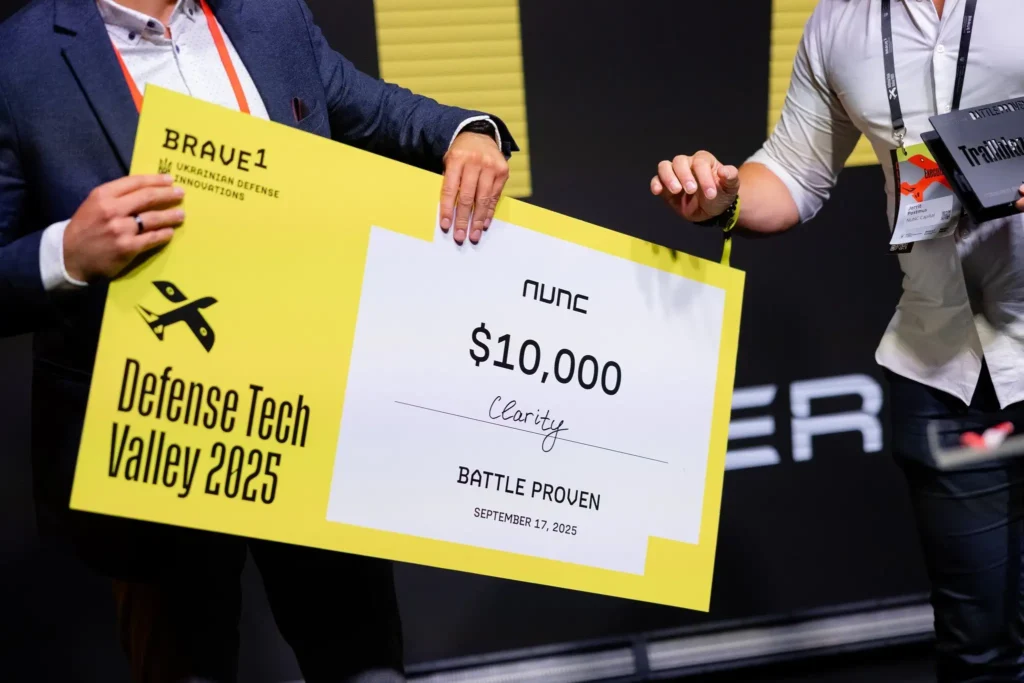
In September, we won the Trailblazers category at Brave1 Defense Tech Valley. More recently, Lex implemented a critically important feature — automatic detection of object coordinates in photos and linking them to maps.
All these steps allowed us to scale rapidly: by the end of summer 2025 we had reached 250 registered users, and now we already have more than 800.
What does your roadmap look like for the near future? Where is the technology heading?
Flame: Right now, we are integrating our hardware module directly onboard UAVs. We plan to complete this stage with combat testing in the first half of 2026. This will allow data to be processed during flight rather than after landing. We are also integrating with the Delta system.
Lex: Our business goal is to reach break-even in the first half of 2026. Technologically, we are focused on improving video stream processing algorithms to achieve consistently high recognition quality. Our broader business goal is international expansion and exporting our solutions to NATO and EU countries.
Regarding cooperation with drone manufacturers, can you name any companies you work with?
Flame: We have signed agreements that restrict disclosure. Without permission, we cannot name our partners. It’s a matter of competitive advantage for them — using our software makes their products more effective, so they want to keep it confidential. However, two companies allowed us to mention them: Mara Drone and 2021 Solutions, which produces the BZIK reconnaissance drone.
Could you explain what exact problem your product solves? Why did the existing reconnaissance process need automation?
Lex: The key point is that there are so-called “photo drones” — UAVs that capture a series of high-resolution photos. They are cheap, and the image quality is extremely high — 6K or 9K. Much better than video feeds or satellite imagery.
But there’s a problem: during one hour of operation, such an aircraft can take 1,000–2,000 photos. The files are huge, so they cannot be transmitted over radio channels in real time. After the flight, the crew has to manually analyse all this data. That can take up to eight hours. By then, the intelligence loses relevance, and people get tired and miss important details.
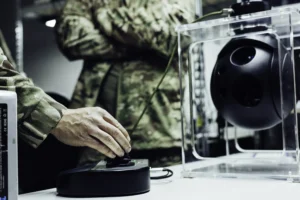
Our main product is a desktop application that automates this process. The workflow is simple: the aircraft lands, the flash drive is inserted into a computer, the folder with photos is uploaded, and the system begins recognition.
What exactly can the system identify in the images?
Lex: The algorithm identifies not only equipment. We detect indirect signs of enemy presence as well.
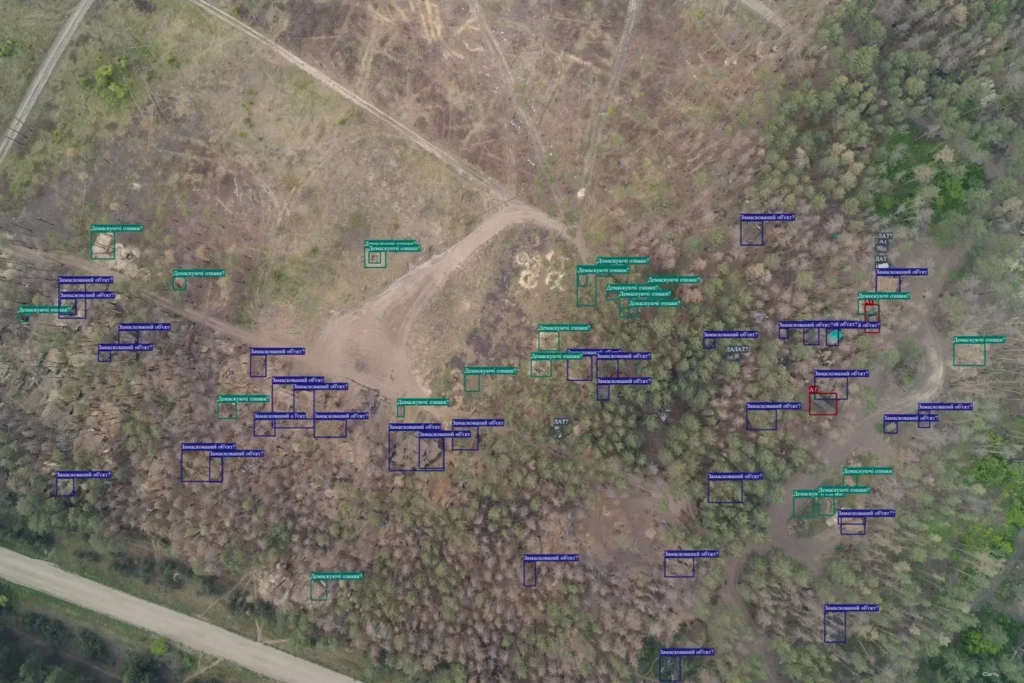
The process consists of three steps:
- Recognition: the AI analyses the images and identifies objects.
- Geolocation: the system automatically determines the coordinates of detected targets.
- Export: the data is compiled into a report and uploaded to the Delta situational awareness system.
This reduces mission processing time from six hours to around 20 minutes. The time savings are enormous.
How does the workflow physically look? Do operators need to bring the flash drive back to headquarters or a command post?
Lex: Not necessarily. Everything can happen at crew level. We work with sensitive data, so we fundamentally do not upload it to the cloud or our own servers.
Processing happens locally on-premise on a laptop. Usually, it’s the same computer used as the drone’s ground control station — the key requirement is having a graphics card. Crews can receive decrypted data and target coordinates directly in the vehicle while returning from position to base. The software is also used by intelligence analysts and decoders at headquarters.
The speed advantage is obvious — hours saved. But what about recognition quality compared to the human eye?
Flame: We conduct precise measurements over multiple flights to obtain verified figures.
The subjective assessment based on feedback is this: the system performs better than an operator who has just finished training. For such specialists, our application becomes their primary decoding tool.
For experienced soldiers with four or more years of combat experience, it’s more of a powerful second-opinion tool. Professionals can notice incredible things that AI still struggles to interpret — for example, identifying an enemy communications hub based on the placement of wires in a tree line. But even for them, the software helps avoid missing obvious targets due to fatigue.
What is your solution based on? Is it classical Computer Vision?
Lex: These are AI models trained on open-source data. We’d rather not go too deep into the technical stack, but honestly, machine learning itself isn’t the hard part. AI finds what it is shown.
That means our core value is not the code or even the dataset itself, but the ability to correctly identify and prepare training objects. Our task is to teach machines to see what the human eye misses.
You mentioned the next stage of product development. What exactly will it involve?
Lex: Right now, our core product is a desktop application for post-processing. The next stage is integrating the module directly onboard aircraft.
The problem with reconnaissance using “photo drones” is that they do not operate in real time — analysis happens after landing. Because of this delay, this class of drones is not very popular in NATO countries, for example.
We are solving this issue: our module will recognise targets directly during flight and transmit ready-made coordinates in real time. This is effectively a transformation of the entire industry: we are turning a cheap platform with high-quality optics into a real-time intelligence tool. That removes the main weakness of “photo drones”.
Are you planning to raise venture investment now? If so, what amount are you targeting and what timeline do you have in mind?
Lex: We are always happy to speak with people who can help us, including investors. But we do not publicly comment on specific amounts or timelines.
You mentioned moving into video processing. What is the main technical challenge compared to photos?
Lex: The key difference is the shooting angle. “Photo drones” usually capture images at a 90-degree angle straight down. Video from reconnaissance drones has constantly changing angles and perspectives. The recognition technology itself remains the same, but to work correctly with video we need to collect and label significantly more specialised images. That’s what we are currently working on.
Tell us about the role of the European Defense Tech Hub in your product’s development. How exactly did they help?
Flame: The hackathon itself was useful because it pushed us toward the hardware side of things. Before that, we only had software. Through conversations with military users, we constantly heard that they wanted software that could run on existing hardware. But conceptually, after speaking with manufacturers, we realised that if funding wasn’t a limitation, the most promising path globally was additional onboard hardware — where image quality is best, directly on the UAV.
So we took our first steps. We used a hardware module provided by the organisers — essentially hardware support for experimentation — specifically a Raspberry Pi Zero 2 W. We also had our own Jetson Nano module. We began experimenting.
The result was successful. We measured performance and realised these particular mini-computers would not be suitable long term, but we gained a clear vision of how to proceed and where to move next. Later, we implemented it. So it was a major leap forward for us.
EDTH also helps with investor introductions, contacts and networking. Overall, it’s a unique environment: on one side, you see enthusiastic people from all over the world arriving to help Ukraine, and on the other side, military personnel with real problems needing solutions.
My recommendation to all founders, engineers and anyone experimenting in this field: absolutely go and talk to military personnel. One of the best places to do that is hackathons like these. I saw people arrive from the other side of the world, and their entire worldview changed. They completely rethought their products and started pitching entirely different solutions.
It’s impossible to create a defence product without understanding frontline reality. Developers in the rear often try to impose their own vision on soldiers: “Do it like this, it will work.” And frontline troops reply: “No, that’s not how it works.” The paradox is that some people ignore this feedback for years. Developers need the courage to break their own illusions.
How large is your team now and who are you looking for as you scale?
Lex: Right now, the team consists of nine people — developers and annotators. As for scaling, we face a specific challenge. We cannot ask active-duty military personnel to continue training the model because we work with sensitive data and cannot transfer it to our servers.
The solution we found is hiring veterans with combat experience operating reconnaissance UAVs. It’s a win-win strategy: on one hand, we get specialists who know exactly what and how to label. On the other, we integrate real frontline feedback directly into the team. So if any readers are veterans with experience as UAV pilots, intelligence analysts or decoders and are interested in working on solutions for the frontline — write to us at hello@clarity.army.
We also need machine learning specialists, software developers, QA engineers, an operations manager, sales specialists, and user support staff — from technical support and feedback collection to training military users and, when necessary, travelling to combat deployments.
How can military personnel access your product? And does the version they use differ from the one offered to drone manufacturers?
Flame: We provide free access directly to military units. In the Delta system there is the Element or Red messenger, where military users can contact my ID “Flame”. We verify them and grant access.
Overall, we have two licence models. The first is free and somewhat simplified. The second is the version we provide to drone manufacturers. It is more advanced: it includes deeper aircraft integration, flight log processing and enhanced geolocation features. The software is installed on the ground control station and supplied together with the UAV complex. We set the price for this licence at $2,000 per year. We believe this is affordable while significantly increasing the value of their product.
The Ukrainian state is currently declaring active support for the industry. Are there any systemic issues you would personally like to highlight?
Flame: Yes, there is one important idea. I would like the state to do more to support AI system developers. And this is not about funding. The main problem is the absence of a legal framework for transferring training data from the military to developers.
Globally — in the US, China and the UK — access to such data is viewed as a strategic asset. That’s what enables the creation of next-generation weapons systems. Everyone is competing for it. In Ukraine, however, the issue remains unresolved.
With this data resource, Ukraine could gain a strategic advantage in the global defence tech market and unique defence capabilities. It is critically important that we understand the value of this resource and do not hand access to foreign players “for glass beads”, the way indigenous peoples once traded away their land to colonisers without developing their own industry.
So my appeal to the relevant authorities is this: we need to accelerate the development of legislation and regulations. Right now we have a paradox: Brave1 allocates funding, there are willing developers, there are military personnel who understand the potential of such systems and are ready to provide images of enemy equipment. But when it comes to actually sharing the data, they say: “We won’t provide it because we don’t know whether we are allowed to.” This issue must be resolved.
This is not an abstract problem. Russians are actively working on autonomous systems that will have no restraining factors such as civilian protection. They fight on territory where, in their eyes, everyone is an enemy and Ukrainian lives have zero value to them. In my opinion, other authoritarian regimes around the world approach autonomous weapons in the same way. We must stay ahead of them.
Reading now
1
SkyFall officially unveils Thor Hammer mid-strike and announces 1,000+ km version
2
Pentagon to hold Drone Dominance trials for bomber drones, with UFORCE, Gurzuf Defence, Grim Tech and others taking part
3
British-Ukrainian Occam Industries raises €3.8m. The funds will go towards scaling drone autonomy software
4
Terra Drone acquires 50% of Ukrainian Kurin Technologies for $3.5 million
5
Frontline Robotics CBDO Mykyta Rozhkov: Ukraine and Norway are working on an autonomous system to protect maritime infrastructure
By submitting this form, you give Defender Media consent to the processing of personal data.
Надсилаючи цю форму, ви надаєте Defender Media згоду на обробку персональних даних.

Latest news
1
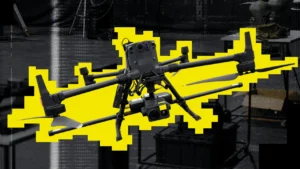
Ukraine’s Defence Forces hit a record number of Russian air defence systems and radars in September
2

Nataliia Mykolska to become VP of Growth and Affairs at Sine Engineering
3
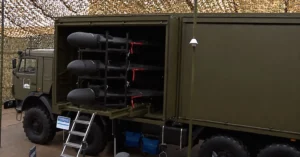
Black Mirror #79: What’s inside Geran-4, unmanned tanks, balloon barrages and more of a new russian miltech
4
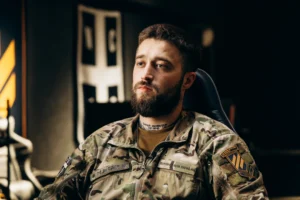
6,000 lives saved by replacing people with robots. “Makar” on the ground strike drone unit NC13 and its role in Operation Vivaldi
5