Dorozvidka #53: statements from the presidents of Rheinmetall and Ukraine, plus Berlinska, Group 12, Wild Hornets, and drone swarms
What opinion leaders in Ukrainian and global defence tech were talking and writing about last week

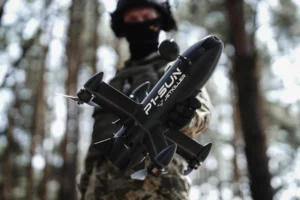
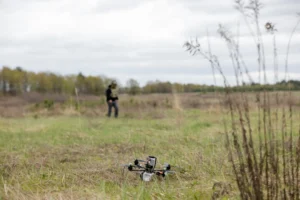
Photo Courtesy: Wild Hornets
In the latest issue of Dorozvidka:
- The president of Rheinmetall faces pushback from “Ukrainian housewives”;
- The president of Ukraine tours Middle Eastern countries and criticises manufacturers that opened exports behind the state’s back;
- The story of Wild Hornets and their Sting interceptor drone;
- Mariia Berlinska on the drone fever;
- Officers from Group 12 on the anatomy of anti-aircraft drones;
- The Economist on swarm technologies.
Rheinmetall president calls Ukrainian drone makers housewives — and gets a response
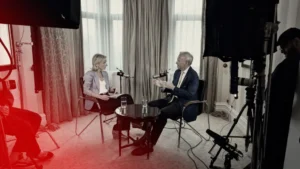
On March 27, in an interview with The Atlantic journalist Simon Shuster, Rheinmetall CEO Armin Papperger said there is nothing innovative about Ukrainian drones and referred to their manufacturers as “Ukrainian housewives”.
Papperger’s remarks triggered a wave of reactions from officials, business leaders, and opinion-makers — mostly negative. The hashtag #MadeByHousewives trended across social media.
President of Ukraine Volodymyr Zelensky, in particular, said during a meeting with journalists that if every Ukrainian housewife can produce drones, then every Ukrainian housewife can be CEO of Rheinmetall.

Oleksandr Yakovenko, founder of TAF Industries, wrote that Papperger’s statement shows how deeply the European defence establishment still misunderstands the nature of modern warfare. “These ‘housewives’ destroy more enemy equipment every month than entire European armies do over full campaigns. And they do it while your industry continues to sell 20th-century solutions at 21st-century prices,” the businessman argued.
On March 29, the German company indirectly apologised for its CEO’s remarks. “We have the utmost respect for the tremendous efforts of the Ukrainian people in defending against Russian aggression for more than four years. Every woman and man in Ukraine is making an invaluable contribution,” the company said in a post on X.
Zelensky: 10 interceptor drone factories were built around the world behind the state’s back
On March 28, President Volodymyr Zelenskyy told journalists he is aware of 10 interceptor drone production facilities built in various parts of the world without the state’s involvement. The president made it clear he is dissatisfied with such actions by businesses and plans to respond. In his view, these companies are “harming Ukrainian exports”.
President’s quotes via Interfax.
The story of Sting interceptors
Censor.NET spoke with the founders of Wild Hornets about their path, funding, cooperation with charitable foundations, China’s role in the Russia-Ukraine war, and the challenges they face daily.
Ukraine signs defence cooperation agreements with Saudi Arabia and Qatar
The president of Ukraine visited the Middle East, where several defence cooperation agreements were signed. In particular, Ukraine’s Ministry of Defence and Saudi Arabia signed a defence cooperation agreement. The document lays the groundwork for future contracts, technological cooperation, and investment, strengthening Ukraine’s role as a security provider.
Last week, the chiefs of general staff of Ukraine and Qatar also signed a 10-year intergovernmental defence cooperation agreement. It implies joint projects in the defence industry, co-production, and technological partnerships between companies.

In addition, the president visited the UAE and Jordan, where he met with state leadership and agreed to cooperate on security and defence. Teams are finalising the details.
During these visits, Zelenskyy also met with three teams of Ukrainian military experts working in Saudi Arabia, the UAE, and Qatar. The president heard reports on the protection of critical infrastructure, capabilities for civilian protection, approaches to intercepting ballistic threats and drones, and proposals for building a comprehensive defence system.
Mariia Berlinska on the drone fever
In a column for Ukrainska Pravda, Mariia Berlinska, head of the Aerial Reconnaissance Support Centre, writes that the president of Ukraine holds a uniquely strong position — that of a leader of a society engaged in the largest technological war in human history. He speaks about technology as one of Ukraine’s key geopolitical assets. According to Berlinska, this is the right bet.
“But are officials within the presidential вертикаль doing everything necessary to turn technology into a fully-fledged asset in the big geopolitical game?” she asks. “So that Ukrainian technologies become not just a tool of war, but a full-fledged industry, a budget-generating export product, and a strategic geopolitical asset for Ukraine?”
In the column, she outlines where Ukraine stands in the military tech race and what must be done urgently “so as not to lose again the chance gained at the cost of the lives and health of around a million of our people.”
Group 12 on the anatomy of anti-aircraft drones
Officers of the Ukrainian Armed Forces from the analytical unit Group 12, which studies the behaviour of weapons in combat environments, appeared on the “Do Zbroi!” podcast by Militarnyi. They discussed interceptor drones and hunting Shaheds: how crews operate, why “gaps” in air defence emerge, and whether drones can realistically replace mobile fire groups. They also covered types of interceptors and how effective they currently are.
The US and France launch their own defence marketplaces, following Ukraine’s example
The US Army has launched the Unmanned Aircraft Systems Marketplace, a platform for procuring unmanned systems. It operates on principles similar to Ukraine’s DOT-Chain Defence marketplace, according to Ukraine’s Defence Procurement Agency.
The platform was developed by Amazon Web Services and the US Army’s Enterprise Cloud Management Agency. It will be available to government partners and allies of Washington, allowing them to compare system specifications and quickly place orders.
Ukraine’s Defence Procurement Agency noted that the platform follows an approach already used in Ukraine. “A similar model has already proven effective in practice — DOT-Chain Defence reduced delivery times to combat brigades from months to just weeks. As of mid-March, military units have received more than 500,000 drones and other equipment through the IT system,” the agency said.
Ukraine’s decentralised procurement model has also attracted interest from France. The French military is considering adopting a similar system, including a points-based mechanism allocated to brigades. This was stated by French Army Chief of Staff General Pierre Schill in an interview with Le Point.
The Economist on drone swarms
The Economist has published an article on autonomous drone swarms as the future of warfare.
Currently, drone operations require large numbers of personnel, as each pilot controls a single drone. Swarm technologies will enable a single operator to control dozens or even hundreds of UAVs The next step is full autonomy, where operators assign tasks rather than directly control drones. Future systems will “think as a system”, sharing data and distributing roles among themselves.
The publication notes that Ukraine is one of the centres of this revolution. Read more.
Reading now
1
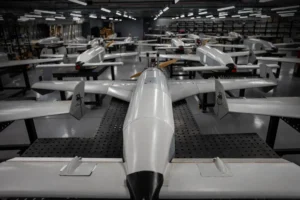
SkyFall officially unveils Thor Hammer mid-strike and announces 1,000+ km version
2
260+ vacancies in Ukrainian defence technology at BlueBird Tech, Sine Engineering, Buntar Aerospace and more
3
British-Ukrainian Occam Industries raises €3.8m. The funds will go towards scaling drone autonomy software
4
Terra Drone acquires 50% of Ukrainian Kurin Technologies for $3.5 million
5

Autonomous interceptor drones need radars to work. Why is there still a lack of them
By submitting this form, you give Defender Media consent to the processing of personal data.
Надсилаючи цю форму, ви надаєте Defender Media згоду на обробку персональних даних.

Latest news
1
Tencore launches an ecosystem to bring together UGVs and components from several manufacturers
2

Defense companies may see staff deferrals cut from 100% to 85%
3
Japan signs contract with Ukrainian company SkyFall to procure interceptor drones
4
260+ vacancies in Ukrainian defence technology at BlueBird Tech, Sine Engineering, Buntar Aerospace and more
5