Dorozvidka #65: 3,000 km deep strikes, plus Mykhailo Fedorov, Oleg Rogynskyy, Iryna Terekh, Wild Hornets, “Fidel”, and Honduras
The most interesting interviews and quotes from leading officials and business leaders about Ukrainian defence tech over the past week

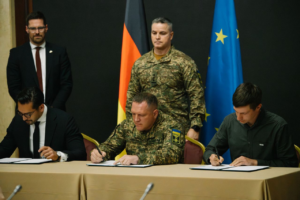
President of Honduras, Nasry Asfura, during a meeting with President of Ukraine Volodymyr Zelenskyy / Photo: Office of the President of Ukraine
In this edition of Dorozvidka:
- Zelenskyy says upgraded Fire Point drones can strike targets 3,000 km away;
- Three hours with Mykhailo Fedorov;
- An interview with a representative of Wild Hornets, the company behind the Sting interceptor drone;
- UFORCE CEO Oleg Rogynskyy joins the Mission Matters podcast;
- Ukrainian defence companies fear European bureaucracy more than Russians, says Fire Point CEO Iryna Terekh;
- Germany considers Ukrainian Flamingo and Bars missiles as alternatives to US-made Tomahawks, according to Politico;
- The commander of the 1st Separate Centre of the Unmanned Systems Forces discusses mid-range and deep-strike operations;
- Honduras plans to acquire Ukrainian drones to strengthen border security and combat drug trafficking, according to Euronews;
- Russian missile production and co-production with Europe: who is moving faster? An op-ed by Anatolii Khrapchynskyi.
Upgraded Fire Point drones can strike targets 3,000 km away, says Zelensky
On 20 June, Ukrainian President Volodymyr Zelenskyy announced that Ukrainian long-range drones are now capable of reaching oil refineries in Russia’s Tyumen region, more than 2,000 kilometres from Ukraine’s border.
“We tested new upgraded FP drones. They can now reach targets at a distance of 3,000 kilometres,” Zelensky said, thanking Fire Point’s engineers.
Earlier, Ukrainian outlet Oboronka reported on the upgraded Fire Point drones from the Eurosatory 2026 defence exhibition in Paris, where the company unveiled new versions of its FP-1 and FP-2 UAVs featuring extended range and integrated artificial intelligence.
The FP-2 received a new single-wing design with an integrated fuel tank, allowing it to carry a 200 kg warhead. With this payload, the drone has a range of 370 km. Equipped with its previous 105 kg warhead, it can travel up to 700 km.
Meanwhile, the FP-1 deep-strike drone, fitted with an additional fuel tank integrated into the wing, can reportedly engage targets at ranges of up to 2,700 km, compared with 1,650 km in its previous configuration.
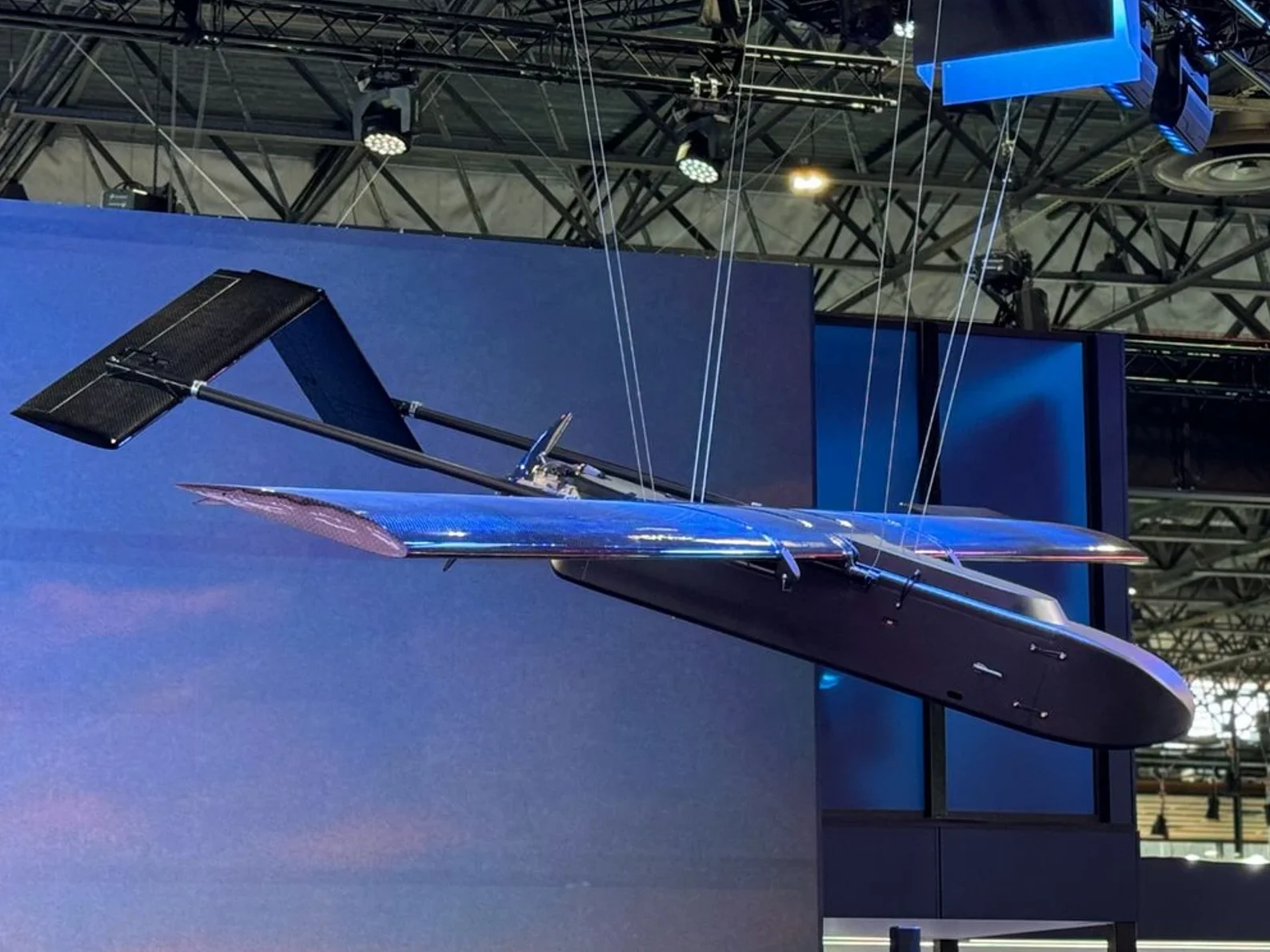
The drones are also being equipped with AI-based systems, although Fire Point has not disclosed the role of artificial intelligence in flight operations for security reasons.
Three hours with Mykhailo Fedorov
Ukraine’s Minister of Defence Mykhailo Fedorov has given his first major interviews since taking office — in fact, two of them. Both are available in video format and run for around 90 minutes each.
In a conversation with TSN, Fedorov discussed the audit of the Ministry of Defence, savings achieved in drone procurement tenders, artificial intelligence in UAVs, and Ukraine’s ballistic missile programme.
A second interview was published by the PRESSING YouTube channel. There, Fedorov also spoke about mobilisation and corruption, his working relationship with Commander-in-Chief Oleksandr Syrskyi, the role of US tech figures Eric Schmidt, Alex Karp and Elon Musk in the technological competition with Russia, countering Shahed drones, arms exports and more.
Interview with a Wild Hornets representative, the company behind the Sting interceptor
Wild Hornets is a Ukrainian company that developed the widely used Sting interceptor drone, as well as several other UAVs for Ukraine’s Defence Forces. The team is also building Hornet Vision, its own drone-control ecosystem designed to combine video transmission, remote control, positioning and AI-powered capabilities.
In an anonymous interview with DOU, a Wild Hornets representative discussed the interceptor-drone market, the limitations of AI, the shortage of embedded engineers, the copying of defence technologies, and why “drone swarms” currently resemble more of an investor narrative than a battlefield reality.
UFORCE CEO Oleg Rogynskyy joins the Mission Matters podcast
Oleg Rogynskyy, CEO of Ukraine’s first defence tech unicorn UFORCE, appeared on the English-language Mission Matters podcast. During the discussion, he spoke about UFORCE’s product portfolio, including the Magura naval drone, Nemesis strike UAV, and the Liut unmanned ground vehicle.
Rogynskyy also discussed how the company develops and manufactures systems under the constant threat of missile attacks, what Western defence tech firms often misunderstand about battlefield deployment, and why combat-proven systems are becoming the new standard for NATO allies.
Ukrainian defence companies fear European bureaucracy, says Fire Point CEO Iryna Terekh
Ukraine’s ability to rapidly develop, test and upgrade weapons systems could become one of its most important contributions to European security, according to Fire Point CEO and CTO Iryna Terekh.
Speaking at a briefing during Eurosatory 2026, she argued that excessive bureaucracy remains the biggest obstacle to integrating Ukrainian technologies into European defence systems.
Terekh noted that the Flamingo cruise missile completed certification in Ukraine in just five weeks.

Germany considers Ukrainian Flamingo and Bars missiles as alternatives to Tomahawks — Politico
Germany’s Ministry of Defence is in talks with Israeli and Ukrainian missile manufacturers as it seeks a lower-cost alternative to US-made cruise missiles for its long-range strike arsenal, Politico reports, citing German defence planning documents.
According to the publication, two Ukrainian companies have made the shortlist of potential suppliers.
Commander of the 1st Separate Centre of the Unmanned Systems Forces discusses mid-strikes and deep strikes
The latest guest on Militarnyi’s video podcast was Borys “Fidel” Martynenko, founder of the 14th Separate Regiment and head of the project team at the 1st Separate Centre of the Unmanned Systems Forces.
Among other topics, he discussed:
- Strikes against targets in Russia;
- The growing “zoo” of deep-strike and mid-strike systems;
- Mission planning;
- The destruction of Shahed drone launch infrastructure.
Honduras plans to buy Ukrainian drones for border security and counter-narcotics operations — Euronews
Honduras is considering the purchase of Ukrainian drones to strengthen border security and combat drug trafficking, Euronews reports.
The announcement was made by Honduran President Nasry Asfura following a meeting with Ukrainian President Volodymyr Zelenskyy in Kyiv.
According to Asfura, Ukraine proposed cooperation on military technologies, particularly unmanned systems.
Russian missile production and European co-production: who is moving faster? An op-ed by Anatolii Khrapchynskyi
In an op-ed for Novyny LIVE, Fly Group Ukraine Development Director and aviation expert Anatolii Khrapchynskyi explains why Russia is producing missiles faster than anti-missile systems are being manufactured, and how European co-production initiatives and Ukraine’s own industrial capabilities could help shift the balance in air defence.
Reading now
1
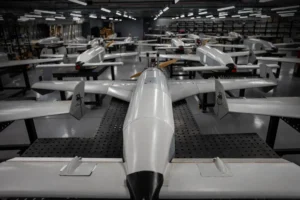
SkyFall officially unveils Thor Hammer mid-strike and announces 1,000+ km version
2
Pentagon to hold Drone Dominance trials for bomber drones, with UFORCE, Gurzuf Defence, Grim Tech and others taking part
3
Terra Drone acquires 50% of Ukrainian Kurin Technologies for $3.5 million
4
British-Ukrainian Occam Industries raises €3.8m. The funds will go towards scaling drone autonomy software
5

Frontline Robotics CBDO Mykyta Rozhkov: Ukraine and Norway are working on an autonomous system to protect maritime infrastructure
By submitting this form, you give Defender Media consent to the processing of personal data.
Надсилаючи цю форму, ви надаєте Defender Media згоду на обробку персональних даних.

Latest news
1

Nataliia Mykolska to become VP of Growth and Affairs at Sine Engineering
2
Black Mirror #79: What’s inside Geran-4, unmanned tanks, balloon barrages and more of a new russian miltech
3

6,000 lives saved by replacing people with robots. “Makar” on the ground strike drone unit NC13 and its role in Operation Vivaldi
4
M-Fly and Dwarf Engineering announce partnership: what it involves
5