


Frontline Robotics CBDO Mykyta Rozhkov: Ukraine and Norway are working on an autonomous system to protect maritime infrastructure
Soon, thanks to increased autonomy, a single operator will be able to control a swarm of up to 10 drones

Mykyta Rozhkov. Photo: Frontline Robotics
Ahead of his appearance at the German-Norwegian Defence Dialogue 2026, Frontline Robotics CBDO Mykyta Rozhkov spoke about Ukraine’s experience in employing uncrewed systems, the development of the European defence industry, and the prospects for trilateral cooperation between Ukraine, Germany, and Norway.
In particular, he stated that Ukraine and Norway are jointly working on a project to develop an autonomous system for protecting critical maritime infrastructure. The Ukrainian side is contributing combat experience, technological solutions, and an operational understanding of the modern battlefield, while Norway is providing high-tech components and sensor suites. Germany is also engaged in this cooperation, leveraging its industrial capacity, manufacturing output, and engineering culture to rapidly scale serial production.
According to Rozhkov, the scientific, technological, and industrial alliance among these nations has yet to reach its full potential. Combining frontline combat experience with European innovation and industrial scale could establish a fundamentally new level of defence resilience across Europe.
“Ukraine was forced to create an innovative and integrated unmanned systems industry in wartime conditions,” says Frontline Robotics CBDO. “Europe has an opportunity to create similar capabilities without currently being in an open war.”
In his view, achieving this requires Europe to build its own large-scale uncrewed systems industry, European value chains, and innovation hubs.
Rozhkov notes that the joint Frontline Robotics and Quantum Systems production facility in Munich was brought online in less than six months. The contracted production volume for 2026 exceeds 10,000 Linza 3.0 drones developed by Frontline Robotics.
The speaker also noted that the drone dominance zone currently extends approximately 15 km on each side of the frontline. According to his forecasts, it could expand to 20–25 km next year. This will require robotic systems capable of operating at ranges of up to 100 km, short-range air defence assets, and autonomous platforms for position holding.
Rozhkov added that currently, an average of 2.5 personnel is required to operate a single drone. In the future, due to increased autonomy, a single operator will be able to control a swarm of up to 10 drones simultaneously. The primary objective behind developing these technologies is to completely replace humans wherever the threat level is highest.
Reading now
1

70+ vacancies in Ukrainian defence tech at Ukrspecsystems, Strix Air, DoD Solution and other industry leaders
2
Swarmer acquires Ukrainian UGV and UAV manufacturer Ratel Robotics for $224m – and this is just the beginning
3
Ukrainian Skyeton secures $10.6M US army contract
4

Vluchnyk develops interceptor planned for production in Sweden and other countries: what attracted investors and what the team is working on
5
Canadian General Dynamics signs agreements with Ukrainian GreenTech
By submitting this form, you give Defender Media consent to the processing of personal data.
Надсилаючи цю форму, ви надаєте Defender Media згоду на обробку персональних даних.

Latest news
1

Frontline Robotics CBDO Mykyta Rozhkov: Ukraine and Norway are working on an autonomous system to protect maritime infrastructure
2
Dorozvidka #78: Jet-powered Shahed interceptors, the world’s first airborne deployment of strike UGVs, plus Sternenko, Romaniukov and Babenko
3
German-Ukrainian drone manufacturer UUS integrates autonomy technology from DoD Solution
4
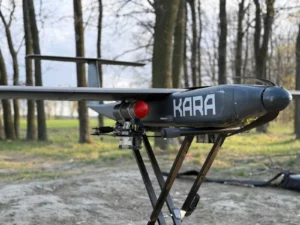
KARA UAV can deliver FPV drones behind enemy lines and operate as a relay
5
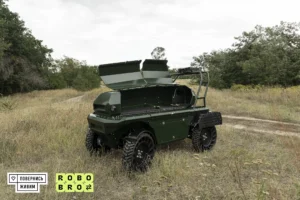
Come Back Alive fund has launched the RoboBro project to scale up UGV usage
September 23, 2026
KARA UAV can deliver FPV drones behind enemy lines and operate as a relay
September 23, 2026