Ukraine at IDEF 2025: new drones, robotic platforms, electronic warfare systems, AI-powered vehicles, and more
Ukraine showcased new and well-known drones, upgraded armoured vehicles, and UGVs
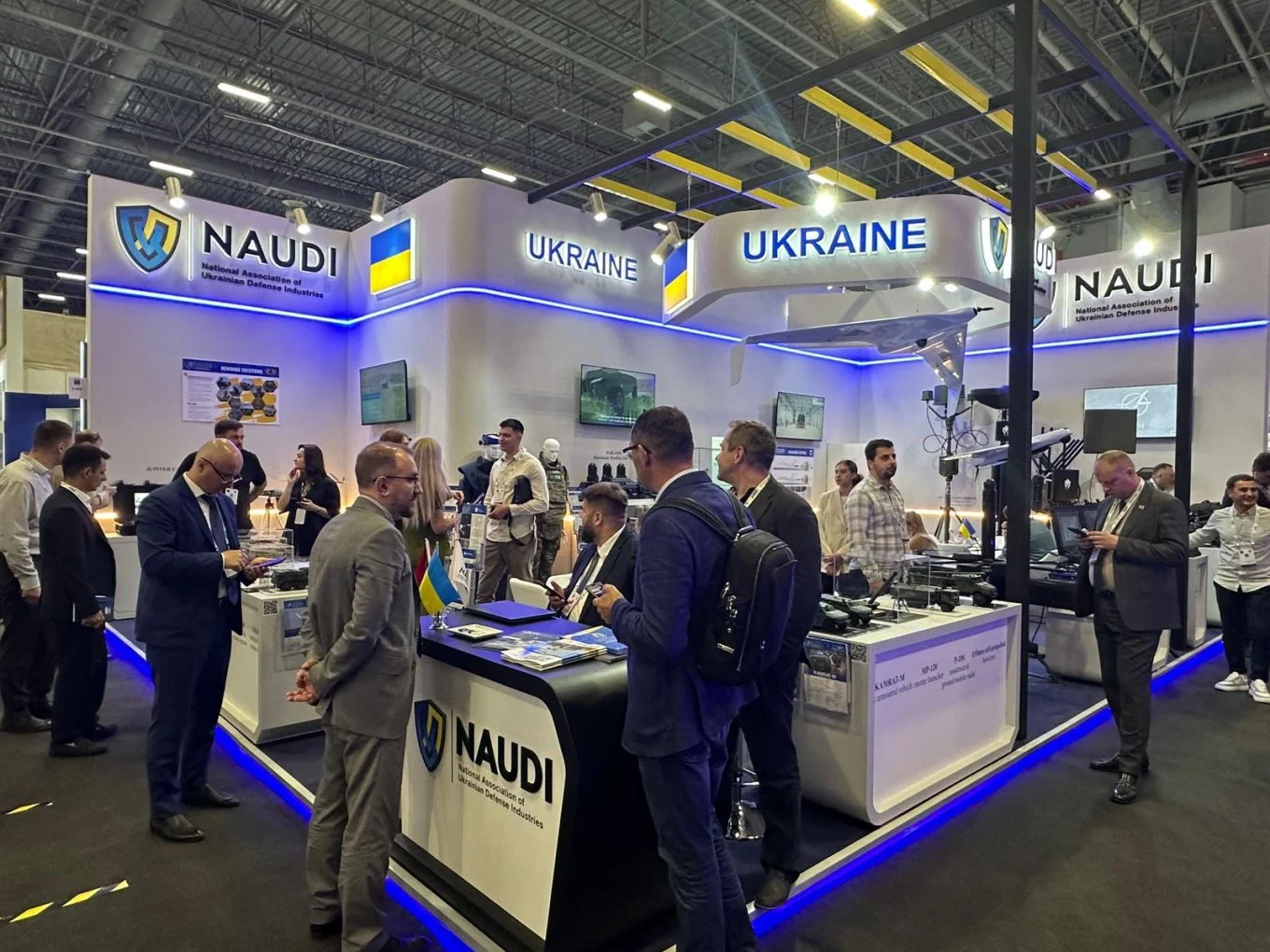
Photo: United24
Last week, Istanbul hosted IDEF 2025, one of the world’s top defence expos – and Ukrainian manufacturers came out strong. Alongside tried-and-tested battlefield gear, they showed off a wave of new drones, robotic platforms, and more.
The event brought together 1,400 companies from over 50 countries, but Ukraine’s stands stood out. Several booths showcased the country’s defence industry, including a central display from the National Association of the Defence Industry of Ukraine. Much of what visitors saw had already been proven in combat — a key reason for the buzz around the Ukrainian section.
Defender Media rounded up the highlights from what Ukraine brought to the floor at IDEF 2025.
Who was represented at the NAUDI stand
The Association’s stand featured products from 18 Ukrainian companies, covering a wide range of solutions—from drones and electronic warfare to armoured vehicles, medical technologies, demining systems and anti-tank weapons.
Among them:
- Ukrainian armoured vehicles, including the new Protector UGV, approved for operation by the Ministry of Defence.
- Athlon-Avia and Jupiter-Dron, drone manufacturers.
- Kvertus and Parasol, developers of electronic warfare (EW) and electronic reconnaissance (ERR) equipment.
- UBM, Defence Solutions, and Ukrainian Bomb Manufacture, suppliers of ammunition for UAVs.
NAUDI also demonstrated developments by KTD Plus, Ukrtac, OKO Camera, Aviation Systems of Ukraine, System Electronic Export, UA Defence, MixSteel, LFTX, Spetcmashcomplekt, Demining Solutions, as well as the state-owned Luch Design Bureau.
Armoured vehicles: Gyurza-2 and Tysa from Ukrarmotekh, Varta-2 and Inguar
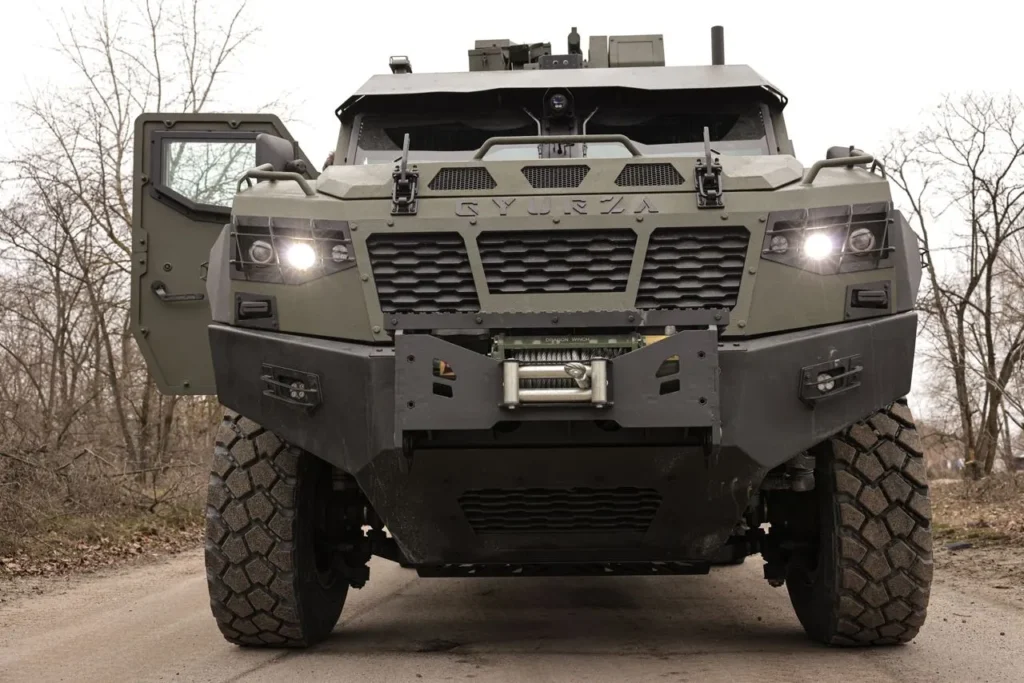
Gyurza-2 is positioned as a digital combat platform. The vehicle features an interactive vision hardware and software complex with AI, thermal imaging and augmented reality, which allows it to detect threats up to 400 m away. It has enhanced mine protection and aluminium plating. With a mass of 16 tonnes, it can accommodate up to eight paratroopers and two crew members. This makes it an excellent candidate for an armoured personnel carrier or evacuation vehicle.
The basic serial armoured vehicle UAT-TISA has successfully passed certification based on tests confirming ballistic resistance. It is designed to transport personnel, deliver ammunition, perform low-risk tactical tasks, and support mobile response and rapid deployment of mobile groups. According to the company’s director, Gennady Khirhiy, it was the “Tysa” that generated significant interest, and the company has received new orders.
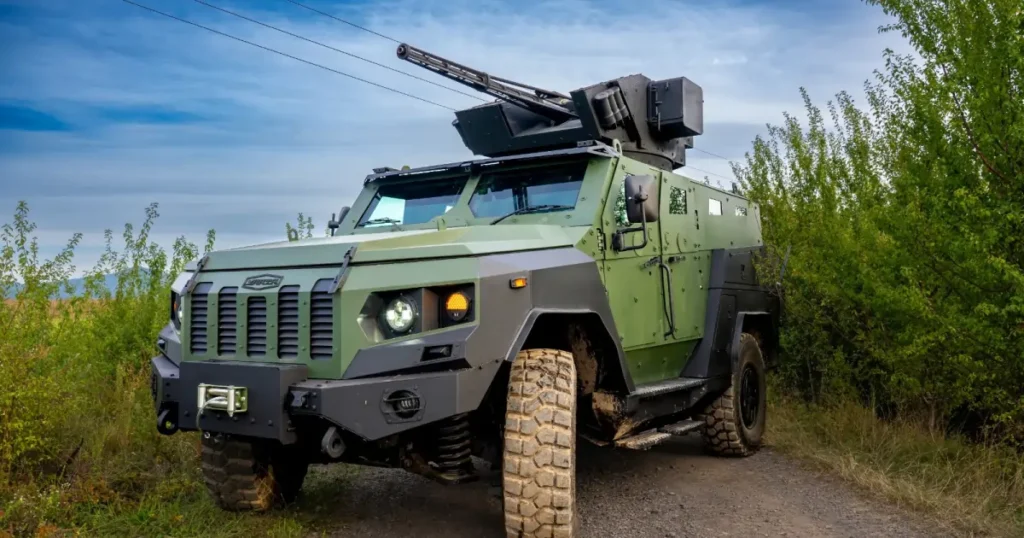
“Varta-2” from Ukrainian Armoured Vehicles passed testing and codification in spring this year. The vehicle is ready for mass production and features the ability to install combat modules, including automatic guns, bringing it closer to an infantry fighting vehicle (BMP) in terms of firepower. At the same time, the platform retains a 4×4 configuration and weighs under 14 tonnes.
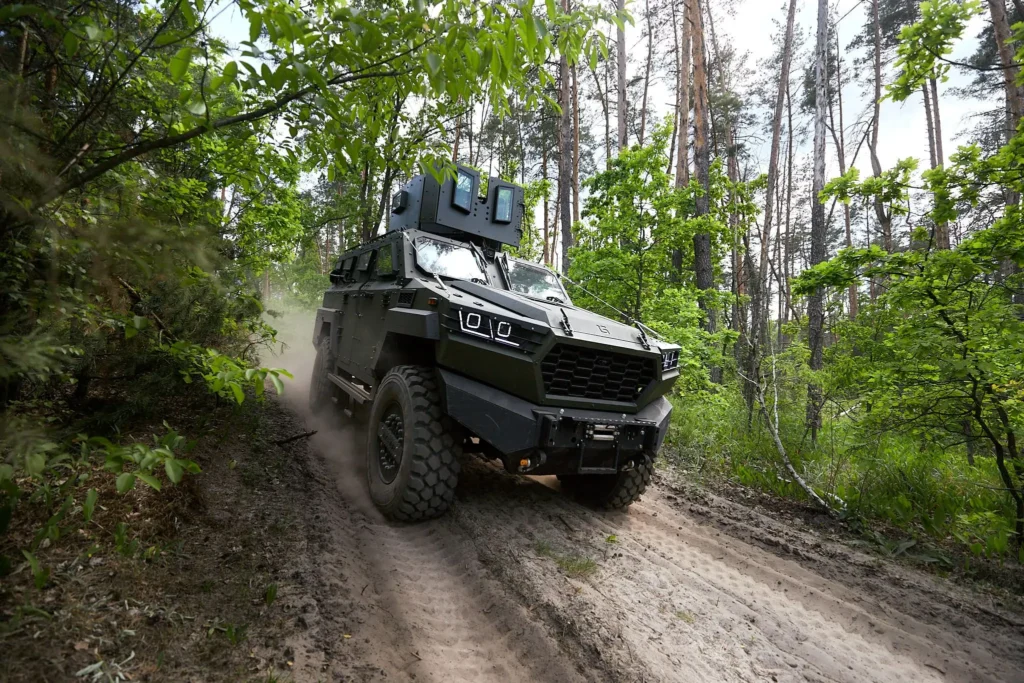
Inguar Defence introduced the Inguar-3 as a new generation modular platform. It is positioned as a platform for a combat module and can also serve as a 6×6 base for heavy weapons. According to the manufacturer, the “Inguar” armour can withstand hits from 7.62×54 mm armour-piercing bullets, fragments of 155-mm shells, and explosions of up to 8 kg of TNT under the wheels. The vehicle has all-round vision and night vision cameras.
Strike drones and interceptors
Defender Media has previously covered the new-generation Interceptor 2.0 drone from RC Direction. Today we showcase other drones presented at the exhibition.
The modular multi-purpose strike drone Cetus-X belongs to NATO’s class I(c) drones and is designed for long-range strike missions. It is launched from a catapult and can act as a loitering munition, a light bomber or a platform for transporting FPV drones. According to unnamed developers, the drone can hit targets at distances between 70 and 120 km, carry up to 10 kg of payload, and reach speeds up to 160 km/h.
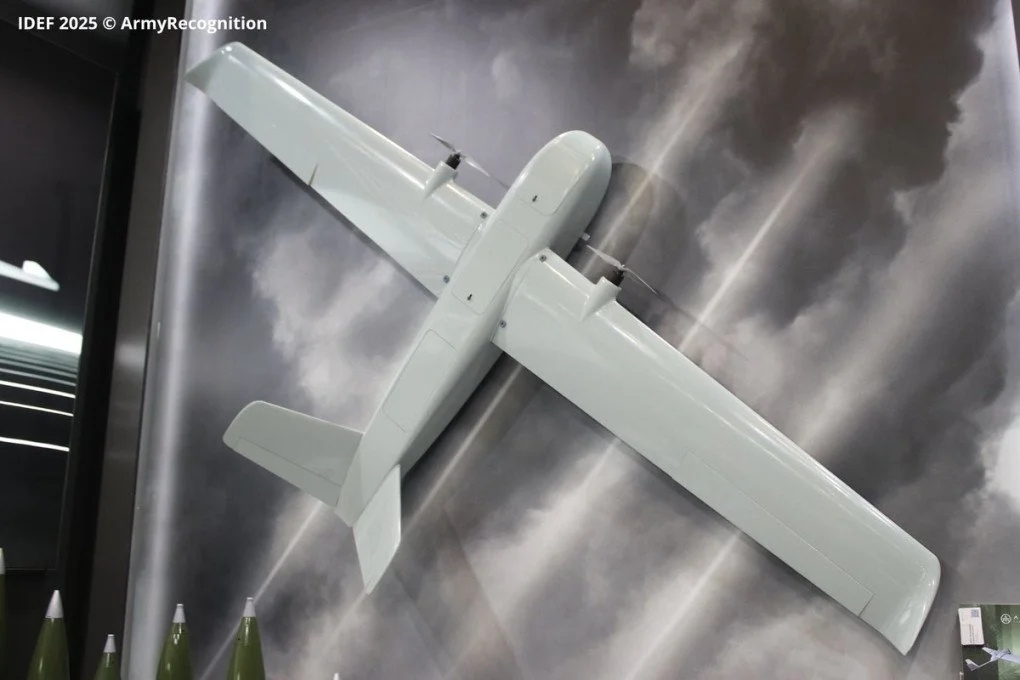
The Cetus-X is equipped with a GNSS receiver resistant to electronic warfare and a protected video transmission system, enabling effective operation under electronic warfare conditions. In the loitering version, it automatically detects and tracks targets; in the bombing version, it drops guided ballistic charges; and as a carrier of FPV drones, it can transport up to four such devices for pinpoint real-time strikes.
The Spetstechnoexport company presented at the exhibition an updated version of the Chaklun-B 2.0 drone, designed as a universal solution for reconnaissance, transport tasks and ISR (Intelligence, Surveillance, Reconnaissance) operations.
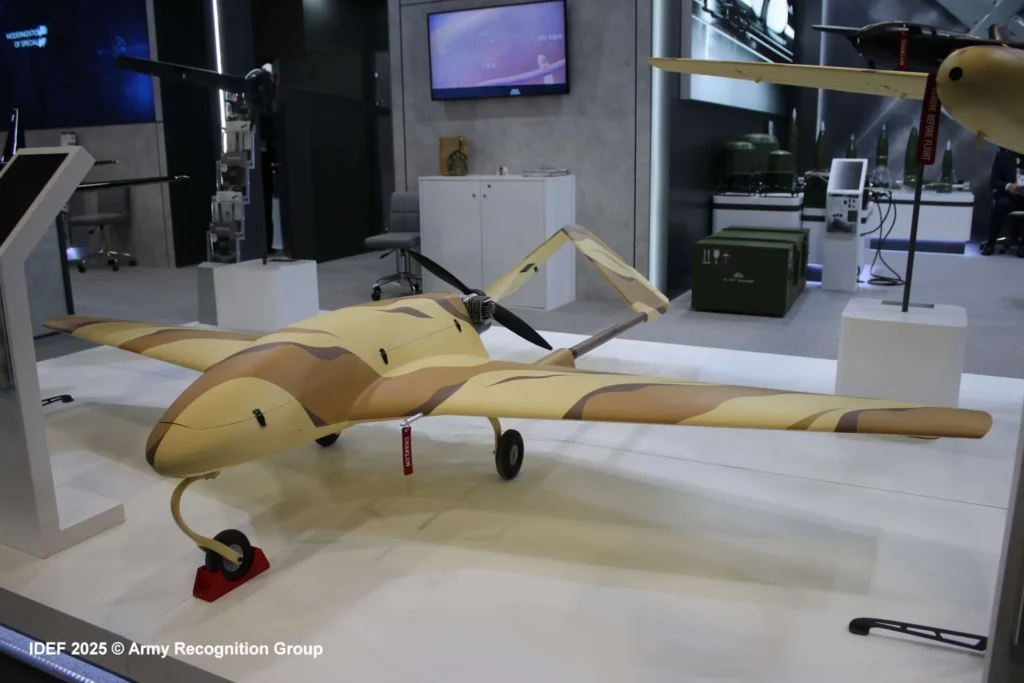
The Chaklun-B 2.0 is designed for long-range missions with minimal infrastructure and offers cost-effective performance of complex tasks under front-line conditions. It can stay airborne for up to eight hours, carry payloads up to 35 kg, and fly over distances exceeding 500 km. It fills the niche between manually launched tactical drones and large MALE platforms, providing an affordable but versatile option.
UGVs
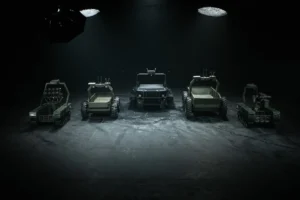
Among the Ukrainian UGV presented in Turkey, the Triminer robot minelayer, previously covered by Defender Media, attracted the most attention. Ukraine also demonstrated well-known developments such as the heavy logistic UGV Protector from Ukrainian Armoured Vehicles, logistic vehicles from Ratel, and compact all-terrain vehicles Tanchyk.
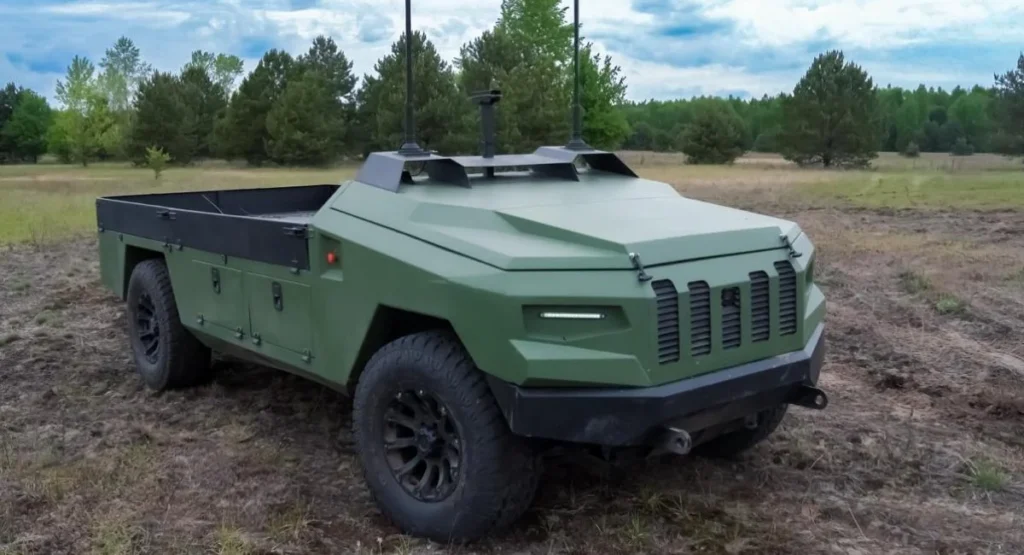
The development of the UGV Protector began back in 2023, but only last week the vehicle was codified and approved for operation in the Armed Forces of Ukraine. The UGV is designed for logistical tasks — it has a payload of up to 700 kg and can transport several smaller ground drones, or be used as a platform for various equipment.
Reading now
1
SkyFall officially unveils Thor Hammer mid-strike and announces 1,000+ km version
2

260+ vacancies in Ukrainian defence technology at BlueBird Tech, Sine Engineering, Buntar Aerospace and more
3
British-Ukrainian Occam Industries raises €3.8m. The funds will go towards scaling drone autonomy software
4
Terra Drone acquires 50% of Ukrainian Kurin Technologies for $3.5 million
5

Autonomous interceptor drones need radars to work. Why is there still a lack of them
By submitting this form, you give Defender Media consent to the processing of personal data.
Надсилаючи цю форму, ви надаєте Defender Media згоду на обробку персональних даних.

Latest news
1
Denmark to hold first-ever Danish Defense Tech Week in four cities: what to expect
2
Forbes: Airlogix plans to raise $100m at a $2bn valuation
3
Tencore launches an ecosystem to bring together UGVs and components from several manufacturers
4

Defense companies may see staff deferrals cut from 100% to 85%
5