Why Ukrainian startups are on Presto Tech Horizon’s radar for next-gen defence
The Czech fund’s portfolio already includes Ukrainian defence startups Vidar Systems and Bavovna.ai. Who’s next?

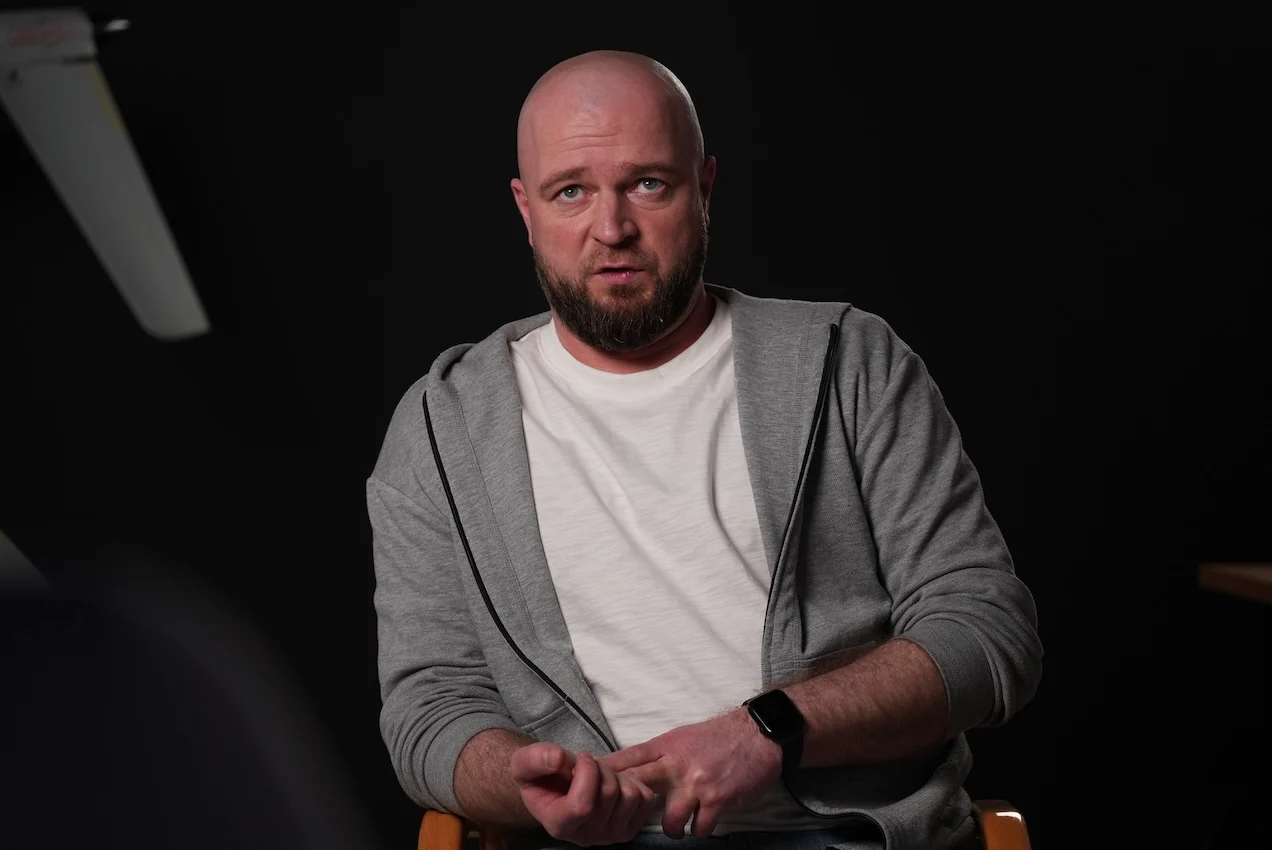
A year ago, European venture firm Presto Ventures and Czech industrial giant CSG joined forces to launch the Presto Tech Horizons fund. They’re raising €150 million to invest in startups, with an emphasis on defence tech and related sectors. Within a year, the fund backed four projects — two of them Ukrainian defence tech startups. At Defender Media’s request, columnist Bojan Stojkovski spoke with Presto Ventures resilience investor Matej Luhovy about what it takes to get on the fund’s radar.
Presto Tech Horizons is betting big on the future of defence and dual-use technologies across NATO countries and their allies — including Ukraine.
Launched through a strategic partnership between venture capital firm Presto Ventures and industrial powerhouse Czechoslovak Group (CSG), the €150 million fund aims to become one of the largest in the world focused on security and defence tech.
With a sharp focus on defence solutions, Presto Tech Horizons is backing companies that enhance not just state and institutional security, but also personal safety and data privacy. The ticket sizes range from €500K to €5M, with a sweet spot around €2M, as they tell Defender Media.
A year since its inception, the fund has already welcomed its first four portfolio companies: Ukrainian Vidar Systems, known for its portable acoustic locators; Ukrainian Bavovna.ai, a hybrid AI platform for autonomous drone navigation; BlueQubit, a platform for running quantum simulations; and DiffuseDrive, redefining physical AI for automotive, aerospace, defence, and robotics.
During the recent Invest in Bravery conference in Kyiv Defender Media spoke with Matej Luhovy, resilience investor at Presto Ventures, about what the fund is looking for in Ukrainian defence tech — and why regional startups are drawing serious interest despite the many obstacles they face.
Defender Media: It’s been almost a year since Presto Tech Horizons launched, how satisfied are you with initial investments that the fund made?
Matej Luhovy: The partnership is very unique in the VC world, as a joint venture between Presto and the Czechoslovak Group (CSG), one of Europe’s fastest growing primes. The venture capital scene is super competitive, and there are great VC firms out there. There’s more and more funding, and if you want to really stand out, access the best deals, and attract the most promising startups, you need to create the best possible product for them, deliver the most value.

We are a venture fund, and our joint venture model allows our portfolio companies to scale, gain access to asymmetric information, and explore potential resale opportunities. So it’s very practical and valuable for startups, for sure.
The idea is that, together with CSG, we can bring basically unmatched opportunities and benefits to our portfolio companies. We can open doors for defence-focused startups, in terms of business and government relationships, contacts, and even further R&D. This will give the companies credibility with defence customers, essential for securing those first contracts.
How happy are we? So far, we’ve announced four investments, and we have a couple of great investments lined up where the potential for partnership makes a lot of sense. More aligned spaces would be, historically, electronic warfare, radars, and software development kits for quantum technologies. Now we’re looking again into space tech — developing command and control systems, electronic warfare solutions, and counter-unmanned aerial vehicle systems. These are some of the key areas.
The overall thesis of the fund is resilience — defence and aerospace, especially given what’s happening in the U.S. You’re seeing increased reliance on key markets. Take semiconductors: the entire industry is very interesting right now. There’s a new wave of innovation in how semiconductors are built. A few companies are working on major new approaches, some adjusted for AI, others experimenting with new printing methods and wafer frames. It’s all very interesting — and also closely tied to sovereignty.
One of the hot topics of the past year is dual-use technology. What’s your take on it?
About 95% of the defence hardware deals we look into need to have some potential application in the commercial space, because otherwise, the opportunity wouldn’t be big enough.. If you’re building a horizontal application startup, it needs to also be deployable in commercial settings. So it is critical.
In some cases, it might be unnatural to force such applications, and I would say the term is overused in the sense that everyone’s doing “dual-use” now. Some are starting to openly say “defence”, which might be healthier and more appropriate.
Is the perspective changing? Possibly — especially now with developments in the U.S. I feel like the sentiment is shifting a bit with every passing month. It’s difficult to navigate. Some banks used to consider dual-use as ESG or impact investing, and that may change in the future.
I’d say the narrative is also being dictated by the movements of the European Commission. There’s even talk about having a unified procurement system. So things are definitely moving in a broader direction — more acceptance of dual-use tech in that sense.
A few years ago, defence used to be a ‘nasty’ word. But now, unfortunately, if you look at it through the lens of game theory, you realize that you need to have some defence — otherwise you risk being occupied or attacked. If you don’t invest in defence and don’t prioritize resilience in your budgets, you’re perceived as weak and vulnerable. It would be lovely if we didn’t need weapons — but unfortunately, that’s human nature.
What stood out to you last year as particularly impressive from Ukrainian defence efforts?
When you invest in a company—let’s say they’re building AI agents for models or whatever—you ask them what motivates them, why they founded the company, and why they want to build it. You look for resilience in their approach, so you know they won’t give up and take a comfy job in five years, when things get tough.
If you’re a Ukrainian founder in defence, of course, your motivations are completely different. You want to survive. You want to win the war. That’s dedication on a whole different level. And it’s crucial—because in the early stages, talent and motivation are everything. That’s what really matters. So this is a huge plus when it comes to the attractiveness of Ukrainian companies.

When it comes to tech, I would still say it’s more of a bet on the founder and the belief that they’ll learn and grow. Because, quite frankly, if we compare hardware companies—what’s being built in the U.S. versus in Ukraine—it’s still not at the top level. What is top level, for sure, is communication and electronic warfare.
What specific areas of Ukrainian defence tech do you find most promising right now, and where do you see the greatest potential for future growth?
So, for example, the way Ukrainian drones communicate with ground stations, the mechanisms they use to avoid jamming, and the location systems that prevent drones from crashing when jammed—these are areas where Ukraine might be the number one manufacturer of such technologies in the world. We’re actively looking into those.
In terms of talent, yes, there is talent, but it’s also quite expensive and hard to finance. We see companies with similar founder quality and similar tech in the U.S. receiving four to five times more investment than their counterparts in Ukraine. Yet Ukrainian companies are often more resourceful. Regarding possible investments, there are multiple companies that we are currently looking into.
It’s tough, it takes time, but the potential is there. Some of the companies we’re particularly interested in are working on laser-based counter-UAV systems—capable of taking down rockets, missiles, and drones.
What else might be interesting? Cheap cruise missiles could be an area to watch. We’ve seen a few companies that started with strike drones and are now shifting into that space.

Bojan Stojkovski
Bojan Stojkovski is a freelance journalist. Based in Skopje, North Macedonia, he reports on technology, science, and environmental issues, as well as post-war societies in the Western Balkan countries. His work has been featured in Foreign Policy, WSJ, ZDNET, New Eastern Europe, and Interesting Engineering.
Reading now
1

70+ vacancies in Ukrainian defence tech at Ukrspecsystems, Strix Air, DoD Solution and other industry leaders
2

Swarmer acquires Ukrainian UGV and UAV manufacturer Ratel Robotics for $224m – and this is just the beginning
3
Canadian General Dynamics signs agreements with Ukrainian GreenTech
4

Vluchnyk develops interceptor planned for production in Sweden and other countries: what attracted investors and what the team is working on
5
Unwave’s Stepovyi Viter mid-strike drone passes codification: what we know about this UAV
By submitting this form, you give Defender Media consent to the processing of personal data.
Надсилаючи цю форму, ви надаєте Defender Media згоду на обробку персональних даних.

Latest insights
1
Everything about the RAM-2X mid-strike drone: interview with Ukrspecsystems deputy director Andrii Rymaruk
2

A demo is not demand: How to prove the value of a defence tech product. Column by Tekever Ukraine Director Kateryna Bezsudna
3
How to choose the right video link for an FPV drone: analogue, digital, or fibre-optic?
4

How a frontline signal becomes an engineering task. A column by Defence Builder Accelerator Director Yana Shkvarovska
5