Why Roman Sulzhyk and partners are launching Resist 2.0 – a €50m fund investing in Ukrainian defence tech
An interview with the founder of VC that has already backed seven Ukrainian defence startups – with another 10-15 in the pipeline
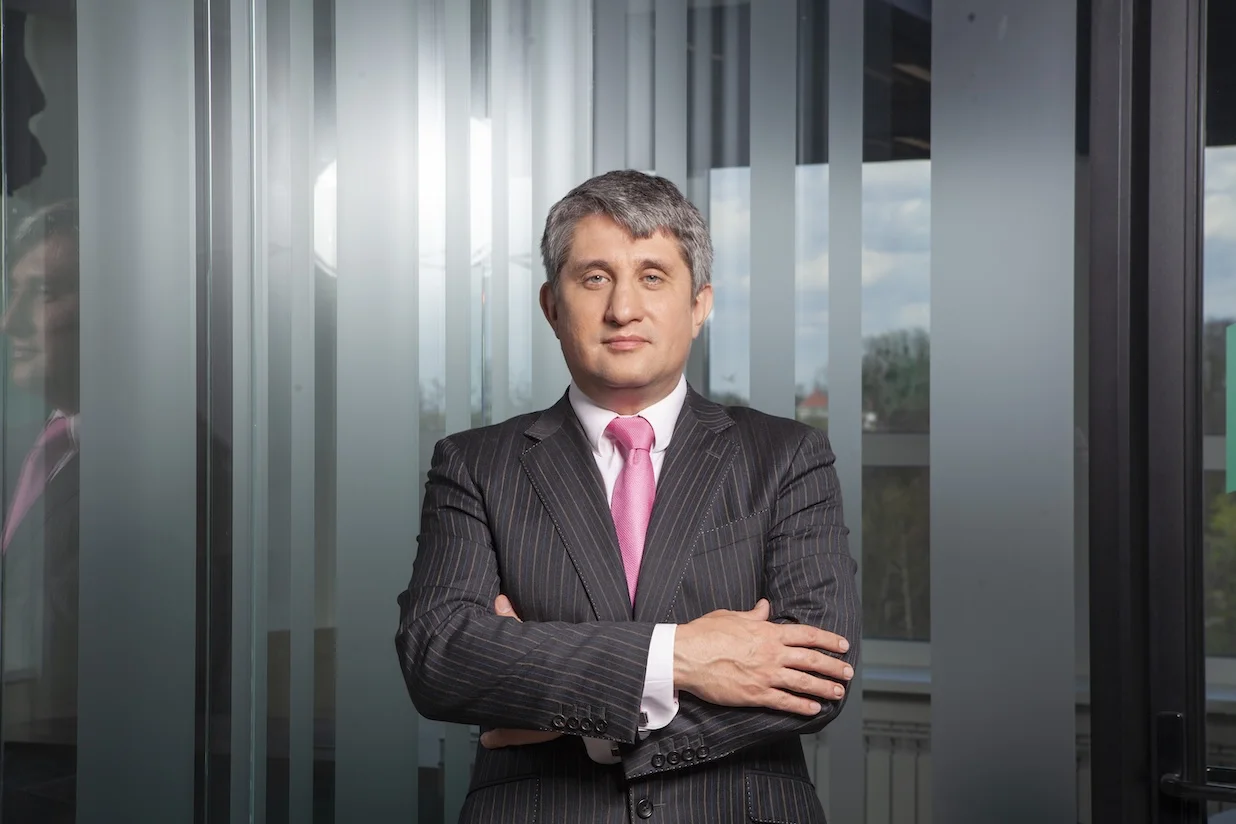
Venture capital fund Resist.UA began investing in Ukrainian defence tech in 2023. Since then, the team led by investment banker Roman Sulzhyk has invested several million euros in seven startups, including Farsight Vision and M-Fly. The fund has already completed its first successful exit, selling its stake in Phantom Technology to TAF Industries.
The young fund’s early success has attracted international attention. Sulzhyk is now launching a new €50 million fund together with his partners, opening the door for foreign investors to back Ukrainian defence tech.
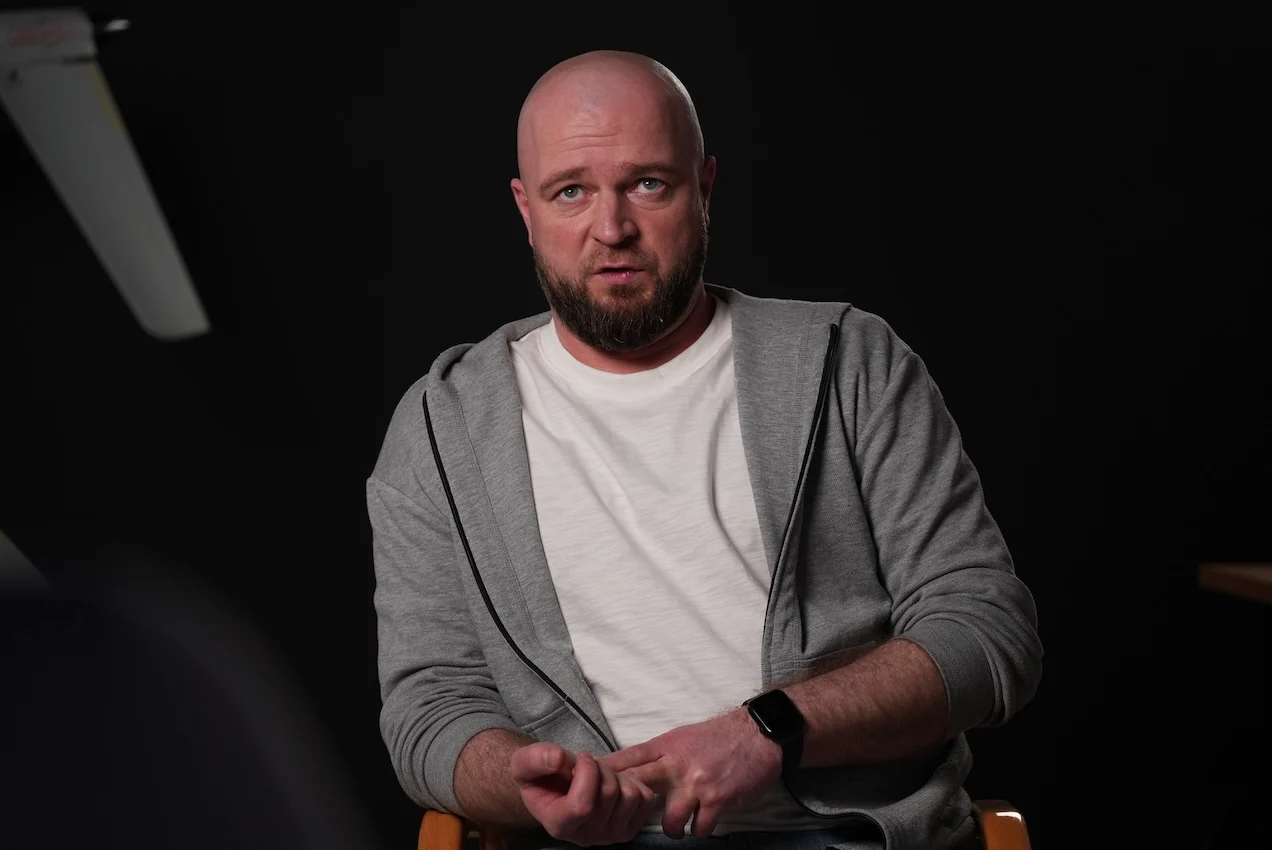
In an interview with Defender Media, Sulzhyk discusses the achievements of the first fund, the shortcomings of Ukraine’s financial infrastructure, and the investment philosophy that places Ukraine’s long-term development above short-term returns.
About the first Resist.UA fund
We launched Resist.UA in 2023, and since then we have invested in seven Ukrainian defence tech startups.
By my estimates, there are around 150-200 defence startups in Ukraine that have raised structured venture funding. Roughly ten per cent of them are what investors call investor darlings – companies everyone wants to back because they combine outstanding products with exceptional founders. In Ukraine’s defence tech sector, there are probably 15-20 such companies.
Three or four of our seven portfolio companies fall into that category. We were fortunate to invest in Farsight Vision and M-Fly at an early stage. Another highly promising startup in our portfolio is developing low-cost surface-to-air missiles designed to intercept jet-powered Shahed drones. We expect to see the first results this autumn.
Another potential standout is a team building an advanced system to counter enemy FPV drones. Their technology is expected to begin saving soldiers’ lives on the battlefield as early as September.
When we launched the fund, we told investors that, as is typical in venture capital, they should expect the first exits within five to seven years. They smiled and said it would be more honest to promise ten. Instead, we completed our first exit in just the third year. TAF Industries recently acquired our stake in Phantom Technology, the developer of the Teslia ground robotic vehicle. Our investors generated a return on that deal, and we are already distributing dividends.
There will be many more stories like this. The market will inevitably consolidate, and not every company will grow into a billion-euro business or reach an IPO. That said, I believe Farsight Vision, one of our portfolio companies, could go public tomorrow and command a valuation of at least €500 million.
The first fund was relatively small, with total assets of several million euros. I invested my own money, alongside a group of prominent Ukrainian entrepreneurs who believed in our vision. They are experienced businesspeople and professional investors, each contributing a few hundred thousand euros. In total, the fund has fewer than ten investors. Interestingly, I didn’t even know some of them before Russia’s full-scale invasion.
Over the past three years, we have reviewed at least 600 startups, met with around 100 teams, and ultimately invested in just seven. My own conservative estimate values our current portfolio at around €10 million.
Why the second fund is being launched abroad
When we launched our first fund, my partners advised us to structure it in a foreign jurisdiction. Out of patriotism, however, I wanted to prove it could be done in Ukraine. In the end, we learned a painful lesson because of the limitations of the country’s financial infrastructure.
One of the biggest challenges was Ukraine’s outdated approach to asset valuation for corporate investment funds. Since we raised capital gradually while making investments at the same time, the fund’s net asset value was constantly changing. However, Ukrainian regulations do not allow funds to properly account for goodwill or revalue startup investments based on subsequent funding rounds.
For most licensed valuers in Ukraine, tangible assets such as real estate or vehicles matter. They have no effective mechanism for recognising the increased value of a startup after a successful financing round. As a result, every new investment we made caused the fund’s reported net asset value to decline on paper instead of increase. That meant new investors entering the fund received a larger ownership stake than our early backers. It is a fundamental flaw in Ukraine’s financial infrastructure.
It was a painful but necessary lesson. We are now working closely with the new head of Ukraine’s National Securities and Stock Market Commission, and I hope we can reform these rules so venture funds can operate properly within the country.
In the meantime, we are launching our second fund in Estonia, allowing international investors to participate directly. At the same time, we will establish a parallel Ukrainian fund so domestic investors with assets denominated in hryvnias can also invest. We intend to raise the Ukrainian fund within six months to minimise the asset revaluation issues we encountered with the first vehicle.
Future investments will be financed proportionally by both funds. For example, if the Estonian fund manages €10 million and the Ukrainian fund €5 million, one-third of a new investment will come from the Ukrainian fund and two-thirds from the Estonian one.
Resist 2.0, the defence tech boom and investment strategy
Through our first fund, we invested in companies valued at no more than €5 million, typically writing cheques of €200,000-300,000. Today, valuations like that have almost disappeared from the sector.
The market is overheated. Founders come to us with nothing more than an idea — sometimes without even a conceptual design — yet they immediately expect to raise €2 million at a €10 million valuation.
But that’s a normal stage of development. Bubbles always emerge around breakthrough innovations, and for the first time, Ukraine finds itself at the centre of such a process.
Despite the sharp rise in valuations, there are still many outstanding young companies on the market. We are not going to chase companies like UForce, which have already become unicorns. Our second fund will remain boutique in size. We plan to raise €50 million, or slightly more, over the next two years.
While the first fund invested in companies valued at up to €5 million, we are increasing that ceiling to €50 million for the second fund. We want to invest in 10-15 companies of that calibre, meaning our average cheque will increase to €3-5 million.
Our goal by the end of this year is to secure €20 million in commitments. We are already ready to deploy capital and are planning follow-on investments in several startups backed by our first fund.
One of our investors also manages a $1 billion fund and provides us with a great deal of valuable advice.
About the fund’s team
The fund’s founders and General Partners are myself, investment banker Oleksii Komlichenko, lawyer Taras Zharun, and entrepreneur Borys Shestopalov. We come from different professional backgrounds and generations: Borys is nearly 60, I’m 50, Oleksii is 40, and Taras is 30.
Oleksii Komlichenko is responsible for fundraising and developing the fund’s investment pipeline. He works with international and Ukrainian investors, government institutions and other key partners. Before co-founding the fund, he spent more than 15 years building businesses in executive search and HR consulting, founding Talent Advisors (now Odgers Ukraine).
Taras is our legal architect and oversees the fund’s day-to-day operations. He manages all documentation, structures transactions and coordinates our team of analysts.
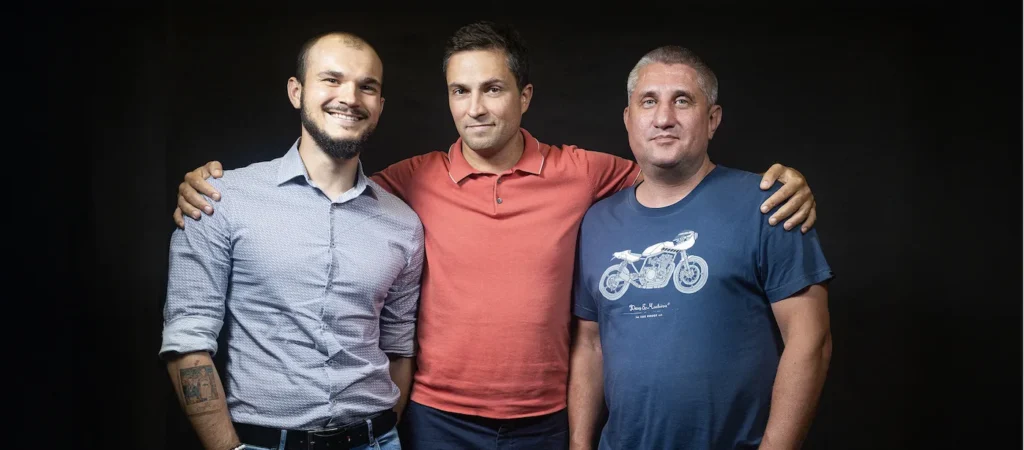
Borys Shestopalov is a well-known entrepreneur from Zaporizhzhia. Around €50 million worth of his businesses have either been destroyed or occupied by Russia, so he has a very personal score to settle with the occupiers. He brings deep industrial expertise to our team.
One of our portfolio companies, which develops highly effective systems for countering FPV drones, was introduced by Borys to industrial partners that provided manufacturing capacity and working capital to help scale the project. Together they established a joint venture and are now successfully manufacturing the product. This is exactly the kind of smart industrial cooperation we want to encourage. Startups do not need to build factories from scratch – Ukraine already has many established businesses that are willing to support the defence sector. Borys serves as the bridge that brings these partnerships into our fund.
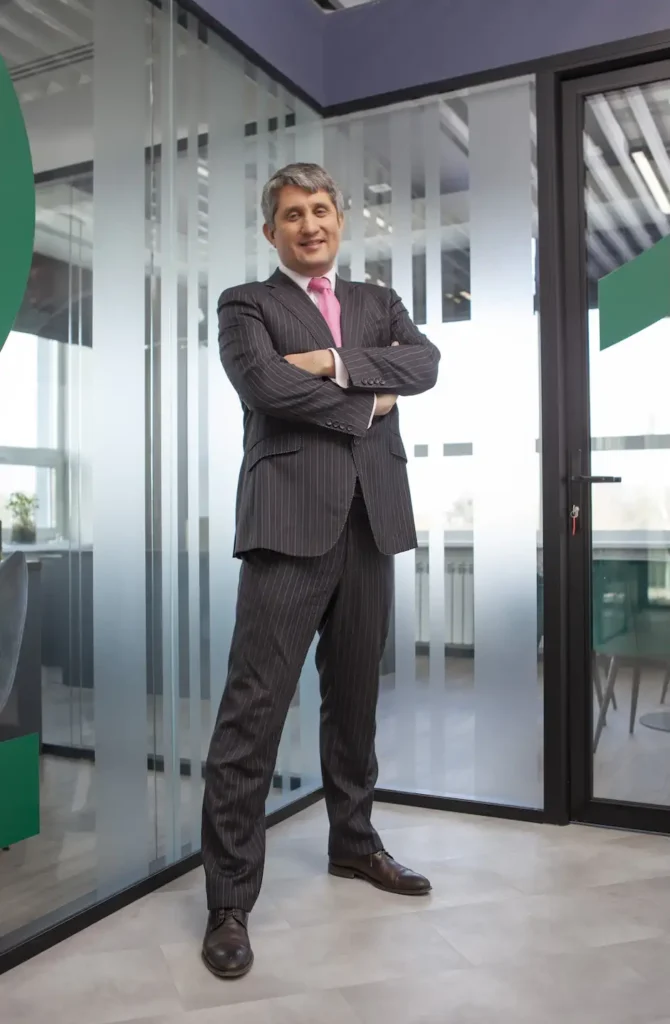
As for me, my journey began at Kyiv Physics and Mathematics School No. 145. At one point I ranked second in Ukraine in mathematics. I later studied in London and New York, worked as a software engineer at JPMorgan, and eventually became a trader, where I learned how to manage large sums of money and take responsibility for them.
In 2009, during the global financial crisis, I found myself at a crossroads and accepted an offer to head trading at Deutsche Bank in Moscow. I wanted to be closer to Kyiv, and at the time I didn’t understand that Russians were the enemy. That became clear to me in 2014, when I left Russia, never to return.
I have now been back home for 11 years. During the full-scale war, I got married, and my wife and I had a son. We both grew up in a Russian-speaking environment, but my dream is for our child not to know a single word of Russian.
On the fund’s investment philosophy
The philosophy of our fund is to invest not just in technologies, but in founders and teams capable of continuous innovation and rapid adaptation. We are looking for young, dynamic teams that will be able to integrate into the European defence ecosystem after the war.
When evaluating a startup, we ask ourselves a simple question: would a company like Raytheon or Rheinmetall want to acquire this team in the future? Our exit strategy is built around helping these companies become attractive acquisition targets for major international corporations at valuations significantly higher than our entry price. That is why we deliberately avoided investing in conventional FPV drone manufacturers — it was impossible to predict who the winners would be.
As for the technologies that interest us most for the new fund, I personally have strong conviction in projects developing the “brains” for drones — Ukrainian equivalents of Raspberry Pi, so to speak. The market for such solutions is enormous, both during the war and afterwards.
More broadly, one of the fund’s missions is to help change Ukraine’s image. We want to demonstrate that Ukraine is a country worth investing in, where people can generate returns, that it is not nearly as corrupt as many perceive it to be, and that successful businesses here are not built solely by oligarchs.
Success, in our field, means proving that Ukraine is an investable country. To achieve that, the country needs to attract €10-20 billion in private investment every year. That’s roughly the amount Poland attracted when it was joining the European Union.
Today, new names and new stars are emerging in Ukraine’s defence tech sector. These companies will need capital to scale their businesses, and many of them will go on to build companies worth hundreds of millions — or even billions — of euros.
These new entrepreneurs will replace the oligarchs who built their business empires on assets acquired in the 1990s. And they will play by a completely different set of rules.
That is one of the criteria I use when selecting startups for investment. Founders have to be decent people. I look at whether we share the same values. Would I want this person to run a major company — or even the country I live in? Would I want my son to work for them in 20 years’ time?
Many people say the product is what matters most. I disagree. My belief is that you should place your bets on the integrity of the people you work with. I’d rather earn less alongside an honest person than make a fortune with a fraudster.
Reading now
1
260+ vacancies in Ukrainian defence technology at BlueBird Tech, Sine Engineering, Buntar Aerospace and more
2
Forbes: Airlogix plans to raise $100m at a $2bn valuation
3
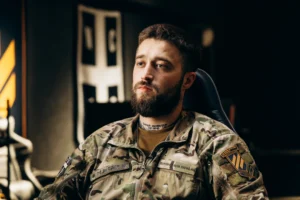
6,000 lives saved by replacing people with robots. “Makar” on the ground strike drone unit NC13 and its role in Operation Vivaldi
4
Black Mirror #79: What’s inside Geran-4, unmanned tanks, balloon barrages and more of a new russian miltech
5
US Buys 1,320 more FPV drones from Ukraine’s F-Drones for $6.5M
By submitting this form, you give Defender Media consent to the processing of personal data.
Надсилаючи цю форму, ви надаєте Defender Media згоду на обробку персональних даних.

Latest insights
1
TENCORE starts buying up other UGV manufacturers. CEO Maksym Vasylchenko explains the logic behind the deals
2
How to enter Norway’s defence market: an ultimate guide for Ukrainian companies
3
Everything about the RAM-2X mid-strike drone: interview with Ukrspecsystems deputy director Andrii Rymaruk
4
A demo is not demand: How to prove the value of a defence tech product. Column by Tekever Ukraine Director Kateryna Bezsudna
5