
How to choose the right video link for an FPV drone: analogue, digital, or fibre-optic?
Each of the three types of links used by strike FPVs solves one problem while creating another
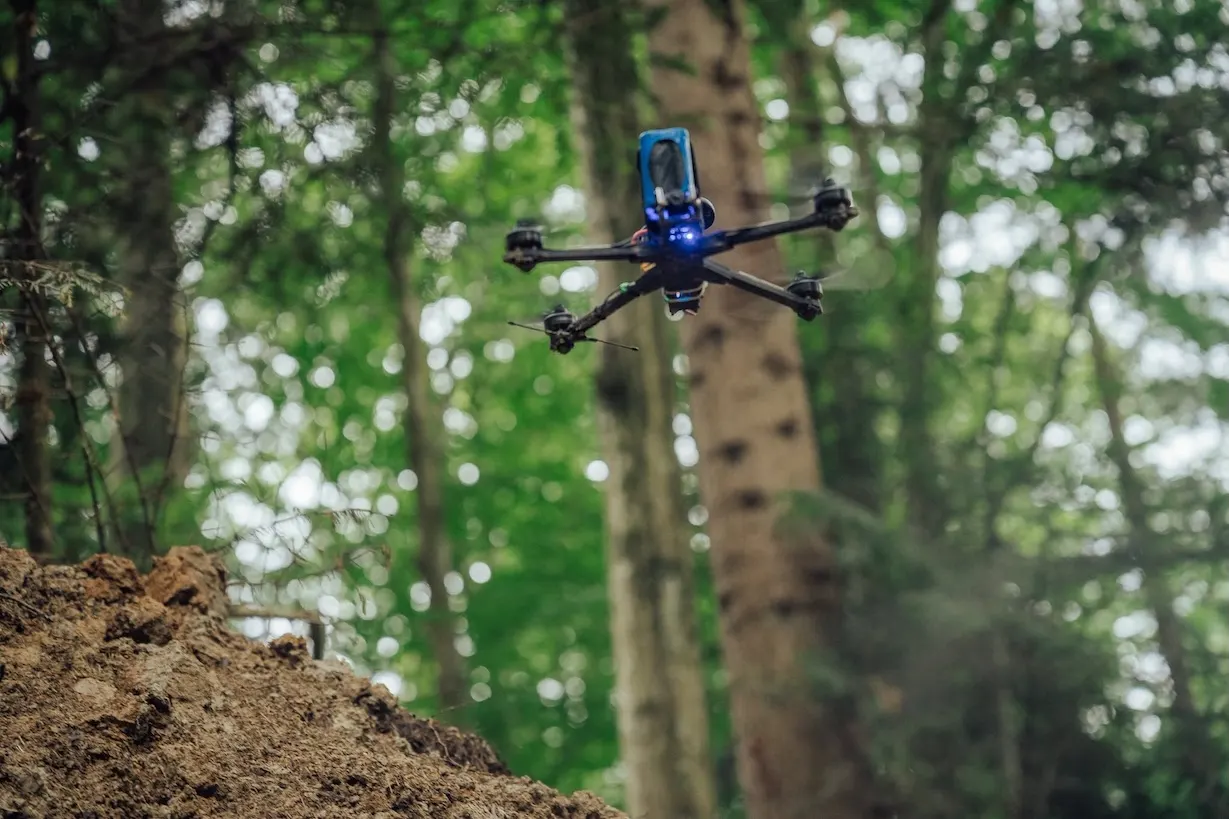
In an opinion article for Defender Media, Rise Technologies Commercial Director Viktor Chuikovskyi explains the basics of FPV video links, including when analogue is sufficient, when digital makes more sense, and why fibre optics can be indispensable for certain missions.
For a strike FPV drone, video is the primary guidance system. In the final seconds of a flight, the operator needs to see the target, identify obstacles and adjust the flight path. That is why mission success depends not only on range and warhead, but also on link stability and video quality and smoothness.
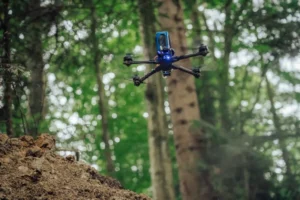
Today, strike FPVs use three main types of links: analogue radio, digital radio and a physical fibre-optic link. Each solves one problem while creating another.
Analogue: keeping control through interference
Analogue video is transmitted as a continuous radio signal. This type of link is simple and affordable, with virtually no encoding latency. The signal degrades gradually: as distance or radio interference increases, “snow” appears on the screen, but an experienced operator can often continue flying through it.
The trade-off is guidance quality. The analogue PAL standard provides 25 frames per second at a resolution of 720×576, while NTSC provides about 30 frames per second at 720×480. Interference damages pixels, lines or frames, causing tearing and colour loss. During a high-speed approach to a target, it becomes harder to spot wires, nets, branches or a vulnerable point on a vehicle, while the lower frame rate makes movement appear less smooth.
Digital: more detail, but a more complex fight for spectrum
A digital link provides HD video, higher frame rates and the ability to combine video, telemetry and control. For example, DJI’s O4 digital FPV video system transmits 1080p video (1920×1080 pixels) at up to 100 frames per second, with a claimed minimum latency of 15–35 ms — but these figures are measured without interference.
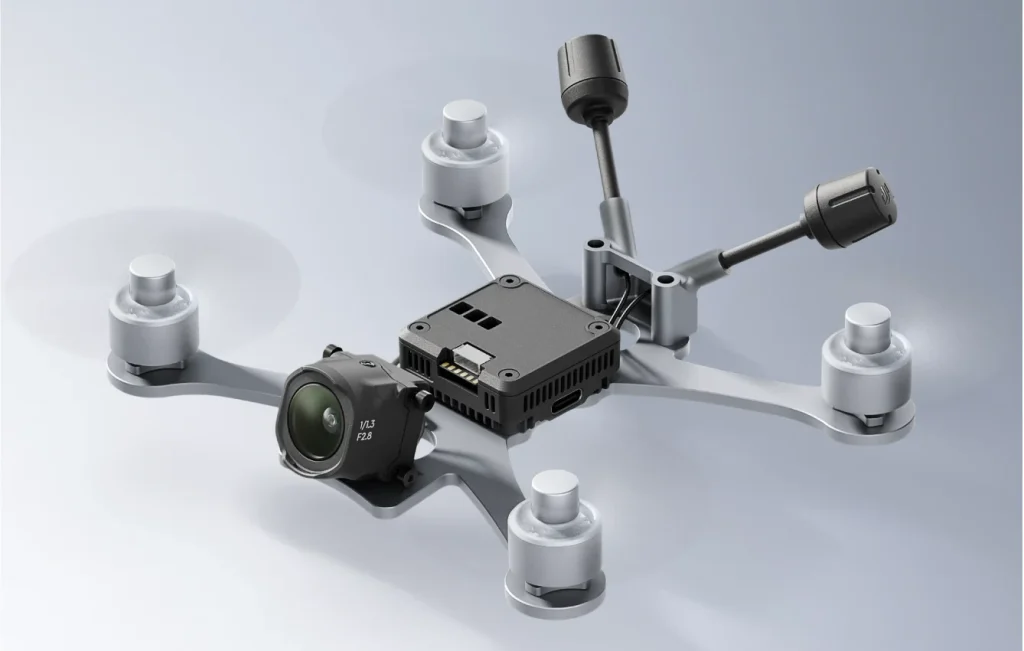
Digital eliminates the constant “snow” and provides smoother images during fast manoeuvres, but it does not by itself guarantee resistance to electronic warfare. Once the signal falls below a certain threshold, the video stream can freeze or disappear. That is why HD resolution and bitrate are not the only considerations: the system also needs to be able to find a clear channel, change frequencies and maintain predictable latency.
Fibre optic: independence from the spectrum, dependence on the cable
In a fibre-optic FPV system, control commands and video are transmitted via a cable deployed from a spool carried by the drone. The drone is not dependent on the radio spectrum and remains controllable under electronic warfare conditions until the fibre is cut by the enemy or breaks upon contact with an obstacle.
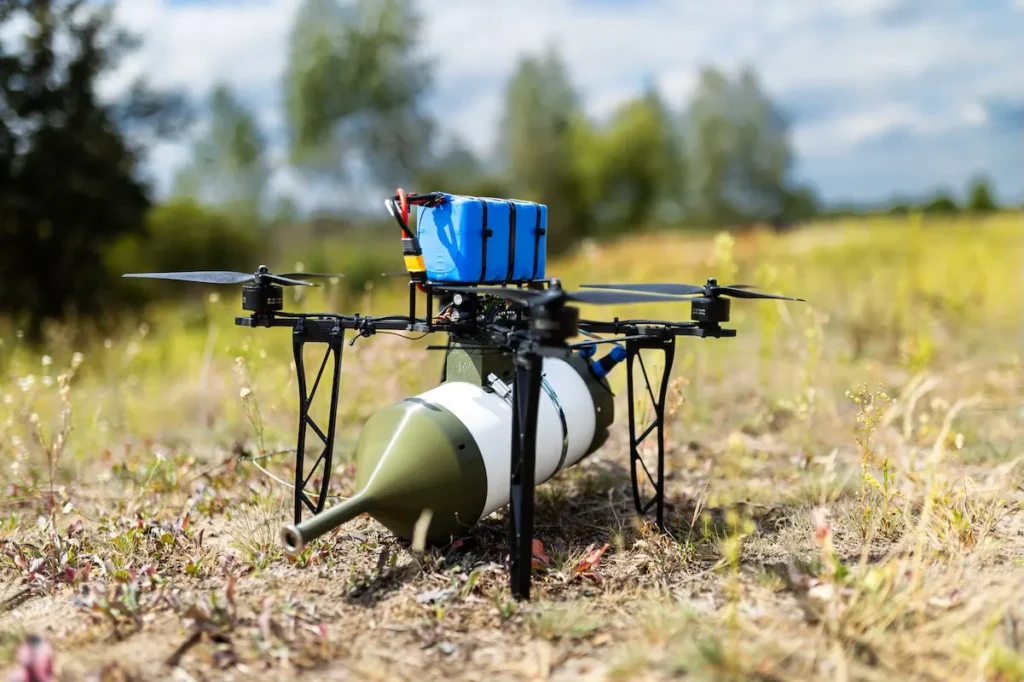
The price of EW immunity is additional weight and bulk from the spool, leaving less capacity for the battery or warhead and reducing manoeuvrability. The fibre-optic cable can snag on trees, poles, debris or nets, while sharp manoeuvres increase the risk of a break. Range is limited by the length of the disposable cable.
What video links are Ukrainian strike FPV manufacturers using?
There is no single standard: manufacturers offer different configurations depending on the platform, frequency plan and requirements of the military unit.
As a rule, radio-controlled FPVs remain multi-band and often allow the video link type to be selected. In other words, the same quadcopter can be equipped with different links depending on the mission.
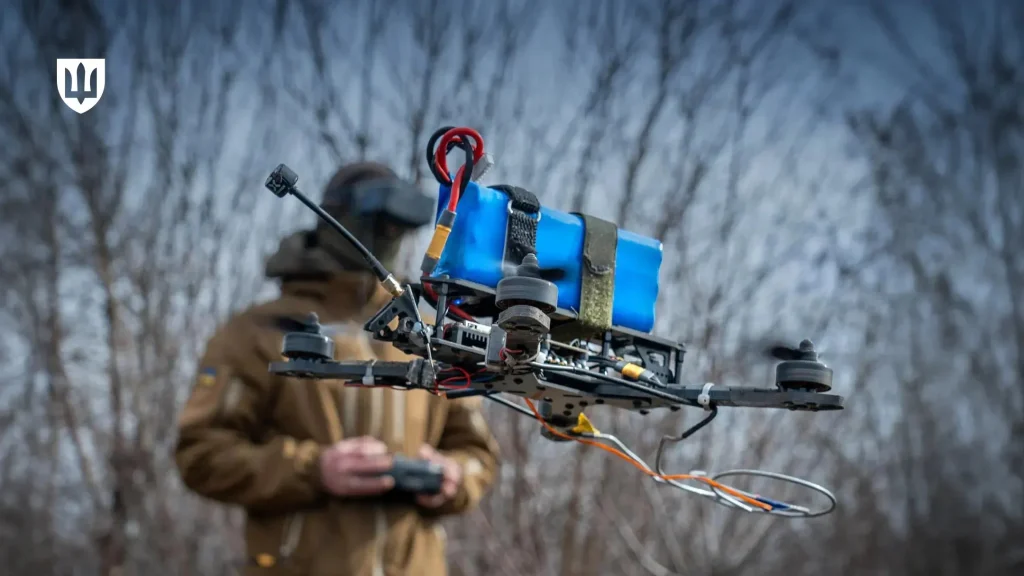
Digital systems are gradually moving beyond specialised platforms. At the same time, Ukrainian manufacturers are already offering fibre-optic FPVs in serial production, with spools ranging from 15 to 30 km and beyond.
Ukraine’s market therefore already uses all three approaches. Analogue remains the mass-market baseline, digital systems address the need for higher-quality video, while fibre optics are used for missions in areas where radio links are systematically jammed.
It is not a choice between wire and radio, but between solutions for different missions
Analogue retains an advantage in simplicity and minimal latency, but forces the operator to attack through a “noisy” image. Fibre optics eliminate radio-frequency vulnerability, but add weight and a disposable spool while restricting the flight path. Digital radio can potentially provide the best situational awareness and freedom of manoeuvre, but only if it can adapt to a congested spectrum.
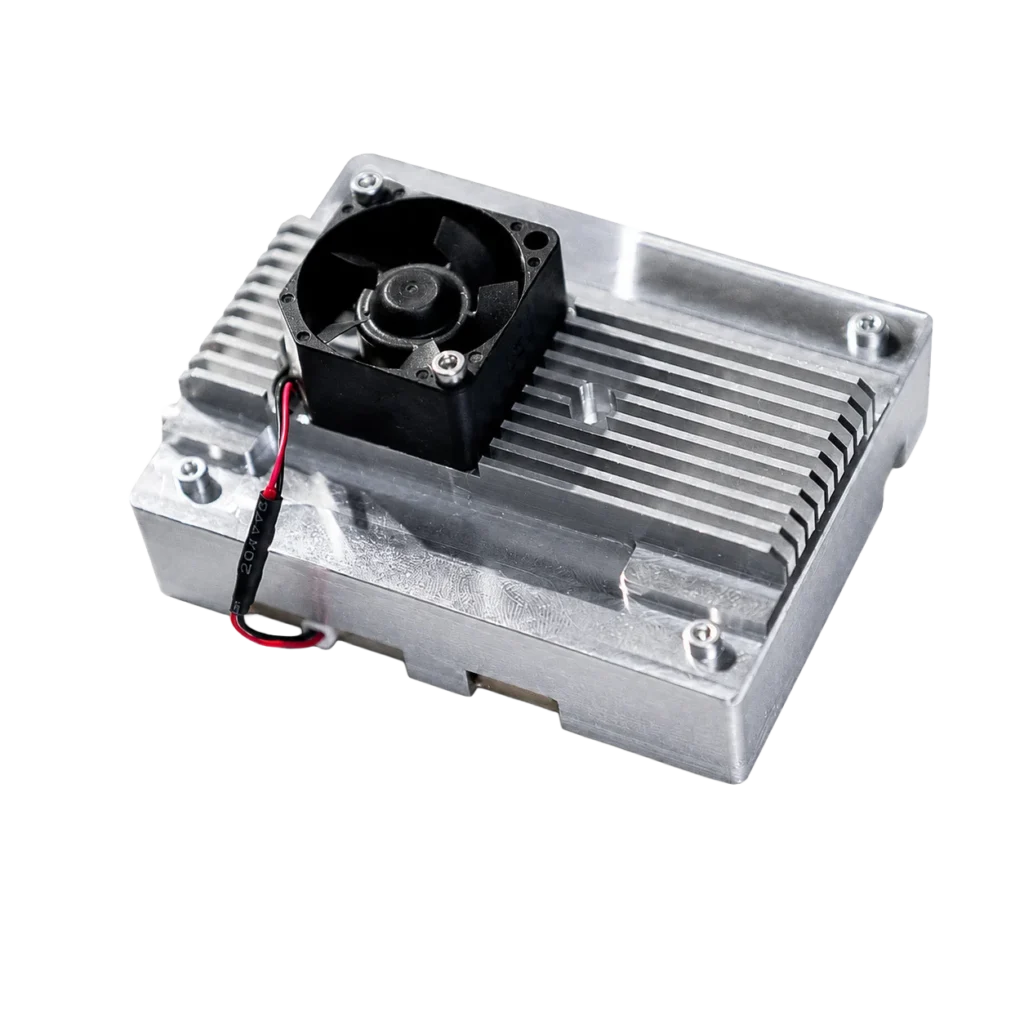
There are numerous foreign digital modules designed to address similar challenges, including solutions from Silvus, Persistent, Rajant, Radionor and others. We at Rise Technologies have also developed our own Nakande digital communication system, designed to operate in the conditions of the modern battlefield.
Author: Rise Technologies Commercial Director Viktor Chuikovskyi
Reading now
1

260+ vacancies in Ukrainian defence technology at BlueBird Tech, Sine Engineering, Buntar Aerospace and more
2
Buntar Aerospace raises $16M to scale up and enter foreign markets
3

6,000 lives saved by replacing people with robots. “Makar” on the ground strike drone unit NC13 and its role in Operation Vivaldi
4
Forbes: Airlogix plans to raise $100m at a $2bn valuation
5
Ratel Robotics and General Dynamics Mission Systems to jointly produce UGVs for Ukraine in Canada
By submitting this form, you give Defender Media consent to the processing of personal data.
Надсилаючи цю форму, ви надаєте Defender Media згоду на обробку персональних даних.

Latest insights
1
How to enter Norway’s defence market: an ultimate guide for Ukrainian companies
2

Everything about the RAM-2X mid-strike drone: interview with Ukrspecsystems deputy director Andrii Rymaruk
3

A demo is not demand: How to prove the value of a defence tech product. Column by Tekever Ukraine Director Kateryna Bezsudna
4
How to choose the right video link for an FPV drone: analogue, digital, or fibre-optic?
5