From idea to investment: How NETWORK.VC Defense selects promising defence startups
NETWORK.VC Defense Managing Partner explains how the fund selects its portfolio companies
На UADEVC 2026 в Берліні
American-Ukrainian venture capital fund NETWORK.VC Defense runs its own accelerator programme, with the second cohort of startups currently underway. Beyond supporting promising companies, the programme is a key part of the fund’s investment process, allowing its team to evaluate founders, technologies and business models before making investment decisions.
In a column for the Defence Tech Investor Playbook special project, Oleksandr Soroka, Managing Partner of NETWORK.VC Defense, explains exactly how startups are selected – and why a modern venture fund must not only invest, but also actively develop its portfolio companies.
NETWORK.VC Defense is currently running the second cohort of its international accelerator programme for defence and dual-use technology startups. The programme brings together teams from Ukraine, Europe and the United States developing solutions in unmanned systems, autonomy, artificial intelligence, electronic warfare, sensor technologies and other areas of the modern defence industry.
Over the past several months, participants have worked with international mentors, representatives of defence corporations, investors and potential customers, gaining practical tools for business development, fundraising and expansion into global markets.
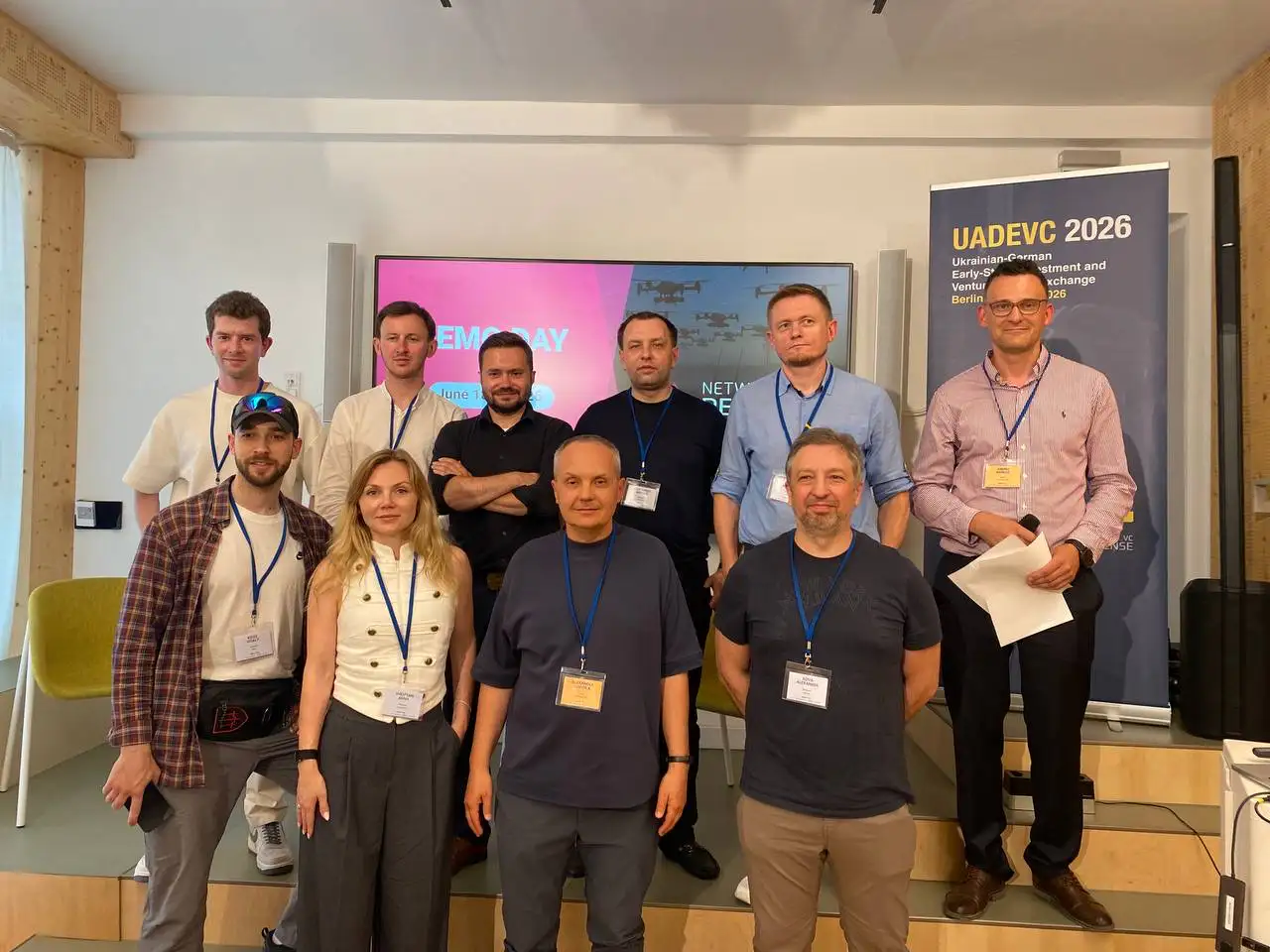
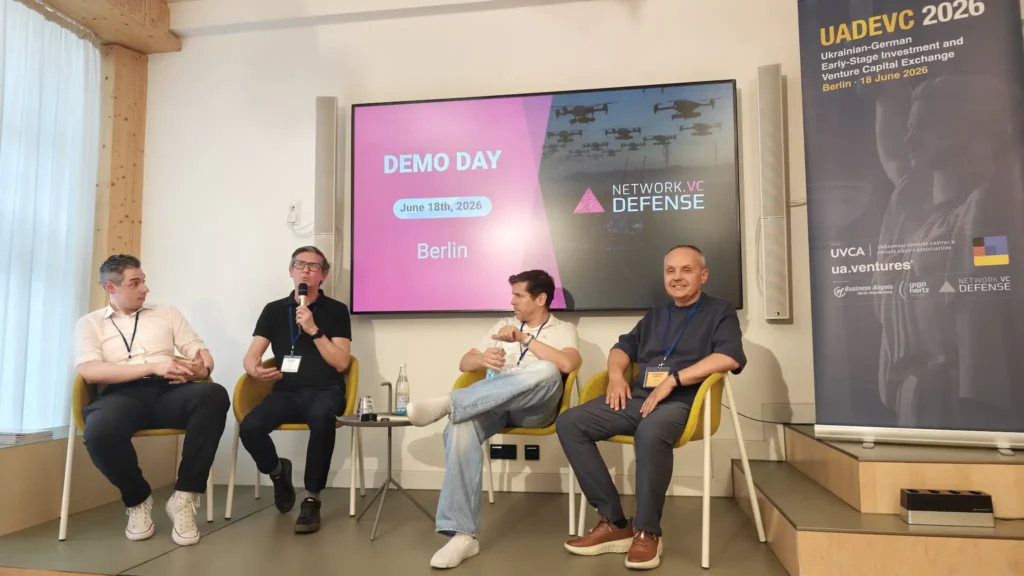
The programme culminated in a series of Demo Days held in Menlo Park, Paris and Berlin, where participating startups presented their solutions to international investors, defence industry representatives and potential strategic partners.
For NETWORK.VC Defense, however, the accelerator is more than a platform for supporting promising companies. It is an integral part of the fund’s investment process, enabling the team to gain a deeper understanding of startups’ capabilities, technologies and business models before making investment decisions.

In this column, I explain how we evaluate startups and why today’s venture capital funds should not only invest in portfolio companies but also play an active role in helping them grow.
The investment decision begins long before the pitch
In reality, the pitch is only the beginning of the process.
Behind every investment lies a significant amount of work that often remains invisible to the market. This is especially true in defence technology, where it is not enough to assess an attractive pitch deck or a promising market.
We need to understand whether the technology works in real conditions, how much demand there is for it among end users, whether it has the potential to scale, and whether the team is capable of delivering on its stated ambitions.
As investors, we are accountable to our partners and LPs (Limited Partners, the fund’s investors – ed.). Our task is therefore not to seek out loud stories, but to identify companies capable of creating long-term value.
Where startup selection begins
The first stage is initial screening.
We assess how well a startup fits our investment strategy, the maturity of its technology, the quality of its team and its market potential.

Each year we analyse far more projects than end up in our acceleration programmes or investment pipeline. In terms of the average funnel, of the 200 startups that come into our field of view, only around 20–30 pass the initial selection. After in-depth analysis of the technology, team and market, approximately 10 companies make it into the acceleration programmes. And only some of these subsequently move on to the investment review stage.
For us, what matters is not only how interesting a technology looks today, but also whether it has the potential to become a competitive business in a few years’ time.
Technology as the foundation of the investment decision
In defence tech, the technology itself remains the foundation of the investment decision.
We analyse the product’s technology readiness level, testing results, evidence of real-world use, technical advantages over comparable solutions, and the potential to scale production.
We pay particular attention to whether the product solves a real problem and how difficult it would be for competitors to replicate it.
Today the defence market is developing extremely quickly, which means that a technological advantage must be systemic rather than temporary.
The team matters more than it seems
Very often it is the team that determines a company’s future success.
A product can be refined, a business model changed, or a company adapted to a new market. But it is far harder to build a strong founding team.
We assess not only technical expertise, but also the ability to attract partners, build production, work with customers, manage resources and scale the business.
We particularly value founders who learn quickly and are able to adapt to new challenges.
Why assessing the product alone is not enough
We look far beyond current demand.
For us, it is important to understand the potential of the global market, the prospects of working with NATO countries, the possibility of integrating the technology into international programmes, and the presence of civilian or dual-use application scenarios.
The successful defence company of the future must be capable of operating beyond the boundaries of a single market or a single country.
That is why we assess how appealing a technology could be to international customers in five or ten years’ time.
Why acceleration became part of the investment strategy
We are convinced that creating value for an investor begins long before the moment of investment.
Many teams have strong technologies but need support with building a business, international development, working with investors, or entering new markets.
This is precisely what our acceleration programmes are for.
We bring in international experts, defence industry representatives, venture funds, corporate partners and potential customers. This allows startups to develop faster and address weaknesses before they begin scaling.
For an investor, this means access to better-prepared companies that have already passed through an additional stage of development and vetting.
Acceleration as a tool for evaluating startups
During the acceleration programme, we have the opportunity to work with teams over an extended period and observe them in real working situations.
We assess not only the technology, but also the team’s ability to deliver on tasks, work with feedback, adapt to market requirements and achieve set goals.
In a sense, acceleration is one of the most effective due diligence tools available.
It allows us to see things that cannot be assessed during a single meeting or a review of a presentation.
The most common risks the fund sees
Among the most common risks are excessive dependence on a single client, lack of intellectual property protection, difficulties scaling production, market overestimation, or a shortage of management competencies.
Sometimes we see strong technologies that do not yet have a clear commercialisation strategy. In other cases, conversely, a well-built business exists, but the technological advantage is insufficiently protected.
This is why we take a comprehensive approach to evaluating companies.
What a fund investor (LP) receives
First and foremost, a well-formed pipeline of opportunities.
The investor receives the output of the fund team’s work, which includes sourcing promising startups, technological expertise, market analysis, team assessment, business model verification, risk identification, acceleration support and ongoing company support.
In essence, the fund acts not only as a source of capital, but also as a system for selecting and developing promising companies.
When an investor sees a company at a Demo Day or in the fund’s investment pipeline, they are seeing only the tip of the iceberg. By that point, the fund’s team has already carried out dozens of hours of analysis, checks, interviews and expert consultations.
It is precisely this work that reduces investment risk and improves the quality of the investment portfolio.
The philosophy of NETWORK.VC Defense
We view startup sourcing, acceleration and investment as a single process of value creation.
Our goal is not only to find promising defence technologies. We aim to help them become international companies capable of raising capital, forming partnerships and scaling their solutions in the global market.
That is why NETWORK.VC Defense invests not only money, but also time, expertise, an international network of contacts and resources for company development.
In modern venture investing, the advantage goes not to whoever sees the most startups, but to whoever is able to properly assess their potential and help that potential be realised.
This is precisely the principle on which NETWORK.VC Defense is built. We believe that the best investments are not only about capital. They are about the ability to find strong teams, help them become stronger, and create technologies that will shape the future of the global defence industry.

Oleksandr Soroka
Managing Partner at NETWORK.VC Defense
Reading now
1
380+ vacancies in Ukrainian defence tech from Fire Point, DevDroid, UFORCE and others
2

A new Ukrainian fund, WildField Ventures, plans to invest $10-15 million in 20 dual-use startups. What areas is it interested in
3
230+ vacancies in Ukrainian defence tech from Tencore, Zvook, Airlogix and others
4
SkyFall unveils new StarGate hexacopter for casualty evacuation
5
Ukrainian units conduct “world’s first airborne evacuation from the frontline” using Audag-6 drone
By submitting this form, you give Defender Media consent to the processing of personal data.
Надсилаючи цю форму, ви надаєте Defender Media згоду на обробку персональних даних.

Latest news
1
Black Mirror #82: Filin cruise missile, Geran upgrades, new interceptor drones and other Russian miltech developments
2
Ukrainian defence firms sign 54 subsidised leasing agreements worth UAH 244.5 million
3

Himera and Danish GomSpace launch OBRIA NANO – a test satellite for the future Ukrainian communications network
4
TAF Industries and DoD Solution have integrated the Aura autonomy module into the Kolibri 10 Advance FPV drone
5