20 Ukrainian companies are working on jet-powered interceptor drones. Firebolt Engineering is among them
Firebolt’s production is based in Ukraine, but a turbojet engine is being developed for it in the United Kingdom
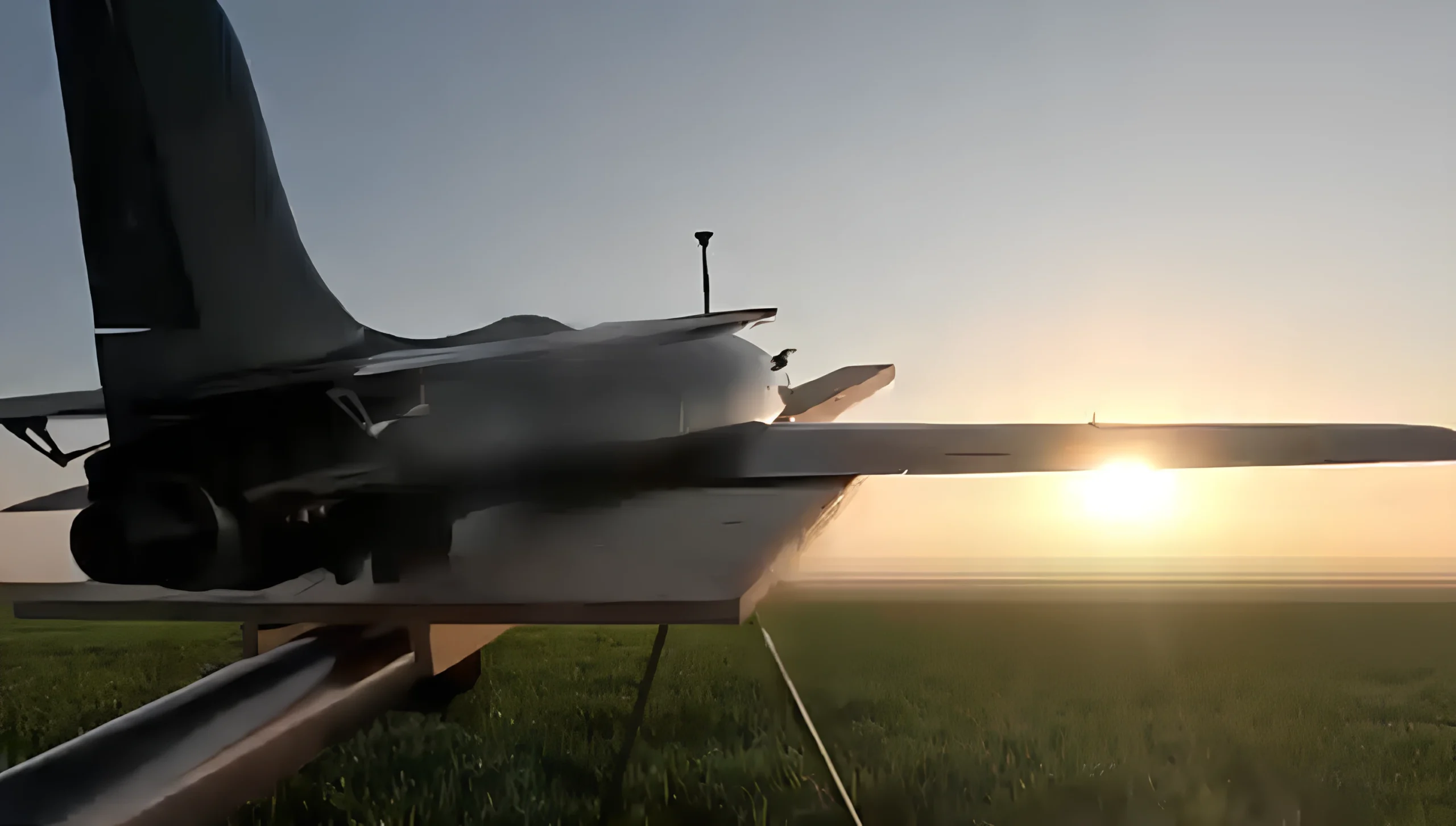
Griffen drone (Screenshot from Firebolt Engineering video)
In July, Defender reported on the jet-powered Griffen interceptor drone, which downed its first Shahed. The interceptor was developed by Ukrainian-British company Firebolt Engineering, which raised investment from British fund Grenadyr.
The team can currently produce 30 Griffens a month and is already preparing to expand its product line.
Defender Media spoke to the company’s CEO and its investor, and reports in more detail on the emergence of Firebolt Engineering, its products, and Ukrainian-British cooperation.
The company’s origins and investment from a British fund
Firebolt Engineering was born out of another project – Technary. This is an Odesa-based design bureau founded by Andriy Kosyak, Hennadiy Suldin, Viktor Rekun, Oleksandr Tumanovsky and Yevheniy Lyashan.
Technary’s product line includes training simulators for military personnel and the ‘ePPO’ app for reporting aerial targets. About a year ago, the team took on the development of its own interceptor drone.
After testing a multicopter version, the developers switched to a fixed-wing version due to better energy efficiency.
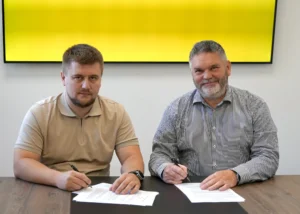
At the same time, the development team connected with Grenadyr through the Defence Builder accelerator. The British were specifically looking for a product to invest in.
Grenadyr director Tomasz Woźniak says that as jet-powered Shaheds scale up, a reliable solution for intercepting them “has never been more important.” The investor believes the Firebolt team is making a significant contribution to finding a solution that will be scalable and affordable.
After receiving funding from Grenadyr, the team created a separate company – Firebolt Engineering. The head of the interceptor project, Mykola, became its CEO. The speaker asked that his surname not be disclosed. The company has legal entities in Ukraine and the United Kingdom.
The parties to the deal are not disclosing the amount of investment from Grenadyr, though it is known that the size of the British cheque ranges from $350 thousand to $1.3m.
The new structure employs up to 25 people. Production is divided into three units: manufacturing structural components, final assembly and calibration. There is also an R&D department within the structure.
How the Griffen interceptor works
Firebolt Engineering’s first product was the Griffen interceptor drone. It has a jet engine, a fixed wing, reaches speeds of over 350 km/h, can climb to altitudes above 7.5 km, and has a flight range of up to 120 km.
In future, the developers plan to increase speed to 400 km/h and beyond. The CEO says this can be achieved by improving the drone’s aerodynamic characteristics.
The drone’s approximate cost is UAH 370,000–470,000. Production is based in Ukraine, while the partner company Dynamic Propulsion in the United Kingdom is developing a turbojet engine specifically for Firebolt. By the end of summer, the manufacturer expects to receive test samples.
For now, however, the drone uses Chinese engines. Other components come from Europe and Ukraine.
The company can currently produce 30 Griffens a month. The interceptors are used by two Air Force units and special forces units. The CEO says they plan to increase the number of crew-users in the near future.
Griffen was created in response to the emergence of jet-powered Shahed modifications, which are inaccessible to conventional interceptors. Helicopters and reconnaissance drones are also potential targets. Griffen’s first downed target was a Geran with a conventional engine.
Future of the interceptor and the company’s other products
The company plans to achieve full autonomy for the drone, in which the operator launches the UAV, and it finds and hits the target on its own. Other interceptor manufacturers, such as The Fourth Law, SkyFall and F-Drones, have set themselves the same goal.
To this end, the team is developing its own terminal guidance system, which is already undergoing testing. It is planned to be added to drones by default by mid-autumn.
However, the CEO says the interceptor’s autonomy runs up against another problem – Ukraine’s radar field. It is not dense enough and too fragmented, making it difficult to obtain accurate target data. According to him, solving this problem depends on the state and the procurement of radars.
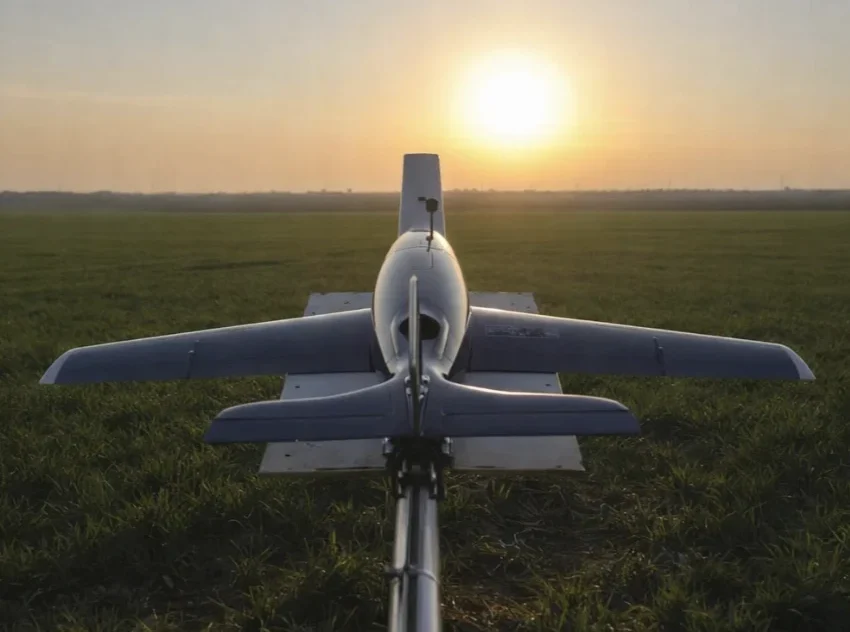
Firebolt is also working on a mid-strike drone. It is already being tested, and the resulting UAV is intended to carry a 4 kg warhead, reach speeds of up to 280 km/h and fly up to 120 km.
The team has also not abandoned the idea of an interceptor with additional armament. The CEO says this would make it possible to down at least two targets – one using onboard weapons, the other using the interceptor itself.
What the jet interceptor market looks like
Focused work on high-speed and jet-powered interceptors has intensified in response to Russia’s deployment of jet-powered Shaheds, according to state cluster Brave1.
Since the start of 2026, the number of jet-powered Shaheds launched at Ukraine has grown severalfold, Defender previously reported. In addition to these, Russia is also using, among other things, the Banderol – a missile-drone with a jet engine.
The main difficulty in downing jet-powered drones is their maximum speed, which reaches 500–600 km/h in the enemy’s newest Gerans. At the same time, in some cases, jet-powered Shaheds reduce their speed because they consume a lot of fuel at high speeds.
Brave1 explains that existing propeller-driven drones are not always able to catch up with such targets, which is why jet interceptors are a necessary technological response. Although their price is higher than that of copters, they still remain cheaper than conventional surface-to-air missiles.
There are currently around 20 companies in Ukraine working on jet interceptors – all at different stages of development. Besides Griffen, there is also the Chaklun Jet drone, presented at the SAHA exhibition. It can reach speeds of up to 320 km/h, fly for around 40 minutes and carry a 1.6 kg warhead, according to Army Recognition.
Last year, company Degree-Trans also unveiled the Bullet jet interceptor, which has a speed of up to 450 km/h, a range of around 200 km and a modular payload of 2.5 to 9 kg.
Reading now
1

260+ vacancies in Ukrainian defence technology at BlueBird Tech, Sine Engineering, Buntar Aerospace and more
2
Forbes: Airlogix plans to raise $100m at a $2bn valuation
3
US Buys 1,320 more FPV drones from Ukraine’s F-Drones for $6.5M
4
Japan signs contract with Ukrainian company SkyFall to procure interceptor drones
5
Phantom Defense provided EW systems for UAV tests under Drone Dominance
By submitting this form, you give Defender Media consent to the processing of personal data.
Надсилаючи цю форму, ви надаєте Defender Media згоду на обробку персональних даних.

Latest news
1
General Cherry says it cannot deliver drones under the tenders it has won. What is the DPA’s response
2
Quantum Tencore Industries plans to produce first TerMIT UGVs in Germany by end of 2026
3
ANT upgrades Mercury reconnaissance UAV system: flight time increased to five hours
4
DevDroid and Norway’s Inission Norge AS to cooperate on the production of UGV remote control systems
5