Product placement in Killhouse: how Ukrainian Shark, TerMIT and HIMERA made it into an action thriller
Defender Media spoke with the film’s director, Liubomyr Levytskyi, and representatives of the companies behind the featured products
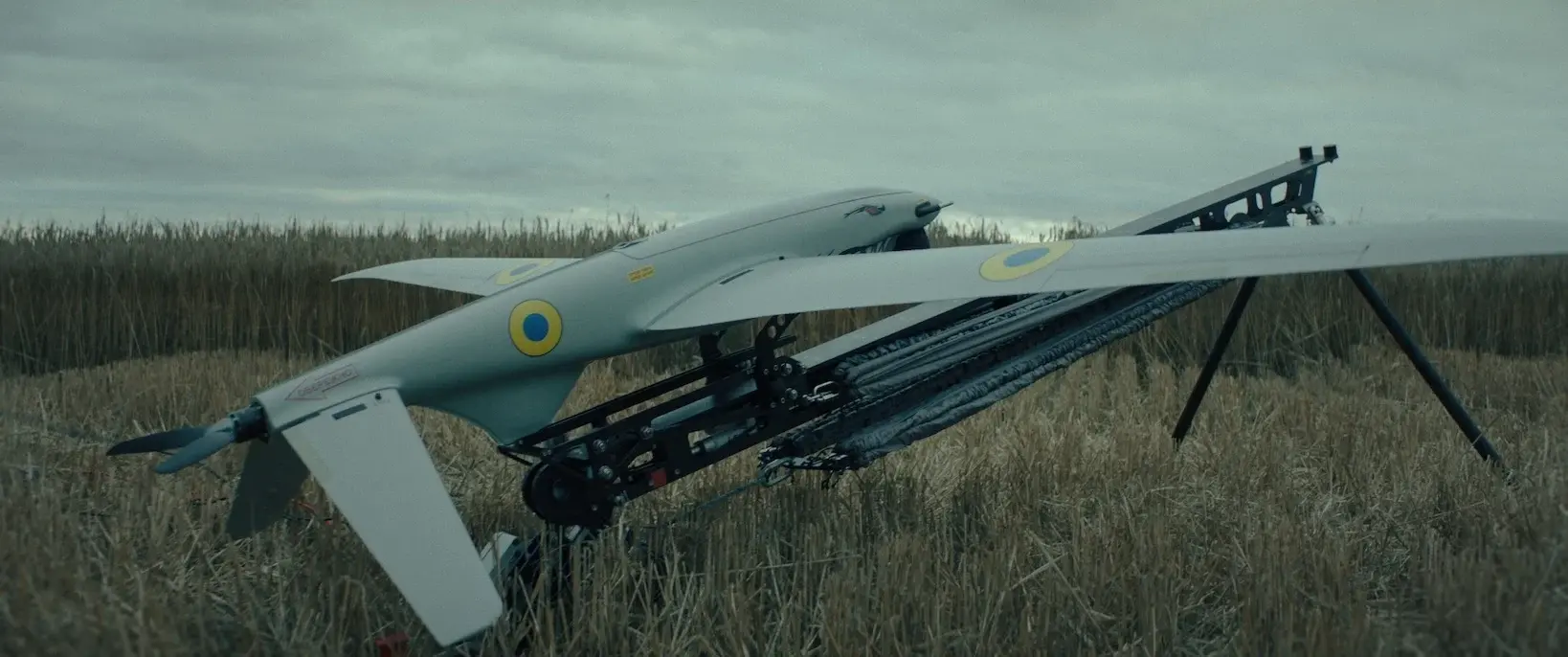
Shark-M. Still from Killhouse movie
Among the “actors” appearing in the new Ukrainian action movie Killhouse are the Shark-M reconnaissance drone by Ukrspecsystems, HIMERA radios, the TerMIT ground robotic system manufactured by Tencore, and several other products developed by Ukrainian defence industry companies.
Defender Media spoke with the film’s director, Liubomyr Levytskyi, and representatives of the manufacturers to learn how and why these products ended up on screen. The article also includes video clips and stills from the film featuring the systems in question.
About Killhouse
Killhouse is a Ukrainian military action film released in 2026 and directed by Ukrainian filmmaker Liubomyr Levytskyi.
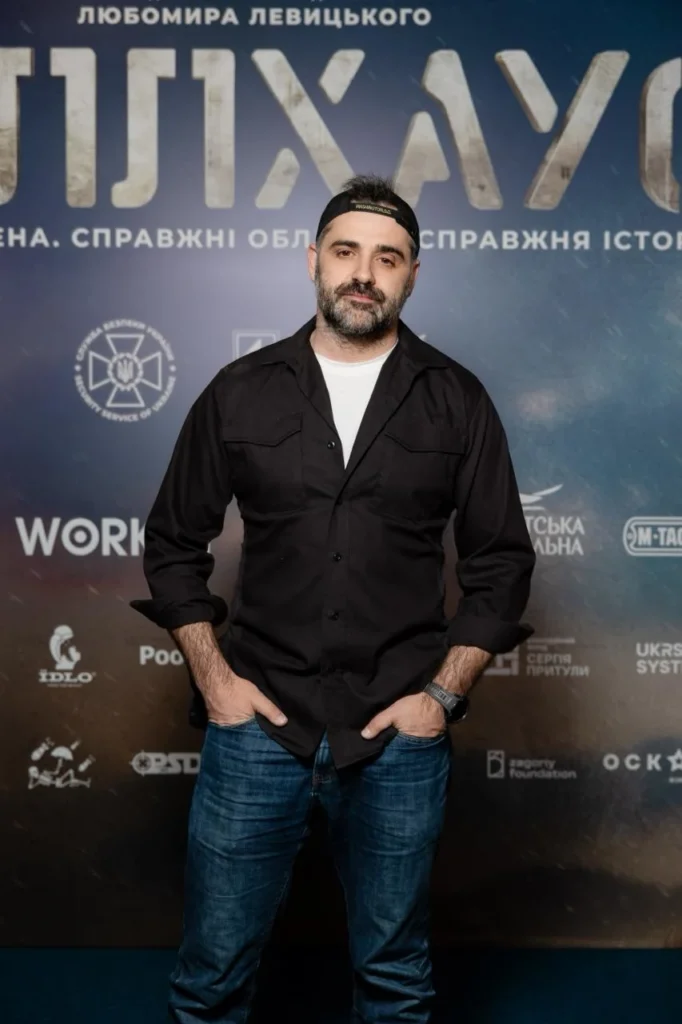
The film premiered in Kyiv on 21 April 2026.
Based on real events, the story centres on the rescue of a Ukrainian family by the 93rd Mechanised Brigade Kholodnyi Yar during the summer of 2022 near Izium.
Liubomyr Levytskyi says the core idea from the very beginning was to involve real military personnel in the production. According to the director, the film is about new technologies, real people, a new generation of Ukrainians, a new army and new special services, and how Ukrainian society has changed.
“We all understand that military culture, defence tech, weapons manufacturing and equipment production in Ukraine have made an enormous leap during the years of the full-scale war,” Levytskyi says. “So there was a desire to reflect at least part of that in the film and show the elements that naturally fit into the story.”
Product placement in the film
According to the director, Killhouse is the first example of Ukrainian-made weapons and military equipment being featured in a Ukrainian full-length film on such a scale and level of detail.
“I don’t know of any Ukrainian action or tactical film where domestically produced products have been shown this thoroughly and systematically,” he said.
When selecting weapons and military equipment for the film, the production team focused primarily on items that fit naturally into the storyline.
That is how suppressors from the Ukrainian company Kruk found their way into Killhouse. The suppressors were manufactured specifically for the film. According to Levytskyi, the products were tested by specialists from Ukraine’s military intelligence, the Security Service of Ukraine and various special operations units.
One of the most prominent roles in the film is played by the Shark UAS produced by Ukrspecsystems. Levytskyi describes it as a true star among Ukrainian drones.
“It is impossible to imagine, let alone successfully conduct, the kind of special operation depicted in the film without reconnaissance fixed-wing drones,” representatives of Ukrspecsystems told Defender Media. “We hardly had to weave Shark-M, our flagship reconnaissance UAV system, into the script. It naturally belongs there.”
The company says Shark-M essentially plays itself in the film.
“It provides Ukrainian commanders with situational awareness, allowing them to effectively manage combat operations and make informed decisions at critical moments.”
The film crew worked closely with Ukrspecsystems specialists while filming Shark-related scenes.
“They helped us film everything correctly, including launch procedures,” Levytskyi says.
According to Ukrspecsystems, Killhouse may be one of the most extensively consulted military films produced to date.
“Some of Ukraine’s best military units took part directly in the production and filming process. These are active military professionals of the highest calibre, whose expertise is now studied by the entire civilised world, including drone manufacturers,” the company noted.
Throughout the film, Ukrainian military personnel communicate using HIMERA radios, another domestically developed technology. The manufacturer shared several film stills with Defender Media showing its products on screen.
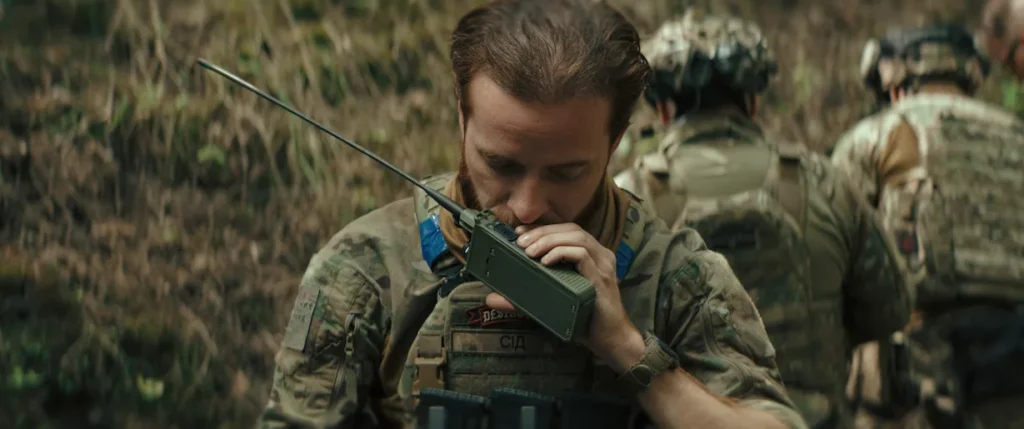
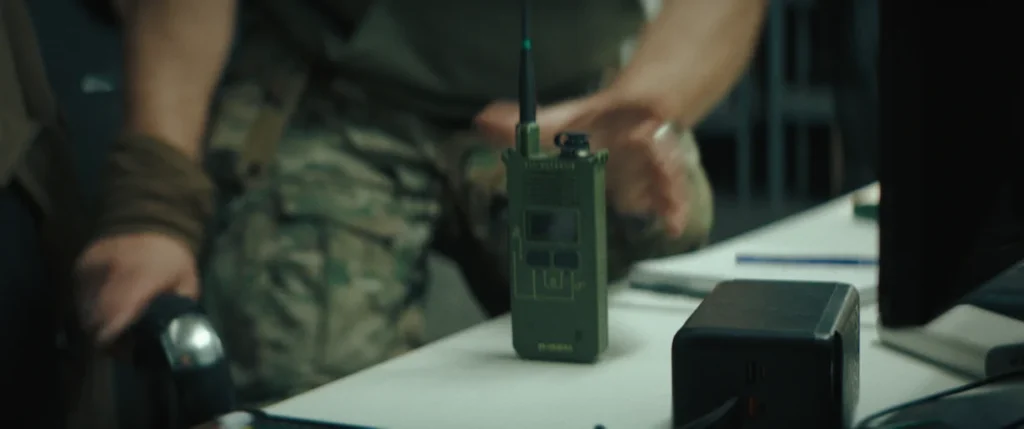
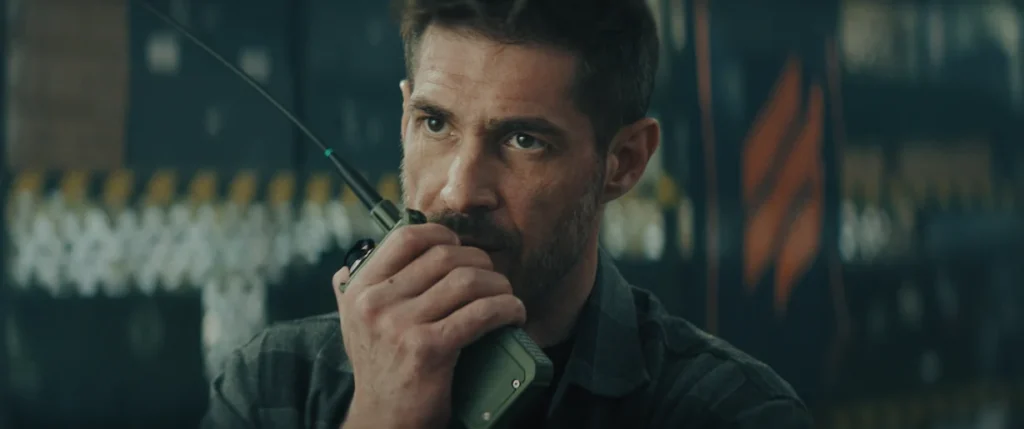
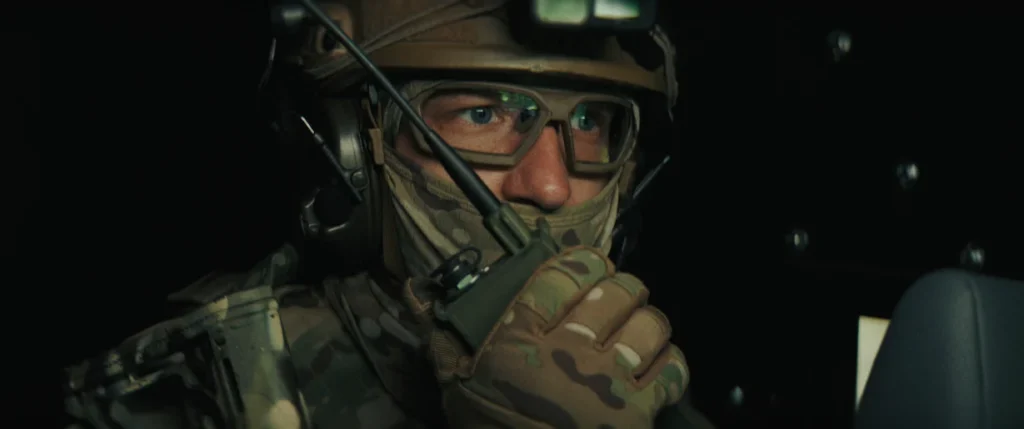
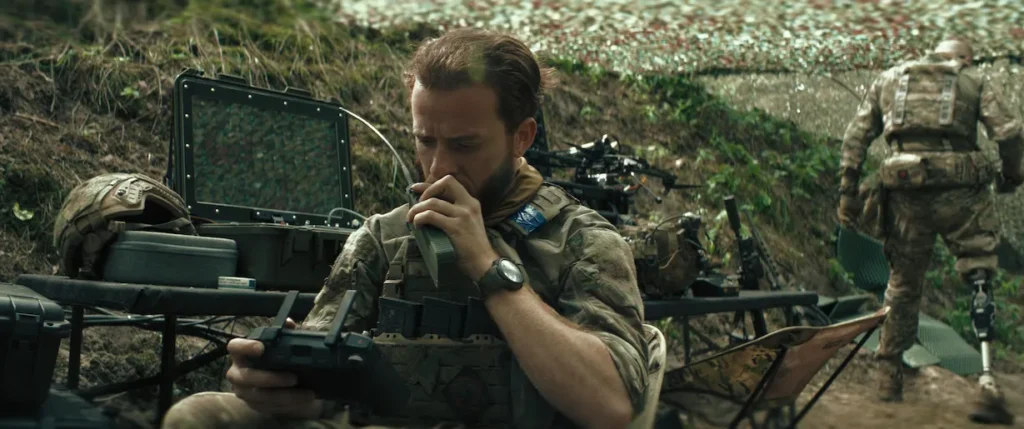
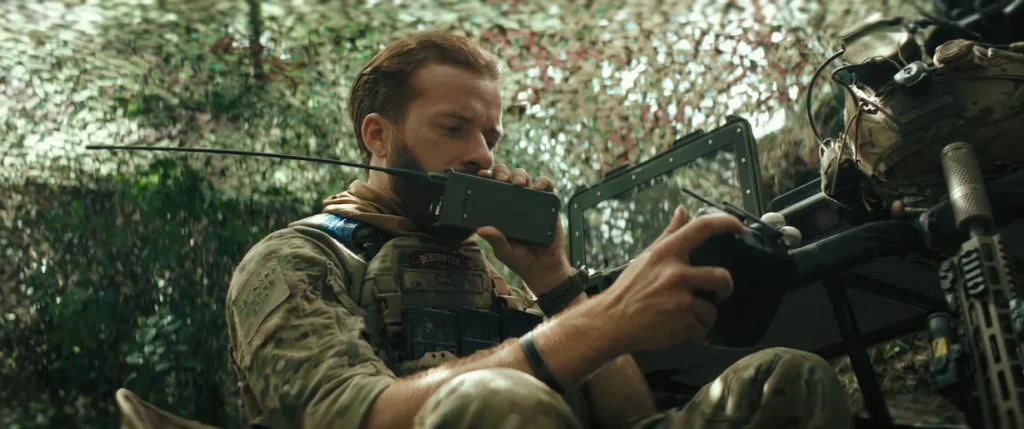
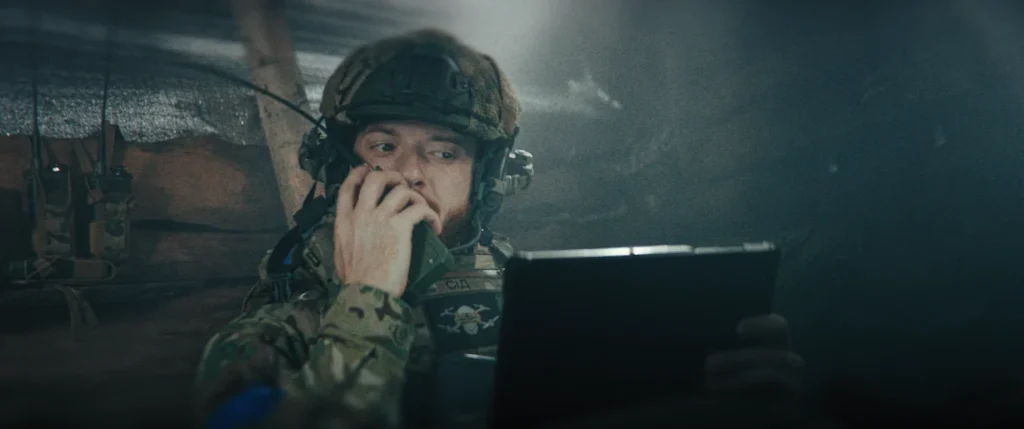
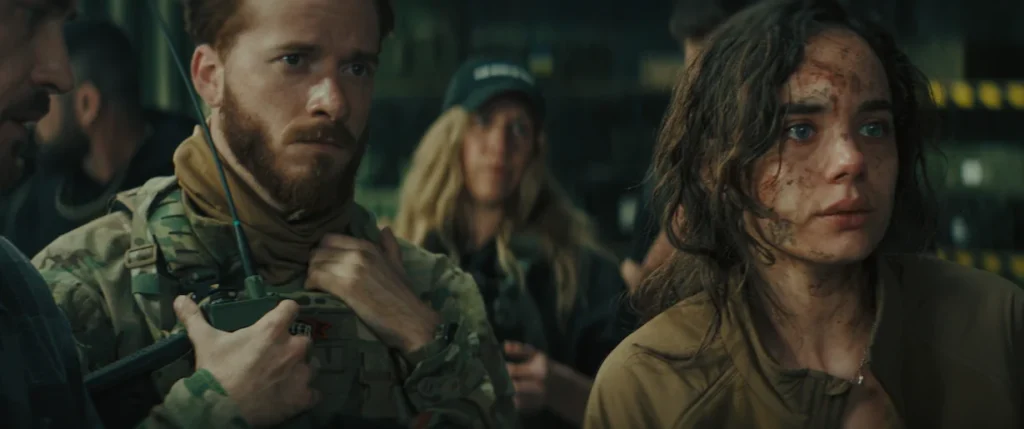
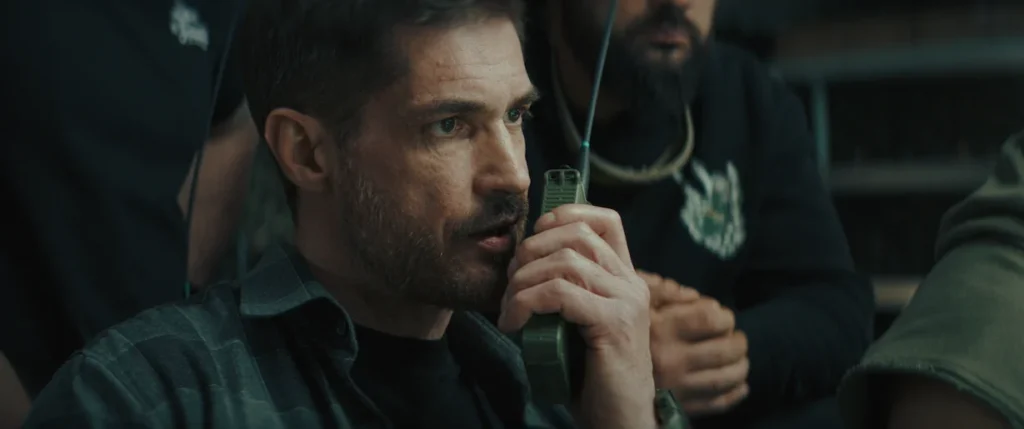
Liubomyr Levytskyi says HIMERA specialists helped the crew understand important technical details, including signal coverage, radio operation and how to make everything look realistic.
“We spent a long time working on what sound should play when the push-to-talk button is pressed,” the director recalls. “What’s interesting is that the sound we created for the film is now something HIMERA wants to install as the default sound on its radios. It’s a great example of how cinema can influence technology.”
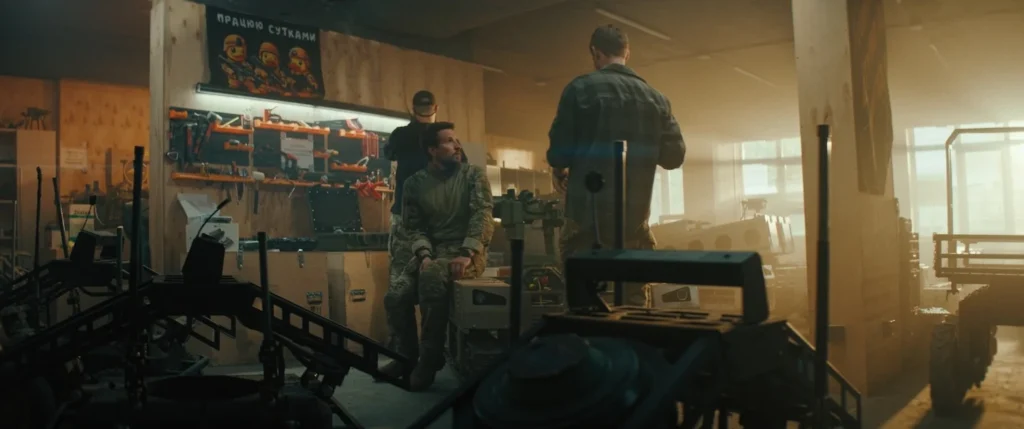
Another Ukrainian defence tech product featured in the film is the TerMIT UGV developed by Tencore.
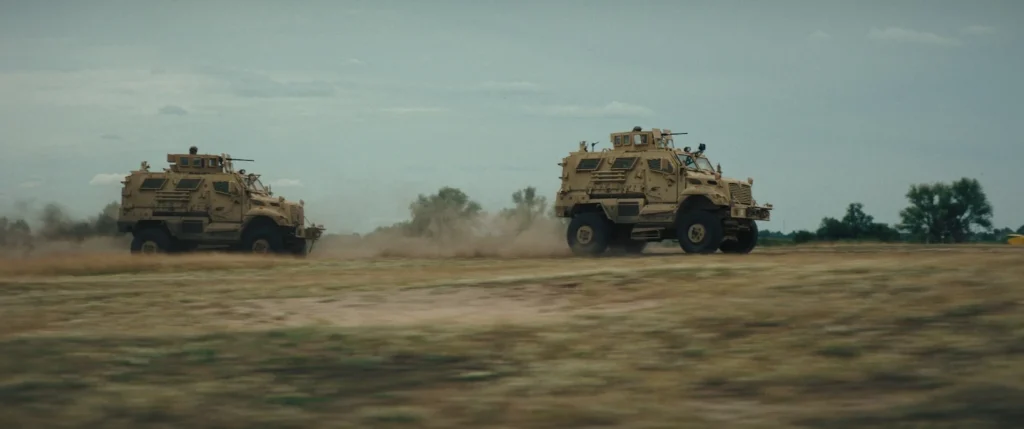
The film also includes the Inguar, a Ukrainian armoured vehicle.
“It’s an incredibly impressive armoured vehicle, and we worked closely with its manufacturers to understand how it should be portrayed, how it operates, what its advantages are and what makes it special,” Levytskyi says.
The director regrets that some scenes showcasing those capabilities did not make the final cut due to runtime constraints.
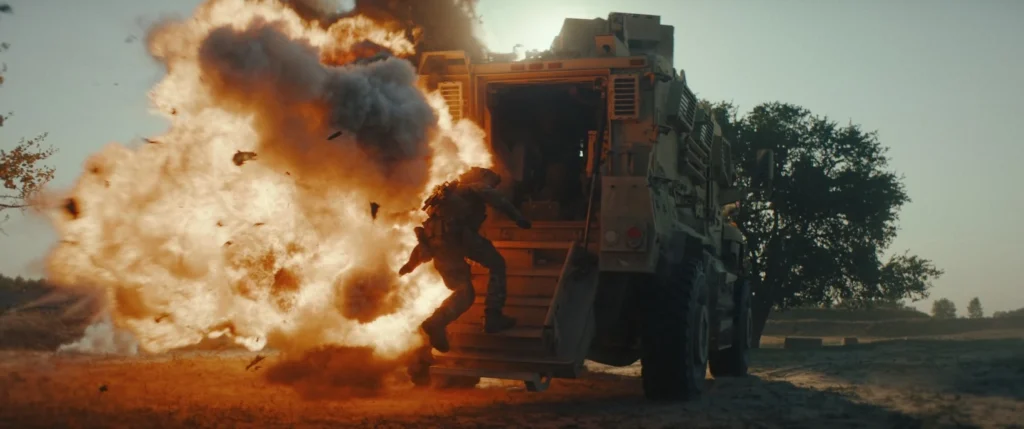
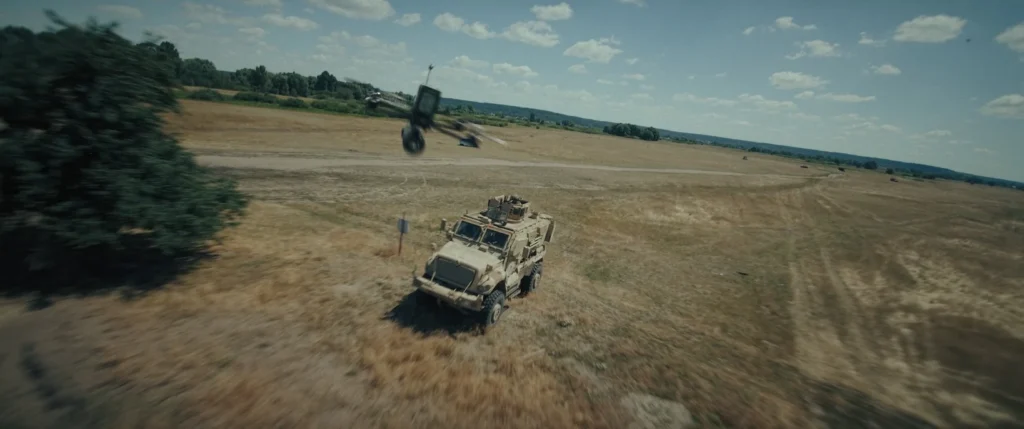
Other brands appearing in the film include Atagir, a manufacturer of pistol holsters, military apparel producer Abrams, and M-Tac, one of Ukraine’s leading suppliers of tactical gear and military clothing.
According to Levytskyi, it is important for both manufacturers and viewers to feel connected to the war effort, to future victory, and to the transformation Ukraine is undergoing as a country and as a people.
In his view, all of this is captured by a phrase repeated three times throughout the film:
“Today, there is no you and me. There is only us, and we are one.”
Reading now
1
SkyFall officially unveils Thor Hammer mid-strike and announces 1,000+ km version
2
Pentagon to hold Drone Dominance trials for bomber drones, with UFORCE, Gurzuf Defence, Grim Tech and others taking part
3
Terra Drone acquires 50% of Ukrainian Kurin Technologies for $3.5 million
4
British-Ukrainian Occam Industries raises €3.8m. The funds will go towards scaling drone autonomy software
5

Frontline Robotics CBDO Mykyta Rozhkov: Ukraine and Norway are working on an autonomous system to protect maritime infrastructure
By submitting this form, you give Defender Media consent to the processing of personal data.
Надсилаючи цю форму, ви надаєте Defender Media згоду на обробку персональних даних.

Latest news
1
Ukraine’s Defence Forces hit a record number of Russian air defence systems and radars in September
2
Nataliia Mykolska to become VP of Growth and Affairs at Sine Engineering
3
Black Mirror #79: What’s inside Geran-4, unmanned tanks, balloon barrages and more of a new russian miltech
4
6,000 lives saved by replacing people with robots. “Makar” on the ground strike drone unit NC13 and its role in Operation Vivaldi
5