Dorozvidka #63: Yarmak, Chmut, Syrskyi, Sviatokum, plus Fire Point, Vyriy, UGV Robotics, BlueBird and Sternenko Community
What other media outlets showcased about Ukrainian defence tech over the past week
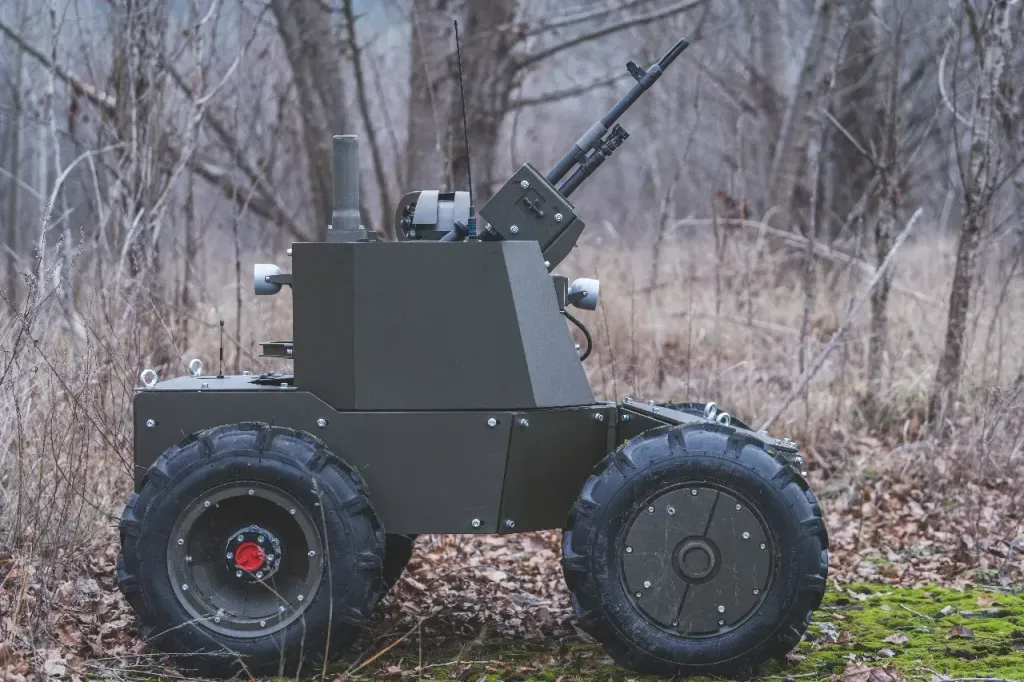
НРК "Лють" виробництва UGV Robotics / Фото виробника
In this edition of Dorozvidka:
- Taras Chmut on the export ban: “Our weapons will not become Ukraine’s oil if we keep wasting time”;
- Darknode Battalion commander Oleksandr Yarmak on shooting down Shaheds and R&D;
- Vyriy launches a training initiative for UAV pilots and crews;
- UGV Robotics CEO Petro Leontiev featured in the Weapons of UGVs video project;
- Syrskyi: Ukrainian interceptor drones destroyed more than 3,500 enemy UAVs in May;
- Fire Point featured by TSN and Al Jazeera;
- Behind the scenes of Sternenko Community: interview with the foundation’s director;
- Denys Svyatokum on Kyiv24;
- BlueBird Tech upgrades its Bandura UGV.
Taras Chmut on the export ban: “Our weapons will not become Ukraine’s oil if we keep wasting time”
Taras Chmut, head of the Come Back Alive Foundation, said Ukraine needs to abandon illusions about the technological uniqueness of Ukrainian drones. Speaking at the Security Architecture conference, he warned that Ukraine risks losing the global competition if the ban on weapons exports remains in place.
“If you look at what we call the Ukrainian technological miracle, there is very little Ukrainian technology there. An FPV drone is essentially 10–15 components that we buy and assemble. Our strength lies in learning how to quickly assemble a cheap, high-quality, functional product. That’s what we do well,” he said.
According to Chmut, another key strength of Ukrainian companies is their ability to adapt products to a battlefield that changes every three to four months. At the same time, he pointed out that Ukraine still lacks a complete manufacturing chain, from raw materials to components.
“If you look at our deep-strike drones, reconnaissance drones, and mid-range systems, the most valuable parts are communications, navigation and optics — and we buy them. If Silvus disappeared tomorrow, it would hurt us badly. If Starlink disappeared tomorrow, we would lose all those impressive videos from the SBU, HUR, Unmanned Systems Forces, Special Operations Forces and other branches of the Defence Forces,” Chmut said.
Darknode Battalion commander Oleksandr Yarmak on shooting down Shaheds and R&D
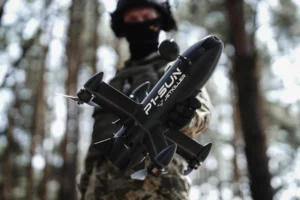
When Russia launched its full-scale invasion, musician Oleksandr Yarmak joined the military. Today, he commands Darknode Battalion, one of the most technologically advanced units within the 412th Nemesis Brigade. The battalion is known for its effective use of FPV drones against Shaheds and is also actively testing new interception technologies.
Speaking at DOU Day, Yarmak discussed why developing new drones is not always the answer, what technologies the Unmanned Systems Forces actually need, and whether frontline R&D makes sense.
Vyriy launches UAV pilot and crew training initiative
Ukrainian drone manufacturer Vyriy Industries has launched Vyriy Aero School, a training initiative designed to systematically prepare UAV pilots and crews, the company announced on social media.
The goal is to reduce the burden on combat crews, which, according to Vyriy, should be “fighting rather than training newcomers.”
The programme includes two formats. A basic course lasting one to two weeks combines theoretical and practical training. Operators already familiar with other UAV platforms can take an accelerated four-to-five-day practical course.
Training will initially focus on the Sokil reconnaissance drone, with the Veresen and Blyskavka UAVs to be added later.
UGV Robotics CEO Petro Leontiev featured in Weapons of UGVs
Petro Leontiev, CEO of UGV Robotics, appeared on Militarnyi’s Weapons of UGVs video project.
He discussed the company’s two flagship products: the Liut assault UGV and the Hyzhak remotely operated combat module, which is used to destroy enemy FPV drones.
Syrskyi: Ukrainian interceptor drones destroyed more than 3,500 enemy UAVs in May
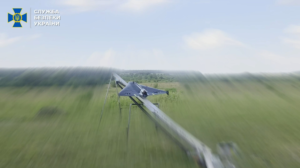
Commander-in-Chief of the Armed Forces of Ukraine Oleksandr Syrskyi said that most Russian Shaheds, Gerans and other aerial attack assets neutralised today are being destroyed by Ukrainian interceptor drones.
According to Syrskyi, interceptor drones eliminated more than 3,500 enemy UAVs of various types in May alone.
Not only has the number of interceptions increased, but the effectiveness of Ukraine’s “small-scale air defence” has also improved significantly. The highest performance, he said, comes from the second layer of air defence operated by the Unmanned Systems Forces, which downed more than 1,200 drones during the month.
Fire Point featured by TSN and Al Jazeera
How did defence company Fire Point begin? What mistakes did its first drones make? When will Ukraine field ballistic missiles? How many missiles do Shtilerman’s drones now carry? And what about mothership drones and missile-armed UAVs?
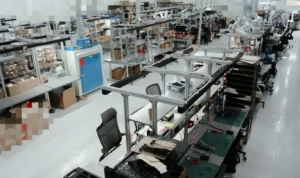
Fire Point co-founder Denys Shtilerman discussed the technical details behind the company’s latest weapons with TSN Tyzhden journalist Oksana Radionova and provided a tour of the production facilities behind some of Ukraine’s most effective long-range drones.
Meanwhile, Al Jazeera journalist Audrey MacAlpine published a video report from one of Fire Point’s underground factories, where FP-1 and FP-2 drones are assembled.
Behind the scenes of Sternenko Community
The GRUNT media team interviewed Oleksandr Skarlat, director of the Sternenko Community charitable foundation.
He spoke about how the organisation operates, how companies can become suppliers, the role of artificial intelligence in drones, and the foundation’s plans for 2026.
Denys Sviatokum on Kyiv24
Denys Sviatokum, chairman of the Ukrainian Dual-Use Technologies Cluster, appeared on Kyiv24 to discuss Ukraine’s defence industry, drones, interceptors, artificial intelligence, missile programmes and the future of the sector.
BlueBird Tech upgrades Bandura UGV
BlueBird Tech engineers have upgraded the control system of the company’s Bandura UGV, improving manoeuvrability and stability during off-road operations.
The key upgrade is the integration of Starlink as a backup communications channel when traditional analogue links become unstable or are completely disrupted by enemy electronic warfare systems.
The company has also upgraded the platform’s video surveillance system by installing additional cameras capable of operating via Starlink.
Reading now
1
Ukrainian Skyeton secures $10.6M US army contract
2
The Pentagon has announced the results of Drone Dominance Gauntlet II – announced Ukrainian companies did not make the top 5
3
Korven Systems project: How Teletactica co-founder is building an autopilot for interceptor drones
4
Ukrainian SkyFall again among winners of US Drone Dominance Program
5

Frontline Robotics CBDO Mykyta Rozhkov: Ukraine and Norway are working on an autonomous system to protect maritime infrastructure
By submitting this form, you give Defender Media consent to the processing of personal data.
Надсилаючи цю форму, ви надаєте Defender Media згоду на обробку персональних даних.

Latest news
1
Sights, radar systems and UAV components now available to the military through Prozorro Market
2
SkyFall officially unveils Thor Hammer mid-strike and announces 1,000+ km version
3
Ukrainian developer of AI tools for detecting information threats Osavul raises $10 million
4
TAF Industries plans joint UAV development with Luxembourg’s LUXUAV
5