
A drone detector is needed by almost every soldier on the frontline. Why does this segment barely interest investors?
What is happening in the market for devices that are hard to imagine travelling to the front without

Photo: Kara Dag Technologies
“Forty minutes ago this device saved five soldiers”, “the detector warned fighters in time about an FPV drone attack”, “safety improves both during movement and while the guys are at their positions” – a few quotes from posts dedicated to portable drone detectors.
This is now a must-have device when moving or staying in a combat zone. A small gadget costing between UAH 2,000 and UAH 42,000 can detect an enemy UAV in time and help save lives.
Although the importance of this technology is acknowledged by soldiers, investors, and manufacturers alike, the need for it has not yet been fully met: buyers face order queues, and investment into the segment is almost non-existent.
Defender Media conducted nine interviews with manufacturers, investors, and communications specialists to explain how the portable detector market currently works, how its customers are changing, why venture funds are not focused on it, and what its prospects are.
Who buys detectors and how
The primary audience for detectors remains the military. According to hospital statistics, 85% of FPV drone casualties occur on the road, says Serhii “Flash” Beskrestnov, a military radiotechnology specialist and adviser to the Ukrainian Minister of Defence. This makes having a detector for movement an everyday necessity.
Russian FPV drones already strike at ranges of 30–40 km, and detectors allow those operating within their range to feel more protected. And the deeper the “grey zone” extends, the greater the demand for these devices will grow.
As a result, other users have gradually joined the military: police officers, rescue workers, medics, journalists, bus drivers, and agricultural workers. Even civilians with no connection to these professions, but who live in somewhere like Kherson, are buying detectors for themselves.
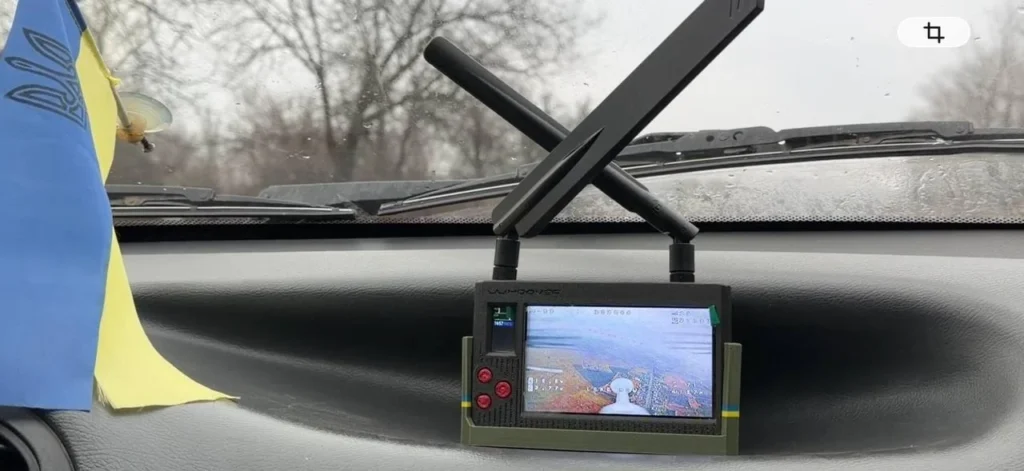
BlueBird Tech says the primary large-scale orders for detectors come from the Ministry of Defence. Local authorities, municipal enterprises, military units, and charitable foundations also purchase them. There are currently around 300 public procurement listings for such devices on Prozorro. This is combined with individual orders – at Kara Dag Technologies, for example, a greater share of sales falls into that category.
Have order queues shortened?
One of the main problems at the outset was the queues for detector orders, market participants note. Kara Dag Technologies began operating in 2023, and the queues at the time were enormous, recalls COO Andrew Poberezhniuk. The company needed two years to scale up production, reach acceptable volumes, and reduce dispatch times to one to two days.
Drone Spices, the manufacturer of the “Tsukorok” detector, faced the same problem at the start, says COO Yuliia Vodolaska. Tsukurok became one of the first detectors adopted by Ukrainian soldiers. The prototype was developed in 2022, when Drone Spices founder Dmytro Selin assembled it.
Between 2022 and 2024, the company’s management team worked on orders almost around the clock. The queue for the Tsukorok detector in 2024 stood at three months. The picture has now changed – sales continue, but demand is not as high as it was a few years ago. The Drone Spices representative says there is no sustained interest in the product; it shifts depending on the situation on the frontline. The company, therefore, does not maintain a large permanent team but has instead learned to scale up quickly when needed.
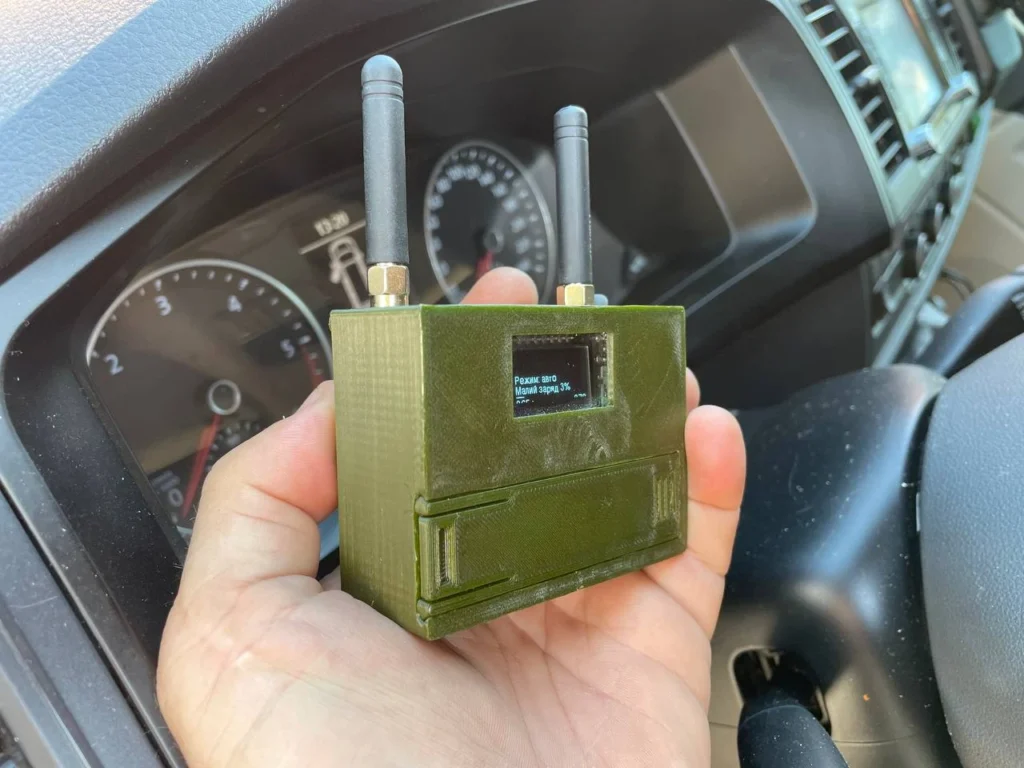
Meanwhile, Poberezhniuk from Kara Dag Technologies says that some competitors still have queues: “It may indicate low production capacity, or it may mean their orders are going very well.”
There are around 10 manufacturers of FPV video-intercepting drone detectors in Ukraine, says Serhii Beskrestnov. New companies are gradually emerging, and existing ones are increasing their volumes, so order waiting times are slowly shrinking. Competition is also driving prices down. The cost of portable detectors on the Brave1 Market ranges from UAH 2,000 to UAH 42,000, depending on the device’s capabilities.
How detection works
Most UAVs operating at the front use analogue video communication, says BlueBird Tech R&D engineer Serhii. Video transmitters and control receivers operate on specific frequency bands. A detector scans these bands and either intercepts the video or alerts the user to the presence of a signal. Intercepting a digital signal from a Mavic, for example, is difficult, so the detector instead alerts to the fact of a signal on a given frequency.
A portion of manufacturers’ catalogues is occupied by external antennas and extenders. These are used, for example, in armoured vehicles, which absorb radio waves, thereby reducing the detection range. An external antenna is therefore mounted on the vehicle, unimpeded by the armour plating.
Detectors can equally be used in dugouts. The BlueBird Tech antenna, for instance, takes up little space and is difficult for the enemy to spot.
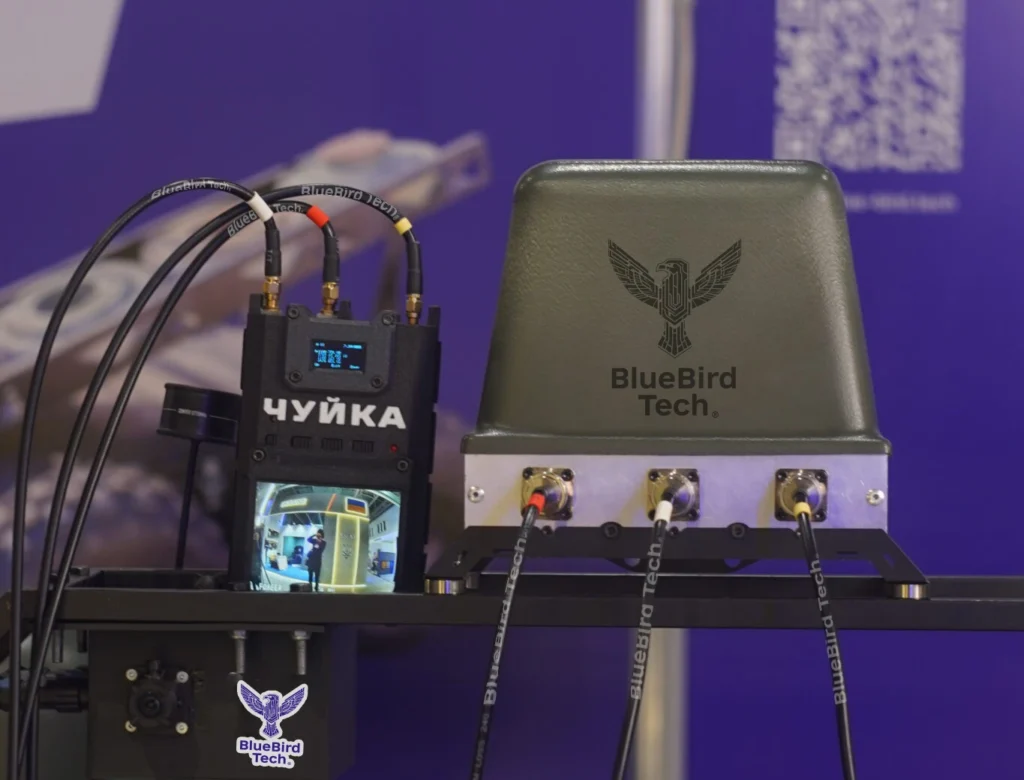
A similar problem exists in urban environments – buildings limit the detection range. At the same time, Kara Dag, for example, is testing a stationary monitoring point in Kherson. This is a protected Obriy detector housed in a sarcophagus casing, capable of withstanding weather conditions and mechanical damage, with cables running to a command centre.
Russians are also adapting to the development of Ukrainian detection capabilities. They are, for example, switching to custom frequency bands that detectors cannot intercept. The Babai company has released a device operating in the 7.5 GHz band, and its CEO says some Russian drones are already using these frequencies. Serhii from BlueBird Tech adds that Russia is also applying signal encryption, though very rarely, as it is expensive and does not fit the concept of a cheap FPV drone.
Another way to avoid detection is to use fibre-optic drones, which cannot currently be detected by such means. Russians occasionally resort to tricks on conventional FPV drones as well. For example, they alter the markings overlaid on the video feed to pass themselves off as a Ukrainian drone. In this video, the enemy VT40 UAV “transforms” into a Spaloh (presumably intended to be Spalah – the name of one of the unmanned systems battalions).
Full localisation is not yet possible
Thirty per cent of components in Kara Dag detectors are Ukrainian-made, with the remaining 70% sourced from China and Taiwan, the company says. According to the project’s COO, this helps keep the product as affordable as possible for the end user. Materials purchased in Ukraine include metal, aluminium, copper, and silicone. The advantage of local suppliers lies, in particular, in faster delivery.
Drone Spices uses Ukrainian, Chinese, American, and European components in its detectors. The company’s representative says making it 100% Ukrainian is difficult.
BlueBird Tech confirms that not everything can be localised, and so components are ordered from China and Europe. At the same time, the company produces some antennas in-house, the circuit board is an original development by the company’s engineers, and the casings for the “Chuika” are also printed using their own 3D printing facilities.
Several companies sourcing components from China report difficulties with orders. The manufacturer of Babai, for instance, is facing supply delays. The CEO suggests this is due to large-scale orders from Russia, which is also purchasing components there. Kara Dag claims that China is restricting component supplies to Ukraine, meaning they must be ordered via Poland.
How investors view this sector
According to estimates from various analytical firms, the global drone detector market was valued at $659–730 million in 2024. Gradual growth is forecast through to 2030, already visible in the performance of Ukrainian companies. Franek, a detector manufacturer, increased its revenue by 169% between 2024 and 2025, according to YouControl. Kara Dag Technologies has similarly improved its figures, the COO says. Revenue has also grown at other companies with such devices in their product lines – BlueBird Tech and the manufacturer of Contra Drone – though these do not focus solely on detectors.
At the same time, although the detector market valuation is growing alongside demand, investors are not rushing to back manufacturers of these products.
One publicly known private investment in a detector manufacturer is Kara Dag Technologies, which received backing from the American fund Green Flag Ventures in 2024. “It allows us to meet demand, scale our operations, improve our technology,” Kara Dag founder and CEO Erik Kadyrov said at the time. BlueBird Tech co-founder Ihor Osetymskyi also spoke of cooperation with investors.
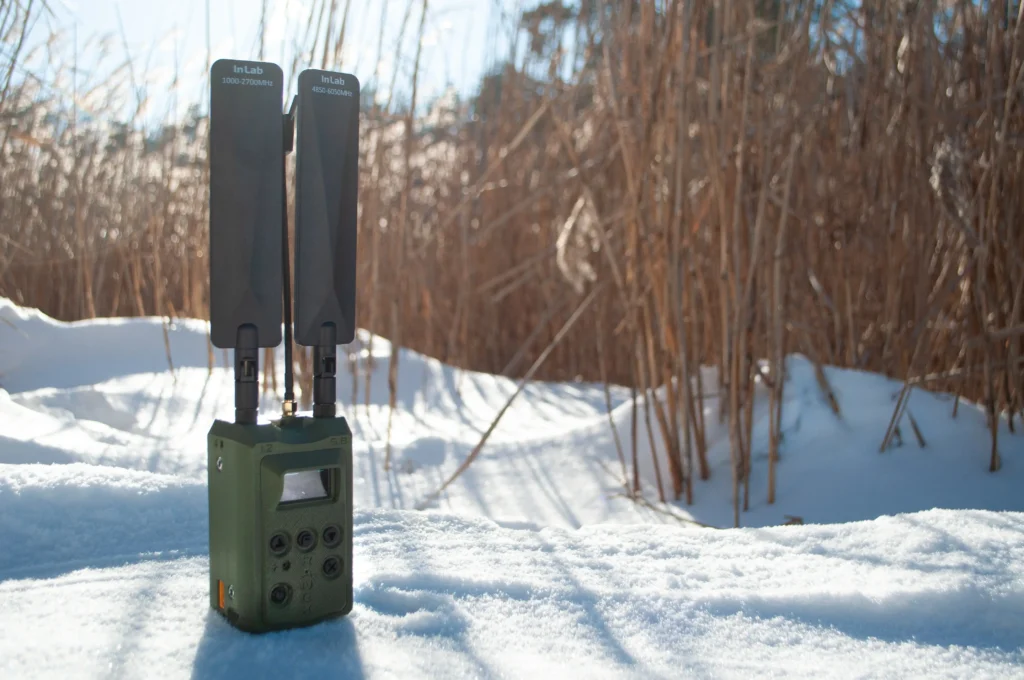
Investor representatives tell Defender Media that this sector is indeed not a focus for the funds. According to Network.VC Defense lead analyst Pavlo Odnokoz, venture investors are more inclined to back solutions that are harder to replicate.
The portable detector space already has a range of products from various manufacturers, and both large and small companies can begin developing them. Competitive advantages here are also minimal.
Since radio frequency detection is a relatively straightforward technology, every country wants to produce something of its own, says Oles Khudoba, co-founder of Double Tap Investments. “For international investors, this topic is often simply irrelevant, because the system does not require any very specialised knowledge. They have the time and the money, so they can develop it themselves,” he adds.
One scenario in which international investment might begin flowing actively into this sector is the emergence of “properly packaged” propositions. “If we start asserting that they need it for a range of reasons, I am confident it will sell. But it is more of a technical question – whether it is even possible to package it correctly and demonstrate our differentiation,” says Khudoba.
Valeriia Fadieienko, principal at Angel One fund, also highlights the limited application of detectors. Once the hot phase of the war ends, demand may drop, and sales could become unstable.
And while funds understand the importance of the technology, investors are focused on how it will develop further. According to research by AVentures Capital, last year money flowed primarily into companies working with UAVs, autonomy, and EW/ELINT. Fadieienko also adds that funds largely share a similar focus – drones, AI, and electronic warfare.
On the other hand, large EW/ELINT manufacturers are themselves uninterested in venture investment. “When a large order is in place, they can raise funds for that project from other sources, which makes more sense for them,” Odnokoz explains.
In the meantime, grants remain an option for manufacturers. The Drone Spices team, for example, received funding from the state cluster Brave1. It is also known that Kseonics Technology, which produces detectors, charging stations, and a tester for EW systems, received a grant from Brave1.
Market and export prospects
The United States and European countries have already concluded contracts with private companies for the supply of personal detection systems. Danish company MyDefence, for example, signed a contract with the US to supply more than 400 drone detection systems.
Ukrainian manufacturers, therefore, also have a chance to enter the international market. However, as Pavlo Odnokoz of Network.VC Defense notes, a product alone is generally not sufficient for such foreign sales. “A systemic approach is needed, in which the portable drone detector is a component of more comprehensive counter-drone systems,” the analyst explains.
Although procurement is emerging, Europeans are only beginning to discover the importance of detection, says a representative of Gnizdo LTD, a Ukrainian technology hub in the United Kingdom. The company acts as a distributor of some detectors and sells them in small batches for testing abroad.
“They are still getting to know this. And based on our experience, it will take a year to a year and a half before they can purchase and adopt this product,” says the Gnizdo LTD representative.
However, when discussing the sale of deftech technologies abroad, officials and manufacturers themselves consistently stress that it must not come at the cost of the domestic army’s needs. In Ukraine, not even 1% of the total need for detectors has been met, according to Ministry of Defence adviser Serhii Beskrestnov.
He adds that the market will continue to develop, but the product currently does not carry high margins. This is why many manufacturers are not investing in this space. Kara Dag Technologies, for instance, confirms that it “barely earns anything” and reinvests funds to scale. Drone Spices, in addition to grants and sales, receives income from manufacturers producing Tsukorok units under commercial licences.
Reading now
1
SkyFall officially unveils Thor Hammer mid-strike and announces 1,000+ km version
2
Pentagon to hold Drone Dominance trials for bomber drones, with UFORCE, Gurzuf Defence, Grim Tech and others taking part
3
Terra Drone acquires 50% of Ukrainian Kurin Technologies for $3.5 million
4
British-Ukrainian Occam Industries raises €3.8m. The funds will go towards scaling drone autonomy software
5

Frontline Robotics CBDO Mykyta Rozhkov: Ukraine and Norway are working on an autonomous system to protect maritime infrastructure
By submitting this form, you give Defender Media consent to the processing of personal data.
Надсилаючи цю форму, ви надаєте Defender Media згоду на обробку персональних даних.

Latest news
1
Nataliia Mykolska to become VP of Growth and Affairs at Sine Engineering
2
Black Mirror #79: What’s inside Geran-4, unmanned tanks, balloon barrages and more of a new russian miltech
3

6,000 lives saved by replacing people with robots. “Makar” on the ground strike drone unit NC13 and its role in Operation Vivaldi
4
M-Fly and Dwarf Engineering announce partnership: what it involves
5