Black Mirror #84: Guidance of Iskander-M, what is in Geran-5 K5-K, Kokoshnik and other novelties of Russian miltech
Overview of the novelties of the Russian military-industrial complex for the first week of November
Launch of an unknown Russian satellite from the Plesetsk cosmodrome
Last week, Ukraine’s Defence Intelligence (HUR) analysed an upgraded version of Russia’s Geran-5 drone and published a list of its components, including parts made in Europe. Russian sources described two new interceptor drones designed to fly at more than 400 km/h. It also emerged that Iskander-M ballistic missiles use two homing systems. Read more about these and other developments in Russia’s defence industry in Black Mirror, Defender Media’s weekly review.
Iskander-M missiles received optical and radar homing systems
The 9M723 ballistic missile of the Iskander-M short-range ballistic missile system is equipped with two homing systems — the 9E436 optical correlation system and the 9B918 active radar system. This information was confirmed by presidential advisor Serhii “Flash” Beskrestnov.
The optical seeker determines the missile’s position by matching terrain imagery with pre-prepared data. This navigation principle uses features of the Earth’s surface to adjust the flight without constant reliance on satellite navigation signals.
The Iskander radar seeker uses its own active radar channel to obtain target information.
HUR revealed the components of the new modification of the Russian UAV Geran-5 K5-K
The Main Directorate of Intelligence of the Ministry of Defence of Ukraine published an interactive 3D model of the new modification of the Russian Geran-5 K5-K jet drone on the War&Sanctions portal, as well as information about its design and electronic component base. Based on an examination of one of the nearly undamaged specimens, specialists identified 93 electronic components of foreign origin.
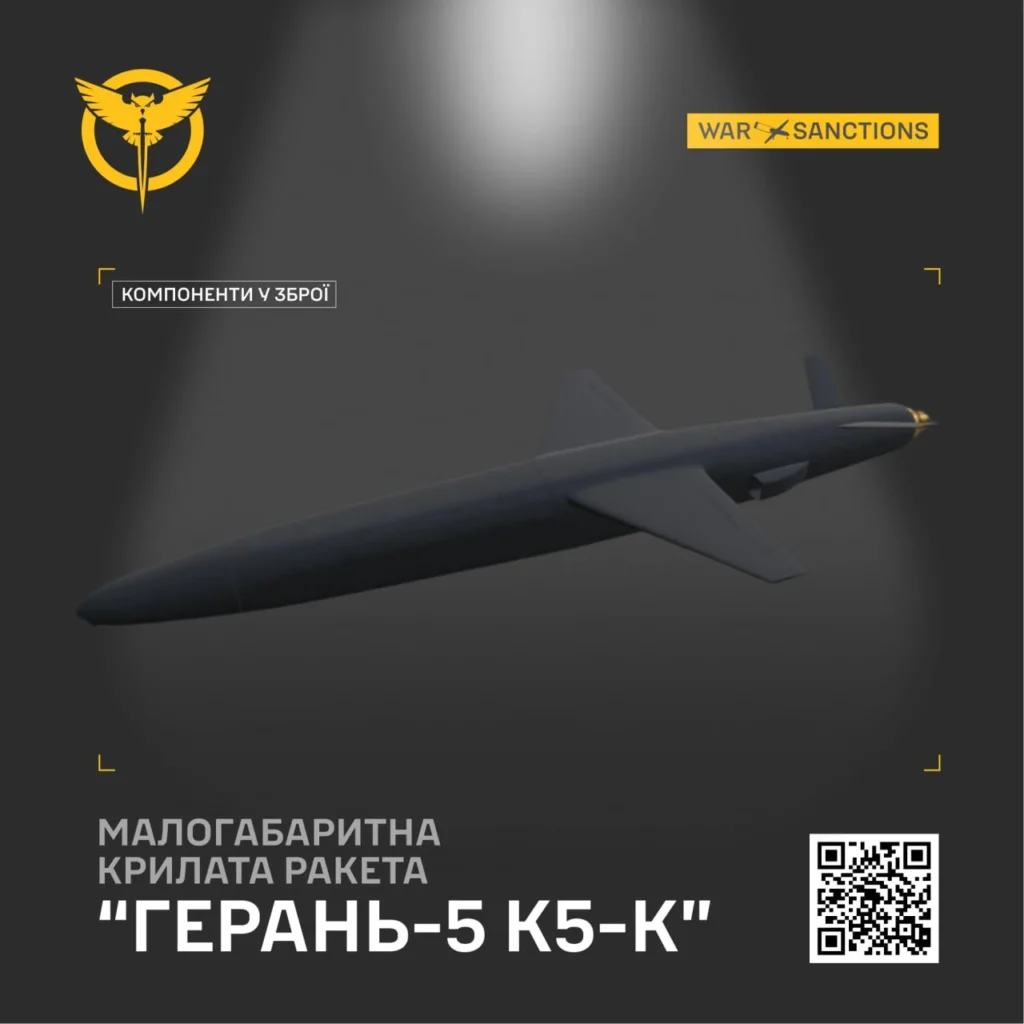
The K5-K is slightly smaller than the Geran-5 and has an altered fuselage. The claimed maximum flight altitude has increased from 5 to 6 km, the cruising speed exceeds 450 km/h, and during individual manoeuvres it can reach 1,000 km/h. Flight range — up to 1,000 km, warhead mass — 90 kg. In the examined specimen, HUR discovered a TBBC-90 thermobaric warhead.
The K5-K’s on-board avionics generally match the equipment of the latest versions of the “Geran-4 Seeker” jet UAV. In particular, the drone is equipped with a flight controller, a SADRA Seeker inertial navigation system with a MOX module, a 16-element CRPA antenna — a localised copy of the Harxon GI-006, a tracker, and a mesh modem.
Also, the Susanin optoelectronic correlation system was identified in the design, which compares the image from the camera with reference images stored in the microcomputer’s memory to monitor route compliance with the preset one. In the K5-K, the system uses a dual-band camera instead of separate optical sensors. Image processing is provided by a Coke Pi microcomputer — a Chinese analogue of the Raspberry Pi.
The propulsion system is a TRD-200 turbojet engine, assembled in the “Alabuga” Special Economic Zone from Chinese components.
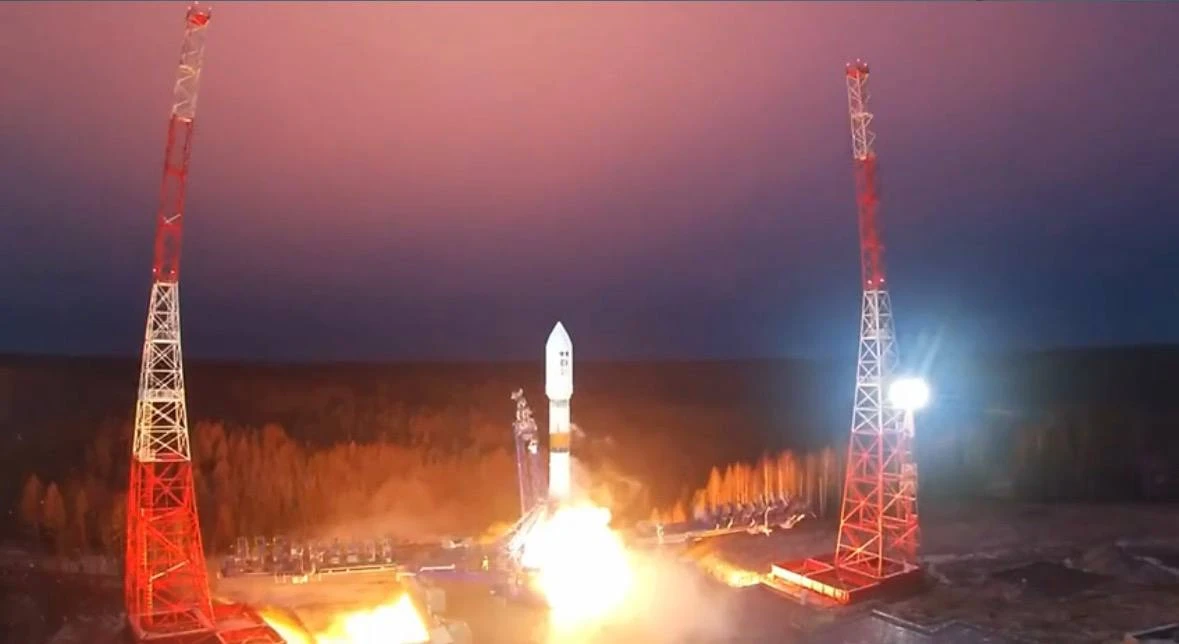
Russia launched a satellite of unknown purpose from Plesetsk
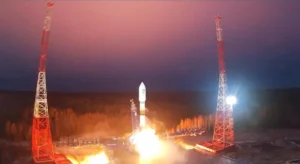
On November 7, Russia launched a Soyuz-2.1b carrier rocket from the Plesetsk cosmodrome. It placed a spacecraft into orbit, the official purpose of which is not disclosed.
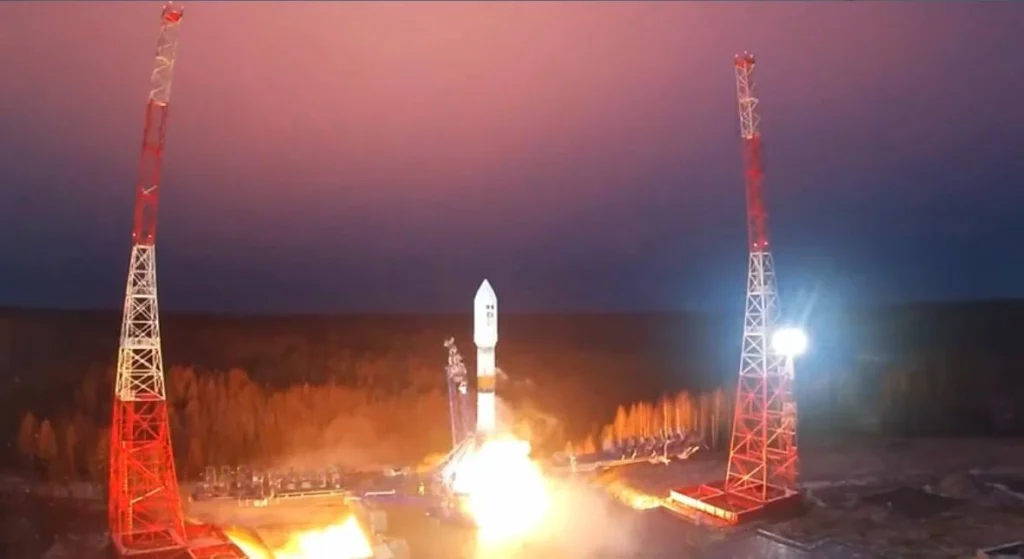
According to the Ministry of Defence of the Russian Federation, the spacecraft was placed into the designated orbit, after which ground control facilities established stable telemetry communication with it.
Russian observers suggest that the satellite may monitor other satellites, assess their technical condition, and analyse operations in orbit.
Russia claims the interception of a 100-kilogram drone using an aerostat
A Russian aerostat equipped with protective cables intercepted an aeroplane-type drone weighing about 100 kg with a wingspan of approximately 4 m. Polina Albek, founder of the “Pervyy Dirizhabl” aviation design bureau, spoke about this incident.
According to the developer, the system uses an airborne platform with special cables that create a physical barrier in the drone’s path.
Aerostats are also considered as platforms for deploying anti-aircraft defence equipment for facilities. According to Albek, radar stations, electronic warfare systems, and structures for physical drone interception can be installed on them.
Details of the claimed interception have not been disclosed. In particular, the aerostat’s flight altitude, the cable system’s design, and the object it protected are unknown.
Citadel anti-aircraft system received a mobile version on a vehicle chassis
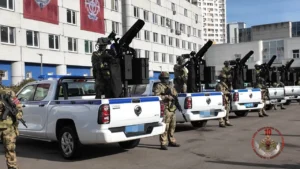
The Russian state corporation Rostech has developed a mobile version of the Citadel anti-aircraft artillery system. In this new configuration, the combat module, radar, and optical target detection systems are mounted on a vehicle chassis.
The mobile version is intended for rapid movement between objects requiring protection from air attack assets. The system is also planned for use in mobile fire groups.
Chernyy Sokol-3 interceptor drone reaches speeds of up to 400 km/h
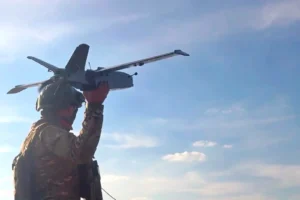
The Russian military is testing the third modification of the Chernyy Sokol interceptor drone, which, according to operator claims, can reach 360–400 km/h.
The previous modification could reach up to 270 km/h and was used against drones on the frontline. The third model, as claimed, is being prepared to intercept jet drones.
The claimed performance characteristics of the new version have not yet been confirmed by independent testing.
Russian UGV Depesha-3 is used for engineering missions
The UGV Depesha-3 of the Russian holding Vysokotochnye Kompleksy was used to transport a metal crossing in the combat zone. The state corporation Rostech reported this.
In the published video, a tracked platform tows a trailer with an engineering structure along a difficult route, including sections with waterlogged soil.
According to the developer, Depesha-3 is designed to operate in conditions of limited visibility, particularly at night, as well as over rough terrain. The platform can tow trailers weighing over 500 kg.
Gerbera-2 equipped with an interceptor drone detection system
The Russian Gerbera-2 drone received a video processing unit named Sosiska. According to available reports, the system is designed to detect interceptor drones and execute evasive manoeuvres.
The updated version of the Gerbera-2 features increased dimensions and a fuel tank with a capacity of 63 litres.
Kokoshnik interceptor drone with a 400 g warhead
The Russian company EDgun presented the new hand-launched Kokoshnik interceptor drone. According to the claimed characteristics, the drone is capable of independently locking onto an aerial target at a distance of up to 1.2 km and reaching speeds of up to 300 km/h. The warhead mass is 0.4 kg.
The developers plan to increase the maximum speed of the device to 450 km/h and the warhead mass to 1 kg.
Vogan-15 strike drone equipped with a Malyutka ATGM warhead
The Russian military adapted the shaped-charge warhead of the Soviet Malyutka anti-tank guided missile for use on the Vogan-15 strike drone.
The mass of the shaped charge is 2.6 kg. The claimed armour penetration of the warhead is up to 400 mm.
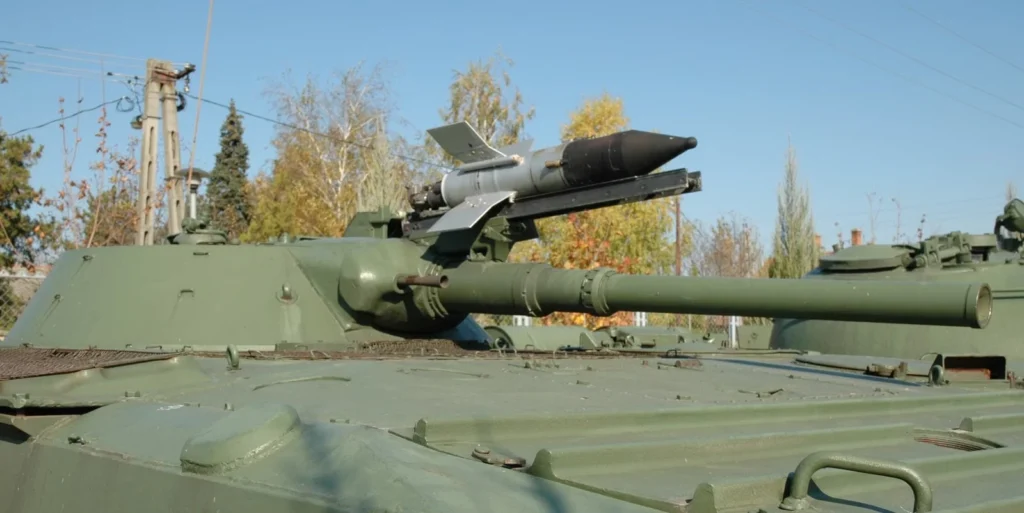
The Malyutka missile was developed in the USSR in the 1960s to combat armoured vehicles. The system used a wire-guidance system, with the help of which the operator corrected the missile’s flight. In the new configuration, the warhead was adapted for dropping from a drone and is used as an aviation munition to strike ground targets.
Kochevnik mobile anti-aircraft system with a engagement range of up to 4 km
In Russia, a model of the Kochevnik mobile anti-aircraft missile system was presented, designed to combat aerial targets, including drones. According to published data, the system is planned to be placed on an all-wheel-drive two-axle KamAZ chassis with an armoured cabin. The cargo platform provides for the installation of a radar station, a thermal imaging camera, and other system elements.
The S-8VTs missiles, intended for use from Ka-52 and Mi-8AMTSh-V helicopters, are claimed as armament. The claimed target engagement range is up to 4 km.
The system will be able to track up to eight aerial targets simultaneously, but fire at only one of them. The claimed detection range characteristics are up to 1,000 m via the thermal imaging channel and up to 2,000 m via the television channel.
Reading now
1

Why A&D manufacturers need a coherent digital strategy now
2
Ukrainian-Japanese FPV KT-2 drones appear on Brave1 Market: key details and specs
3
Why Danes, Swedes and Norwegians invest in Ukrainian defence tech: Gardar, Final Frontier and Varangians explain
4

6th UK-UA Defence Tech Forum to take place in London: cooperation with Ukraine, arms production and investment
5

14+ defence tech events around the world in November
By submitting this form, you give Defender Media consent to the processing of personal data.
Надсилаючи цю форму, ви надаєте Defender Media згоду на обробку персональних даних.

Latest news
1
Black Mirror #84: Guidance of Iskander-M, what is in Geran-5 K5-K, Kokoshnik and other novelties of Russian miltech
2

Valkyrie Dynamics raises €1m for interceptor drone radar and is already preparing its new version
3

Digital twin, real results – smart manufacturing in Aerospace & Defense
4

Ukraine’s MoD and Economic Security Bureau to vet defence procurement before contracts are signed
5