Black Mirror #78: Susanin for the Geran-5, Zubr air defence systems, SuperCam updates and other Russian miltech developments
Overview of Russian defence-industrial complex developments for the fourth week of September
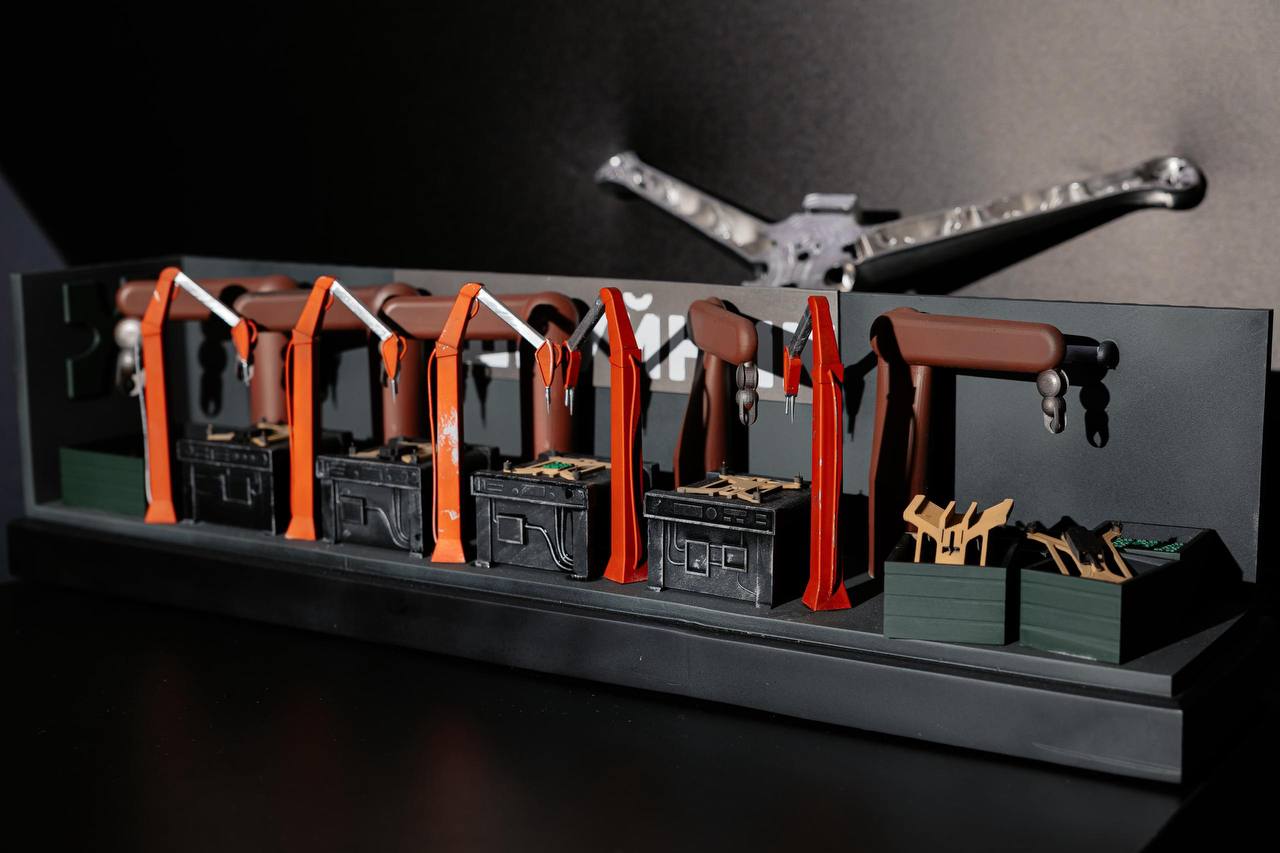
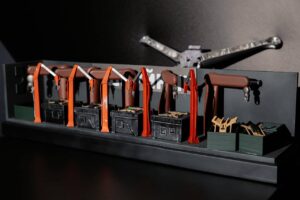
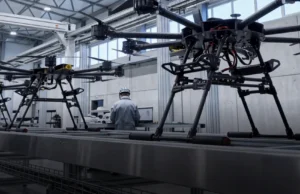
Model of a containerised UAV assembly workshop
Last week, the Russians discussed modifications to the Geran-4 Seeker and Geran-5 strike drones, planned to use satellite communications technologies via the Rassvet system, and released footage of the Zubr air defence system in operation. In addition, military personnel from the Rubicon centre published statistics on interceptions of Ukrainian fixed-wing drones, while representatives of Ushkuynik spoke about the development of an autonomous mobile UAV assembly centre. Read about these and other developments in Russia’s military-industrial complex in Defender Media’s weekly Black Mirror review.
Geran-5 receives K5 modification with Susanin optical correction system
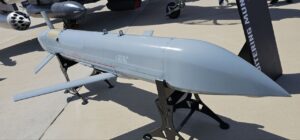
The Geran-5 jet-powered unmanned aircraft has received a new modification designated K5, featuring a modified fuselage and the Susanin optical trajectory correction system. Components of the system were found among the wreckage of the drone.
According to the published description, Susanin uses optical correction and navigates using images of the terrain captured by an onboard camera and pre-loaded terrain data. The method is designed to enable flight missions in the absence of GPS signals and communication with the operator. The system is similar to those used on Kh-101 cruise missiles and some other systems.
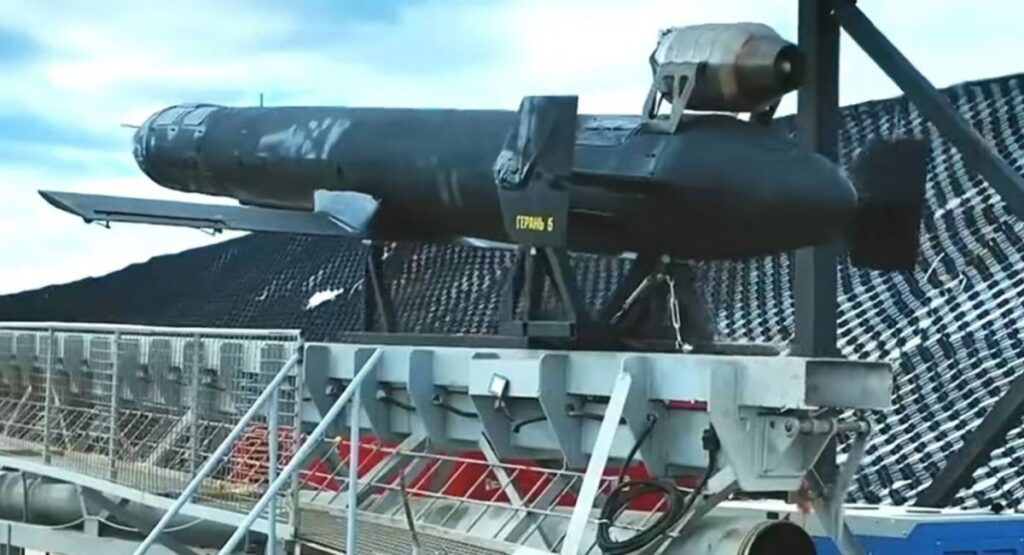
Another method of guidance and control was described by presidential adviser Serhii “Flash” Beskrestnov. According to his information, the Russians used two strike drones, one of which acted as a relay and provided strike-damage assessment.
According to Beskrestnov, the jet-powered Geran-4 flew around the site of the strike on a data centre at an altitude of about 3 km. The drone acted as a MESH radio-signal relay for the Geran-5, which carried out the strike, while simultaneously recording and transmitting footage of the attack to the operator. The Geran-4 then flew beyond Kyiv and struck a McDonald’s warehouse.
The jet-powered Geran sometimes switches off its engine before an attack
The Geran-4 jet-powered strike drone sometimes switches off its jet engine before attacking a target and continues flying in a glide, presidential adviser Serhii Beskrestnov said.
“There is currently no clear understanding of whether this is a malfunction or a deliberate action to approach the target as slowly and accurately as possible,” the statement said.
In the published video, a Geran-4 Seeker searches for a target; the drone can be seen with a front-facing camera and two MESH antennas on its tail section, one pointing downwards and the other upwards.
Preparations for strikes using Rassvet satellite navigation
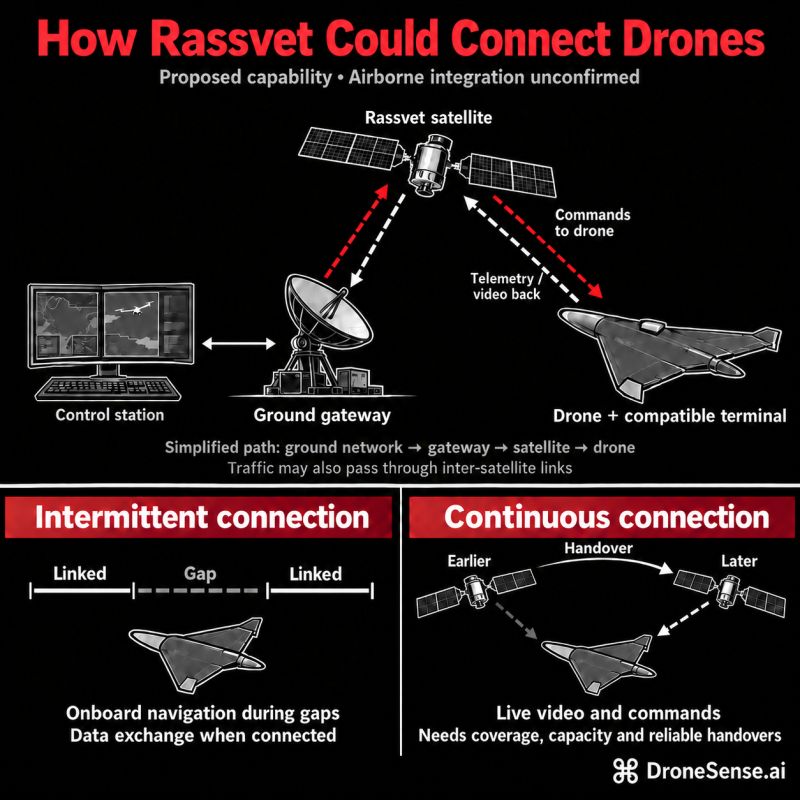
Russia’s Rassvet satellite constellation may already comprise 32 satellites and provide several hours of communications over the combat zone. According to open-source data, 12 of 16 spacecraft have reached their target orbit at an altitude of 550 km, while the others are being raised to operational orbits.
According to Russian analysts, Russian military communications via Rassvet have already been detected, although there have so far been no reports of corresponding terminals being installed on Russian drones.
At the same time, Geran-4 Seeker strike drones may use the Russian satellite constellation for control and data exchange: according to claims by Russian media, the use of guided Gerans against moving targets may indicate this.
In addition, Russian analysts have written about the possible use of satellite communications by medium-range drones as a means of supporting MESH communications. With a sufficient connection to Rassvet, Russian drones could transmit video, monitor changes in the situation and receive control commands beyond the range of ground-based relays.
Rubicon FPV units claim to have intercepted more than 6,000 fixed-wing UAVs
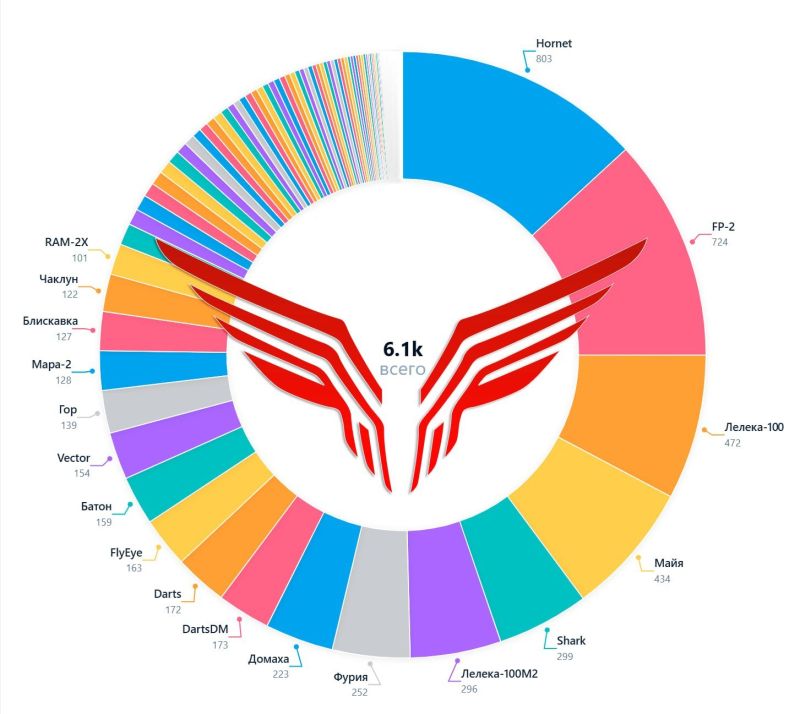
The air defence unit of Russia’s Rubicon centre has claimed to have intercepted more than 6,000 fixed-wing UAVs, including more than 1,000 since the beginning of September 2026.
Two models — the FP-2 and Maya — account for more than half of Ukrainian drones since the beginning of September 2026. Hornet, Leleka-100, Shark (M), “Furia”, Domakha, Darts, FlyEye, Baton and others are also mentioned.
Forpost operator describes surveillance capabilities
An operator of the Russian Forpost UAV described the drone’s long-range surveillance capabilities and the training of specialists. According to him, from an altitude of 7.5 km, an operator can make out a person and determine whether they are an adult or a child. He said armoured vehicles can be identified at distances of up to 10 km.
Forpost is part of a reconnaissance-strike unmanned aircraft system. The drone can be used for reconnaissance, while its strike variants are designed to carry air-launched weapons and missiles.
Another task for the operator is identifying objects at considerable distances. To this end, specialists are trained to work with imagery and recognise targets.
The stated specifications of the Forpost are: length — 5.85 m, wingspan — 8.55 m, flight altitude — up to 6,000 m, flight endurance — more than 17 hours. The drone can reach speeds of up to 200 km/h, carry up to 100 kg of payload and has an operational range of up to 250 km.
Yastreb 1.0 electronic warfare system undergoing final trials
Russia’s Yastreb 1.0 intelligent electronic warfare system is undergoing final trials. The system is planned for deployment on the frontline in November, while final testing and trials against unmanned aircraft are currently under way.
According to its developer, Yastreb 1.0 can detect threats by scanning the radio-frequency spectrum and selectively suppress them without distributing its power across a broad band. The system operates across the 100–6,000 MHz range.
The system’s electronic intelligence component has gained a video interception function, with the imagery displayed on the operator’s network. The next stage of development is described as shifting frequencies into the bands used by Starlink systems to maximise the suppression of potential threats.
Patent and trials of a new artillery smoke shell
Russia’s Defence Ministry has patented and tested a new artillery smoke shell designed to create smoke screens. The development can also be used to blind optical and optoelectronic equipment and systems operating in the infrared range.
The aim of the development was to address shortcomings of the 155 mm LU217MS smoke shell for the Caesar self-propelled howitzer and create an aerosol-forming munition with specified smoke-screen parameters, increased effectiveness and reliability.
The patented design features a body with a detachable base, a fuze, components for housing the smoke composition and axial ignition devices. When activated, the munition is designed to create an aerosol screen with specified parameters.
Supercam S180 to be presented in the Caspian region
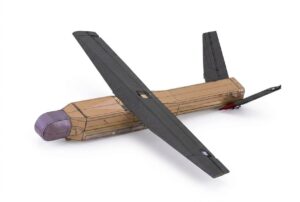
The BVS group of companies will present a new version of the Supercam S180 high-speed reconnaissance unmanned system at ADEX-2026 in Baku. The system is designed for monitoring and reconnaissance and has already been used in the war against Ukraine.
The developer positions the Supercam S180 as a system for operating in the challenging conditions of the modern battlefield. The company cites manoeuvrability, speed and the ability to evade enemy interceptor drones among its characteristics.
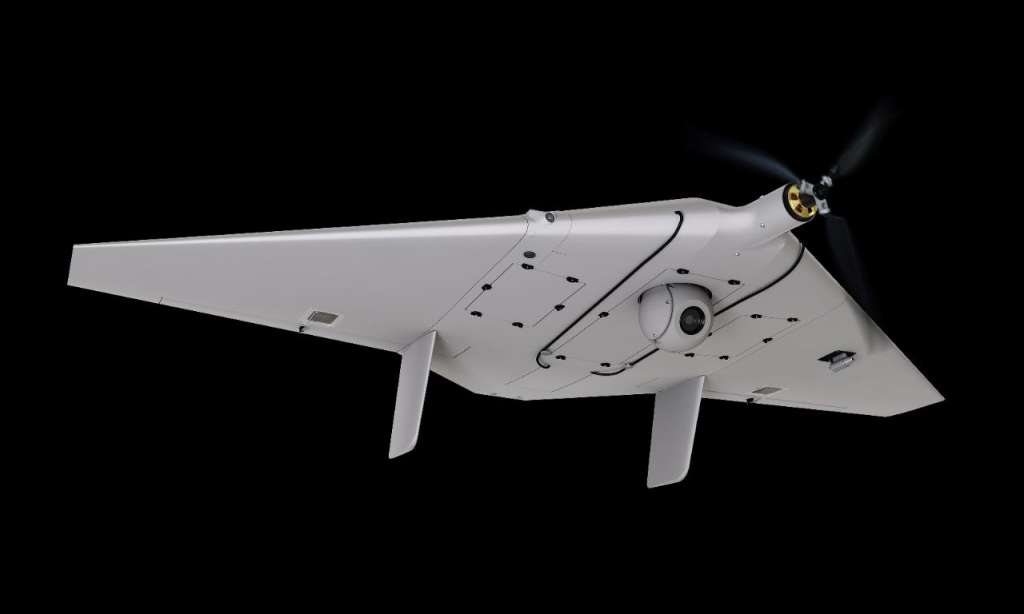
The Russian exhibition will also feature the flagship dual-use Supercam S350 UAV. It can be used for patrolling national borders, maintaining law and order and security, monitoring infrastructure, including pipelines and offshore platforms, as well as aerial photography for geodetic and cartographic work.
The company also said that the S350 has been used in combat conditions as part of a reconnaissance-strike network with multiple-launch rocket systems and artillery.
Rostec announces delivery of another batch of Zubr automated anti-aircraft systems to the military
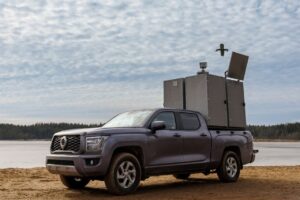
Russian state corporation Rostec has delivered automated Zubr anti-aircraft systems to the military, designed to counter manoeuvring and small UAVs. The system detects a drone independently and automatically tracks it. The operator decides whether to engage the target and issues the command.
The Zubr comprises four combat modules, a command post and its own radar.
Ushkuynik presents mobile containerised UAV production workshop
Russia’s Ushkuynik research and production centre has presented an automated unmanned aircraft assembly system based on a modified transport container. The production line inside the container allows manufacturing to be deployed autonomously at any location, without direct human involvement in the production process.
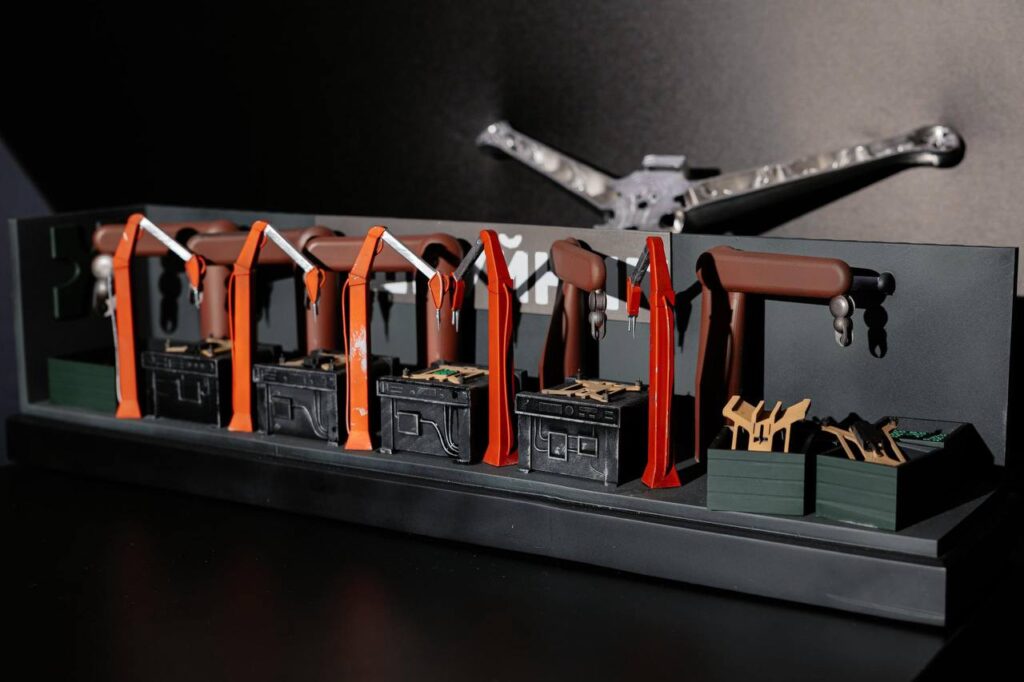
According to company head Aleksei Chadayev, the container can be delivered by ship, rail or truck and installed in a secure location or underground shelter. Components for assembling drones can be transported more compactly than finished products, reducing transport costs. The estimated production capacity is up to 400 drones per day.
The company says it intends to shift from developing individual UAV models to creating infrastructure for their mass and decentralised production.
Mi-28NM reported to use Izdelie-305 missiles
The Russians have used light multi-purpose guided missiles known as Izdelie-305 on Mi-28NM attack helicopters.
According to open-source data, Izdelie-305 has a calibre of 305 mm, a weight of about 105 kg, a warhead weighing about 25 kg and an operational range of up to 14.5 km. The missile is equipped with a combined guidance system, with an inertial-satellite navigation phase during the flight and an electro-optical seeker during the terminal phase.
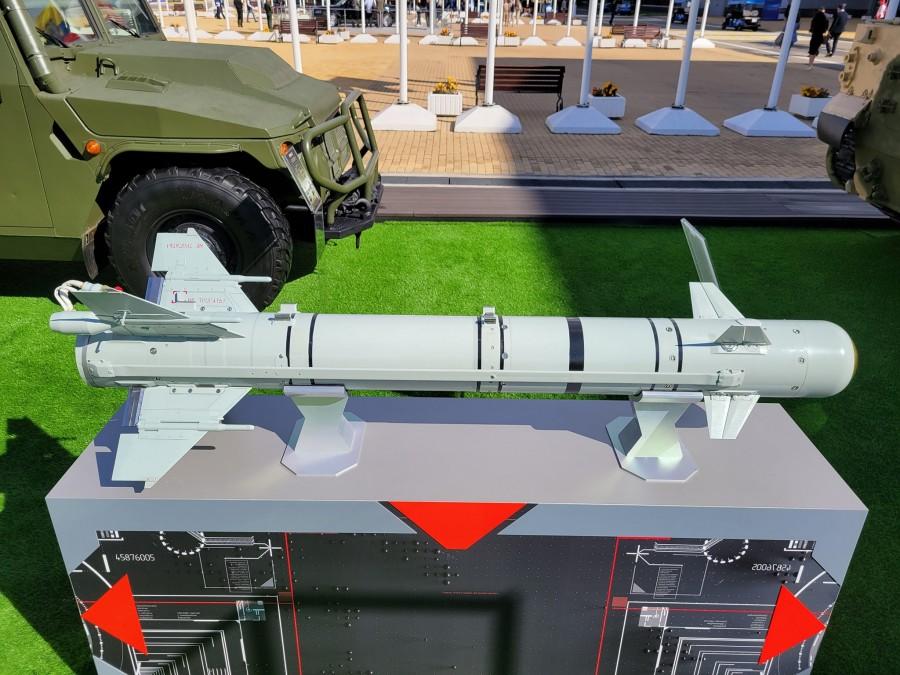
The upgraded UR-305UD (Izdelie-305UD) variant is believed to have an increased range of up to 26–29 km and enhanced capabilities against armoured vehicles, fortifications and command posts.
Reading now
1
Ukrainian Skyeton secures $10.6M US army contract
2
The Pentagon has announced the results of Drone Dominance Gauntlet II – announced Ukrainian companies did not make the top 5
3
Korven Systems project: How Teletactica co-founder is building an autopilot for interceptor drones
4
Ukrainian SkyFall again among winners of US Drone Dominance Program
5
A drone group, not a swarm: How Pasika by Sine Engineering works
By submitting this form, you give Defender Media consent to the processing of personal data.
Надсилаючи цю форму, ви надаєте Defender Media згоду на обробку персональних даних.

Latest news
1
Black Mirror #78: Susanin for the Geran-5, Zubr air defence systems, SuperCam updates and other Russian miltech developments
2
MITS Industries opens R&D office in Denmark. Ukraine’s Infozahyst leads the project
3
Terra Drone acquires 50% of Ukrainian Kurin Technologies for $3.5 million
4
Defence City residents will be able to lease state and municipal property without auctions
5