Black Mirror #83: Countering Starlink, Gerbera-2 components, a new ZALA reconnaissance UAV, and other Russian miltech developments
Overview of Russian defence-industrial complex developments for the last week of October
Russia's Izdeliye 80 heavy UAV
Last week, the Russian military unveiled a new ZALA reconnaissance UAV, upgraded the Izdeliye 80 heavy drone, and conducted sea trials of an uncrewed surface vessel based on the BK-10 boat. Reports also surfaced that Russia is adopting a new strategy to protect rear-area facilities by jamming Starlink satellite communications.
Read about these and other developments in Russia’s defence-industrial complex in Defender Media’s weekly Black Mirror review.
Russia disperses electronic warfare systems to jam Starlink
Russia continues to field electronic warfare (EW) systems designed to jam Starlink satellite communications. According to presidential adviser Serhii “Flash” Beskrestnov, these systems cover individual sites across about 25 sq km, including locations in occupied Crimea. The systems are also being deployed more frequently along the front line.
Beskrestnov noted that while the system previously comprised six closely grouped trailers at a single location, Russian forces are now dispersing the equipment. Current configurations include individual antennas mounted on separate vehicle platforms.
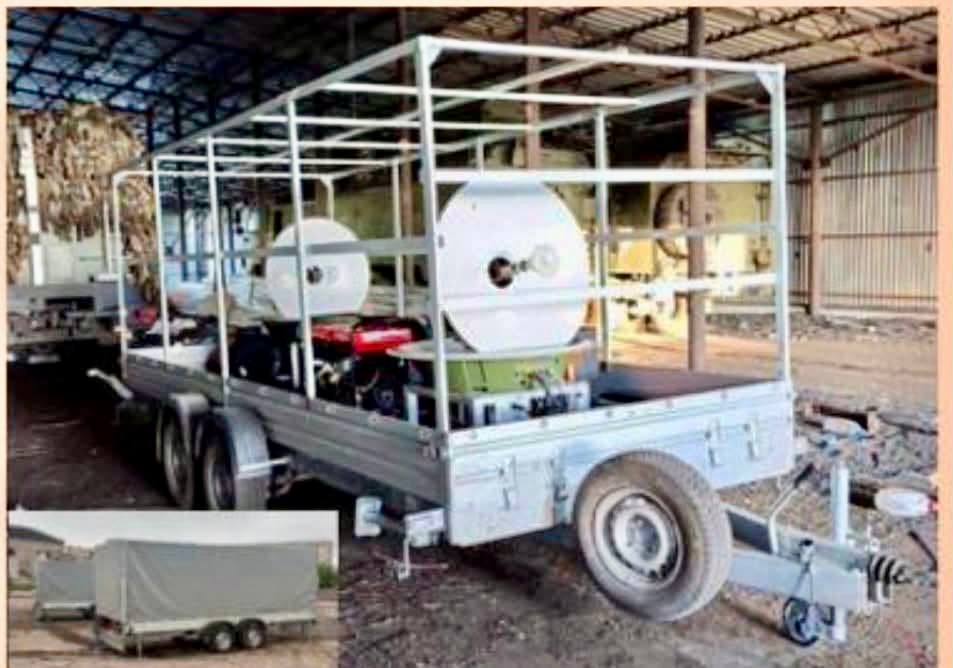
The system relies on prime-focus satellite antennas approximately one metre in diameter. Because their design requires an unobstructed line of sight to the zenith, concealment options remain limited. The setup does not require grid power, as the equipment can operate off mobile generators.
According to Russian sources, Starlink jamming systems designated Volna-Kupol-Garant are also being marketed in China. While these technological solutions were previously restricted to a limited number of Russian entities, Chinese suppliers are now advertising them in specialised online communities.
Specifications revealed for enlarged version of Russian Gerbera-2 UAV
Ukraine’s Defence Intelligence (HUR) has published an interactive 3D model, design details, and an electronic component breakdown of the Russian Gerbera-2 UAV on its War&Sanctions portal.
According to HUR, Russian forces have begun deploying an enlarged variant of the UAV, which was originally designed as a decoy to saturate Ukrainian air defences.
The new variant features a 3-metre wingspan and a fuselage length of 2.6 metres. Its stated operational range reaches up to 1,200 km, supported by a 63-litre fuel tank. To maintain flight stability during manoeuvres, the tank is internally baffled.
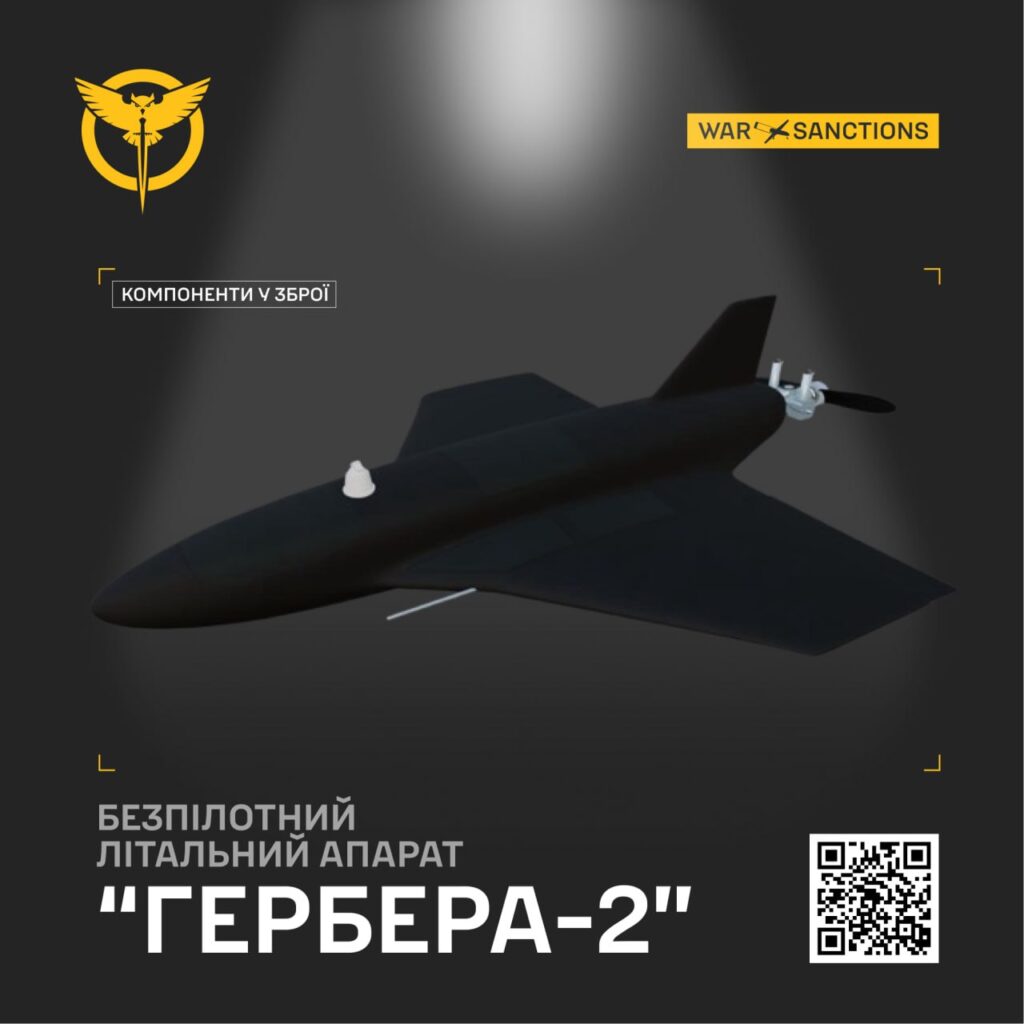
The UAV is powered by a two-cylinder, two-stroke engine with localised production in Russia’s Alabuga Special Economic Zone.
The examined unit was fitted with a 10 kg OFZBCh-10 high-explosive fragmentation incendiary warhead, alongside separate incendiary packets. However, Russia claims a maximum warhead capacity of up to 25 kg.
The Gerbera-2’s avionics include an upgraded flight controller, a 12-channel Kometa satellite navigation module, a Chinese-made mesh modem from Shenzhen Sinosun Technology, and a Sosiska video processing unit built around a Chinese Coke Pi single-board computer. Four of the onboard components were identified as US-manufactured.
Upgrades to the Izdeliye 80 heavy UAV
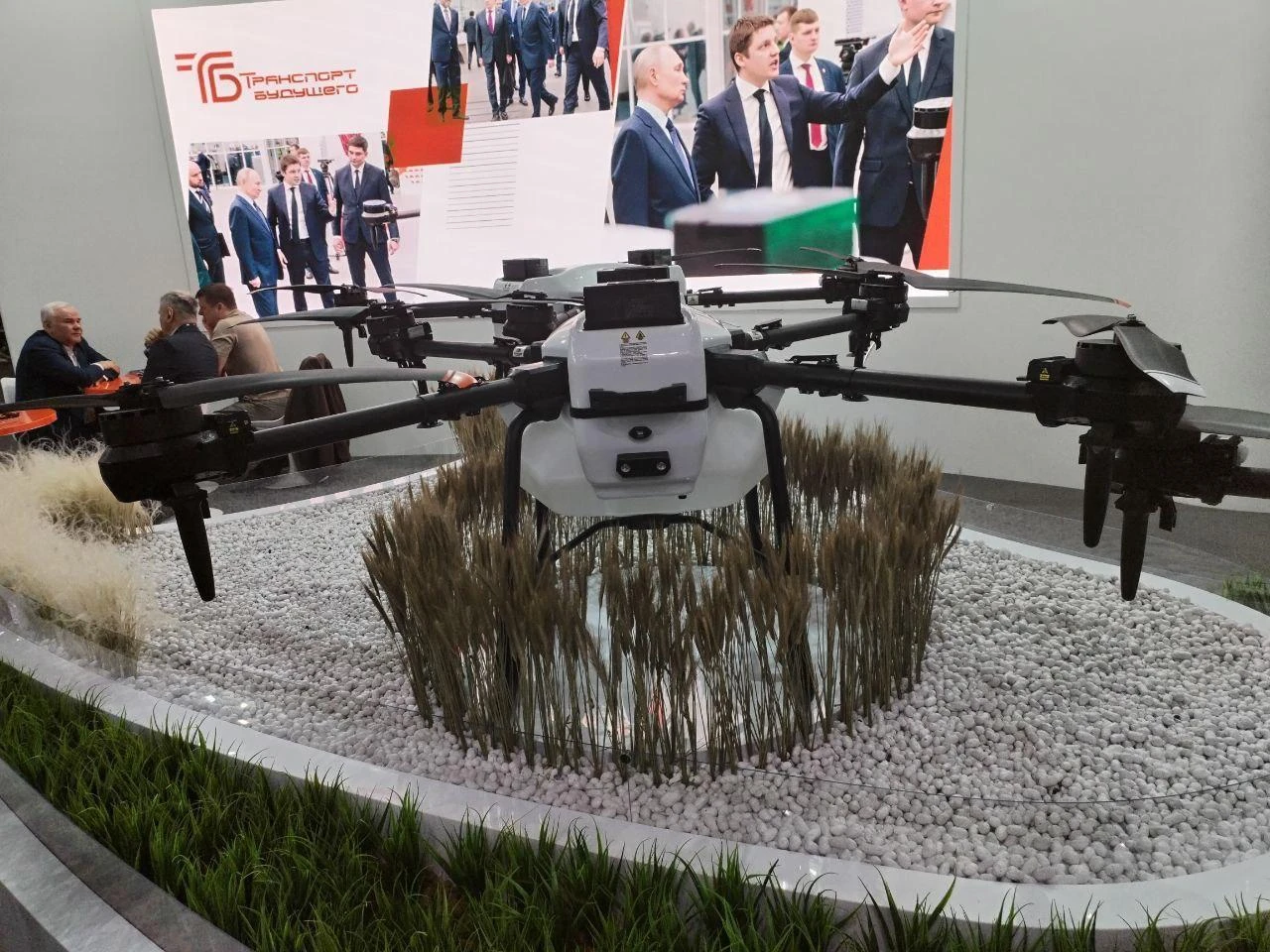
Russian firm Transport of the Future has begun delivering Izdeliye 80 heavy UAVs to the military. The initial batch includes 1,500 upgraded drones, 750 transport trailers, and spare parts kits containing auxiliary batteries and propellers.
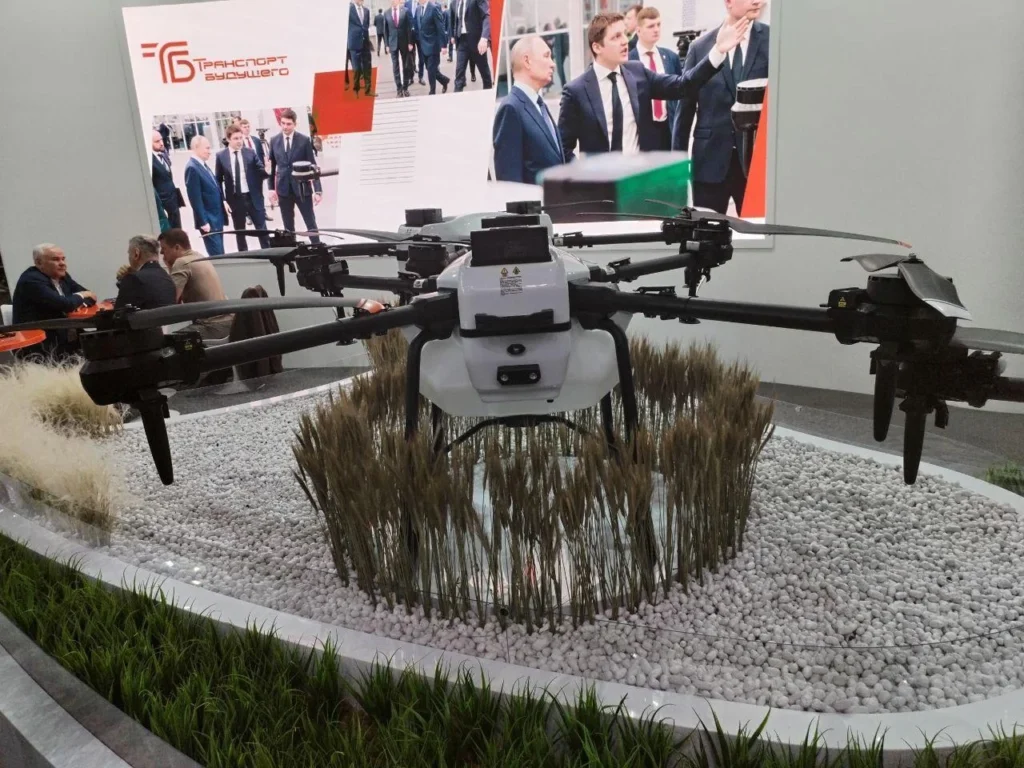
The Izdeliye 80 is a multirotor UAV capable of carrying payloads of up to 40 kg, including large-calibre mortar rounds and shaped-charge munitions. It operates at maximum speeds of 35–43 km/h.
The updated variant integrates a revised flight control system, redundant communications channels, a reinforced airframe, and an additional battery power source. In October, the manufacturer also began retrofitting previously produced first-generation units.
The company manufactures the landing gear, airframe elements, arms, and propellers in-house, assembles battery packs, and develops its own software. However, it still imports most electronic components. The company claims a production capacity of up to 400 units per month.
Z-61 reconnaissance UAV fitted with interceptor detection system
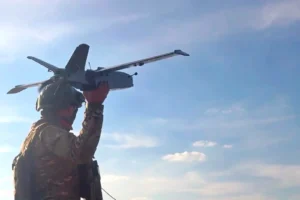
Russian manufacturer ZALA has revealed its new Z-61 reconnaissance UAV, engineered for operations in high-threat air defence and EW environments. A key feature of the platform is an integrated sensor suite designed to detect interceptor drones, track their trajectories, and execute evasive manoeuvres.
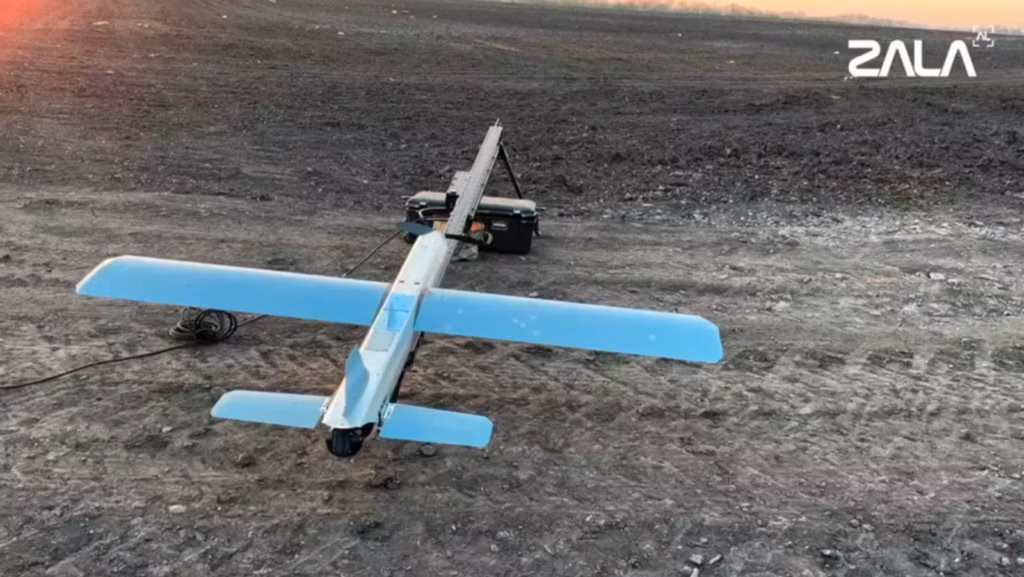
The Z-61 uses a conventional fixed-wing layout with a tractor configuration. Its fuselage is constructed from aluminium, while a modular architecture allows it to be reconfigured for varied reconnaissance missions.
Its electro-optical payload comprises an HD camera and a high-resolution thermal imager for target detection, including incoming interceptors. Sensor data streams directly to the operator, who evaluates threat trajectories and executes evasive flight paths. The UAV is reportedly fully compatible with ground control stations for the Lancet loitering munition system.
Kalashnikov completes builder’s trials of uncrewed BK-10 boat
The Kalashnikov Concern has completed builder’s trials of an uncrewed surface vessel (USV) built on the hull of the BK-10 high-speed assault craft.
The BK-10 (Project 02450) is a high-speed littoral operational platform. The baseline vessel measures 10.48 metres in length and 3.7 metres in beam, with a full displacement of 6.12 metric tonnes. It reaches speeds exceeding 40 knots (~74 km/h), has an operational range of up to 400 nautical miles (~741 km), and carries a 3.5-tonne payload capacity.
In its crewed configuration, the craft operates with a crew of two and can transport up to ten troops. Standard armament includes 7.62 mm or 12.7 mm machine guns, or a 40 mm automatic grenade launcher.
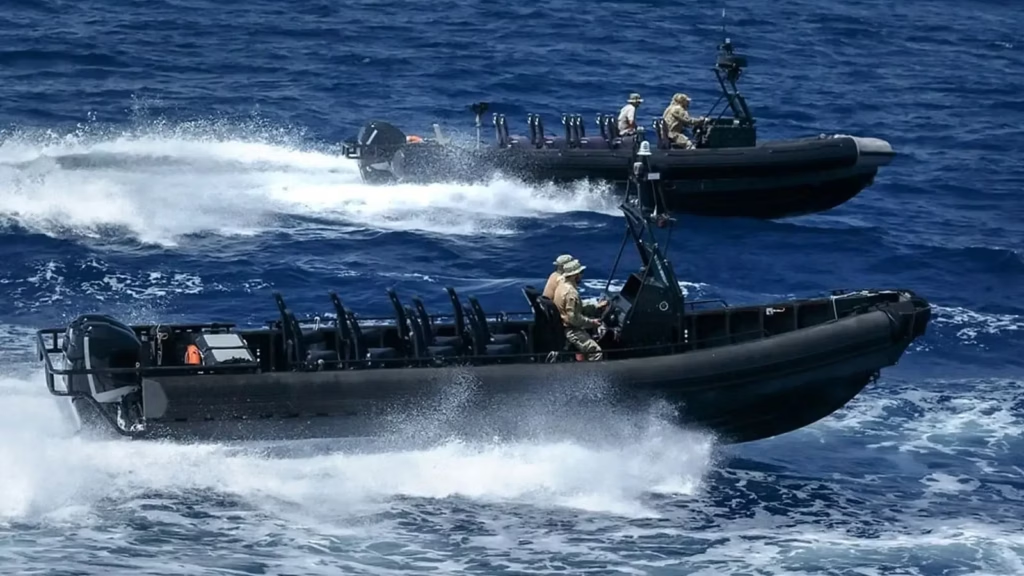
No technical details regarding the uncrewed variant’s control architecture, sensor suite, or remote weapon stations have yet surfaced in open sources.
Kalitka-KA anti-drone machine-gun system unveiled
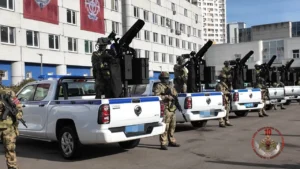
Kalashnikov Concern has unveiled the Kalitka-KA system, targeted at point defence for critical infrastructure against small UAVs. The system features a semi-automatic remote weapon station (RWS) armed with a 7.62 mm PKT machine gun with a rate of fire reaching 800 rounds per minute.
The station carries an electro-optical payload with a thermal imaging channel and AI-assisted fire control. According to published technical specifications, it can detect targets with a radar cross-section (RCS) of under 0.05 sq m at ranges of up to 1,000 metres.
To engage aerial targets, the system automatically computes lead angles based on target telemetry. The claimed effective engagement range is 400–600 metres against FPV drones and up to 700–800 metres against fixed-wing UAVs. The fire control system compensates for target dynamics at speeds of up to 100–120 km/h.
Export variants of missiles and drones presented for African markets
At the Russia–Africa Forum in Moscow, Rosoboronexport showcased a lineup of military hardware, including UAVs, counter-UAV systems, and small arms.
Exhibits featured an export variant of the Garpiya-A1(E) long-range UAV, with a claimed range of up to 1,000 km, alongside the Dan-T air-launched loitering munition.
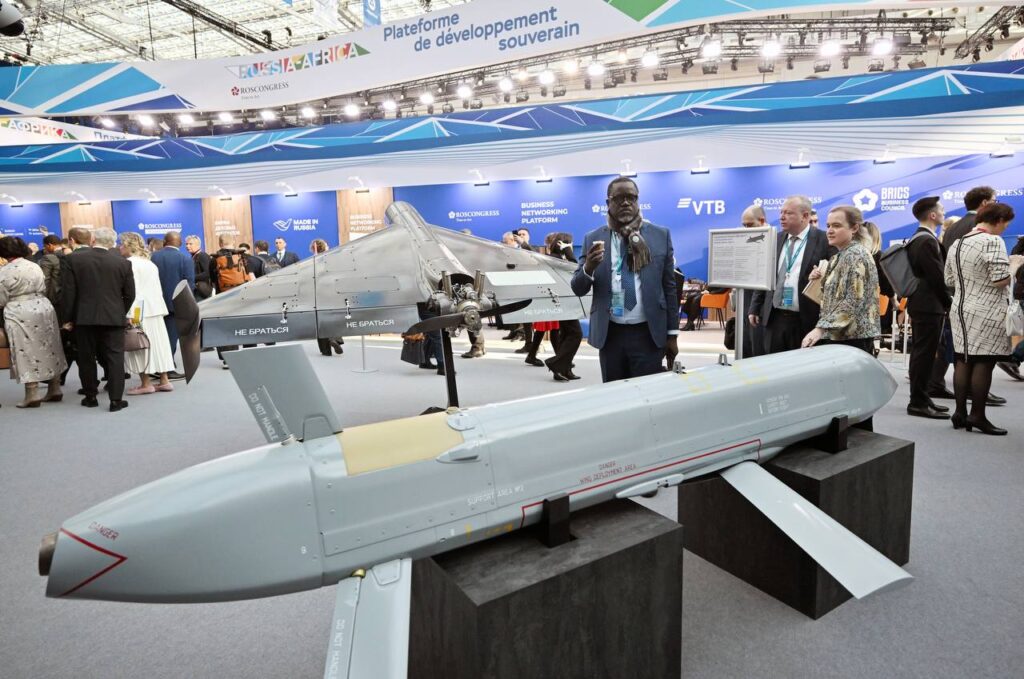
Russian officials also presented the conceptual “Anti-Drone Dome,” a layered counter-UAV system combining air defence radar, EW jammer suites, and kinetic engagement options. The proposed setup integrates Pantsir-SMD-E and Pantsir-S1M air defence systems, Verba MANPADS, the Citadel anti-aircraft artillery unit, and Silok, Repellent-Patrol, and Sky-Hunter 4PC EW systems. The company plans to integrate directed energy weapons and high-power microwave systems in the future.
Rosoboronexport additionally displayed the SKL ZOV Shturm tactical semi-automatic rifle and the Specter sniper system by BespokeGun. However, several items were re-displays; the Dan-T, for example, had been showcased at prior international defence expos.
Reading now
1

380+ vacancies in Ukrainian defence tech from Fire Point, DevDroid, UFORCE and others
2
Ukrainian-Japanese FPV KT-2 drones appear on Brave1 Market: key details and specs
3

Why A&D manufacturers need a coherent digital strategy now
4
F-Captain mid-strike from F-Drones now available on Brave1 Market and DOT-Chain Defence
5
Why Danes, Swedes and Norwegians invest in Ukrainian defence tech: Gardar, Final Frontier and Varangians explain
By submitting this form, you give Defender Media consent to the processing of personal data.
Надсилаючи цю форму, ви надаєте Defender Media згоду на обробку персональних даних.

Latest news
1
Black Mirror #83: Countering Starlink, Gerbera-2 components, a new ZALA reconnaissance UAV, and other Russian miltech developments
2

Brave1 launches matchmaking platform for investors and Ukrainian defence startups
3
BlueBird unveiled new Chuyka 3 Plus drone detector
4
CODE 9.2 conducts third airborne casualty evacuation using StarGate
5

Ukraine’s Defence Ministry signs cooperation deal with NATO’s DIANA innovation accelerator