Black Mirror #80: Rassvet terminals, high-speed jet-powered interceptors, Kinzhal upgrades and other developments in Russian miltech
Overview of Russian defence-industrial complex developments for the first week of September
"Civilian" Rassvet satellite communications terminals
Last week, Russia unveiled prototypes of drone interceptors capable of reaching speeds of 500 km/h, introduced the first “civilian” terminals for the Rassvet satellite communications system, and presented the Nerekhta multipurpose unmanned ground vehicle in an export configuration. Meanwhile, Ukrainian intelligence published a list of components and technical upgrades for Kinzhal hypersonic missiles. RRead about the latest developments in Russia’s defence industry in Defender Media’s weekly Black Mirror review.
Ukraine’s Defence Intelligence releases updated data on the Kinzhal missile
The Defence Intelligence of Ukraine (DIU) has published an interactive 3D model of Russia’s Kh-47M2 Kinzhal air-launched ballistic missile on the War&Sanctions portal, alongside details on its component base and the companies involved in its production. A total of 58 Russian enterprises contribute to manufacturing the missile, 22 of which currently remain unsanctioned by any member of the sanction coalition.
According to the DIU, the 9-S-7760 is a single-stage solid-fuel missile with an integrated warhead. Approximately 90% of its components are standardized with the 9M723 ballistic missile used by the Iskander-M short-range ballistic missile system.
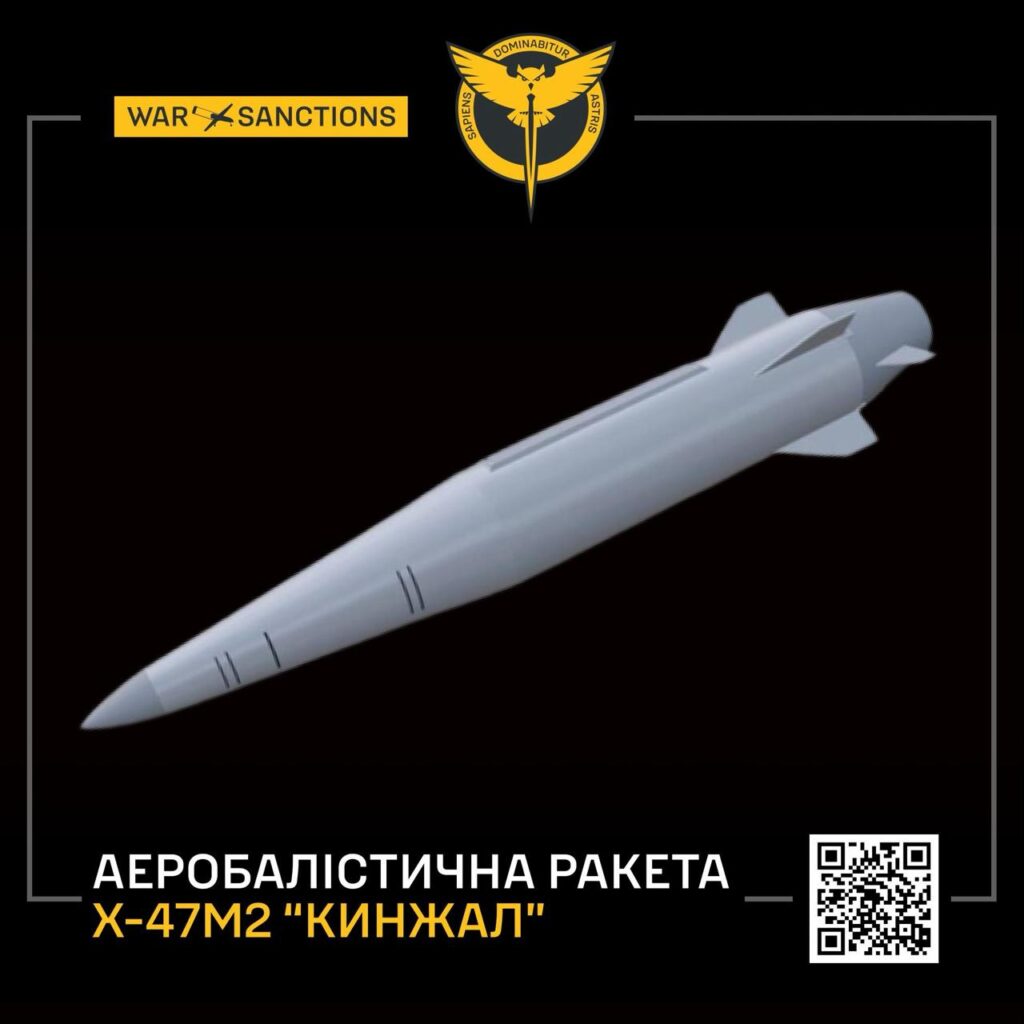
Key features distinguishing the Kinzhal include a jettisonable tail aerodynamic fairing that detaches after engine ignition, a radar homing seeker, and an active jamming system. The missile is also equipped with an S-200 decoy dispenser system.
Ukrainian intelligence reports that the missile carries two primary warhead types: a penetrating high-explosive warhead and a tactical nuclear warhead. Russia is additionally developing a variant fitted with a high-explosive fragmentation warhead—a effort DIU links in part to persistent guidance accuracy issues.
Intelligence data further indicates that Russia significantly reduced state defense procurement orders for Kinzhals in 2026, reallocating production capacity, components, and raw materials toward the manufacturing of 9M723 Iskander-M ballistic missiles.
Russia fits Shahed drones with 32-element satellite navigation antennas
Upgraded jam-resistant satellite navigation antennas featuring 32 elements have been recovered from Russian Shahed-type strike drones used in attacks on Kyiv. Russia previously relied on 16-element arrays, according to military communications expert Serhii “Flash” Beskrestnov.
Increasing the element count enhances an antenna’s anti-jamming capabilities. Expanding from 16 to 32 elements makes disrupting the drones’ navigation via electronic warfare (EW) significantly harder, as neutralizing the receiver requires a higher density of interfering signal sources.
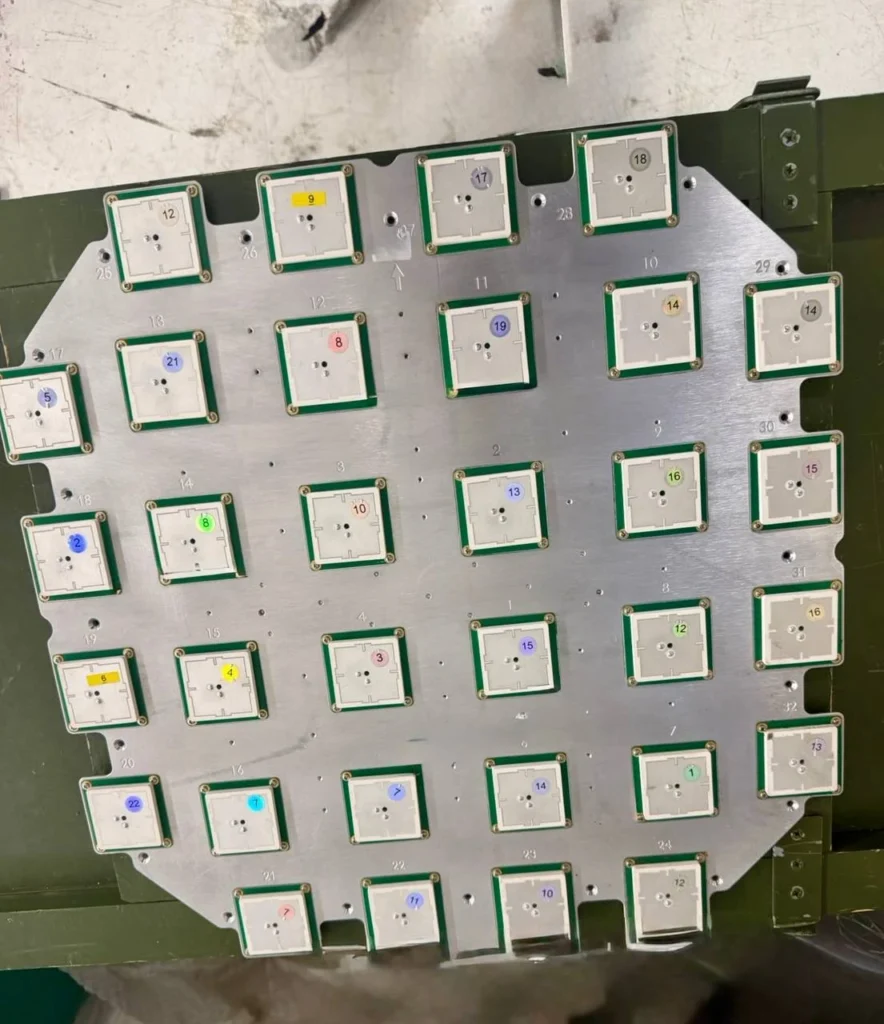
CRPA (Controlled Radiation Pattern Array) antennas are engineered to protect satellite navigation against electronic interference. They actively suppress EW signals, countering attempts to disrupt drone guidance systems reliant on GPS and other GNSS constellations.
Shahed drones can also receive operator commands via a mesh modem.
Russia’s Bureau 1440 unveils three satellite communications terminals
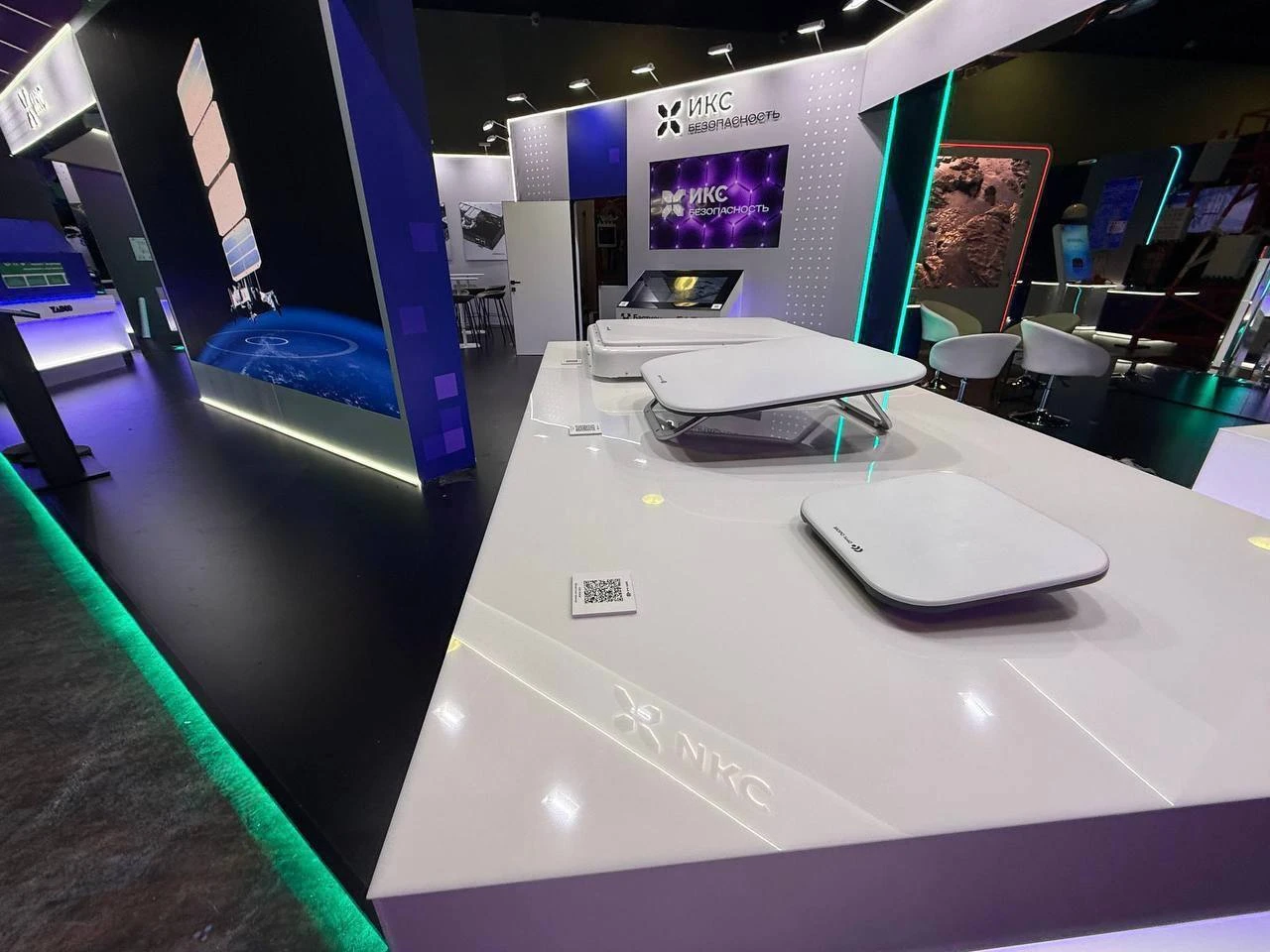
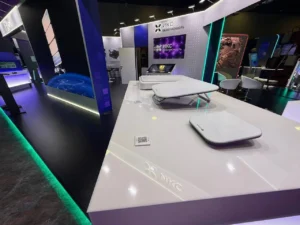
Russian company Bureau 1440 has unveiled three models of user terminals for connecting to the Rassvet satellite communications system.
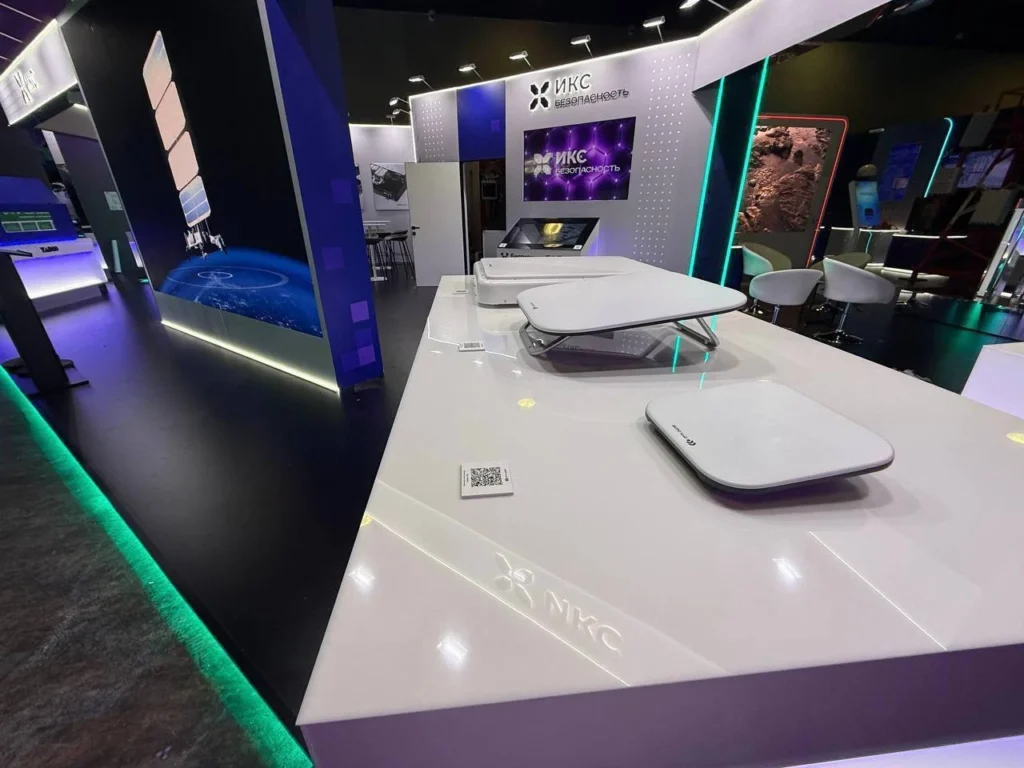
1440.ULTRA is a production terminal with a claimed peak data transfer rate of up to 700 Mbps. It is tailored for industrial facilities, remote areas, infrastructure sites, and mobile platforms.
1440.ZEMLYA is designed for rail transport and capable of maintaining connectivity at train speeds up to 400 km/h. The developer claims it will offer satellite broadband for crews and passengers on high-speed Sapsan and Lastochka trains, as well as long-distance rail lines. 1440.MINI is a compact concept terminal targeting speeds around 100 Mbps. Engineered for low user counts, it is envisioned as a portable communications kit for search-and-rescue teams and emergency services.
The manufacturer plans to announce commercial availability at a later date.
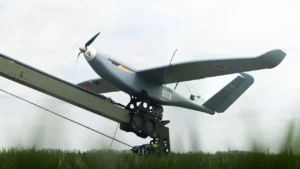
DOFA-Tek develops jet-powered interceptors, unveiling its first drone and two mock-ups
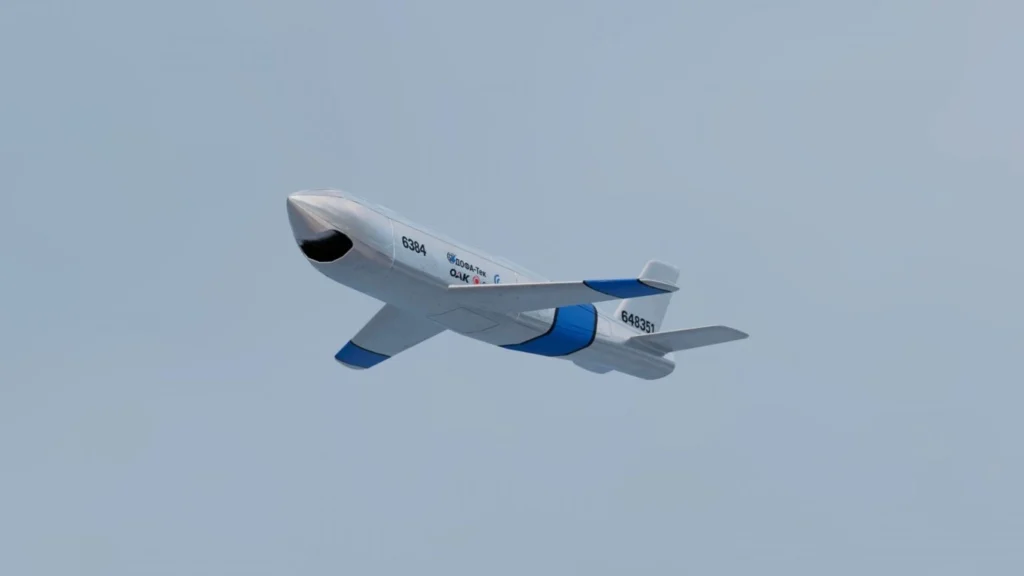
Russian defense startup DOFA-Tek has developed the DF-1 Roscherk, a single-use jet-powered drone interceptor capable of reaching speeds up to 500 km/h. According to company specifications, the aircraft features an endurance of up to 50 minutes and can engage enemy UAVs at ranges up to 250 km. Target destruction is achieved via kinetic impact or explosive payload.
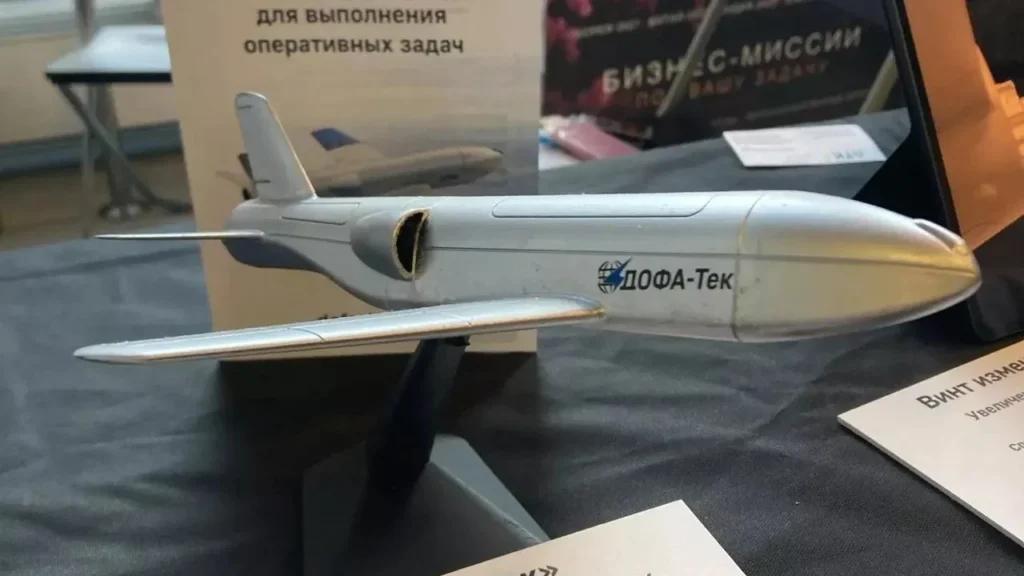
The vehicle has a reported maximum takeoff weight of 15 kg with a 1.5 kg payload. Physical dimensions have not been disclosed. Ground- and rooftop-launch options are available.
Vitalii Dobrovolskyi, the company’s technical director, stated that flight testing is scheduled to conclude in November 2026, after which mass production is set to begin.
The firm is concurrently developing the DF-3 Gadyuka jet interceptor, which boasts a projected top speed of 850 km/h, an operational range of up to 800 km, and a flight endurance of up to 60 minutes. Designed for reusability, the Gadyuka is intended to engage targets, return to base, rearm, and deploy again.
DOFA-Tek claims that “a single sortie will enable the aircraft to intercept swarms of 15–20 drones.” Rather than using collision tactics, the platform will engage targets with an integrated automatic weapon system.
Another project under development at DOFA-Tek is the DF-5 Iskra strike drone, featuring a stated range of up to 1,200 km, a top speed of 850 km/h, and a warhead weighing up to 20 kg.
Ogonyok drone detection system
Russian state defense conglomerate Rostec has detailed the operational principles of its Ogonyok counter-UAV detection system. The equipment monitors radio traffic, distinguishing UAV control and telemetry links from background RF clutter.
According to the developers, the system isolates signal packet signatures typical of video transmission feeds. This approach allows it to differentiate drone communication links from ambient emissions produced by consumer Wi-Fi routers and mobile base stations.
Ogonyok operates passively, monitoring the RF spectrum without transmitting signals that could expose its position. Tactical data can be streamed directly to Android-based smartphones or tablets.
Rostec claims the system has undergone field evaluation in operational environments. It can be deployed on mobile vehicles or fixed emplacements as a complementary sensor layer within integrated counter-drone networks.
Drone interceptor based on the Alazan anti-hail rocket
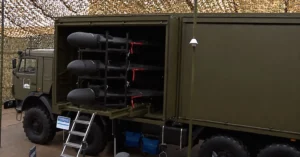
Russia has showcased a improvised air-defense concept built around the Alazan meteorological rocket. The modification converts the weather-modification rocket into a guided anti-drone effector. The chemical reagent payload traditionally used to suppress hail clouds is replaced with a fragmentation warhead.
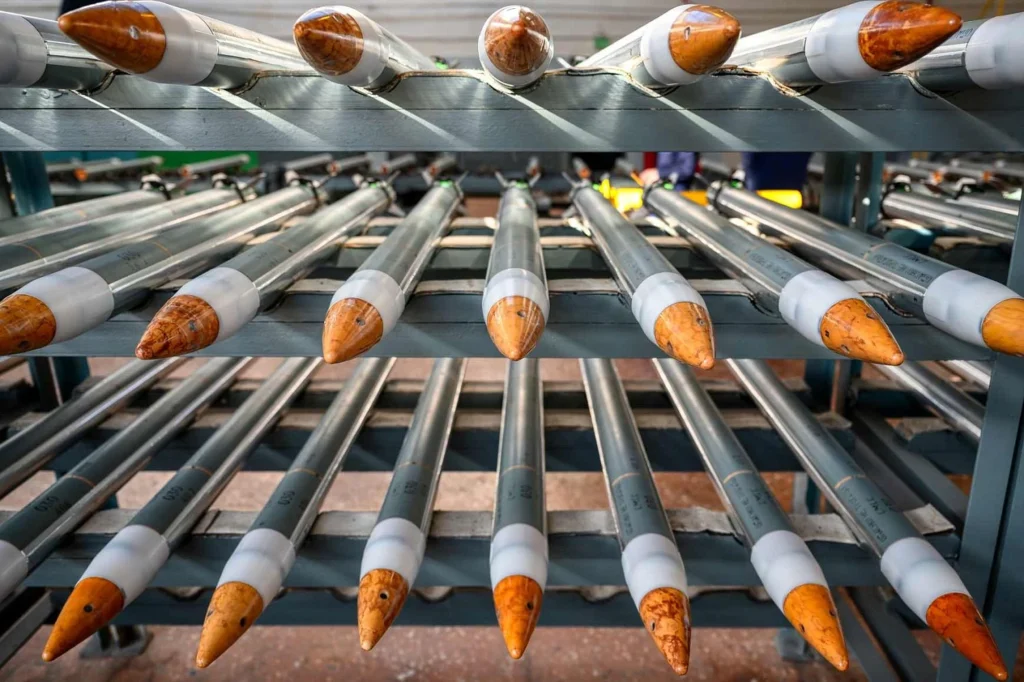
Defense analysts identify the displayed hardware as a derivative of the Alazan-2M or Alazan-6 rocket families, which offer an operational range of approximately 10 km, a ceiling of up to 8 km, and a standard 0.5 kg reagent payload.
Released media shows a forward guidance assembly fitted with either an optical/radar seeker or a proximity fuze. Four folding cruciform canards are integrated into the nose section for flight control, while the tail assembly features deployable fins and a solid-rocket motor nozzle.
The stated price per unit is up to $12,000.
Zemledeliye remote mining system receives a new ammunition calibre
Russia’s Zemledeliye remote minelaying system has been adapted to fire a new caliber of rockets, reportedly extending its operational range and enabling mixed-mine salvo capability.
Previous system iterations launched rockets loaded exclusively with either anti-personnel or anti-tank mines per salvo. Under the updated configuration, a single salvo can deploy a combination of both mine types simultaneously. Precise performance metrics and range figures for the new rockets have not been disclosed.
The full complex consists of an 8×8 heavy off-road launch vehicle, an automated resupply/reload vehicle, and transport-launch canisters pre-loaded with various landmine configurations.
New Mak wheeled self-propelled artillery system
A new wheeled self-propelled artillery system, the Mak, was shown in Russia during the Centre-2026 strategic command-and-staff exercises. Judging by its external features, the vehicle continues the development of Russia’s wheeled self-propelled artillery family, which includes the 2S43 Malva and 2S44 Giatsint-K.
Images published on social media show additional armour and a Doppler radar used to measure a shell’s muzzle velocity. No official information has yet been released on the Mak’s specifications, equipment or possible delivery dates to Russian forces.
Nerekhta attack UGV receives an export variant
Russian company Rosoboronexport has announced the development of an export version of the Nerekhta UGV, designated Nerekhta-E. The system is designed for reconnaissance, fire support, engagement of ground targets, site security and cargo transport. It can operate in both rural and urban environments and is remotely controlled.
The system is built on a tracked platform with an armoured hull and a hybrid powertrain. Its maximum speed is 20 km/h, and it can move continuously for up to four hours. In surveillance mode, the robot can operate for up to 20 hours.
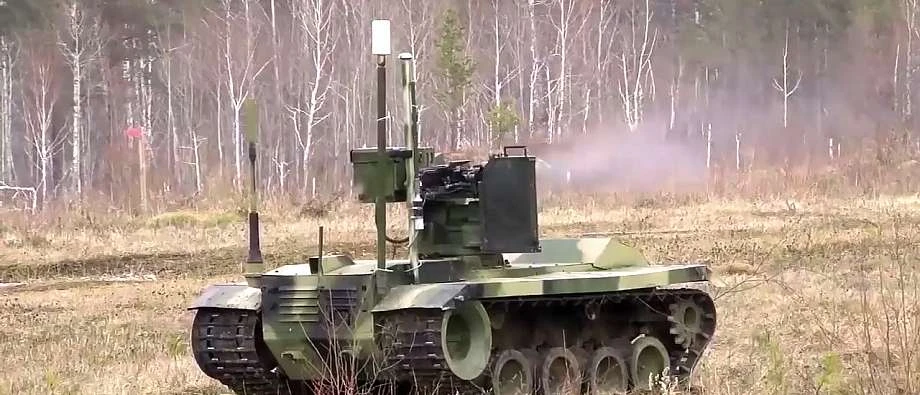
The system has a total weight of 2,100 kg, rising to 2,700 kg with the transport module, including its payload.
Two Nerekhta variants are known to exist: a small-arms and grenade-launcher variant equipped with a 12.7 mm Kord machine gun and a 30 mm AG-30M automatic grenade launcher, and an anti-tank variant fitted with four launch rails for 9M133 Kornet and 9M134 Bulat guided missiles. According to the manufacturer, the system supports firing two missiles at a single target in “tandem” mode and is equipped with a thermal imaging sight.
A transport module with a payload capacity of up to 1,000 kg and a reconnaissance and fire support module are also available.
Reading now
1
SkyFall officially unveils Thor Hammer mid-strike and announces 1,000+ km version
2

260+ vacancies in Ukrainian defence technology at BlueBird Tech, Sine Engineering, Buntar Aerospace and more
3
British-Ukrainian Occam Industries raises €3.8m. The funds will go towards scaling drone autonomy software
4

Terra Drone acquires 50% of Ukrainian Kurin Technologies for $3.5 million
5

Autonomous interceptor drones need radars to work. Why is there still a lack of them
By submitting this form, you give Defender Media consent to the processing of personal data.
Надсилаючи цю форму, ви надаєте Defender Media згоду на обробку персональних даних.

Latest news
1
Black Mirror #80: Rassvet terminals, high-speed jet-powered interceptors, Kinzhal upgrades and other developments in Russian miltech
2
Phantom Defense acquires net-launcher developer KARAKURT to integrate its technology into own ecosystem
3

Acoustic sensor developer Zvook raises investment from new Czech fund managed by DEPO Ventures
4

Denmark to hold first-ever Danish Defense Tech Week in four cities: what to expect
5