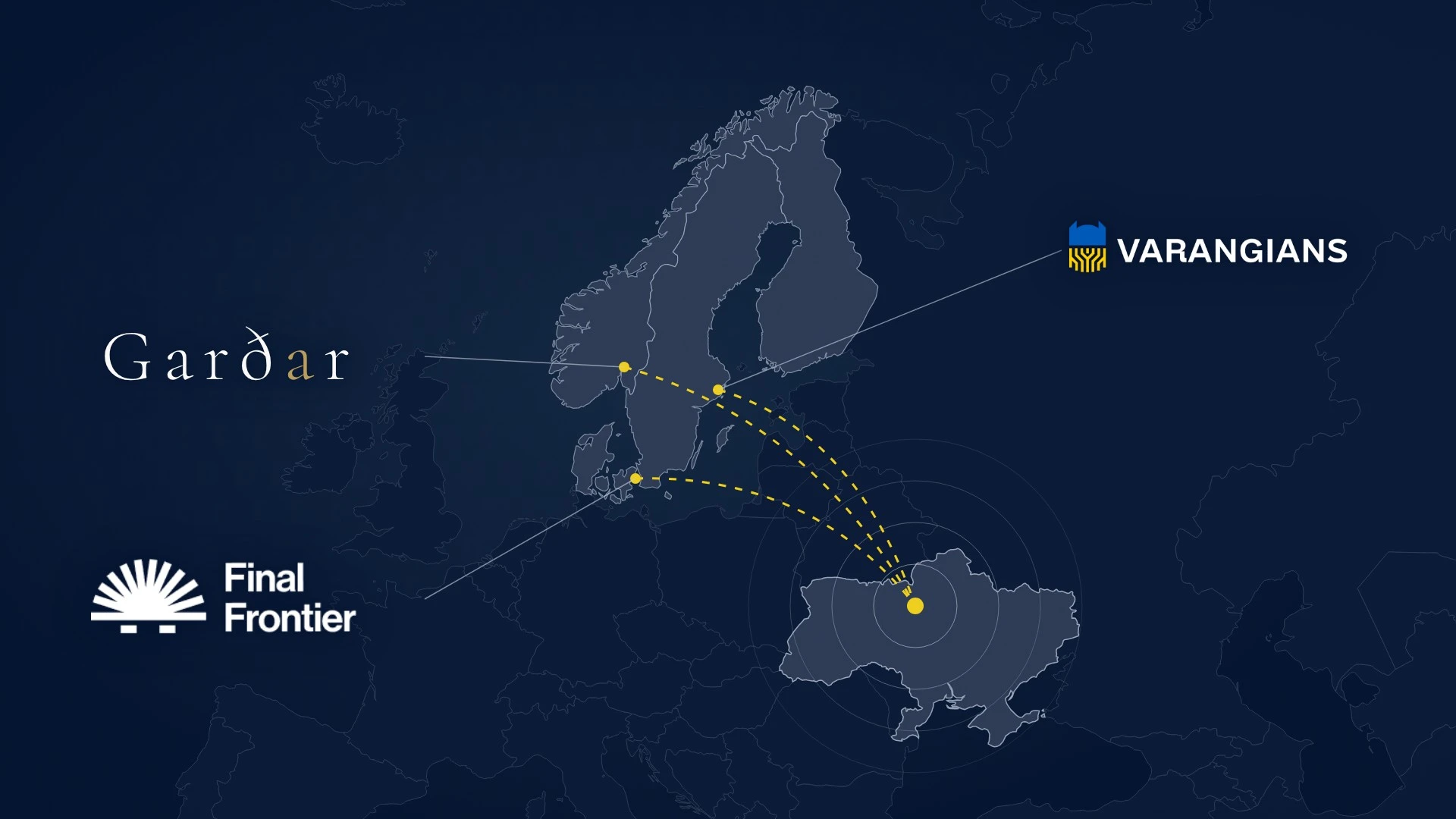
Home ◆ Feed ◆ Why Danes, Swedes and Norwegians invest in Ukrainian defence tech: Gardar, Final Frontier and Varangians explain
Why Danes, Swedes and Norwegians invest in Ukrainian defence tech: Gardar, Final Frontier and Varangians explain
What motivates investors from the Nordic countries, how much they have invested in Ukrainian developments, and what they advise Europeans who are still considering investing
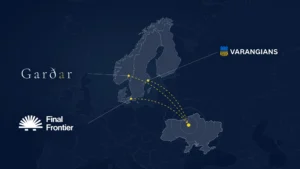
“Our relationship has lasted for over a thousand years,” says Pär Lager, co-founder and CEO of the Swedish investment group Varangians. The group’s name refers to the Scandinavians who travelled to Kyivan Rus in the ninth century.
At that time, they traded and fought on the side of the Kyivan grand princes. Today, their descendants, along with investors from other countries, support the development of Ukrainian defence tech. Last year, 49% of all capital raised by Ukrainian defence startups came from abroad.
One reason for this active support is the desire to rearm Europe using Ukrainian technology and experience. What else motivates investors from the Nordic countries, how much have they invested in Ukrainian developments, and what do they advise Europeans who are still considering investing?
Defender Media spoke with representatives of Scandinavian funds and investment companies most active in the Ukrainian market. In the first part of the article, we publish answers from Pär Lager, co-founder and CEO of Varangians; Niels Vejrup Carlsen, co-founder of the Danish fund Final Frontier; and Erlend Prestgard and Birger Steen of the Norwegian fund Gardar.
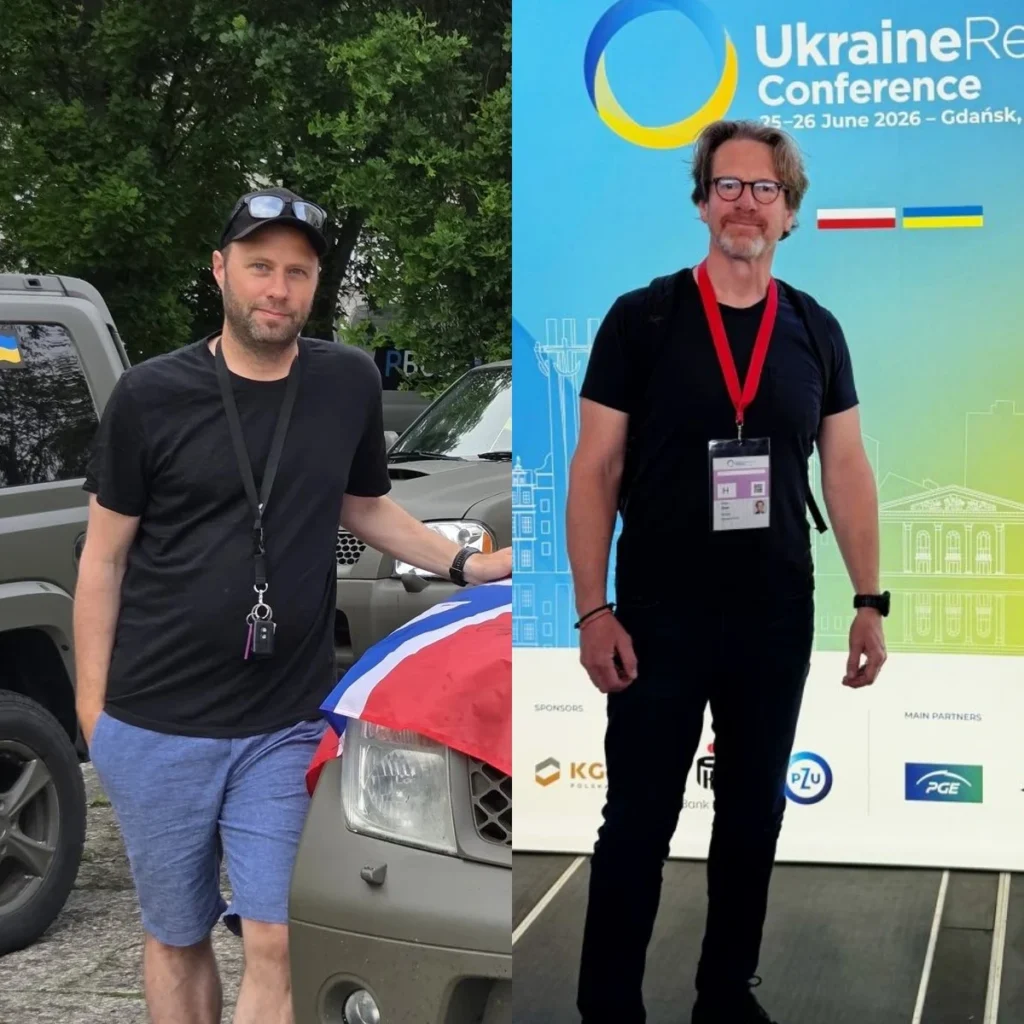
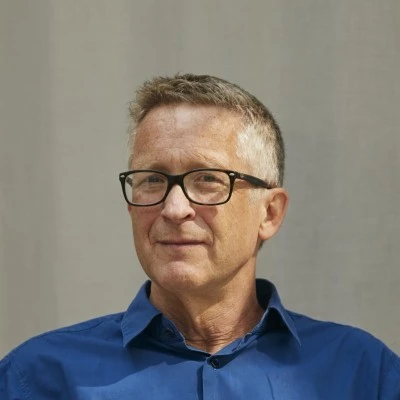
Erlend Prestgard and Birger Steen, Gardar
The Norwegian fund Gardar was launched in June 2026. Its founders have already raised more than €80 million of the planned €100 million, which they intend to invest in Ukrainian defence tech.
Gardar emerged from the Munkene initiative, through which Norwegian businesspeople contributed their knowledge and funds to support Ukraine’s defence industry. It was founded by Torkel Engeness, Birger Steen, Ivar Søvold and Erlend Prestgard.
“I trained as an interrogator and interpreter during Norwegian military service many years ago. The opponent was the Red Army. It feels both right and appropriate to support Ukraine’s defence against its successor,” recalls Birger Steen, explaining his motivation.
Every one of the Munkene founders has helped Ukraine. For example, Prestgard raised money for trucks and drove vehicles to Ukraine.
“Eventually we figured we should use the toolbox we know best, the venture capital one”, says Prestgard. He says identifying and scaling the best companies can be decisive in a technological war.
Thus, the Munkene team held more than 100 meetings with Ukrainian developers and invested in Pai Defence, Buntar Aerospace and several other undisclosed companies. The total amount invested is €7 million. In September, Gardar backed the startup M-Fly alongside MITS Capital, Freedom Fund, and another anonymous investor.
Investments still come with minor problems, such as the long time it takes to transfer funds to Ukraine. But foreign investors’ biggest concern is corruption, says Prestgard.
Steen believes the key areas for Ukraine’s defence industry improvement are an efficient export licensing regime, world-class IP protections and strong compliance/anti-corruption legislation, enforcement and judicial practice.
At the same time, the fund’s scale demonstrates support for Ukraine: more than 30 Norwegian family offices and companies have joined it. Prestgard explains they see war in Ukraine as Europe’s battle for democracy. “It is not us helping Ukraine; it is Ukraine taking the blows instead of us,” explains the managing partner.
To those who are still hesitating about investing in Ukraine, Prestgard says: “The battlefield impact per dollar of invested capital in Ukraine is probably one or two orders of magnitude bigger than that of the average dollar invested in Europe or the US.
Furthermore, the founders we meet have shown bravery, integrity, and ingenuity, and they are the ones who speak out against corruption when necessary. The message is simple: This is where you get the most security per dollar”.
Birger Steen, for his part, says that hesitating over investment in Ukrainian deftech is a mistake and could cost dearly.
Niels Vejrup Carlsen, Final Frontier
Before founding Final Frontier, Niels Vejrup Carlsen spent 17 years at Seed Capital, one of Denmark’s leading venture capital firms.
It focused on early-stage B2B and consumer software. However, the investor felt a need to work with companies that create value at a deeper societal level.
This is how Final Frontier emerged in 2024 – a fund with the motto “Europe must lead again”. In addition to Carlsen, the core team includes Martin Majercin.
They focused on defence technologies to help the region rearm and restore its military capability. At the same time, Carlsen adds that for investors, this is an opportunity not only to do good, but also to get significant returns on their investments.
Final Frontier closed its first fund, worth €4.5 million, in 2025. Its average cheque is €250,000. The investor has backed 12 European companies, including the Danish-Ukrainian Dropla Tech, the Estonian-Ukrainian Farsight Vision, the Czech-Ukrainian Angler Drones and the Ukrainian G-Next Intelligence.
“So far, this allocation has proven impactful and financially attractive,” the speaker adds. Even before founding Final Frontier Fund I, he also invested in Dropla Tech as a business angel.
Other teams in the fund’s portfolio, although located in other European countries, also work in Ukraine. For example, the Danish company Robotto sells its software here and has opened a representative office.
This year, Final Frontier merged with another Danish fund, Myriad Defence. Together they are raising Fund II worth €100 million, which they will invest in defence startups at the pre-seed and seed stages.
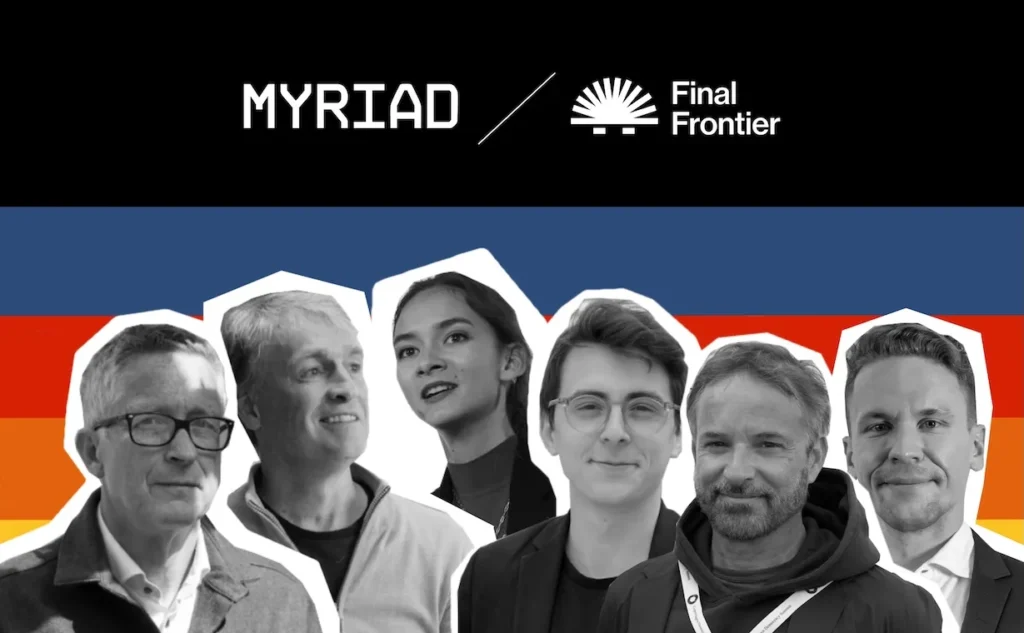
The combined Myriad Defence and Final Frontier team
Niels Vejrup Carlsen has been visiting Ukraine for several years and says he has felt a kindred spirit between the Nordic and Baltic nations and Ukraine. “As a European, it is also apparent to me that we need to back Ukraine as much as we can. Our democracies and our way of life are at stake,” he explains as to his motivation.
His team seeks to support founders building the new giants of the European defence industry, developing at the speed Ukraine needs and proving their products in true combat.
Like other investors, Final Frontier has noticed several obstacles to investing in Ukraine. Some are obvious: the safety of travel or of conducting due diligence in a combat zone.
In addition, issues with shareholder protection, money flow, export regulation, and transparency make it difficult for foreigners to invest in Ukrainian companies. As a result, many companies seeking investment choose to register their parent company outside Ukraine, Carlsen explains.
At the same time, he continues to work in this market because ” no other sector is as important to fund right now and in the years to come”. Without this, Europe risks losing its strategic autonomy and its ability to invest in strengthening democratic societies and fighting climate change.
In addition, it is also a way to make money. On average, Final Frontier’s portfolio has increased in value by 50%.
Carlsen advises starting small – you can invest directly in companies or through venture or private investment funds. “However, as a European investor, I would be cautious about doing angel investments myself in Ukraine unless I teamed up with other experienced angels,” he says.
He also advises building a network of contacts to gain the experience and knowledge needed to find, validate and work with companies.
As a first step, Carlsen suggests investing in several funds to gain access to the sector. Later, you can move on to co-investing in companies. Several funds are currently raising capital, but the minimum investment is €100,000 for regulatory reasons, and often higher.
“Of course, if you are a family office with sufficient scale, you can build a team to invest in the sector and in Ukraine. But, I would still recommend both to build a separate team; and invest in a few funds to start out your effort in order to gain experience much quicker and cheaper”, sums up Niels Vejrup Carlsen.
Pär Lager, Varangians
The name of the Swedish investment group Varangians hints at a connection with Ukraine – this is what the Vikings who travelled to Kyivan Rus were called. “So we have more than 1000 years of relations,” says Pär Lager, the group’s co-founder and CEO.
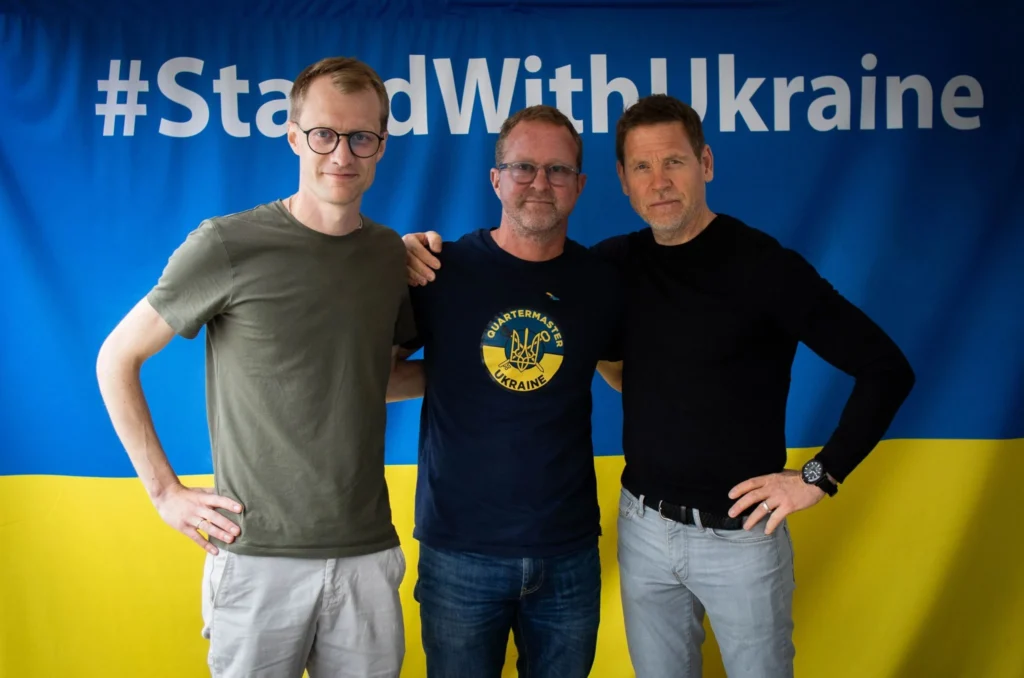
He studied Ukraine’s war experience to adapt training programmes for Swedish officers. Another co-founder, Andreas Flodström, founded the IT company Beetroot in Ukraine, and the third co-founder, Jonas Rydin, founded the charitable organisation Quartermaster for Ukraine, which has provided the Armed Forces of Ukraine with aid worth more than $20 million in recent years.
Lager and his partners saw that Ukraine lacked investment, particularly at the early stages of defence tech startup development. As a result, in spring 2025 they created Varangians, which has already closed a €10 million fund.
The investors’ primary task is to help Ukraine win the war. At the same time, Europe also needs to acquire knowledge and experience and to establish cooperation with Ukraine on modern weapons.
To this end, the Varangians have already made three public investments in Sine Engineering, Himera and Norda Dynamics, plus one anonymous investment. The group made two more investments in the summer but announced them only recently. One developer is working on AI-based target recognition for aerial reconnaissance, and the other produces mid- and deep-strike drones. Lager calls both companies leaders in their fields.
In parallel, the Varangians are pursuing follow-on investments in three portfolio companies and conducting due diligence on about five companies that could receive funding. Cheque sizes range from $100,000 to $1 million.
According to the CEO, the investment climate in Ukraine is pretty good, although the war makes it hard to find information on startups. He also confirms other speakers, it is difficult for Ukrainian companies to open a bank account outside Ukraine.
Varangians is cooperating with the only Swedish bank with a representative office in Ukraine, SEB, but investors need more such institutions.
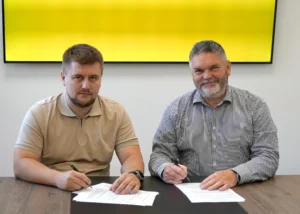
Varangians co-founders (Photo from LinkedIn page)
The group would also like to cooperate more with European investors. Lager says that we share the same threat from Russia, so we need to build a stronger Europe together.
I think that maybe the new Nordic region is showing the way now. A lot of investors have started to invest in Ukraine, and we really think it’s a fantastic trend,” adds the CEO. According to him, this market is growing faster than any other in the world, so investors need to invest in it to stay competitive.
Pär Lager gives new investors five pieces of advice:
Team up with existing investors that have experience in Ukraine and defence.
Make sure your team get hold of Ukrainian experience and military knowledge.
Cooperate with Brave1, IRON and other clusters – they can support you and help identify what the military really needs.
Visit Ukraine often. Investing while remaining solely abroad is very difficult.
If you have decided to invest in Ukraine, you need to act quickly. Faster than you ever have.
Found a mistake or an inaccuracy? Let us know and we will fix it!