Oleg Rohynskyy’s Freedom Fund has invested in 30+ Ukrainian defence tech startups since 2022
The fund’s volume is several tens of milions USD. Rohynskyy is now focused on running UFORCE, while the fund is headed by Volodymyr Nesterenko

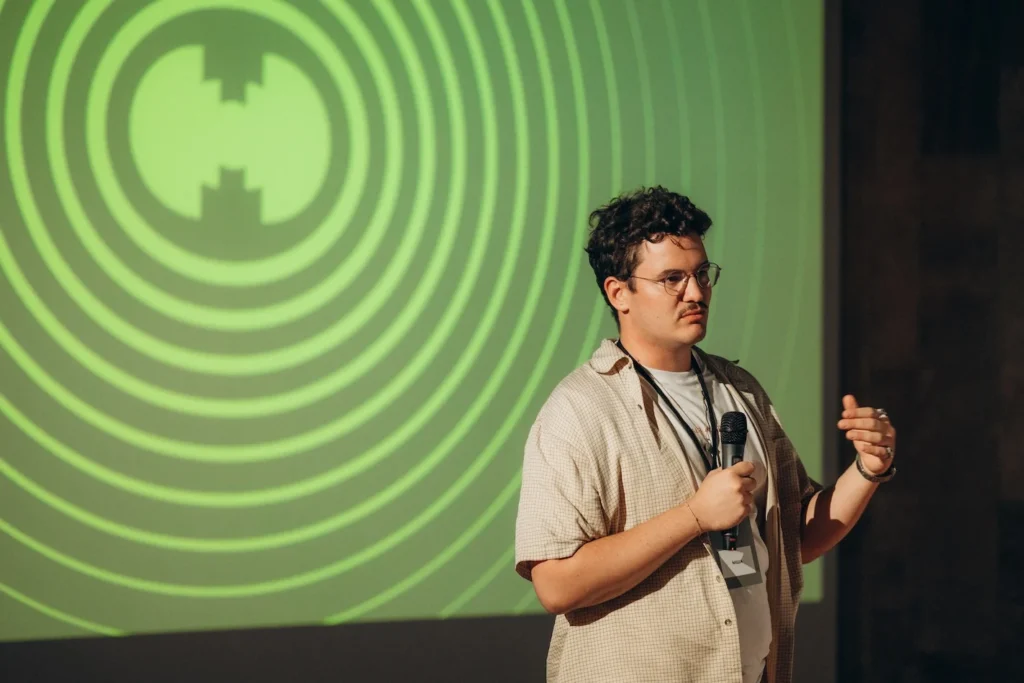
Founder of Freedom Fund and CEO of UFORCE Oleg Rohynskyy. Photo provided by UFORCE
As of August 2026, the portfolio of US-Ukrainian venture fund Freedom Fund includes more than 30 Ukrainian defence tech startups. Freedom Fund founder Oleg Rohynskyy told Defender Media in an interview.
According to Rohynskyy, the fund’s volume is several tens of millions of dollars. Its investors are mostly US-based investors from Rohynskyy’s network, built over many years of doing business in Silicon Valley, where he founded a company that reached a valuation of more than $1 billion.
One of Freedom Fund’s key features, according to its founder, is that it keeps a low profile. This appeals to startups that also prefer to stay out of the spotlight. Only a few of Freedom Fund’s 30+ investments are publicly known, including:
- Farsight Vision – a developer of software and hardware solutions for intelligence and autonomous systems;
- HIMERA – a developer and manufacturer of tactical communications systems;
- M-Fly – a developer of laser guidance systems;
- MaXon Systems – a developer of autonomous Shahed interception solutions;
- Bravo Dynamics – a developer of mesh communications systems.
Rohynskyy says Freedom Fund was the first venture fund to start investing in Ukrainian defence startups in 2022. At the time, he says, there was no legal framework allowing foreign investment into Ukrainian LLCs, especially those producing lethal weapons. As a result, project founders often took money on onerous terms from inexperienced investors.
“Great teams were selling 50% of their company to various petrol station owners who brought nothing to the project apart from relatively small amounts of money,” Rohynskyy explains. “And those great teams effectively got a black mark, because after a round like that, a serious investor would no longer want to invest in the project.”
After seeing several startups get derailed this way, he decided to teach Ukrainian founders how to raise money properly and Ukrainian investors how to invest properly. Rohynskyy hired lawyers from several countries to find the best mechanism for bringing Western investment into Ukrainian LLCs. An Estonian firm came up with the best solution. Freedom Fund began using the procedure they developed. According to the fund’s founder, around 90% of deals in the market are now structured this way, through Estonia.
One of the projects for which Freedom Fund was the first investor is Ukrainian tactical communications developer HIMERA. The company’s co-founder and CEO, Misha Rudominski, says that before its 2023 deal with Freedom Fund, the project operated more like a volunteer initiative. According to him, the first investor provided more than just financial resources: it pushed the team towards global ambitions and helped sharpen the project’s strategy. Rohynskyy also helped with early introductions that gave the HIMERA team access to useful contacts.
“It is very valuable to have someone among your investors with experience building People.ai and running UFORCE,” Rudominski says. He also speaks highly of Freedom Fund managing partner Volodymyr Nesterenko. According to HIMERA’s CEO, the fund’s current head has a strong understanding of the venture business and helps portfolio startups with useful advice on raising further investment.
Rudominski believes Freedom Fund also has every reason to be happy with the partnership. “Their early investment in HIMERA will definitely bring them a good return,” he says.
However, Rohynskyy stresses that making money was never Freedom Fund’s goal. “The fund was supposed to be the first cheque for garage-based defence startups – and make them do everything properly from the very beginning,” he says. “When a company structures its first deal properly, everything becomes much easier afterwards.”
Because investments from Freedom Fund are the first for most of its portfolio companies, the fund invests relatively small cheques of $100,000–200,000.
Rohynskyy acknowledges that competition among funds in the market has increased significantly since 2022. “In 2025, for the first time, we failed to get into a deal we wanted – other funds beat us to it,” he says.
After Freedom Fund’s founder joined UFORCE and became its CEO in 2025, he no longer had time to manage investments. The fund is now fully run by Nesterenko. “My role now is basically to show up at the investment committee once a week,” Rohynskyy says.
According to Rohynskyy, Nesterenko is currently looking for an associate partner to work with Freedom Fund.
Reading now
1
SkyFall officially unveils Thor Hammer mid-strike and announces 1,000+ km version
2
Pentagon to hold Drone Dominance trials for bomber drones, with UFORCE, Gurzuf Defence, Grim Tech and others taking part
3
British-Ukrainian Occam Industries raises €3.8m. The funds will go towards scaling drone autonomy software
4
Terra Drone acquires 50% of Ukrainian Kurin Technologies for $3.5 million
5
Frontline Robotics CBDO Mykyta Rozhkov: Ukraine and Norway are working on an autonomous system to protect maritime infrastructure
By submitting this form, you give Defender Media consent to the processing of personal data.
Надсилаючи цю форму, ви надаєте Defender Media згоду на обробку персональних даних.

Latest news
1
Ukraine’s Defence Forces hit a record number of Russian air defence systems and radars in September
2
Nataliia Mykolska to become VP of Growth and Affairs at Sine Engineering
3
Black Mirror #79: What’s inside Geran-4, unmanned tanks, balloon barrages and more of a new russian miltech
4
6,000 lives saved by replacing people with robots. “Makar” on the ground strike drone unit NC13 and its role in Operation Vivaldi
5