Ukrainian UGV manufacturer develops heavy buggies for logistics and medical evacuation
The platform can execute logistics missions, evacuate casualties, or transport personnel
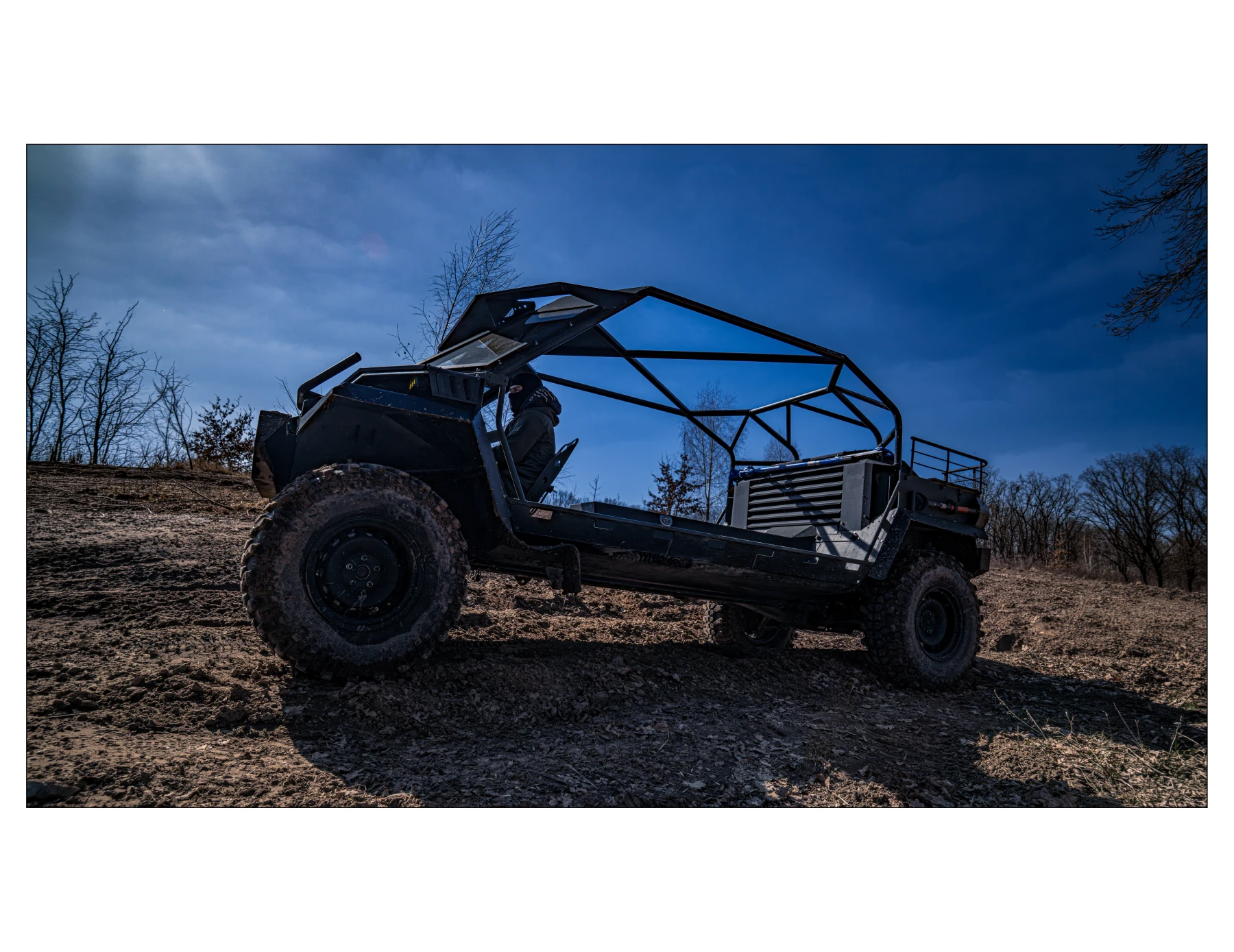
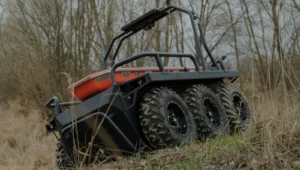
Heavy buggy for CASECAC and cargo transport. Photo by the manufacturer
A Ukrainian UGV manufacturer is developing a lineup of heavy military buggies designed to perform logistics, casualty evacuation, and transport missions. A representative of the company told Defender Media that the vehicles can be operated either with a driver onboard or as unmanned ground vehicles (UGVs) for casualty evacuation and cargo transport.
Dedicated operator stations featuring automotive-style controls are planned for remote operation.
Depending on the configuration, the platform can execute different missions: the troop transport variant accommodates a driver and six service personnel. The casualty evacuation version accommodates a driver, two casualties on stretchers, and two medics. The cargo variant can carry up to 1,000 kg of payload and tow a trailer of equal weight, while the tractor version is intended for towing unmanned ground vehicles and recovering light vehicles.
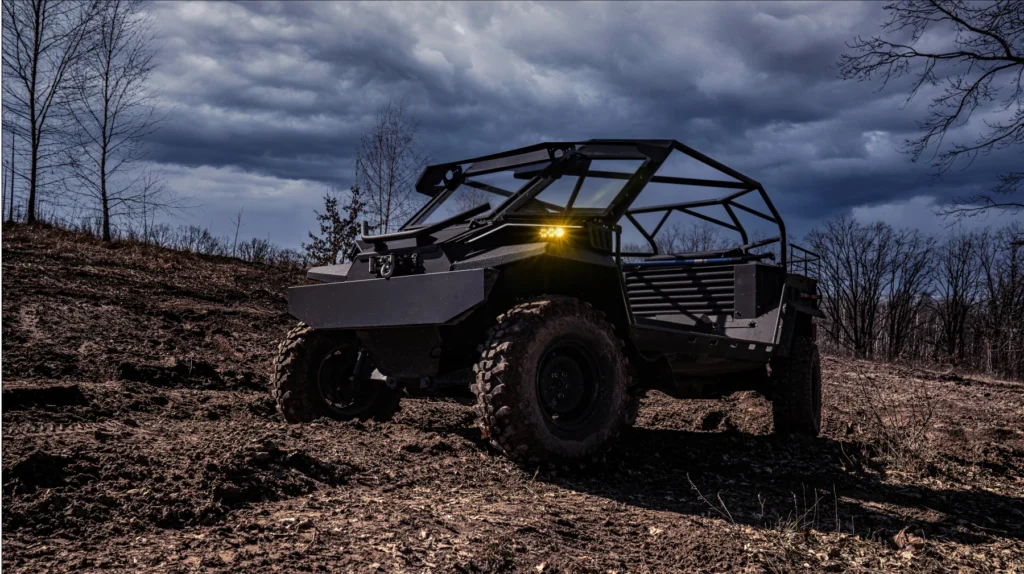
The base platform measures 4.4 m in length, has a ground clearance of 450 mm, and features a kerb weight of 1,700–1,800 kg depending on the configuration. The vehicle is powered by a 190 hp engine and features permanent four-wheel drive (4×4). Its top speed is rated at 100 km/h on paved roads, 80 km/h across rough terrain, and 40 km/h off-road.
The design utilises independent double-wishbone suspension on all wheels, with 300–350 mm of suspension travel. According to the manufacturer, the diesel variants feature an operational range of several hundred kilometres.
Four prototype vehicles have been built so far, one of which has been in operation for roughly a year. The next stages of the programme will include trials of RunFlat tire technology and further cooperation with engine manufacturers to provide service support.
Earlier, Defender Media reported on the Vepr CASEVAC UGV, capable of evacuating two wounded personnel.
Reading now
1

400+ jobs in Ukrainian defence tech from BlueBird, Vyriy, The Fourth Law, Odd Systems and other sector leaders
2

70+ vacancies in Ukrainian defence tech at Ukrspecsystems, Strix Air, DoD Solution and other industry leaders
3
Swarmer acquires Ukrainian UGV and UAV manufacturer Ratel Robotics for $224m – and this is just the beginning
4
Unwave’s Stepovyi Viter mid-strike drone passes codification: what we know about this UAV
5

Vluchnyk develops interceptor planned for production in Sweden and other countries: what attracted investors and what the team is working on
By submitting this form, you give Defender Media consent to the processing of personal data.
Надсилаючи цю форму, ви надаєте Defender Media згоду на обробку персональних даних.

Latest news
1
The Pentagon has announced the results of Drone Dominance Gauntlet II – announced Ukrainian companies did not make the top 5
2
Serhiy Prytula Charity Foundation showcases RAM-3X loitering munition
3
Rise Technologies’ PALYCH shifts standard UAV communications to alternative frequencies for EW resilience
4

Ukraine and Slovenia are preparing to sign the Drone Deal agreement
5