Frontline Robotics’ Buria RWS to be integrated with Dropla’s Logist UGV
The partners have also agreed to jointly develop AI solutions for detecting hidden “waiting” drones
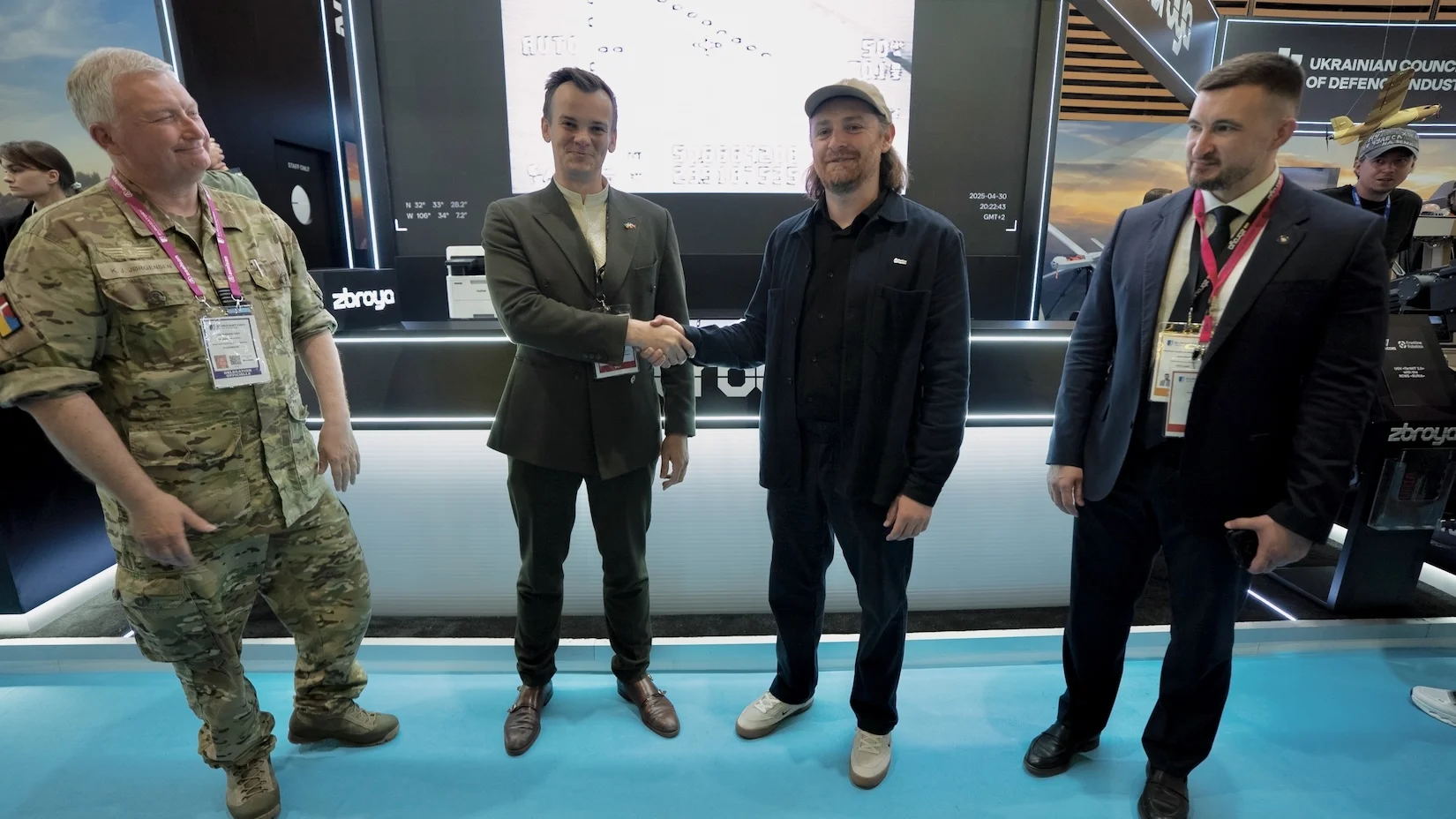
The memorandum between Frontline Robotics and Dropla was signed during the Eurosatory 2026 defence exhibition in Paris. Photo courtesy of Frontline Robotics
Ukrainian defence tech company Frontline Robotics and Danish-Ukrainian firm Dropla have signed a memorandum of cooperation during the Eurosatory 2026 defence exhibition in Paris. As part of the partnership, Frontline’s Buria remote weapon station will be integrated with Dropla’s Logist UGV.
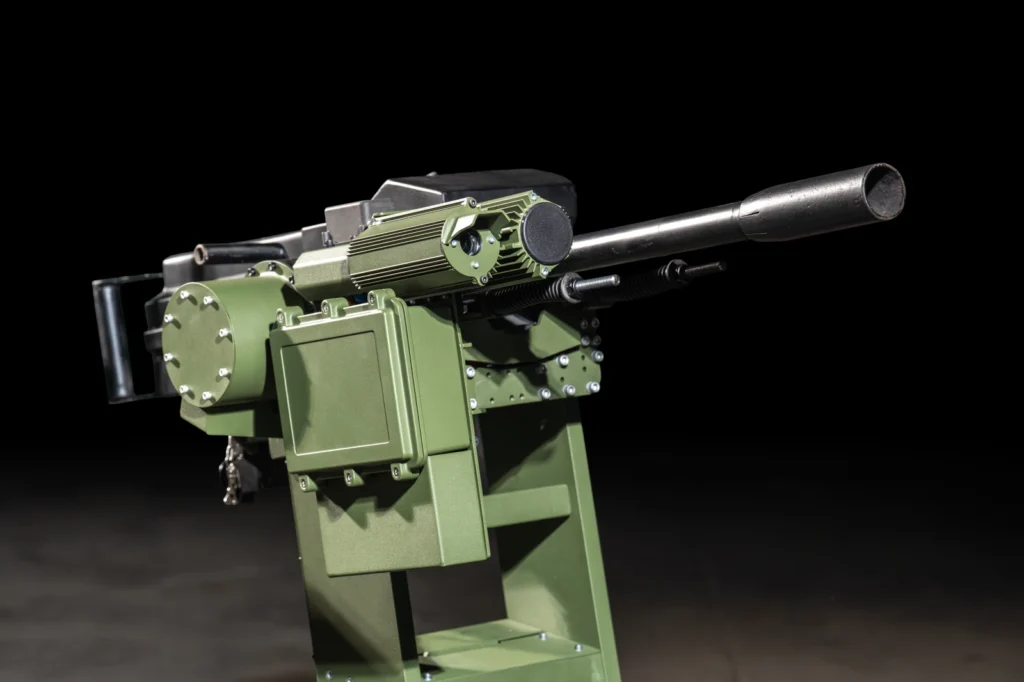
Buria is an RWS designed for precision target engagement from protected positions. The system can be equipped with Mk 19, RDS40 or AGL-53 automatic grenade launchers, Browning M2 heavy machine guns, and compatible weapon systems.
Buria features an integrated ballistic computer and operates on a coordinate-based targeting principle, enabling accurate engagement of targets while minimising operator exposure to enemy fire.
LOGIST is a highly survivable 6×6 UGV designed for logistics, resupply, and combat support missions. With a payload capacity of 250 kg, advanced multi-layer communications, and integrated self-protection systems, the platform can operate in contested environments while maintaining mobility even after sustaining damage.
Integration with Buria will expand the LOGIST platform’s operational capabilities, transforming it into a multi-purpose robotic system capable of supporting both logistics and combat operations.
“By combining our developments, we are creating a modular robotic capability that can support logistics, combat support and semi-autonomous missions,” said Mykyta Rozhkov, CBDO of Frontline Robotics.
The companies have also agreed to integrate Dropla’s AI threat detection capabilities into Frontline Robotics’ reconnaissance drones. Dropla was the first company in Ukraine to codify this solution; under the memorandum, the parties will integrate it to detect concealed “waiting drones”. In the future, this will also allow the system to be adapted for engineering and demining operations.
According to Dropla CEO Viacheslav Shvaidak, one of the most pressing challenges on the battlefield is detecting ‘waiting drones’ hidden in ambush positions near logistics routes.
“For more than two years, we have been training our models to detect small-scale threats,” he said. “Together with Frontline Robotics, we plan to integrate Blue Eyes into a network-centric system and connect it to the control stations of Linza and Zoom drones. This will provide operators with new capabilities, including instant detection of small ground and aerial threats, particularly hidden ‘waiting’ drones.”
Reading now
1
Ukrainian Skyeton secures $10.6M US army contract
2
The Pentagon has announced the results of Drone Dominance Gauntlet II – announced Ukrainian companies did not make the top 5
3
Korven Systems project: How Teletactica co-founder is building an autopilot for interceptor drones
4
Ukrainian SkyFall again among winners of US Drone Dominance Program
5
A drone group, not a swarm: How Pasika by Sine Engineering works
By submitting this form, you give Defender Media consent to the processing of personal data.
Надсилаючи цю форму, ви надаєте Defender Media згоду на обробку персональних даних.

Latest news
1

Autonomous interceptor drones need radars to work. Why is there still a lack of them
2
Ukrainian troops conduct first logistics mission using amphibious UGV
3
Black Mirror #78: Susanin for the Geran-5, Zubr air defence systems, SuperCam updates and other Russian miltech developments
4
MITS Industries opens R&D office in Denmark. Ukraine’s Infozahyst leads the project
5