Black Mirror #53: missile mock-ups on Shahed, new satellite terminals, aerostats and other Russian miltech updates
Overview of new developments in Russia’s military-industrial complex in the first week of April

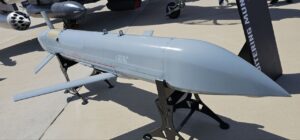
Russian communication aerostat
Russian forces are implementing a unified standard for the classification and coding of unmanned systems, deploying low-profile antennas for frontline communications, and preparing to launch aerostat-based relay platforms. These and other developments in Russia’s defence industry are detailed in Defender Media’s weekly review, Black Mirror.
Introduction of unmanned system classification standards
From 1 April, a preliminary national standard comes into force in Russia, defining the classification and coding of civil unmanned aerial systems (UAS), their infrastructure, and components. The document establishes a single approach to describing device types, their characteristics, and control methods.
Under the standard, drones are divided into several main categories: fixed-wing aircraft (planes, gliders), rotary-wing systems (helicopters, multirotors, autogyros), hybrid systems (vertical take-off and landing, convertiplanes), with separate classifications for ornithopters, aerostats, and airships.
Classification also covers flight duration (from under 1 hour to over 24 hours) and operational altitude. Specific provisions address the standardisation of key components — power units, control systems, and infrastructure, including control and maintenance stations.
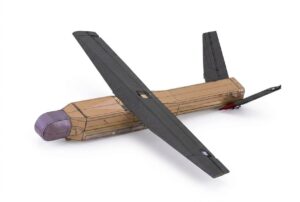
R-60 missile mock-ups on Shahed UAVs
Russian forces have begun equipping Shahed-type strike UAVs with mock-ups of R-60 air-to-air missiles. According to Defence Ministry advisor Sergei Beskrestnov, these dummies do not have a combat function and are used as a psychological tool. Their likely purpose is to create the impression of a greater threat to aviation and to draw the attention of interception units.

Deployment of Spirit-030 satellite terminals
Following restricted access to Western satellite communication networks like Starlink, alternative solutions have become a critical priority for Russian units. Previous Russian satellite internet terminals utilized large-aperture antennas, making them highly susceptible to electronic detection and kinetic strikes.
In response, compact Spirit-030 terminals have surfaced at the front. These units operate via geostationary satellites and feature 30-cm-diameter antennas—a significant reduction from the traditional 90-cm dishes. This transition enhances system mobility and reduces the terminal’s electronic and visual signature.

One of the first documented instances of this terminal being detected and neutralized was recorded by the “Ptakhi Madyara” unit.
New Khunt interceptor drone
Russian manufacturer Neat has unveiled the Khunt and Khunt-Auto interceptor drones. Technical data indicates the device is a multirotor UAV capable of reaching speeds up to 290 km/h. It features a reported operational radius of 40 km and a maximum flight endurance of 30 minutes.

The drone weighs between 2 and 2.3 kg, depending on the payload. Guidance is said to support both manual and autonomous modes and to feature resistance to electronic warfare (EW). Target engagement is executed through physical kinetic interception. To date, there are no confirmed reports regarding serial production or combat testing.
High-Density pellet ammunition
Russian forces are testing a new iteration of anti-drone ammunition with an increased pellet count. While standard rounds contain approximately 90–100 pellets, the new variant carries up to 230. This density increase is designed to improve hit probability against small, agile drones.
Due to the significantly higher recoil from the increased pellet load, a specialised stock with three additional springs has been developed to dampen kickback and maintain weapon control.
Radar-integrated interceptor drone
Russian developers have introduced the Skvorets interceptor drone concept, designed for integration with air defence radar systems. According to specifications, the drone receives real-time target coordinates from the radar and performs mid-flight course corrections toward the interception zone.
The target is neutralised via remote detonation at a range of 4–5 meters. The system utilises a directional munition to minimise collateral damage. While designed for cross-platform radar compatibility, priority is given to dedicated guidance stations.
Aerostat platforms as a satellite alternative
Russian engineers have proposed using aerostat platforms as a contingency for satellite communications. The concept utilises stratospheric balloons or airships as high-altitude signal relays.
Operating at altitudes of 15–40 km, these platforms can provide signal coverage spanning hundreds of kilometres, potentially bypassing the need for satellite launches and simplifying infrastructure deployment.
Beyond high-altitude platforms, developers are discussing tactical aerostats for mobile communications. Operating at altitudes up to 300 meters, these would provide a 10 km coverage radius with data transfer rates of up to 30 Mbps.
Skorlupa unmanned surface vessels enter service
Unmanned “Skorlupa” boats, utilising fibre-optic control channels, have been delivered to select Russian units. Distribution is currently limited to personnel who have completed specialised training at naval ranges.
The Skorlupa is marketed as a multi-role platform capable of reconnaissance, patrolling, and acting as a launchpad for FPV drones. The developer, Ushkuynik, is currently exploring expanded operational doctrines for the platform.
Long-range KVN-35 modification unveiled
The engineering team behind the Knyaz Vandal Novgorodsky fibre-optic FPV drone has revealed a new variant designated KVN-35. The updated UAV can deliver a 3 kg warhead over distances of up to 35 km. By utilising a 23 km fibre spool configuration, the payload capacity can be increased to 5 kg, allowing operators to prioritise either range or lethality based on mission requirements.
Vorobey-10 octocopter for thermobaric payloads
The Vorobey-10 octocopter, specifically designed for dropping thermobaric munitions, is slated for deployment to the combat zone, according to the Spektr Design Bureau.
The drone is powered by 3115-900kv brushless motors in an eight-motor configuration, providing redundancy that allows for continued flight even if one motor fails. It features a 15 km operational range and a maximum payload capacity of 10 kg.
Reading now
1
Ukrainian Skyeton secures $10.6M US army contract
2
Canadian General Dynamics signs agreements with Ukrainian GreenTech
3
The Pentagon has announced the results of Drone Dominance Gauntlet II – announced Ukrainian companies did not make the top 5
4
Korven Systems project: How Teletactica co-founder is building an autopilot for interceptor drones
5

Ukrainian SkyFall again among winners of US Drone Dominance Program
By submitting this form, you give Defender Media consent to the processing of personal data.
Надсилаючи цю форму, ви надаєте Defender Media згоду на обробку персональних даних.

Latest news
1
12 British defence companies to gain access to Ukrainian AI platform Avengers Labs
2

Defence tech startup Zmiyar takes second place at IT Arena Startup Competition 2026
3

Mykhailo Fedorov launches ‘Army of Robots’ project to bring together venture fund, own companies and R&D for frontline robotics
4

Pentagon uses Ukrainian Unwave’s EW to test UAVs in Drone Dominance programme: details of cooperation
5