Dorozvidka #3: Insights on Ukrainian defence tech from Zaluzhnyi, Smetanin, Berlinska, and The Economist
A weekly roundup of key insights from publications in Ukrainian and international media

Image Credits: ukr.radio
In the Dorozvidka section, Defender shares a brief overview of stories that ended up in our editorial backlog over the past week. This edition is mostly driven by insights from interviews and opinion pieces published by other media outlets.
Europe should buy and invest in Ukrainian defence tech – The Economist
The Economist published an editorial urging European countries to purchase Ukrainian defenсe products and invest in Ukrainian defence tech startups.
The editorial emphasizes the technological breakthrough of Ukraine’s defenсe sector and calls on Europe to embrace these innovations. It highlights that Ukrainian companies are rapidly developing advanced drones, EW systems, ground robots, and AI-powered targeting software—often faster and more affordably than their Western counterparts. The article mentions combat-tested solutions like drone swarms and jammer-resistant communications. According to the editors, buying from Ukraine would strengthen Europe’s tech base, cut costs, and accelerate development timelines. The piece calls for removing bureaucratic barriers and initiating direct funding for Ukrainian defenсe startups.
General Zaluzhnyi on how drones, data, and AI have transformed Ukraine’s army
In an op-ed for Defense One, former Commander-in-Chief of the Armed Forces of Ukraine, General Valerii Zaluzhnyi, outlines how cutting-edge technologies have been rapidly integrated into the Ukrainian military to counter Russian aggression.
Central to this transformation is the DELTA battlefield management system, which provides real-time situational awareness by aggregating drone, sensor, and intelligence data—enabling faster, data-driven decisions in combat. Zaluzhnyi notes that Ukraine’s widespread use of tactical drones is responsible for around two-thirds of Russian losses, proving more effective than conventional weapons.
He emphasizes the synergy between drones, data analytics, and AI as a game-changer in boosting Ukraine’s capabilities, and urges the U.S. military to adopt similar approaches—ditching outdated doctrines and embracing tech innovation.
Strategic Industries Minister Smetanin on UGVs, Deep Strike drones, and Shahed interceptors
Ukraine’s defenсe industry increased production of ground-based drones 15-fold in 2024 compared to 2022, according to Strategic Industries Minister Herman Smetanin at the Ukrainian Weapons 2024 briefing attended by Militarnyi.
Smetanin also shared that Ukraine has produced 22 times more Deep Strike drones in 2024 than in 2022. This includes long-range strike drones like Liutyi and Bober, missile-drones such as Peklo and Palianytsia, and several classified systems. More than 50% of Deep Strike drone manufacturing is now localized in Ukraine.
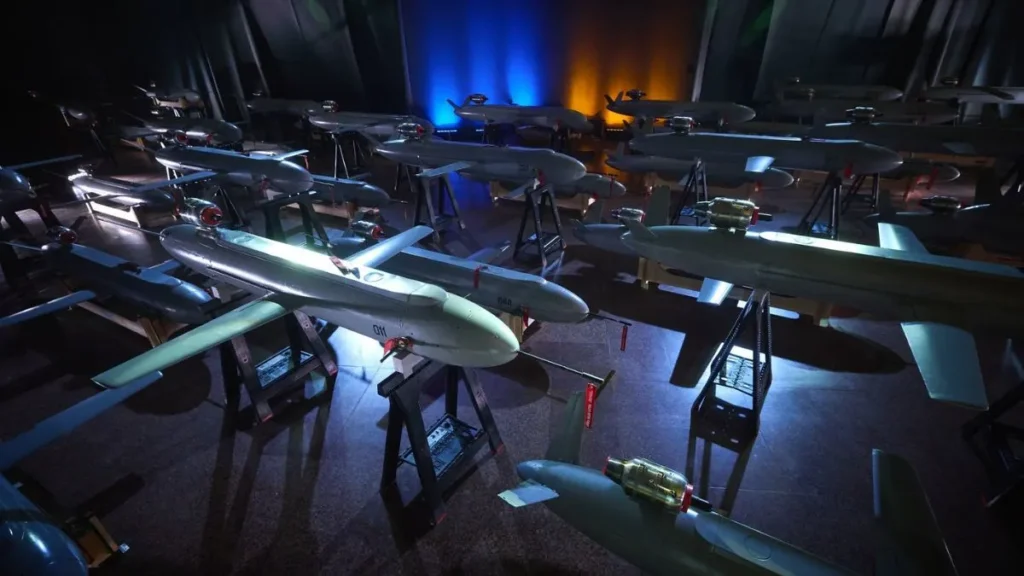
Smetanin revealed that Ukraine has already developed several interceptors for Russian Shahed drones. One drone-based interceptor was successfully tested over Kyiv region and is now being scaled for wider deployment. “It’s a solid case for drone-based air defense, and we have the production capacity to scale it,” said the minister.
Was this the Shahed-hunter drone Smetanin was talking about?
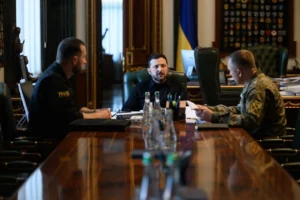
Last week, Belgian Prime Minister Bart De Wever visited Kyiv. Alongside President Zelensky and Belgian defence company representatives, he was introduced to new Ukrainian defence tech.
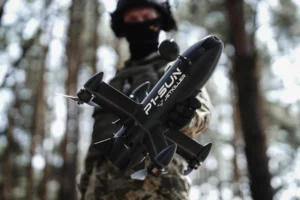
A video shared on President Zelensky’s Telegram channel shows a futuristic drone developed to intercept Shaheds. According to developers, it has already taken down over 20 drones of this type in the past two months, making it the most successful Shahed interceptor currently used by Ukraine’s defence forces.
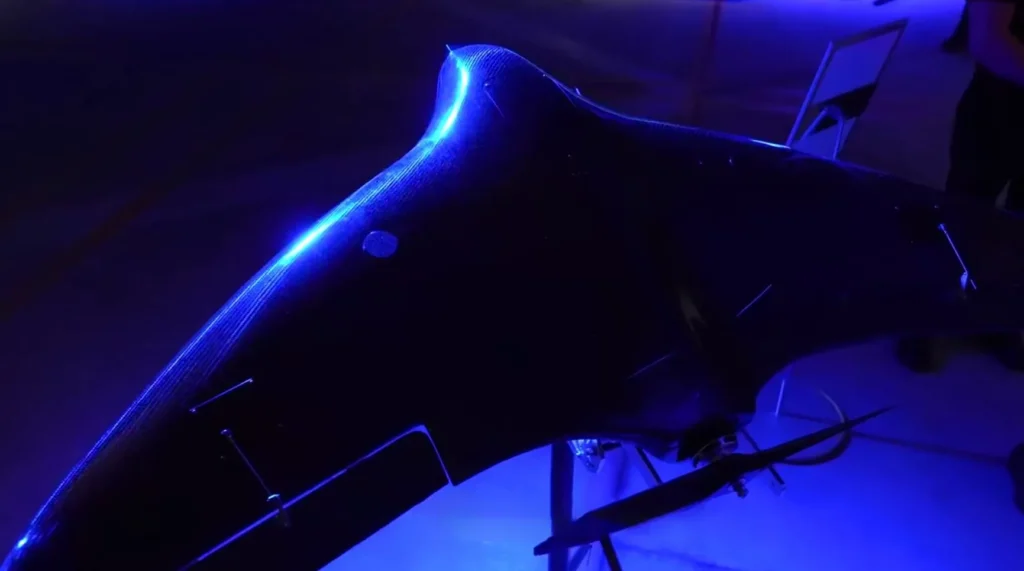
The drone can also target smaller aerial threats like reconnaissance UAVs. While technical specs and manufacturer details remain undisclosed, it’s reported to reach speeds up to 200 km/h and fly at altitudes of up to 5 km.
Maria Berlinska on UGVs, “mother drones,” and FPV with computer vision
Well-known civic activist, Dignitas Fund co-founder, and Victory Drones project lead Maria Berlinska discussed a wide range of defence tech topics in a video interview with Focus.
She covered UGVs (unmanned ground vehicles), FPV drones with machine vision for targeting, fiber-optic drones, FPV-carrier UAVs (“mother drones”), and the threat of Starlink disruptions.
According to Berlinska, Ukraine’s Defense Forces plan to acquire thousands of UGVs in 2025, to be used for logistics, demining, mining, and even casualty evacuation. While not yet a substitute for infantry, the role of robotic systems will continue to grow. “Everything is moving toward autonomous systems—sea, air, and land—integrated into a unified battle management system. And it’s not just us; Russia is also heading that way,” she noted.
Berlinska confirmed that machine vision-based targeting is already in use across various Ukrainian FPV platforms. “We’re taking out Buks, S-300s, air defense radars, launchers, and more. The system locks onto a target from kilometers away and hits it, even if communication is lost,” she said.
As for “mother drones” that deploy FPV units, Berlinska expects the trend to accelerate, citing their advantage in extending range and mission timing. “Looking ahead, the keywords we need to know are optical autotracking, navigation, and full system autonomy,” she concluded.
Reading now
1
SkyFall officially unveils Thor Hammer mid-strike and announces 1,000+ km version
2
Pentagon to hold Drone Dominance trials for bomber drones, with UFORCE, Gurzuf Defence, Grim Tech and others taking part
3
Terra Drone acquires 50% of Ukrainian Kurin Technologies for $3.5 million
4
British-Ukrainian Occam Industries raises €3.8m. The funds will go towards scaling drone autonomy software
5

Frontline Robotics CBDO Mykyta Rozhkov: Ukraine and Norway are working on an autonomous system to protect maritime infrastructure
By submitting this form, you give Defender Media consent to the processing of personal data.
Надсилаючи цю форму, ви надаєте Defender Media згоду на обробку персональних даних.

Latest news
1
Ukraine’s Defence Forces hit a record number of Russian air defence systems and radars in September
2

Nataliia Mykolska to become VP of Growth and Affairs at Sine Engineering
3
Black Mirror #79: What’s inside Geran-4, unmanned tanks, balloon barrages and more of a new russian miltech
4

6,000 lives saved by replacing people with robots. “Makar” on the ground strike drone unit NC13 and its role in Operation Vivaldi
5