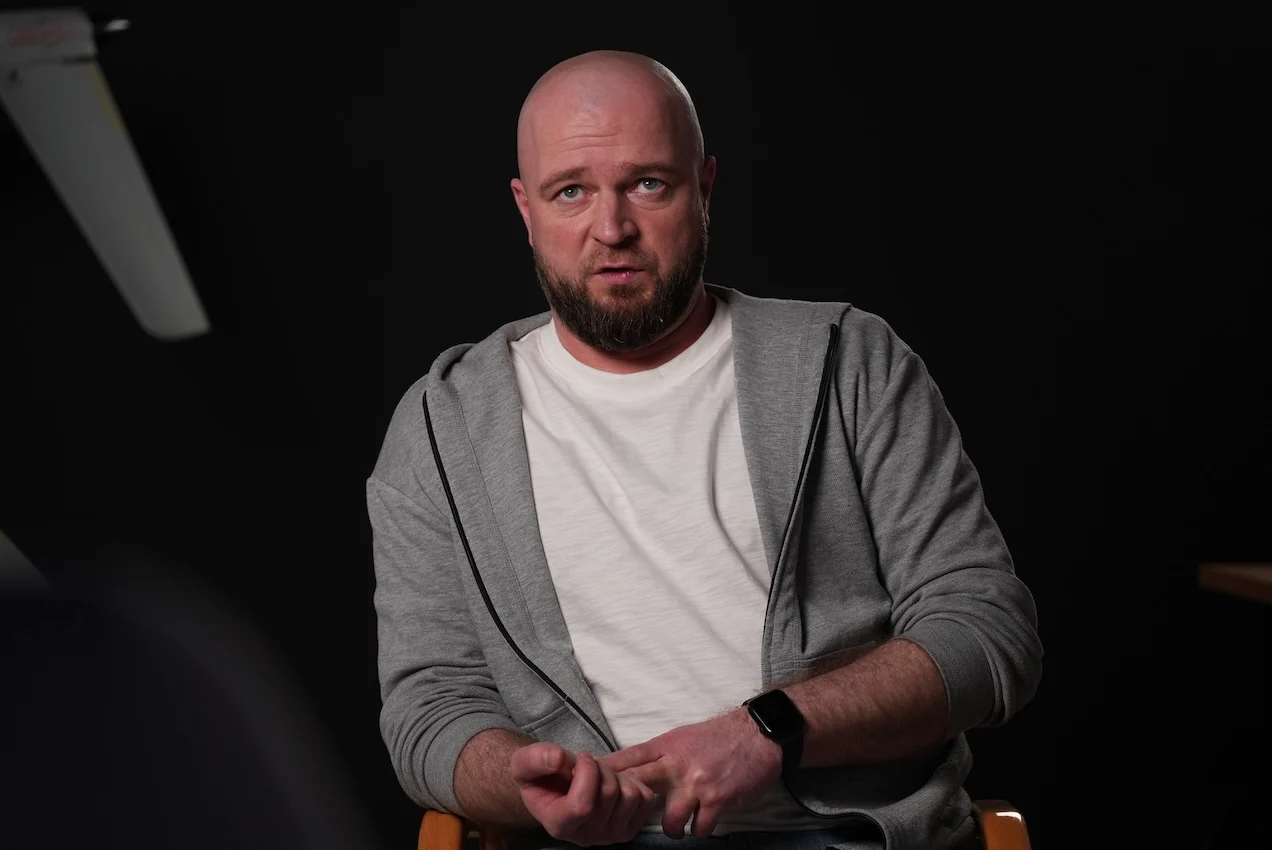
Turning ordinary mines into smart ones: What Victor Shapovalov’s startup ZMIYAR is working on
Defender Media spoke with the entrepreneur, his manufacturer clients, military users, and potential investors

Victor Shapovalov built a successful business manufacturing initiation boards for drones — he sells thousands of such units each month. He decided not to stop there. ZMIYAR’s next product enables even old Soviet mines to be made smart — and allows for the remote control of minefields.
Experts say this solution is very much needed at the front. However, for the project to succeed, several significant challenges must be overcome, funding secured, and military support obtained. Defender Media spoke with Shapovalov, his manufacturer clients, military users, and potential investors.
How ZMIYAR began
Shapovalov comes from Ajax Systems. After the full-scale invasion began, he started volunteering alongside his work. At the dawn of the FPV-drone era, military acquaintances approached him with a request: initiation boards (electronic modules responsible for activating a warhead) were needed. His technical background and product experience allowed Victor to assemble the requirements for such devices. Then he visited other military units to check if the need was widespread. Everywhere he heard: “Yes, very much needed, do it.”
In 2023, Shapovalov gathered a classic hardware development team: an embedded developer, a hardware developer, a mechanical designer who designs cases, and a military expert who helps validate hypotheses. Shapovalov, as product manager and founder, brought it all together.
All team members started part-time alongside their main jobs. Soon, it became clear that the project was “taking off” — and the entire team switched to full-time work in the startup. Today, the ZMIYAR R&D team counts six people, and Shapovalov plans to expand it.
ZMIYAR boards are manufactured at another enterprise under contract. However, at the start of the year, the company received a 2 million UAH grant from the Brave1 state defence tech cluster. With these funds, Shapovalov purchased equipment that allows faster and improved R&D — now the project can rapidly make prototypes and small series without outsourcing.
The chief engineer of the Ukrainian drone manufacturer Sky Force (asked not to be named for security reasons) said he is delighted with the cooperation with Shapovalov. The company produces up to five thousand drones a month, and all units are equipped with initiation boards from ZMIYAR. Sky Force values not only the product but the founder’s attitude. In particular, he always attended Sky Force’s codification tests – and helped the manufacturer significantly at that stage.
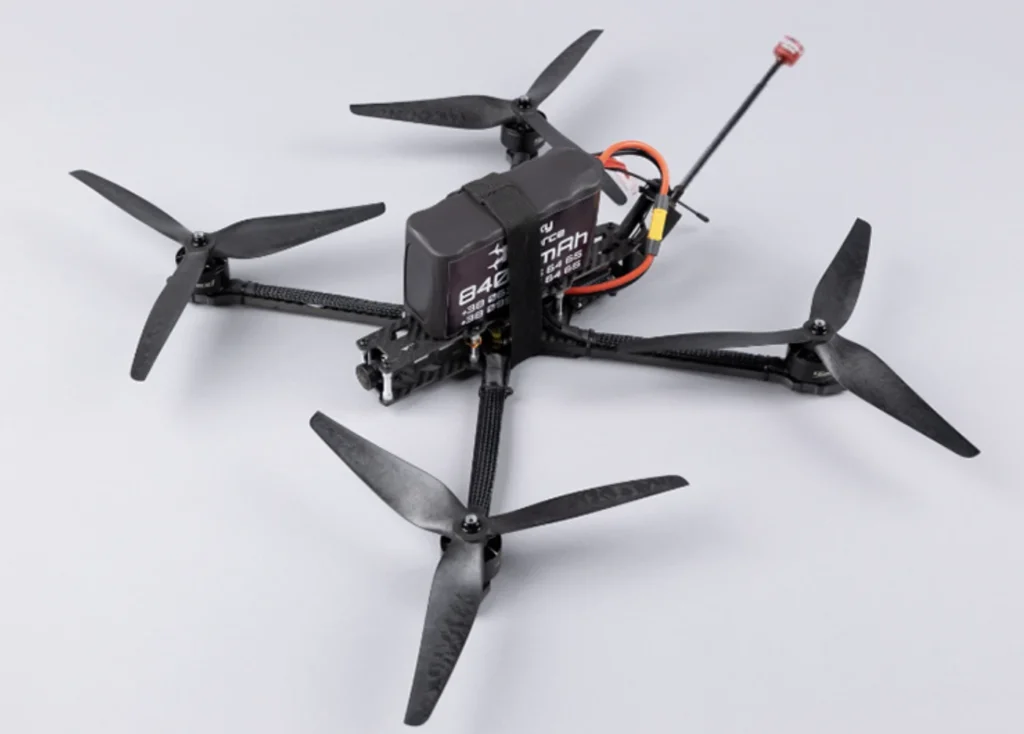
Military users also speak highly of Shapovalov’s company products. The commander of the UAS company of the 1st Infantry Battalion of the International Defence Legion of Ukraine, with the call sign Ratl, states that his fighters have utilised the ZMIYAR MIB initiation board in combat conditions for over a year.
One key advantage of the device he cites is ease of use. “Considering that foreigners serve in the unit, it was important to find a solution that does not require complex training. With this board, the soldier’s preparation time is minimal — training passes very quickly, and connection is completed in under a minute,” says the commander.
According to him, in more than a year of use, there has been no case of failure, and the cost of the device is adequate compared with alternatives from other manufacturers. “In terms of price, functionality and reliability — this is one of the best options on the market,” concludes Ratl.
Shapovalov is trying to bring ZMIYAR’s core business into new niches. Previously, the company made initiation boards only for FPV drones, and now there are integrations with UGV kamikazes and interceptor drones. Next in line: boards for the fixed-wing UAVs.
From sky — to ground
Shapovalov decided to scale the business not only with new boards. His main goal is to disrupt an entirely new market, utilising essentially the same modules but adapting them to new tasks. If the war in the sky has already turned into full high-tech, on the ground, in many ways, old-school still dominates. In particular, this concerns minefields, where Soviet TM-mines and their analogues are still used against military equipment. This causes a whole set of problems — and ZMIYAR has taken on solving them. The startup’s new product: smart fuzes for mines and a comprehensive minefield management system.
The first problem this new ZMIYAR product addresses — the inability to control the old mines. After installation, anti-vehicle and anti-tank mines mostly live their own life. Shapovalov explains that after a minefield with TM-mines is emplaced, commanders often place a man with binoculars to watch what happens on the minefield. At night, enemy infantry can approach and disassemble mines that trigger only on heavy equipment. However, as the kill zone expands, keeping a man with binoculars by the minefield becomes increasingly unrealistic.
That is why ZMIYAR set out to create a system that allows ordinary mines to become smart. For this, the old fuze in the TM-mine is replaced by the Shapovalov team’s device. ZMIYAR fuzes send a signal to a base station, which controls the mine’s status, allowing remote detonation or deactivation. “Sensors in the fuze detect any changes and transmit this to the base station,” explains Shapovalov. If friendly vehicles need to cross a minefield, the relevant sector can just be switched off via the base station.
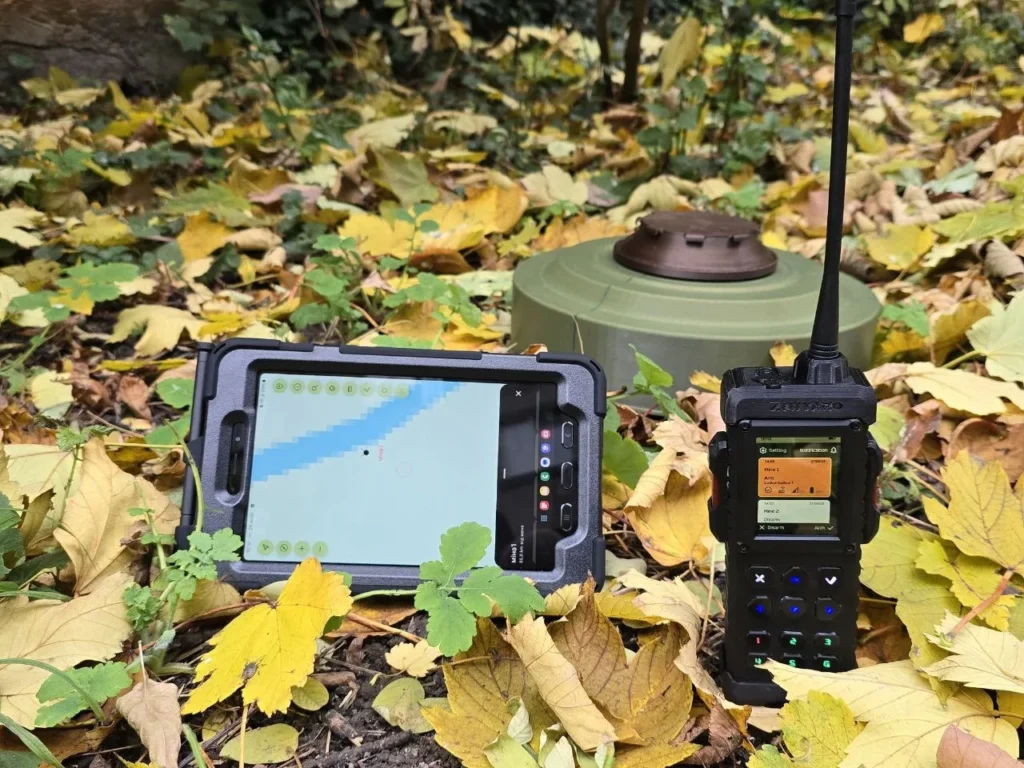
Another problem the development addresses — mapping minefields. With the advent of Delta and Kropyva systems, the issue has begun to be solved, but according to Shapovalov, many units still mark minefields with crosses on Google Maps printouts. “Then this picture is passed to units fighting nearby or moving into the sector,” says the entrepreneur. “The accuracy is nothing, there is no question of control.” ZMIYAR’s smart fuzes, connected to the base station, allow you to view all connected mines, their status, and any significant changes on the tablet.
About the product
ZMIYAR’s minefield management and control system consists of a base station and smart fuzes inserted directly into mines. One base station can simultaneously operate about two hundred fuzes in mines. A dedicated communication network is built between them — i.e., mines aren’t merely connected to the base, but also exchange signals with each other. “Thanks to this, we have a relay mode — the signal can pass further down the chain if a direct line is unavailable,” says Shapovalov. “As a result, the entire system works stably within a radius of up to 20 km.”
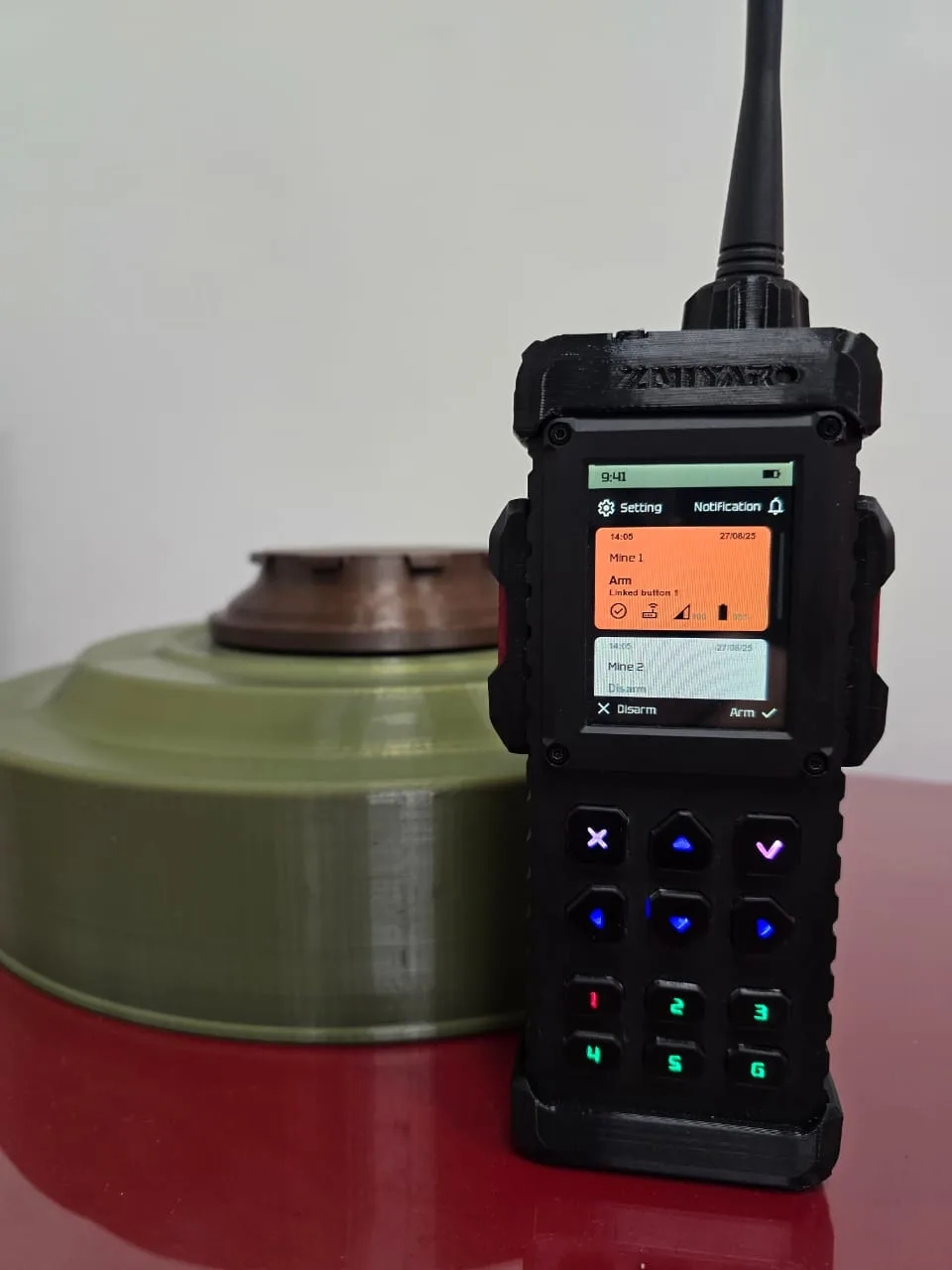
The base station resembles a large radio set in an aluminium case with a colour display; it is used together with a tablet on which the minefield can be monitored. On the screen, the project team implemented simple animations. “We tried to make the product not only functional but also pleasant to use, because it matters for the military,” says Shapovalov. For the same reason, the keys on the base-station change colour depending on the mode, the display information changes, and event alerts appear. This allows the operator to instantly see what is happening and make decisions without unnecessary thought.
The system constantly monitors the network, displaying which devices are connected and which are not, and sends a message to the base station operator if an issue arises.
The price for a kit consisting of the base-station and three fuzes is approximately $3,500. “Each additional fuze alone will cost about $100; we’re finalising the exact figure,” says Shapovalov.
According to him, the system has already passed field tests. Ahead are combat trials – for which ZMIYAR has already agreements with the military.
The project founder understands the trials will expose problem areas of the product and that challenges will have to be faced. The first is clear — enemy electronic warfare tools that can impair the system’s functionality. Already, the system uses non-standard frequencies, and soon Shapovalov plans to add a frequency-hopping function.
The development enables not only intelligent mine emplacement and control, but also more efficient demining. The startup hopes that the products from ZMIYAR will elevate the engineering troops of the Defence Forces to a qualitatively new level.
On money and future
ZMIYAR has already succeeded as a producer of initiation boards for UAVs – and has good prospects in the smart mining and demining niche. “Without going into too many details, I’ll say their new product is currently very relevant on the battlefield,” says Alina Lovchynovska, Managing Partner at MITS Accelerator & Operations Manager at MITS Capital.

She adds that the company has long known the ZMIYAR team and has followed their development since their participation in the Defense Tech Bootcamp that MITS ran with Victory Drones. “One of their strengths is expertise and experience, because the team already has several successful and efficient frontline solutions,” says Lovchynovska.
This year, Shapovalov successfully attended IT Arena 2025. Firstly, he secured interest from MITS, receiving, together with four other startups, a soft commitment to participate in the MITS Accelerator. Graduates of the accelerator receive $200,000, with half as direct investment and the rest as services. At the time of publication, MITS had not yet announced the final list of accelerator participants.
There are other investors considering putting money and expertise into ZMIYAR. European funds, including Wolver Ventures and New Frontier Fund, also announced plans to invest $200,000 in the company at IT Arena 2025.
While investors consider their options, Shapovalov and his partners continue to self-fund further development. ‘The company is profitable, and we’re funnelling sales revenue into R&D,’ says the entrepreneur. However, funds will still be needed to scale the product, so Shapovalov aims to raise about $450,000. He admits that time for fundraising is scarce — at ZMIYAR, the product roadmap and operational challenges keep him busy, and a sizable portion of the founder’s time is taken up by participation in events where the company has been increasingly visible.
Reading now
1
Ukrainian Skyeton secures $10.6M US army contract
2
The Pentagon has announced the results of Drone Dominance Gauntlet II – announced Ukrainian companies did not make the top 5
3
Korven Systems project: How Teletactica co-founder is building an autopilot for interceptor drones
4
Ukrainian SkyFall again among winners of US Drone Dominance Program
5

Frontline Robotics CBDO Mykyta Rozhkov: Ukraine and Norway are working on an autonomous system to protect maritime infrastructure
By submitting this form, you give Defender Media consent to the processing of personal data.
Надсилаючи цю форму, ви надаєте Defender Media згоду на обробку персональних даних.

Latest insights
1
Everything about the RAM-2X mid-strike drone: interview with Ukrspecsystems deputy director Andrii Rymaruk
2

A demo is not demand: How to prove the value of a defence tech product. Column by Tekever Ukraine Director Kateryna Bezsudna
3
How to choose the right video link for an FPV drone: analogue, digital, or fibre-optic?
4

How a frontline signal becomes an engineering task. A column by Defence Builder Accelerator Director Yana Shkvarovska
5