Ukrainian defence tech in the European context: key points from Germany’s defence attaché and the co-founder of General Cherry
What advantages do Ukrainian companies bring to Europe, and what obstacles do they face along the way

Ukraine’s defence sector is entering a phase where combat experience and European expectations are shaping a new path of development. On one hand, there is growing interest in solutions proven in real wartime conditions, while cooperation is gradually shifting from one‑off deliveries to deeper production partnerships. On the other hand, Ukrainian companies must navigate strict standards and procedures that are essential for access to European markets.
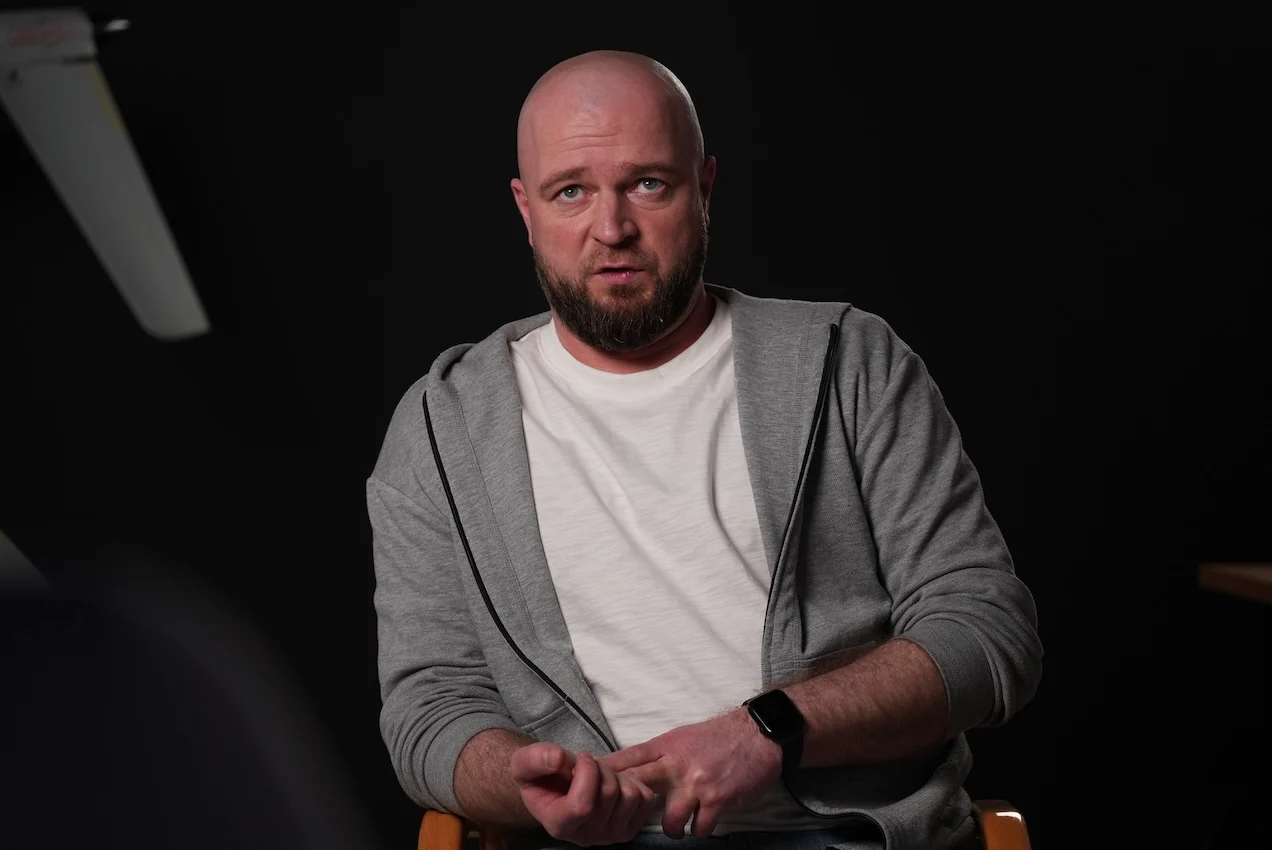
This mix of opportunities and constraints sets the framework within which the sector will operate going forward. Def Talks panellists – Stanislav Hryshyn, co‑founder of General Cherry, and Germany’s Defence Attaché Robert Proese – explored these issues. Defender Media has selected the key points from their discussion.
Ukrainian–European cooperation: from supplies to joint production
Since 2022, defence cooperation between Ukraine and European countries has been shifting from a “donor–recipient” model to one based on “partnership and co‑production”, says Proese. Whereas equipment and ammunition deliveries were previously the main format, interest within EU states in 2024–2025 is moving towards localising production in Ukraine, setting up joint ventures and deploying service hubs near the frontline.
The most promising areas include unmanned systems (strike, reconnaissance and interception), electronic warfare, intelligence assets, optics and sensors, engineering solutions for fortifications and logistics, and ammunition‑manufacturing technologies. Ukraine has a major advantage – combat experience that most European armies simply do not have. Many European companies now see cooperation not just as an economic opportunity but as a way to accelerate their own innovation.

Creating joint ventures with European licences is essential for effective cooperation. As Proese points out, European – and particularly German – procurement processes are “too standardised and too slow” to work directly with Ukrainian companies, while a local partner eases access to these procedures.
Ukrainian manufacturers offer Europeans two clear advantages. First, the ability to produce cost‑effective solutions that meet the demand of European armies for scalable systems. Second, the capacity to tailor products to specific tasks, which strengthens European interest and makes joint production mutually beneficial.
Demand for war‑tested solutions
Ukrainian technologies that have proved effective in combat have real export potential. This includes drone‑interception systems, mobile electronic‑warfare complexes, low‑cost strike UAVs, and ground robotic platforms for logistics and evacuation.
The Baltic states, Poland and Denmark are already facing drone activity over airports, energy infrastructure, and maritime routes. As unmanned threats expand, the market for affordable, effective, and quickly adaptable systems is growing rapidly. Ukrainian solutions fit this niche: designed for specific scenarios, repeatedly tested in combat, and usually cheaper than Western alternatives.
Ukrainian companies are increasingly focused not only on supplying equipment but also on providing full operational support, says Hryshyn. This applies both to local service hubs near the frontline and to remote technical assistance for European partners. Such an approach ensures continuous operation of complex systems and allows technologies to be rapidly adapted to specific tasks.
Hryshyn emphasises that the true value of Ukrainian manufacturers lies not just in producing the product, but in their ability to maintain it in combat conditions and to develop it alongside partners. This opens a new segment of cooperation: European countries could invest in joint personnel training, service centres, and software updates to enhance the resilience and competitiveness of Ukrainian technologies.
The culture of frontline innovation
Despite strong demand for Ukrainian expertise and production, entering the European market comes with significant constraints. These include high risk, lack of guarantees for long‑term stability, difficulty verifying supply chains in wartime, and the need to comply with strict EU and NATO technical standards.
Ukrainian developers have shown a remarkable ability to adapt technologies quickly to real combat conditions, making their solutions unique in the European market. This flexibility spans all areas, from strike and reconnaissance drones to mobile electronic‑warfare systems and robotic logistics platforms.
As Hryshyn notes, “we do not have time for long testing cycles – we develop, test and deploy immediately at the front.” This enables the creation of products that have already been battle‑tested and proven effective in specific scenarios.

Rapid innovation gives Ukraine a strategic advantage over traditional European manufacturers, where bureaucratic and regulatory processes slow the introduction of new solutions. European partners, recognising this edge, are increasingly interested in cooperation and joint projects, allowing them to speed up their own innovation cycles and integrate proven Ukrainian technologies into their security systems.
Yet this same flexibility can create challenges when it comes to scaling up. European customers are accustomed to long standardisation and certification cycles, stable production batches, verified materials, and formal processes. What is a virtue in Ukraine – the ability to modify designs rapidly – can appear to the EU as a lack of production discipline.
European manufacturers are often hesitant to invest in companies located near active combat zones, especially when establishing serial production lines. Bureaucracy is another barrier: for many Ukrainian developers working at frontline iteration speed, certification, documentation, cybersecurity, and supply‑chain requirements can seem overwhelmingly complex.
At the same time, this is where the opportunity lies. European companies increasingly recognise that the traditional weapons‑development cycle is too slow. Ukraine’s model of rapid upgrades, close engagement with end users, and adaptation to real combat conditions may set a new standard for the modern defence industry.
Reading now
1
Ukrainian Skyeton secures $10.6M US army contract
2
The Pentagon has announced the results of Drone Dominance Gauntlet II – announced Ukrainian companies did not make the top 5
3
Korven Systems project: How Teletactica co-founder is building an autopilot for interceptor drones
4
Ukrainian SkyFall again among winners of US Drone Dominance Program
5

Frontline Robotics CBDO Mykyta Rozhkov: Ukraine and Norway are working on an autonomous system to protect maritime infrastructure
By submitting this form, you give Defender Media consent to the processing of personal data.
Надсилаючи цю форму, ви надаєте Defender Media згоду на обробку персональних даних.

Latest insights
1
Everything about the RAM-2X mid-strike drone: interview with Ukrspecsystems deputy director Andrii Rymaruk
2

A demo is not demand: How to prove the value of a defence tech product. Column by Tekever Ukraine Director Kateryna Bezsudna
3
How to choose the right video link for an FPV drone: analogue, digital, or fibre-optic?
4

How a frontline signal becomes an engineering task. A column by Defence Builder Accelerator Director Yana Shkvarovska
5