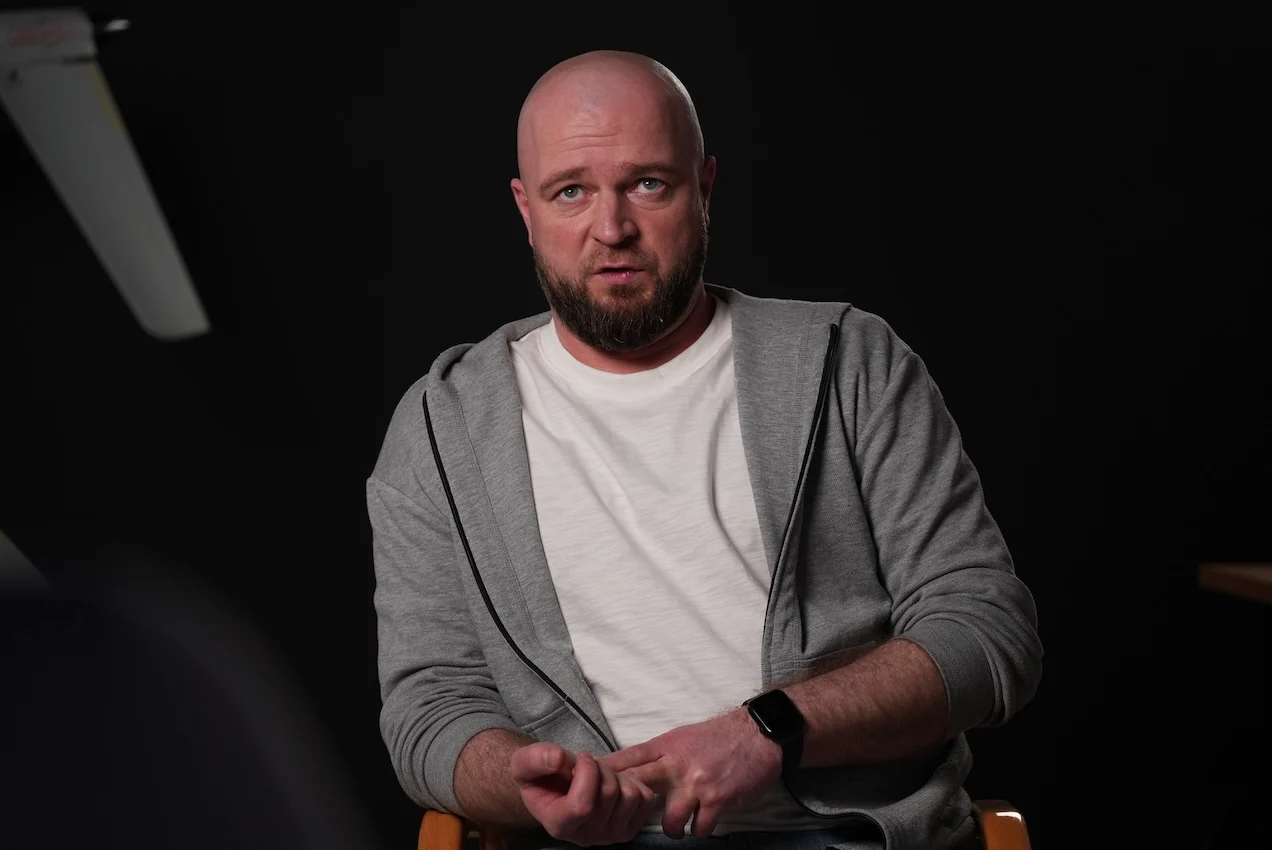
Codification: lessons from a first attempt. Op-Ed by Kvertus CEO Yaroslav Filimonov
The road to a NATO code: how Kvertus went through codification — and why manufacturers shouldn’t fear it

Defence equipment codification is a prerequisite for working with centralised customers, including the Ukrainian Defence Procurement Agency. So manufacturers planning to work systematically with the state or export to NATO countries will inevitably face this process. In a column for Defender Media, Kvertus CEO Yaroslav Filimonov recalls his first experience with codification, shares key lessons, offers advice to newcomers, and highlights areas where the system still needs improvement.
When we at Kvertus first applied for codification in late 2023, the state was only beginning to establish practices for admitting certain categories of equipment — such as tactical-level electronic warfare systems — into service with Ukraine’s Defence Forces. There were no clear algorithms, nor enough case studies to rely on. In many ways, we were going through the process for the first time alongside state institutions, helping shape the practice as we went.
Today, one thing is clear: obtaining a NATO Stock Number (NSN) for every serial product was a purely pragmatic decision. As long as a manufacturer works only with volunteers or individual units, some level of documentation chaos is manageable. But systematic cooperation with the state and large-scale contracts are virtually impossible without this “entry ticket” — the NATO code.
Formally, equipment can still be supplied based on internal military test reports signed by units. But centralised Ministry of Defence procurement and most public tenders via Prozorro typically require codified products.
A lesson that cost us a month
Our first codified products were the Kvertus AD Counter FPV and the Kvertus AD Counter FPV Backpack. The formal procedure for obtaining the code took about a month, but the preparation lasted much longer.
The most challenging part was developing design and technical documentation that fully complied with state standards. It’s not enough to build an effective device — it must be formalised: specifications, testing methods, operating procedures, and performance parameters all need to be documented and verified either in-house or through certified testing centres.
It was precisely this work on documentation that delivered several very practical lessons.

One of them came later, when working with already codified equipment. Due to inexperience, we specified a particular laptop model — an Acer with an exact model index — in the technical requirements. When that model became unavailable in Ukraine, we found ourselves in a formal deadlock: even replacing it with another laptop of the same brand or a more powerful equivalent was impossible because it did not match the documentation.
As a result, shipments to the state were delayed for nearly a month while we amended the technical documentation. Now we phrase such requirements differently: we simply specify “laptop” and list the minimum technical characteristics it must meet.
A similar logic applies to system components. It’s not worth listing minor internal elements as separate items. Otherwise, during inspections, they will be checked individually — creating unnecessary bureaucracy.
New rules: the process is now much simpler
For smaller manufacturers just starting out, there is good news: the codification process has become significantly simpler in recent years.
During martial law, the procedure is regulated, among other things, by the Cabinet of Ministers Resolution No. 1275. Amendments introduced in March further streamlined the process and reduced the number of approvals required.
Today, the process roughly looks like this:
- The manufacturer conducts preliminary testing of the product.
- The manufacturer prepares draft technical specifications.
- The manufacturer submits a document package — including the draft specifications and test results to the Main Directorate for Lifecycle Support of Armament and Military Equipment.
- The Directorate forms a working group to verify compliance with Ministry of Defence technical requirements.
- The manufacturer registers the technical specifications with the Ministry of Economy of Ukraine.
- The documents are then submitted to the codification authority, and within 10 working days the product should receive its code.
Previously, the state effectively reviewed every line of technical documentation before assigning a code. Today, the process focuses more on whether the product meets technical requirements.
Where the system still needs improvement
Despite the simplification, some bottlenecks remain.
Obtaining a code for a new product is now much easier than it was a few years ago. But introducing changes to an already codified product can still be time-consuming. This is particularly critical for electronic warfare systems, which are constantly updated — frequency ranges change, capabilities expand, new features are added. Each such update may require a new round of approvals.
A logical next step for the state would be to simplify the process of updating already codified products.
Three tips for newcomers
Today, new institutions have emerged that were not available to us at the start. For example, Brave1 has become an important bridge between manufacturers and the state, offering guidance on requirements and helping prepare for codification.
But even with such support, manufacturers must get their own processes in order.
- People are the foundation.
You don’t just need a lawyer — you need a technical writer who can produce documentation in line with national standards. You also need clear responsibility for design documentation and a functioning quality department. - Digitise all testing.
Every field test should result in a formal report. All results must be documented so that even a year later, the manufacturer can verify claimed performance — for example, detection range. - Work with standards.
Access to up-to-date national standards is essential, for example via specialised portals. Otherwise, you risk losing time due to formal documentation errors.
Codification is not just about bureaucracy. It marks the transition from “garage” production to a structured business capable of working with the state and supplying the military at scale.
And today, that path is far clearer — and shorter — than it was just a few years ago.
Reading now
1
SkyFall officially unveils Thor Hammer mid-strike and announces 1,000+ km version
2
Pentagon to hold Drone Dominance trials for bomber drones, with UFORCE, Gurzuf Defence, Grim Tech and others taking part
3

Terra Drone acquires 50% of Ukrainian Kurin Technologies for $3.5 million
4

British-Ukrainian Occam Industries raises €3.8m. The funds will go towards scaling drone autonomy software
5

Frontline Robotics CBDO Mykyta Rozhkov: Ukraine and Norway are working on an autonomous system to protect maritime infrastructure
By submitting this form, you give Defender Media consent to the processing of personal data.
Надсилаючи цю форму, ви надаєте Defender Media згоду на обробку персональних даних.

Latest insights
1
Everything about the RAM-2X mid-strike drone: interview with Ukrspecsystems deputy director Andrii Rymaruk
2

A demo is not demand: How to prove the value of a defence tech product. Column by Tekever Ukraine Director Kateryna Bezsudna
3

How to choose the right video link for an FPV drone: analogue, digital, or fibre-optic?
4

How a frontline signal becomes an engineering task. A column by Defence Builder Accelerator Director Yana Shkvarovska
5