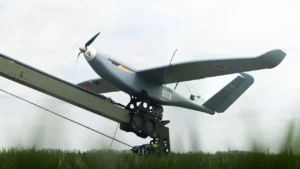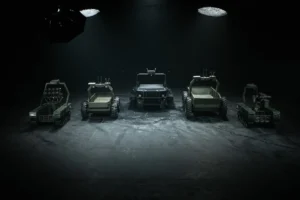
The New York Times: How American AI technology Maven helps the UAF see the battlefield
AI analyzes the movement of russian troops and predicts possible directions of their enemy attacks

Image credits: The New York Times
The Pentagon’s Maven project helps the Ukrainian defense forces fight russia. The artificial intelligence analyzes the movements of Russian troops and predicts possible areas of attack. However, the war in Ukraine has revealed the limitations of these technologies. The New York Times wrote about this.
Six years ago, Google signed a $9 million contract to create an AI tool to help the military identify potential targets using drone footage. However, a scandal erupted due to the resistance of the company’s employees, after which Google withdrew from the project. Maven didn’t disappear – it was transferred to another contractor.
Almost 50 companies worked on the project, but Palantir was the most successful. This company specializes in organizing and visualizing large amounts of data and was able to combine all the data into a single system. Later, Palantir also joined the demining of Ukraine and the modernization of schools.
Early versions of Maven based on Palantir technology were used by the US government during the COVID-19 pandemic and the evacuation of Kabul. The tool allowed coordinating resources and tracking preparedness by processing large amounts of data that could not be processed quickly by humans.
The full-scale war in Ukraine has become a testing ground for Maven and other technologies. According to the NYT, after russia’s invasion, a senior U.S. military officer met with one of Ukraine’s top generals on the Polish border to demonstrate Maven’s capabilities. The article notes that the Americans knew more about the movements of Ukrainian troops than the general himself. Since US President Joe Biden has banned direct involvement in the war, the US could only provide a changing “battlefield picture”.
However, the version of Maven that Ukraine received did not contain the “most sensitive” US intelligence. In response, the Ukrainians created their own “shadow Maven” using data from commercial satellite companies Maxar and Planet Labs, as well as information from Twitter, Telegram, Instagram, drone images, and geolocation data from Russian soldiers’ phones.
How the technology worked
According to the NYT, the information provided by Maven helped Ukraine target russian artillery more effectively. However, expectations that the battlefield picture would be available to soldiers directly in the trenches via phones or tablets did not materialize.
The results are still mixed. On the one hand, generals and commanders have received a tool to create a holistic picture of the movements and communications of russian troops. On the other hand, the American experience in Ukraine has shown how difficult it is to “deliver 21st century data to 19th century trenches.”
Russia’s attack on Ukraine demonstrated the limitations of modern technology. It has become clear that Ukraine’s ability to resist the aggressor largely depends on a stable supply of major weapons and ammunition, including artillery shells.
It is worth noting that russia is adapting to Western technologies faster than expected. While at the beginning of the war they hardly used electronic warfare (EW) systems, now these systems effectively jam not only drones but also HIMARS missiles.
Reading now
1
SkyFall officially unveils Thor Hammer mid-strike and announces 1,000+ km version
2

260+ vacancies in Ukrainian defence technology at BlueBird Tech, Sine Engineering, Buntar Aerospace and more
3
British-Ukrainian Occam Industries raises €3.8m. The funds will go towards scaling drone autonomy software
4
Terra Drone acquires 50% of Ukrainian Kurin Technologies for $3.5 million
5

Autonomous interceptor drones need radars to work. Why is there still a lack of them
By submitting this form, you give Defender Media consent to the processing of personal data.
Надсилаючи цю форму, ви надаєте Defender Media згоду на обробку персональних даних.

Latest news
1
Black Mirror #80: Rassvet terminals, high-speed jet-powered interceptors, Kinzhal upgrades and other developments in Russian miltech
2
Phantom Defense acquires net-launcher developer KARAKURT to integrate its technology into own ecosystem
3

Acoustic sensor developer Zvook raises investment from new Czech fund managed by DEPO Ventures
4
Denmark to hold first-ever Danish Defense Tech Week in four cities: what to expect
5