Dorozvidka #13: Syrskyi, Azhnyuk, Tymochko, plus XTI Engineering and a grenade launcher on the “Queen of Hornets”
A look at last week’s standout media coverage of defence tech

Image Credits: UT-2
Last week saw a number of notable interviews with players in Ukraine’s defence tech space — including a 90-minute podcast with Yaroslav Azhniuk, co-founder of Fourth Law and Odd Systems, and a deep dive into drone-based air defence with Taras Tymochko from the “Come Back Alive” fund. Meanwhile, two European companies announced major fundraising rounds, further proving growing investor appetite in this sector. Here’s a summary of the week in Dorozvidka #13.
Syrskyi on deep strikes and robotic air defence systems
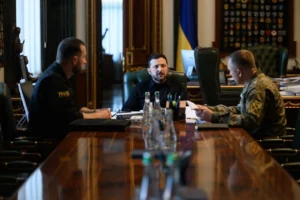
On Sunday, 22 June, Commander-in-Chief of the Armed Forces of Ukraine Oleksandr Syrskyi met with Ukrainian and international journalists. In a summary published on his Telegram channel, Syrskyi emphasised Ukraine’s focus on drones and unmanned ground systems.
One promising direction, he said, is drone interceptors designed to counter incoming Shaheds. “We’re developing both drone and missile DeepStrike programmes – we’ll continue striking inside Russian territory, scaling both the intensity and the range. DeepStrike is one of our strongest capabilities: our cost-to-impact efficiency is 15 times higher than theirs,” Syrskyi noted.
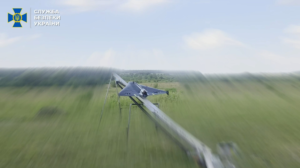
He also revealed that a new experimental unit is being set up to test automated air defence modules built in Ukraine. One such system is Sky Sentinel, recently featured by Defender Media, which uses artificial intelligence to carry out target detection, tracking and engagement – without human input.
Yaroslav Azhnyuk on UT-2
The co-founder of Fourth Law and Odd Systems, Yaroslav Azhniuk, joined Yurii Fedorenko’s video podcast on UT-2. He spoke about the past year for his companies, how working in defence differs from civilian tech, what key challenges face Ukraine’s defence innovation ecosystem, the top priorities ahead, and what kind of technologies Fourth Law is building.
Taras Tymochko on drone-based air defence
Respected expert and “Come Back Alive” fund’s consultant Taras Tymochko gave an interview to Oboronka. He discussed Ukraine’s progress with drone interceptors, radar systems, the “Dronopad” initiative, and the major challenges in countering Shaheds.
According to Tymochko, Ukraine is already producing its own tactical radar systems for detecting UAVs, which are used by drone interceptor units. These domestic radars are in high demand. “The military are very pleased. There’s a 13-month wait for the latest model from one Ukrainian factory,” he said.
Western systems, he noted, often offer longer detection ranges – over ten kilometres – but Ukrainian tech is more stable and simpler for operators to use, as it was designed specifically for UAV interception. That makes it more practical than many Western radars, which have numerous operating modes and require more training.
Everything about XTI Engineering
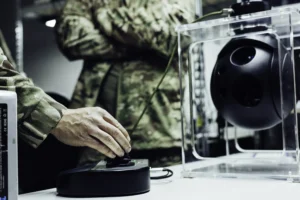
In May, Defender Media reported that the Ministry of Defence had codified the heavy demining UGV “Hart 5100,” made by Kharkiv-based XTI Engineering. Last week, dev.ua published an interview with XTI CEO Vadym Anosov and Igor Tkachuk, managing director of their engineering group. The two shared how they built the first prototype just four months after Kharkiv region’s liberation, what sets the Hart 5100 apart from foreign analogues, and what real-life explosive testing involves. They also discussed how state cooperation has evolved and gave an overview of the global demining market.
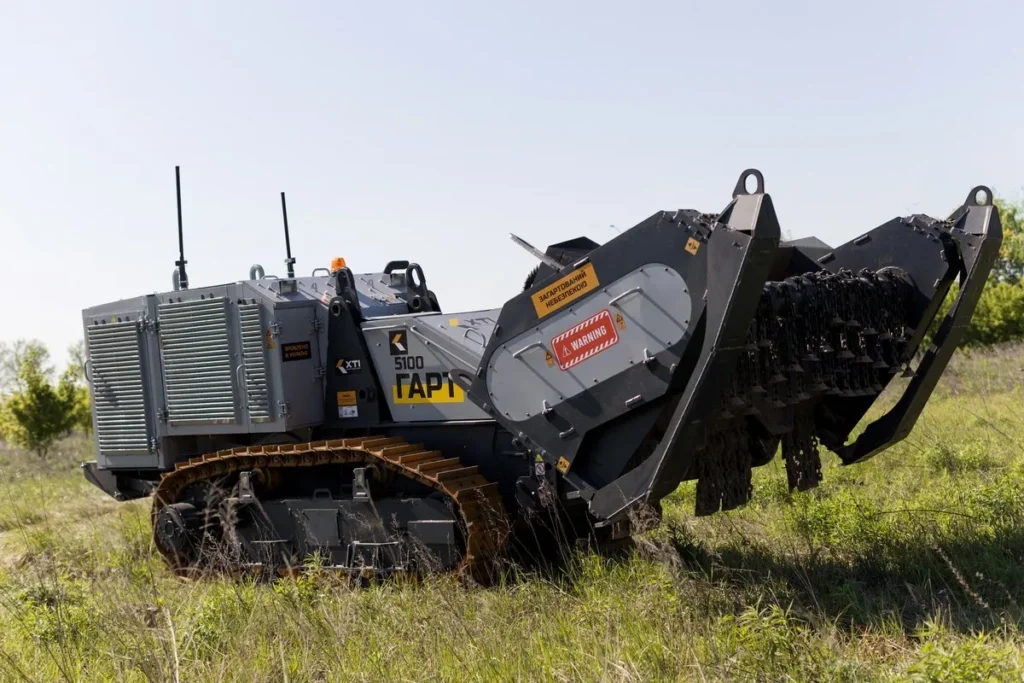
XTI Engineering started out in agricultural machinery but pivoted after 2022. Following the liberation of Kharkiv, Anosov launched the company’s new demining division in response to the sheer scale of mine contamination witnessed on the ground.
Military expert Anatolii Khrapchynskyi on AI in drones and counter-UAV systems
ArmyInform spoke with Anatolii Khrapchynskyi, a well-known military expert and deputy director at a Ukrainian EW systems manufacturer. He explained how AI is changing UAV battlefield tactics, what AI algorithms are used in Russian drones, and how effective electronic warfare tools are against AI-powered UAVs.
FPV grenade launchers tested on the Queen Hornet drone
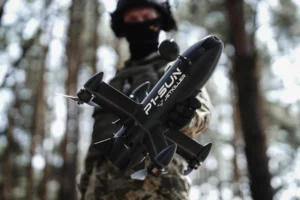
Ukrainian troops have successfully tested a fibre-optic FPV drone armed with a disposable anti-tank grenade launcher in combat. The 420th Separate Battalion of UAV Systems “HORT” shared footage of the drone in action.
The platform used was the Queen Hornet — Ukraine’s largest FPV drone, developed by “Wild Hornets.” With a 17-inch frame, it can drop explosives, carry other drones, serve as a loitering munition or retransmitter, and even mine roads. “Our battalion has a rule: if a drone can lift it, it can fire it,” the unit says.
Mega-rounds for Helsing and Eutelsat
It was a record-setting week for defence tech fundraising. German drone maker Helsing raised €600 million, led by an investment firm owned by Spotify founder Daniel Ek. The company’s valuation has now hit €12 billion, placing it among Europe’s five most valuable tech businesses. Helsing supplies drones to Ukraine.
Meanwhile, European satellite operator Eutelsat raised €1.35 billion to expand OneWeb – its planned competitor to Starlink. Half the funds come from the French government, which sees Eutelsat as key to Europe’s digital sovereignty. Eutelsat plans to raise an additional €4 billion by 2032 and take part in the EU’s Iris2 satellite programme.
Reading now
1
SkyFall officially unveils Thor Hammer mid-strike and announces 1,000+ km version
2
Pentagon to hold Drone Dominance trials for bomber drones, with UFORCE, Gurzuf Defence, Grim Tech and others taking part
3
British-Ukrainian Occam Industries raises €3.8m. The funds will go towards scaling drone autonomy software
4
Terra Drone acquires 50% of Ukrainian Kurin Technologies for $3.5 million
5

Frontline Robotics CBDO Mykyta Rozhkov: Ukraine and Norway are working on an autonomous system to protect maritime infrastructure
By submitting this form, you give Defender Media consent to the processing of personal data.
Надсилаючи цю форму, ви надаєте Defender Media згоду на обробку персональних даних.

Latest news
1
Ukraine’s Defence Forces hit a record number of Russian air defence systems and radars in September
2

Nataliia Mykolska to become VP of Growth and Affairs at Sine Engineering
3
Black Mirror #79: What’s inside Geran-4, unmanned tanks, balloon barrages and more of a new russian miltech
4
6,000 lives saved by replacing people with robots. “Makar” on the ground strike drone unit NC13 and its role in Operation Vivaldi
5