Dorozvidka #7: “Drone Line,” GUR’s robotic boats, plus Himera, Swarmer, Griselda, and Fourth Law
Highlights from our editorial backlog over the past week

Image Source: Militarnyi
A new documentary revealed drone carriers used by Ukraine’s military intelligence (GUR) in attacks on Crimea. Himera successfully tested its autonomous repeater mounted on the Aerobavovna tactical aerostat. Three Ukrainian startups made it into a ranking of the most promising AI-driven defence tech companies.
Read about this and more in the latest Dorozvidka, where we compile news from the past week and highlight notable stories from Ukrainian and international media.
3 Ukrainian startups among the most promising AI players in defence tech
British Global Venturing has featured 14 startups showcasing the growing role of artificial intelligence in modern warfare. Three of them are Ukrainian.
Swarmer, founded in 2023, develops AI-based software that enables one operator to control multiple drones—even under EW interference. The solution allows swarming tactics where multiple drones attack a target simultaneously. The startup was co-founded by Alex Fink and Serhii Kupriienko, and raised $2.7M in 2023 from Radius Capital, Green Flag Ventures, D3, and R-G.AI.
Griselda, launched in 2024, processes large and scattered data sets to extract actionable intelligence. Last year, it secured $600,000 in investments from Double Tap Investments, plus a $250,000 grant.
The Fourth Law is developing an AI-powered guidance system that automates the final few hundred meters of drone flight, ensuring precision strikes even under full EW signal loss. The system can be integrated into most FPV drones. The company’s long-term goal is a fully autonomous system: it would identify targets, launch, navigate internally using neural networks, and strike autonomously. The startup was founded by serial tech entrepreneur Yaroslav Azhniuk.
Drone Line: U.P. Details a New Military Initiative
Ukrainska Pravda published a deep-dive on “Drone Line” – an initiative that brings together five of Ukraine’s most effective unmanned units. The goal: to create a killzone 10–50 km deep along the front, stopping enemy movement entirely. Military analysts calculated the number of FPV, Mavic, heavy bombers, and ISR drones required per kilometer.
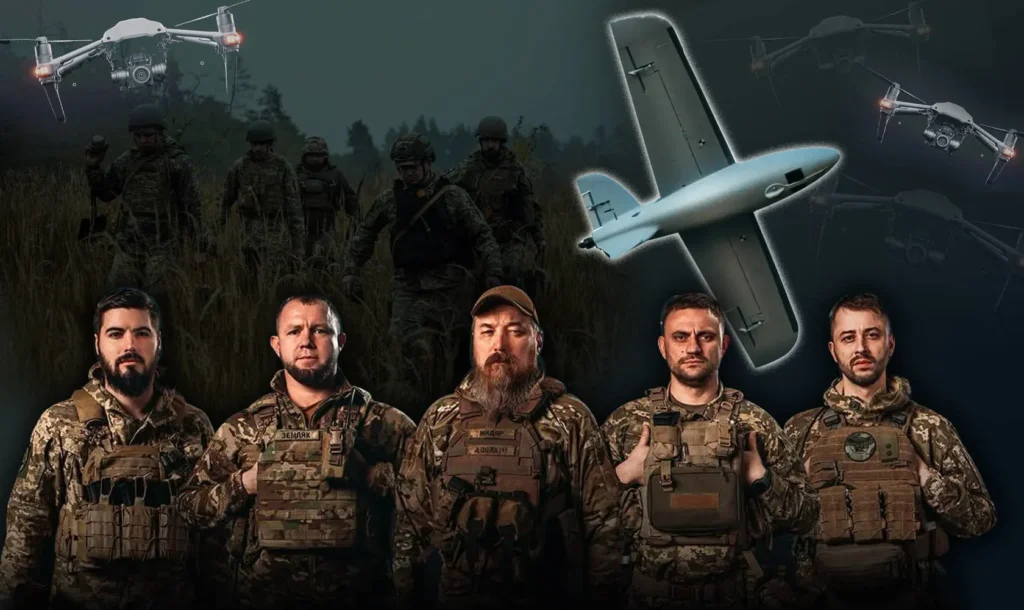
The initiative includes the 20th Separate “K-2” Regiment, 414th “Birds of Magyar” Brigade, 429th “Achilles” Regiment, 427th “Raroh” Regiment, and the “Phoenix” Regiment. Based on Delta situational awareness system data, these are the most effective drone forces in Ukraine’s defence. The article explains the project’s origin, selection process, key tasks, and why it’s not being implemented by the UAV Forces Command. Oleg Khasan from “Raroh” names the end of 2025 as a tentative launch deadline.
Deputy Defence Minister Kateryna Chernohorenko on the DELTA System
ArmyInform published an extensive interview with Deputy Defence Minister Kateryna Chernohorenko on digital transformation. Topics include the newly created Space Policy Directorate, the DELTA dashboard as the war’s digital brain, combat effectiveness ratings, and more.
New GUR USVs revealed in documentary
A private screening of “Naval Battle: The Drone Era”, a documentary by Artem Shevchenko, revealed two types of uncrewed surface vessels (USVs) used by GUR (Defenсe Intelligence of Ukraine) in the Black Sea.
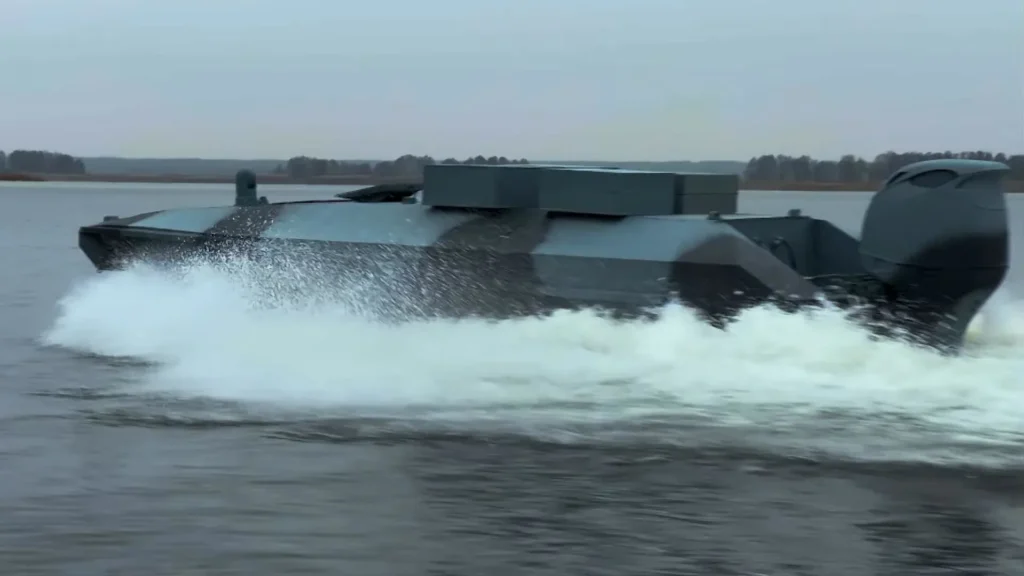
According to the film, a core element of GUR’s naval drone fleet are uncrewed platforms adapted to launch kamikaze drones capable of striking land and fast-moving naval targets.
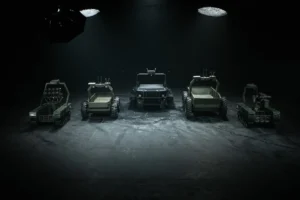
The film presents two new USVs distinct in design from the well-known Magura V5. One features a boat-style propeller engine and can carry four launch-ready FPV drones in pods.
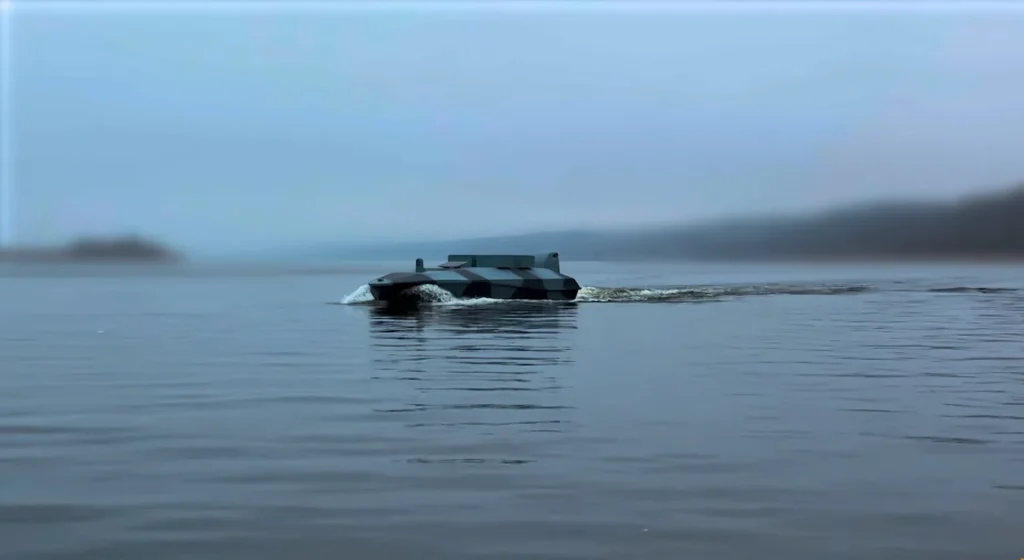
“Our naval platform carries 500 to 3,000 kg of air, surface, and underwater munitions. It uses cutting-edge NATO-grade AI-integrated tech,” says a GUR special forces operator.
A second, unnamed model was shown only briefly in low-res footage. It has a completely different hull design and a launcher for four fixed-wing kamikaze drones.
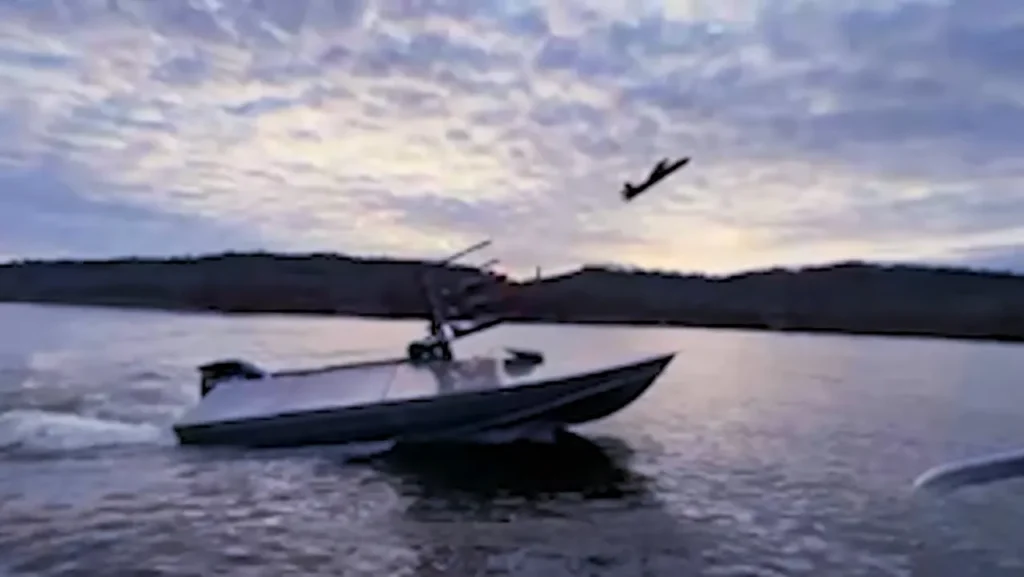
This USV has reportedly been used multiple times by GUR’s Prymary unit to strike Russia’s coastal targets in Crimea. In April, it damaged several Russian boats and a Tor-M2 air defense system.
Operators also revealed the marine control station, featuring an aircraft-style control yoke, throttle lever, and AR glasses replacing conventional monitors, giving a wide-angle, composite video feed from multiple onboard cameras.
Himera tests autonomous repeater on Aerobavovna Aerostat
Ukrainian tactical communications startup Himera conducted joint tests with Aerobavovna, a domestic aerostat developer. Himera’s autonomous B1 repeater was lifted to altitudes of 500 and 800 meters during trials.
The tests were successful. Mounting the relay on an aerostat ensures stable comms within a 30 km radius—even in mountainous terrain or urban zones. The system can be deployed in 10 minutes and operates up to 14 days without recharging.
Reading now
1
SkyFall officially unveils Thor Hammer mid-strike and announces 1,000+ km version
2

260+ vacancies in Ukrainian defence technology at BlueBird Tech, Sine Engineering, Buntar Aerospace and more
3
British-Ukrainian Occam Industries raises €3.8m. The funds will go towards scaling drone autonomy software
4
Terra Drone acquires 50% of Ukrainian Kurin Technologies for $3.5 million
5

Autonomous interceptor drones need radars to work. Why is there still a lack of them
By submitting this form, you give Defender Media consent to the processing of personal data.
Надсилаючи цю форму, ви надаєте Defender Media згоду на обробку персональних даних.

Latest news
1
Phantom Defense acquires net-launcher developer KARAKURT to integrate its technology into its UAVs
2

Acoustic sensor developer Zvook raises investment from new Czech fund managed by DEPO Ventures
3

Denmark to hold first-ever Danish Defense Tech Week in four cities: what to expect
4
Forbes: Airlogix plans to raise $100m at a $2bn valuation
5