“Demand for Ukrainian defense technologies is systemic and growing in both the US and Europe” — Oleksandr Soroka, Network VC
A big interview with the investment manager overseeing a portfolio of 27 defense startups, including Swarmer and Bavovna.AI

Oleksandr Soroka / Photo: Network VC
Oleksandr Soroka is one of Ukraine’s most experienced investment managers. He is the founder of Network VC, a fund that has been investing in early-stage projects in Ukraine, the United States, and across Europe for several years.
In 2024, the fund spun off Network VC Defense — a dedicated division focused on defense technologies. The Network VC Defense portfolio now includes 27 startups, among them Swarmer, Bavovna.AI, Scopa Industries, and other well-known projects.
As part of the special project Defense Tech Investor Playbook, supported by Network VC Defense, Defender Media sat down with Oleksandr for an in-depth interview.
You are the founder and top manager of several projects: Network VC, Startup Network, Ukrainian Valley, and NETWORK.VC Defense. Could you explain what each structure does and what your role is within them?
Network VC is the core of the entire ecosystem — the management structure that brings together various investment and startup-focused activities.
There are several key components within it. Startup Network is an open platform that generates a large flow of startups and deals, effectively serving as one of our primary sources of deal flow. At the same time, we are building a community, including Ukrainian Valley in Silicon Valley, which is about people, connections, and access to the global market — something critically important for scaling.
Separately, there is Network VC Defense — our investment focus on defense and dual-use technologies. We operate both through the fund itself and through syndicates, attracting private investors and entering startups at early stages.

In essence, it is all one system: the platform brings us projects, the community provides access to markets and partners, and the investment instruments allow us to participate in deals.
My role is to keep this entire structure together: overseeing operational and strategic management, developing partnerships, and building effective cooperation between investors and startups.
Speaking specifically about the defense vertical — how many projects have been funded, and what is the total investment volume?
As of now, the Network VC Defense portfolio includes more than 27 defense startups, and we continue to actively expand this direction.
As for investment volumes, we do not publicly disclose those figures.
Could you share the story behind the creation of Network VC Defense? What were the key milestones, and where is the project today?
We launched Network VC Defense in early 2024 as a logical stage in the evolution of the Network VC ecosystem. At a certain point, it became clear that defense deals had their own specifics — different requirements for structuring, compliance, working across jurisdictions, and partnerships. At the same time, the sector itself began developing extremely quickly, requiring a dedicated and focused approach.
Since then, we have assembled a team, built a pipeline, and formed a portfolio of defense tech companies. We also completed the first batch of our acceleration programme and are now launching the second one — interest from both startups and investors has grown significantly.
Recently, you rebranded the defense division. Why?
The rebranding was a practical step. We transformed OPPND into Network VC Defense in order to integrate the direction into the parent brand and make the structure more understandable, transparent, and scalable for international operations.
In many ways, this reflects both our internal development and the broader market situation: defense tech is no longer a niche segment, but a separate investment vertical with rapid growth dynamics and global demand.
What is the size of the defense-focused fund, and what is your average ticket size?
We do not publicly disclose the size of the fund. In terms of ticket sizes, we currently operate with two primary models. When investing through syndicates, the average cheque today ranges from around $100,000 to $500,000 per startup.
If it is an earlier-stage company entering through our acceleration programme, the initial cheque is usually smaller — around $25,000 to $50,000. This allows us to enter at the very beginning and continue supporting the project in future rounds.
Who invests in defense alongside you? What does your LP profile look like?
In terms of headcount, most of our investors today are Ukrainians — private investors living both in Ukraine and abroad. However, if we look at capital volume, a larger share comes from investors based in the United States. These include both Americans and Ukrainians living and working there.
How are investment decisions made? What does your selection process look like?
We work through several sourcing channels: active media outreach, our own Startup Network platform, specialised events in Kyiv and Silicon Valley, as well as partnerships and a global scout network.
After the initial screening, projects are presented to the investment committee, where we conduct a comprehensive analysis and make decisions. In the case of direct fund investments, an internal team decision is sufficient. If the investment is syndicated, the final decision is made by investors within our investment club — they independently decide whether to participate in a specific deal.
Tell us about the defense tech companies in your portfolio. Which are the most interesting and most mature?
That is a difficult question, because “maturity” in defense tech can vary significantly. There are commercially successful companies with revenue, and there are technology startups with no revenue yet but enormous potential.
On one hand, the most attractive companies are those already demonstrating stable business dynamics, revenue growth, and the ability to scale. On the other hand, some of the most impressive projects are still at early stages — no revenue yet, but breakthrough technology and a strong team.

For example, among our international cases, we invested in Maritime Fusion — a project developing a fusion reactor for maritime applications. It is still early-stage, but the team has deep expertise, strong investors, and the potential to create a next-generation technology.
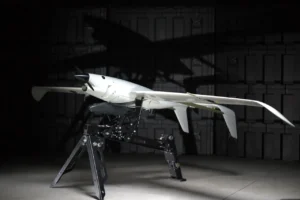
Among more mature stories, Swarmer stands out. We entered the company at the pre-seed stage and later participated in several follow-on rounds. Eventually, the company completed its full growth journey and went public — its shares are now traded on the stock exchange. It is one of the clearest examples of how a Ukrainian technology startup can scale globally.
Cases like this are strategically important for us because they create a “success trajectory” for other teams — from early-stage startup to public market.
Overall, in the technology sector, and especially in defense tech, investment rounds play a critically important role. A company that secures sufficient capital gains a substantial competitive advantage: the ability to hire top talent, invest in R&D, and scale aggressively. Competing globally without that is practically impossible.
Swarmer’s IPO became one of the year’s most successful offerings. Tell us about your relationship with the company — how long you have known the project, why you invested, and whether you are satisfied with its progress.
We first met Swarmer around three years ago and made our initial investment about two and a half years ago, at an early stage of the company’s development. Since then, we have participated in several follow-on rounds. Considering that the company has now completed an IPO and is publicly traded, we are absolutely satisfied with its progress.
The decision to invest was based on two key factors: the scale of the problem and the quality of the team. At early stages, the product itself is often not fully formed — it cannot really be evaluated because it will change multiple times. That is why the focus shifts toward the significance of the problem the startup is solving and whether the team is capable of executing.

In Swarmer’s case, we saw a major unsolved problem and a team with a strong international background. Another advantage was the geographical structure: part of the team is based in the United States, working with investors and customers, while another part operates in Ukraine, close to real operational conditions. This allows for rapid testing, fast feedback loops, and highly efficient engineering development.
That combination ultimately became the basis for our investment decision.
Did the company raise enough during the IPO? Do you think the shares were mispriced, as some Western outlets suggested?
First of all, this was the first IPO of a Ukrainian startup, and that alone already makes the Swarmer case successful, regardless of valuation nuances.
As for the mispricing discussion, those opinions did emerge, but it does not necessarily mean there was a mistake. Often this is a deliberate strategy — leaving part of the upside for investors after the listing. That helps build trust in the company on the public market, create demand, and support positive stock performance during the first trading days.
It is also important to remember that this was a relatively small IPO. For the company, the priority was not only to raise capital, but also to successfully complete the underwriting process, attract international — particularly American — investors, and demonstrate growth potential to the market.
So even if the listing occurred at some discount, it may have been entirely justified from the perspective of the company’s long-term strategy.
Why do you think Swarmer’s stock market debut was so successful? What do you expect from the company over the coming quarters?
Swarmer’s successful debut can be explained by a combination of strong demand, properly managed expectations during the offering, and the broader interest in the defense tech sector. The company entered the market with a clear growth story, which further strengthened investor confidence.
Over the coming quarters, I expect the company to continue developing actively: revenue growth, expansion of its technology portfolio, both through internal development and through possible acquisitions of technologies or teams.
Overall, there is an expectation that Swarmer will evolve from a startup into a large-scale global technology company.
Despite the company’s high valuation and enormous attention, Swarmer’s financials remain modest. Some Ukrainian founders fear the company may be overhyped, fail to meet investor expectations, and damage the reputation of Ukrainian defense tech in the United States. What would you say to those sceptics?
Scepticism in such cases is completely normal. The stock market always operates on differing expectations: at the same moment, some investors believe in growth while others expect decline. That is not a problem specific to one company — it is simply the nature of public markets.
As for Swarmer, yes, risks exist. In the short term, stock markets are difficult to predict, and any company can fail to meet expectations. But it is important to look at the bigger picture.
This is not just an isolated case — it is a breakthrough story for Ukrainian defense tech entering the global market. In practice, it is the first precedent showing that Ukrainian technology companies can complete the full journey: from idea to public listing in the United States.
Even the IPO itself already creates a positive effect for the entire industry:
- It opens access to international capital;
- It builds trust in Ukrainian teams;
- It demonstrates a real scaling path for other startups.
As for the reputation of Ukrainian defense tech in the United States, it is currently positive and growing. Ukraine is increasingly viewed as an environment where technologies undergo real testing in difficult conditions, and where teams know how to adapt quickly and create effective solutions.
So even if individual companies fail to meet expectations, it will not destroy the industry’s reputation. On the contrary, the emergence of cases like Swarmer creates a new wave of interest and sets a benchmark for other Ukrainian players aiming at global markets.
At the state level, relations between Ukraine and the United States are currently somewhat tense. Could this negatively affect investment and business relations?
It is difficult to give a definitive assessment, but for now I do not see any substantial negative impact on investment or business relations. In practice, the market continues functioning, deals continue happening, and interest in Ukrainian technologies remains.
Of course, the geopolitical context always matters and can influence investor sentiment, especially over the long term. But in the short term, the decisive factors remain the quality of teams, technologies, and the market potential of projects.
How will the war in the Middle East affect the defense market and investment in defense tech?
The war in the Middle East is already increasing demand for defense technologies. We see the region becoming much more active: there is growing interest in procurement, new technologies, and rapid “here-and-now” solutions. Many players were not prepared for escalation, so they are now acting aggressively — searching for ready-made products, launching partnerships, and considering localised production.
Overall, this will lead to further growth in the defense market and increased investment in defense tech. Conflicts like these accelerate decision-making cycles: processes that once took years are now happening far more quickly.
For Ukraine, this opens a separate window of opportunity. Ukrainian companies already possess unique experience in creating and testing technologies under real combat conditions, meaning they can act not only as suppliers of solutions, but also as partners in the development and integration of new systems.
In practice, Ukraine now has a chance to establish itself as one of the key global hubs for defense tech — provided it can properly leverage this demand and scale its solutions.
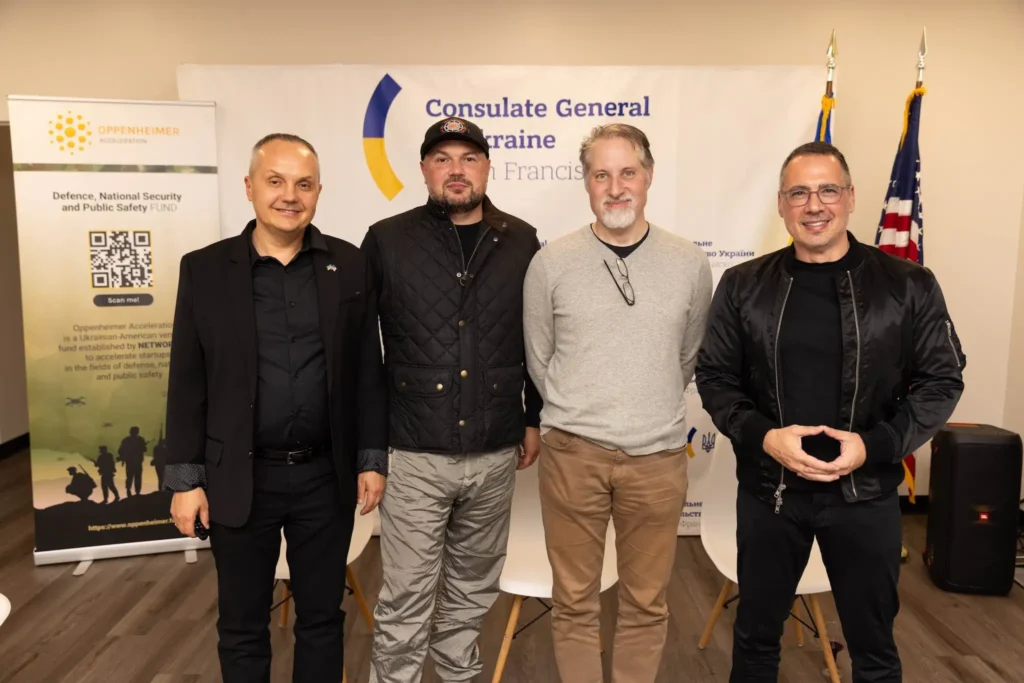
You recently participated in the Brave1 roadshow in the United States. What were your impressions?
Interest was extremely high. The most intensive engagement took place in Washington, where many government institutions and профиль agencies are concentrated. At the same time, from an investor perspective, the strongest activity was in Silicon Valley, where a large number of funds are based.
Importantly, Ukrainian defense tech is now perceived as an established brand. Interest is coming not only from investors, but also from corporations exploring opportunities for joint ventures, technology licensing, and integration of Ukrainian solutions into their own products.
Overall, the Brave1 roadshow demonstrated that demand for Ukrainian technologies is systemic and growing in both the United States and Europe.
How is your syndicate investment project developing?
The syndicate investment project is developing actively. Recently, we closed two new deals — with Toloka and Panoptes — and both companies are showing strong growth momentum.
We are also at the final stage of closing another deal, which we plan to announce soon.
At the same time, we are actively analysing new opportunities — looking at various technological directions and startups that could strengthen the portfolio.
Importantly, we see growing interest in syndicate investments not only in the United States, but also in Europe and Ukraine. This is gradually expanding the investor pool and creating additional opportunities for deals.
Which defense tech directions do you currently consider the most promising? What does Network VC want to invest in this year? How many investments are planned, and at what scale?
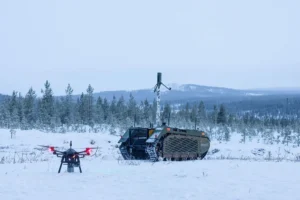
The key focus today is autonomous systems. We believe the development of defense technologies is moving directly toward autonomy: at the first stage of future conflicts, more and more tasks will be carried out by drones and robotic systems — aerial, ground, surface, and underwater.
That is why our priority investment areas include:
- autonomous unmanned systems
- AI and navigation/control algorithms
- swarm solutions for drone coordination
- sensors, detection, and target recognition
- communications systems and EW-resistant solutions
As for investment activity, we aim to complete as many deals as possible within a high-quality pipeline. We operate both through syndicates and thematic funds, meaning the number and scale of investments may vary depending on available opportunities.
Our overall strategy is to actively enter projects at different stages while building a portfolio in the most promising defense tech niches.
Reading now
1
SkyFall officially unveils Thor Hammer mid-strike and announces 1,000+ km version
2
Pentagon to hold Drone Dominance trials for bomber drones, with UFORCE, Gurzuf Defence, Grim Tech and others taking part
3
British-Ukrainian Occam Industries raises €3.8m. The funds will go towards scaling drone autonomy software
4

Terra Drone acquires 50% of Ukrainian Kurin Technologies for $3.5 million
5

Autonomous interceptor drones need radars to work. Why is there still a lack of them
By submitting this form, you give Defender Media consent to the processing of personal data.
Надсилаючи цю форму, ви надаєте Defender Media згоду на обробку персональних даних.

Latest news
1
Phantom Defense provided EW systems for UAV tests under Drone Dominance
2
Ukrainian-Polish UMO Defense unveils fibre-optic drones with multi-drone control
3

Frontline Robotics’ Frodo UGV completes first successful evacuation mission
4
Phantom Defense codifies Blade interceptor and Balaban patrol drone
5