Skyeton unveils a version of Raybird UAV with a hydrogen-powered electric motor
The hybrid model offers shorter endurance but significantly lower noise and an almost non-existent thermal signature
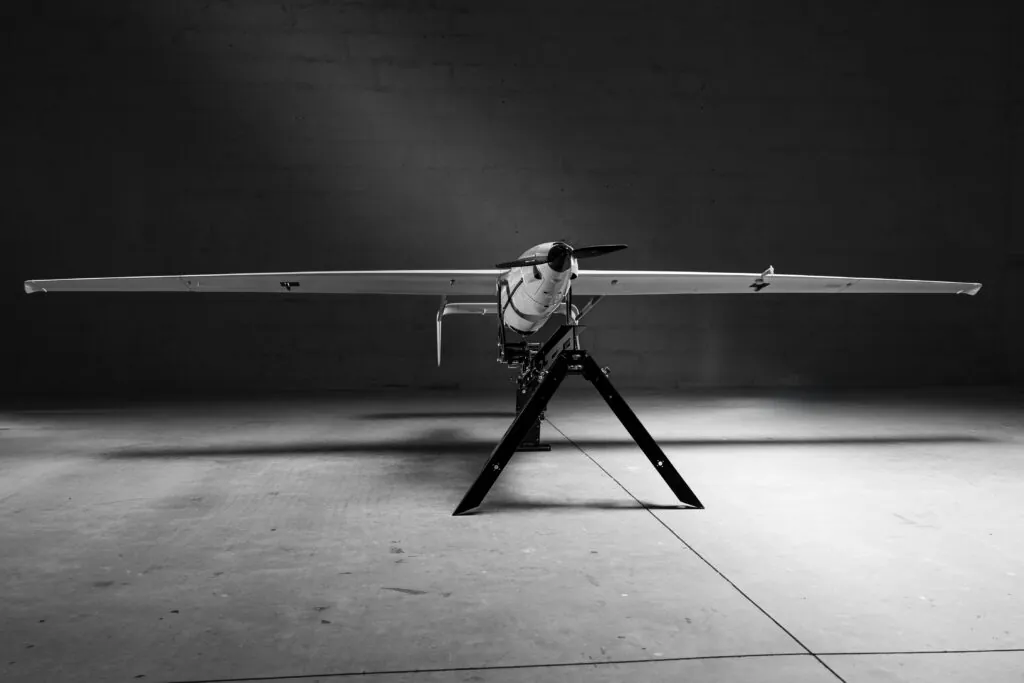
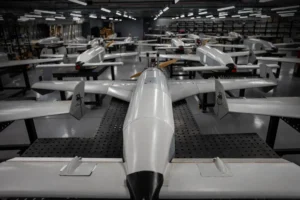
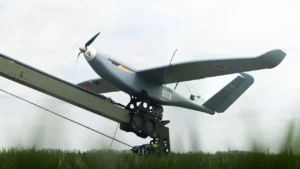
Skyeton Raybird ISR UAV with a hydrogen fuel cell–powered electric motor. Photo courtesy of the manufacturer
Ukrainian UAV developer and manufacturer Skyeton has unveiled a hybrid version of its flagship Raybird reconnaissance UAV, featuring an electric motor powered by a hydrogen fuel cell. The company announced this in an official press release.
The manufacturer is currently preparing the hybrid model for codification, but it has already entered combat duty with one of Ukraine’s Defence Forces units. Defender Media explains how the hybrid Raybird differs from the internal combustion engine version and what challenges Skyeton’s engineers faced while developing the new system.
Comparing the ICE Raybird and the hybrid version
Until now, the company had produced only the Raybird with an internal combustion engine (ACS-3), which provides an endurance of more than 28 hours. As of January 2026, the hybrid version with a hydrogen-electric powerplant can remain airborne for around 12 hours, with Skyeton engineers aiming to extend this to 20 hours.
Despite the shorter endurance, the hybrid Raybird offers a number of advantages. The company notes that hydrogen-electric propulsion delivers improved operational efficiency as well as environmental benefits for both defence and civilian applications.
Additional advantages of the hybrid version include:
- An almost non-existent thermal signature, as the electric motor generates far less heat than an internal combustion engine;
- A wider operational altitude envelope;
- Significantly lower acoustic signature compared to the ICE version.
“Hydrogen fuel is a solution that allows us to combine all the advantages of an electric motor — high reliability and power of the propulsion system, ease of maintenance — with long-endurance continuous flight, which is a defining feature of our UAV,” adds Skyeton CEO Roman Kniazhenko.
How the hybrid Raybird was developed
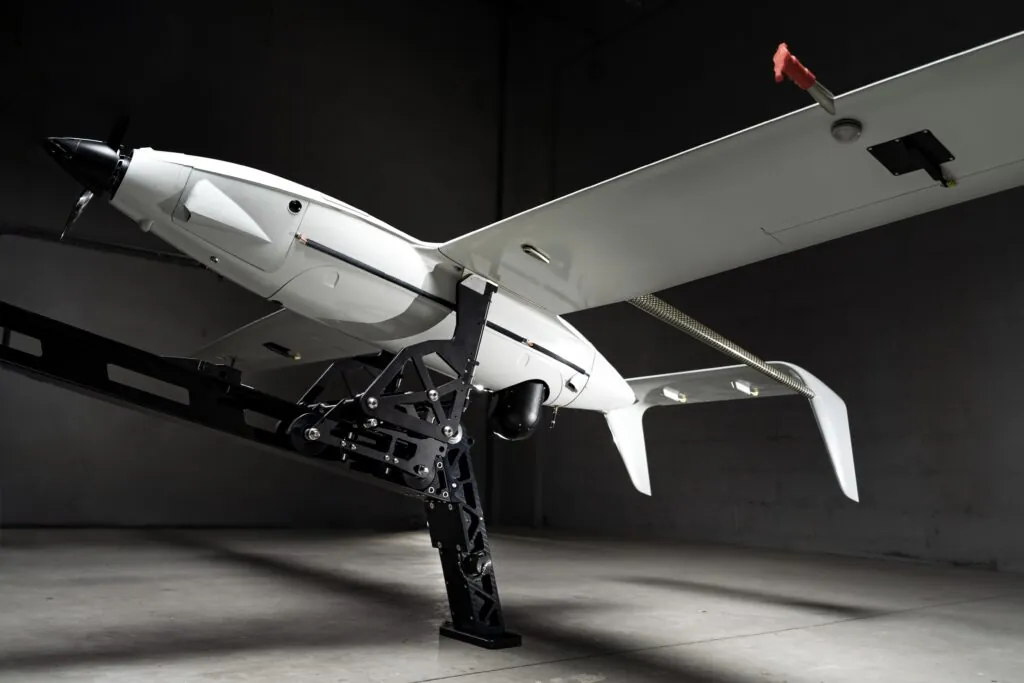
To enable efficient use of hydrogen, Skyeton engineers developed a new Raybird fuselage architecture adapted for integration of an alternative fuel system. According to the company, the new design redistributes internal volume and weight for the hydrogen power system and is optimised for serial production of this UAV variant.
Skyeton reports that during the R&D phase of the hydrogen hybrid project, its engineers resolved a number of issues that previously complicated stable operation of the aircraft in different conditions, including:
- Climatic performance. To ensure mission effectiveness typical of Raybird operations, the company enabled the hydrogen-hybrid powerplant to operate with the same level of efficiency as the ICE version. Both UAV variants are capable of operating in all climates within a temperature range from −35°C to +55°C;
- Hydrogen’s high permeability. To address this, a set of solutions was implemented to improve connections, pressure reduction systems, and overall operator ergonomics when working with the Raybird UAS;
- Infrastructure and logistics requirements. Skyeton will deliver the hybrid Raybird (ACS-3) as a fully self-contained solution. Two scenarios are envisaged: a) the unit receives pre-filled tanks and replaces them as cartridge-type modules; b) the unit receives a compact mobile system that produces hydrogen on site where it is required.
According to Skyeton, the Raybird, equipped with a hydrogen fuel cell–powered electric motor, is currently undergoing preparation for codification to enable wider use by units of Ukraine’s Defence Forces. Since December 2025, as part of interagency trials, the UAV has been conducting missions in the combat zone.
Reading now
1
SkyFall officially unveils Thor Hammer mid-strike and announces 1,000+ km version
2

260+ vacancies in Ukrainian defence technology at BlueBird Tech, Sine Engineering, Buntar Aerospace and more
3
British-Ukrainian Occam Industries raises €3.8m. The funds will go towards scaling drone autonomy software
4
Terra Drone acquires 50% of Ukrainian Kurin Technologies for $3.5 million
5

Autonomous interceptor drones need radars to work. Why is there still a lack of them
By submitting this form, you give Defender Media consent to the processing of personal data.
Надсилаючи цю форму, ви надаєте Defender Media згоду на обробку персональних даних.

Latest news
1
Phantom Defense acquires net-launcher developer KARAKURT to integrate its technology into own ecosystem
2

Acoustic sensor developer Zvook raises investment from new Czech fund managed by DEPO Ventures
3

Denmark to hold first-ever Danish Defense Tech Week in four cities: what to expect
4
Forbes: Airlogix plans to raise $100m at a $2bn valuation
5