Black Mirror #77: Expansion of Alabuga, Geran-4 Seeker teardown, and other Russian miltech developments
Overview of Russian defence-industrial complex developments for the third week of September

Last week, an arms exhibition in Moscow featured state-owned Kalashnikov Concern showcasing new counter-UAS air defence systems. In addition, foreign media investigated the expansion of the Shahed assembly hub in Tatarstan, while Ukrainian journalists examined a captured Geran-4 Seeker. Read about these and other developments in Russia’s defence-industrial complex in Defender Media’s weekly Black Mirror review.
Alabuga-Volokno may launch new carbon fibre production line with annual capacity of up to 500 tonnes
The Alabuga-Volokno enterprise in Tatarstan plans to bring online a new production line with a capacity of up to 500 tonnes of aerospace-grade carbon fibre per year by 2029. This was revealed in an investigation published by European media outlets POLITICO and The Telegraph.
Carbon fibre is utilised in the structural elements and airframes of Geran-series uncrewed aerial vehicles. According to David Albright, an expert at the Institute for Science and International Security, an additional 500 tonnes could theoretically support the manufacture of about 28,000 UAV airframes annually. This represents an expert projection rather than the facility’s official production target: by comparison, POLITICO estimates current Russian output of this drone family at over 36,000 units per year.
Albright notes that carbon fibre reinforces the wing spars and internal airframe structures, including housing around the engine and fuel cells.
According to sources cited in the report, a primary objective of the project is to mitigate reliance on imported materials and secure carbon fibre supplies for Russia’s strategic industries.
Counter-drone systems Zveroboy and Kalitka-KA
State-owned Kalashnikov Concern has publicly demonstrated the Zveroboy and Kalitka-KA counter-UAS systems.

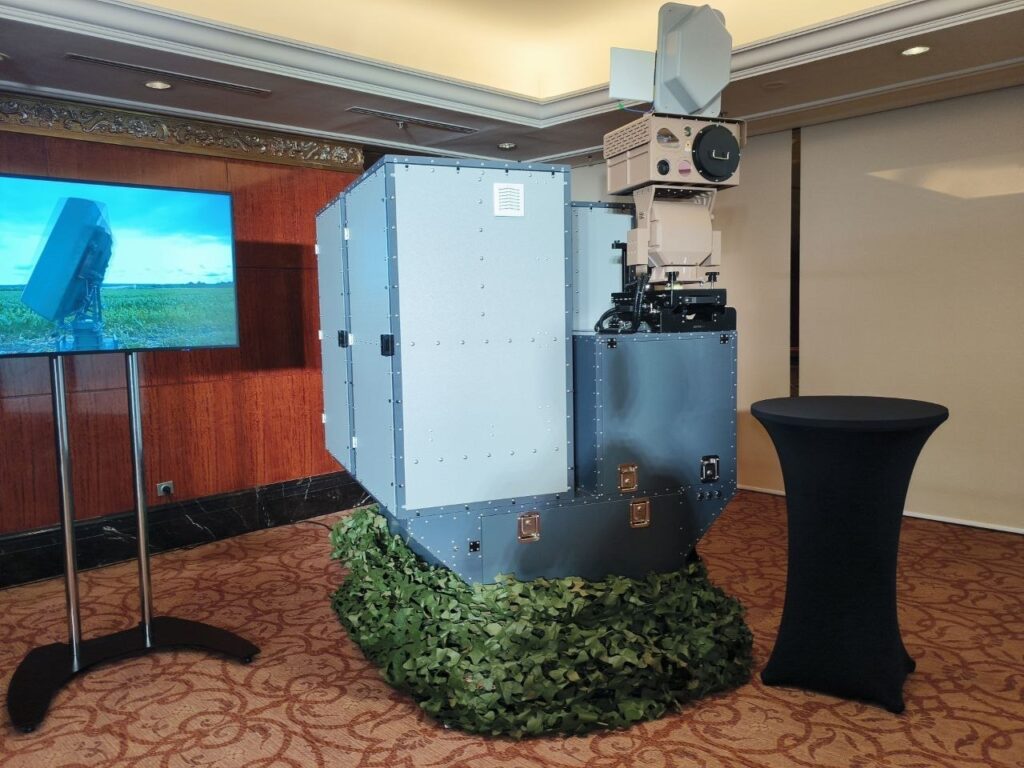
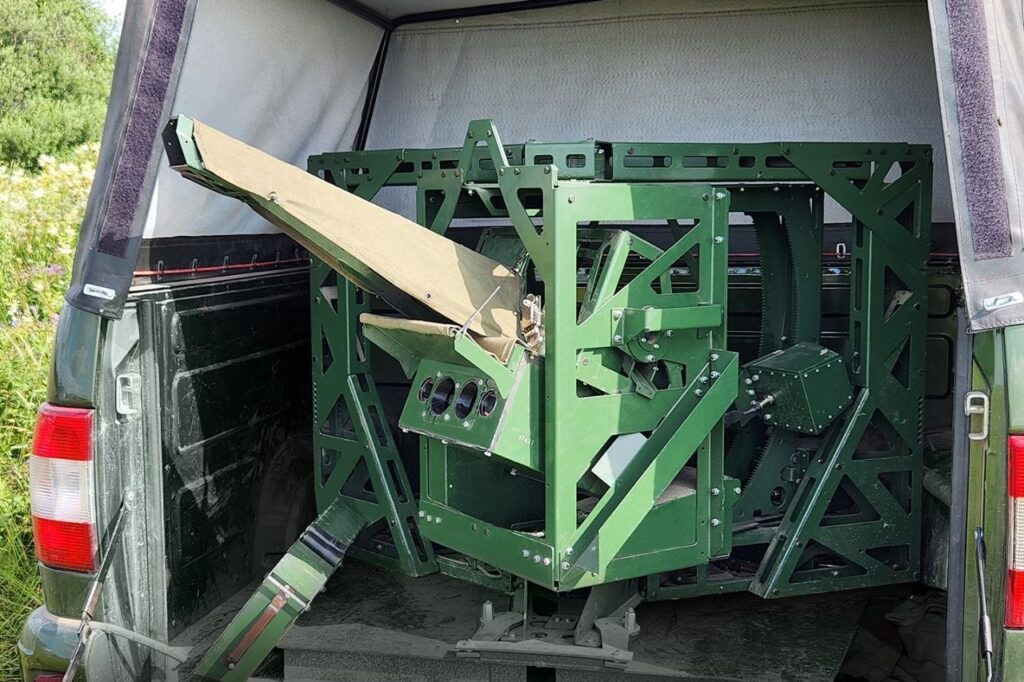
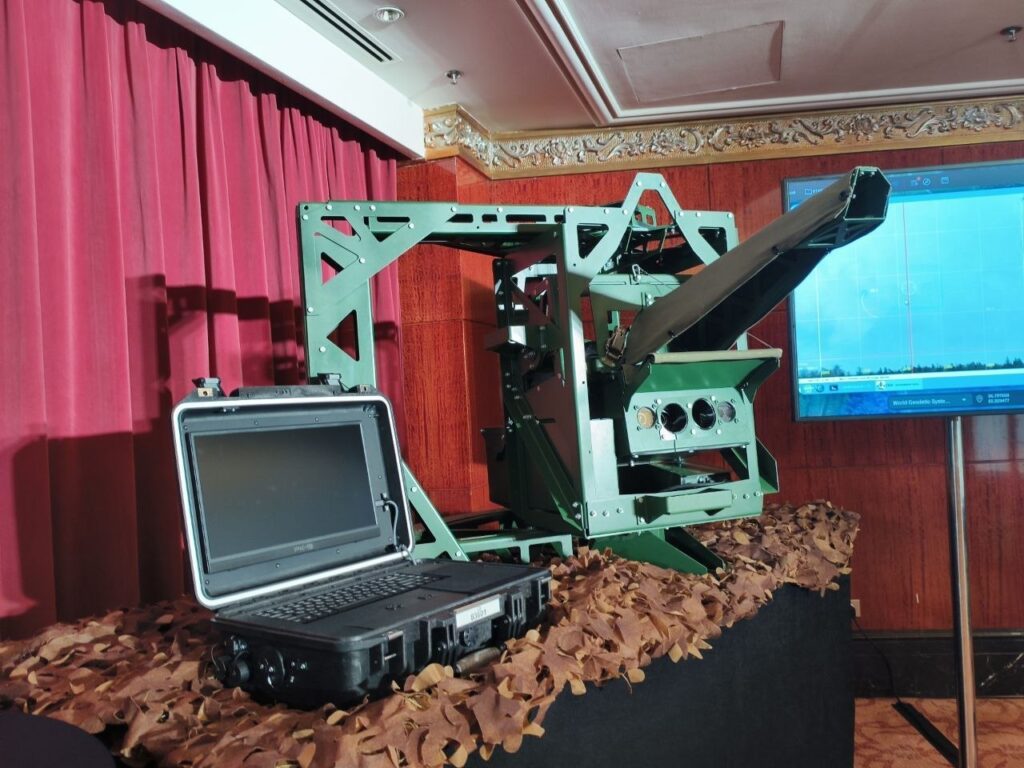
Zveroboy is engineered to provide round-the-clock point defence for critical infrastructure against medium strike UAVs such as the Leleka, Lyutyi, Bober, and other platforms. The system comprises an automated ground control workstation, an electro-optical targeting suite, three containerised launchers, a digital relay, a technical compartment housing power distribution and switching units, a mast-mounted digital compass, and a radar unit.
The system employs Kraken and Kraken-N multirotor interceptors as effector mechanisms, with three interceptors housed per launch container. The platform is offered in both static and vehicle-mounted configurations.
The Kalitka-KA system is an automated, remotely operated weapon station (ROWS) that has reportedly undergone combat evaluation. It features a stabilised mount for a 7.62 mm PKT coaxial machine gun, an electro-optical sight with dual day-channel cameras and an integrated laser rangefinder, an electronic turret control unit, and a remote control terminal.
Deployment of the Ariadna navigation system
Russia is finalising preparations to field the Ariadna navigation system, designed for high-precision guidance of strike weapons and reconnaissance UAVs in contested electronic warfare environments. According to Russian state media channels, the system is intended to substitute satellite navigation: rather than an orbital constellation, it leverages a terrestrial network of radio beacons with calibrated coordinates.
Ariadna is planned for integration into Geran-2 strike drones, guided aerial bombs, and cruise missiles to maintain guidance when GPS and GLONASS signals are unavailable. An onboard receiver determines platform location via trilateration based on time-difference-of-arrival signals from the beacon network. The stated positioning accuracy is 15–20 cm.
Schemes journalists examine captured Geran-4 Seeker
Ukrainian investigative journalists at Schemes have detailed the component base of the Russian Geran-4 Seeker kamikaze UAV, revealing a MESH modem used to establish C2, telemetry, and video links with a claimed range of up to 300 km via air or ground relays.
The UAV is also fitted with commercial 4G telemetry modules as a fallback mechanism if the primary MESH link degrades. These modules enable video streaming from the gimballed electro-optical homing head.
Additionally, the platform incorporates an inertial navigation system with satellite navigation correction.
Rassvet satellite terminals: what’s new
Russia has begun promoting the Rassvet satellite terminal developed by Bureau 1440, marketed as a domestic satellite communications system comparable to Starlink.
Although initial orbital deployment efforts for Rassvet satellites experienced partial failures, the architecture could be iteratively upgraded, according to Serhii “Flash” Beskrestnov, an adviser to the President of Ukraine. He noted that Russia retains an adequate launch-vehicle inventory, while China can manufacture and supply the required terminal hardware.
Beskrestnov said resilient satellite communications would give Russian forces real-time command-and-control over strike drones and missiles, supplementing existing MESH communications networks.
An instance of satellite navigation utilisation by Russian forces was cited by CNN last week. According to the report, 14 Russian satellites passed over Prince Sultan Air Base in Saudi Arabia prior to an Iranian missile strike on the facility. The attack destroyed a Boeing E-3 Sentry airborne early warning and control (AEW&C) aircraft. One of the satellites involved was reportedly Kosmos-2573, designed for high-resolution 3D terrain mapping for the Russian General Staff.
Lis-2 interceptor and Elka retain key roles in counter-drone defence
Russian military sources cite the operational utility of the Lis-2 and Elka interceptor drones. State media recently broadcast footage of the Lis-2 being prepared for operational launch.
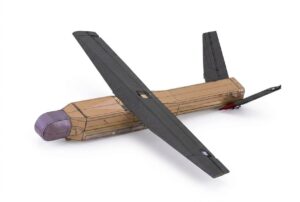
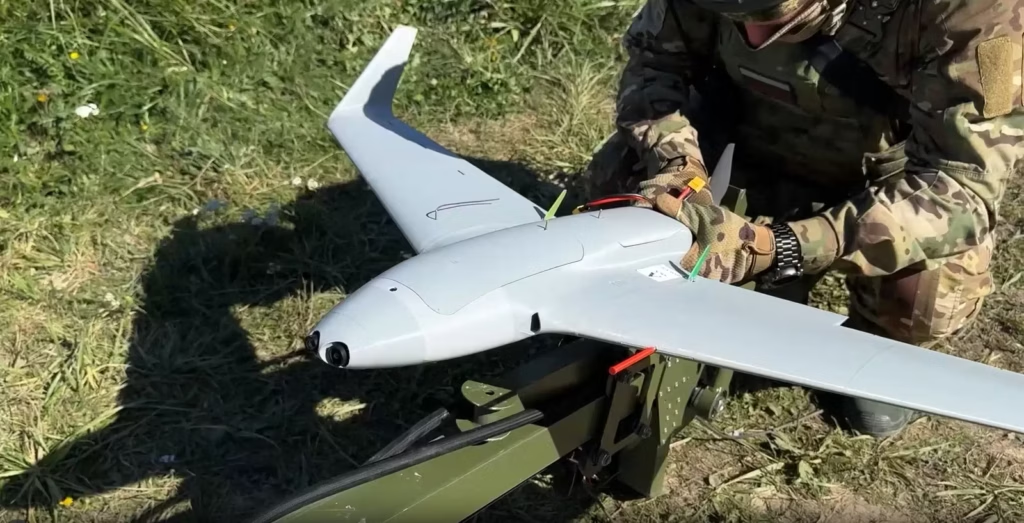
The Lis-2 is a compact fixed-wing UAV launched from catapult systems or improvised flat surfaces. Built from carbon-fibre composite materials, it neutralises target UAVs through kinetic impact or a directional high-explosive fragmentation warhead.
The platform integrates onboard computer vision algorithms for autonomous target engagement. The Lis-2 features a claimed top speed of 230 km/h, an operational range of up to 15 km, a service ceiling of 4,000 m, and a flight endurance of 30 minutes.
Russian FPV drone carrier based on Molniya
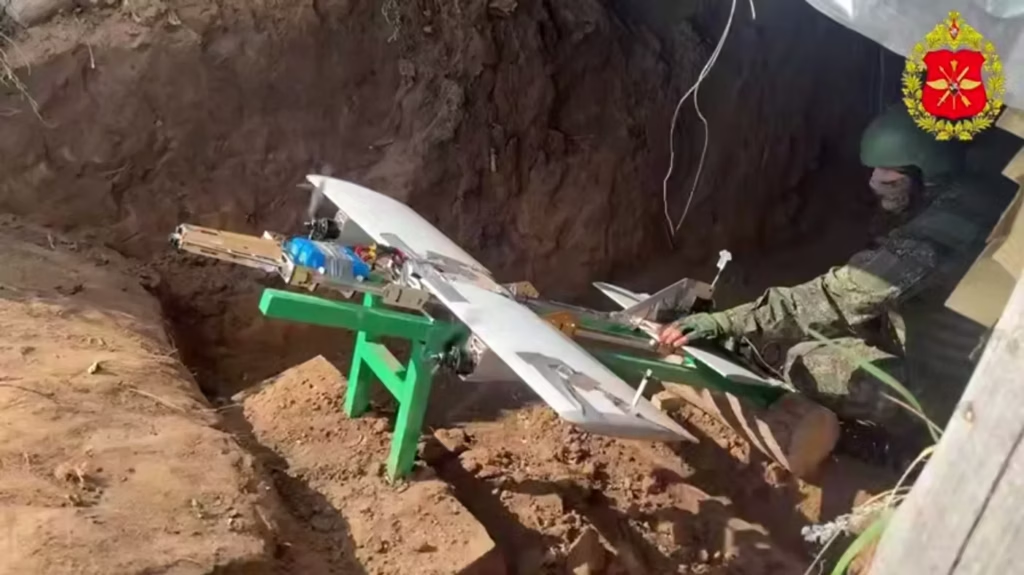
Russian military personnel have created an FPV drone carrier based on the Molniya UAV, together with its standard warhead. According to information released publicly, the Molniya in this configuration also serves as a repeater and for objective monitoring. After the FPV drone detaches, the carrier maintains control and continues its mission.
The Molniya is an inexpensive Russian fixed-wing UAV that is also used as a kamikaze strike drone. It can carry up to 6 kg of payload and, according to official data, has a control range of up to 60 km.
Multiple “Dan-T” missiles from a single carrier
The Russians may launch several compact Dan-T cruise missiles from a single airborne carrier or ground-based launcher. This was reported on Russian television.
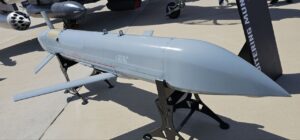
The Dan-T reportedly executes terrain-following flight along pre-programmed waypoints at extremely low altitudes. As it approaches the target area, the onboard guidance system updates the navigation solution, after which the missile climbs and enters a high-angle terminal dive to correct trajectory errors.
Osa system claims close-in FPV interception at 15 metres
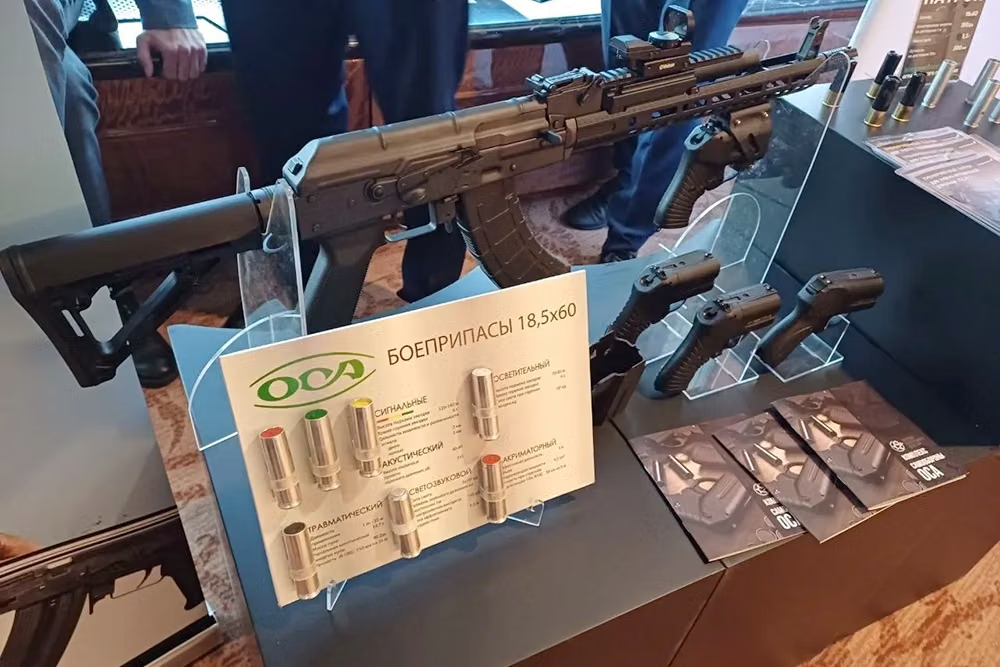
Russian sources have showcased the Osa counter-UAS device, claiming a guaranteed capability to neutralise small FPV drones at a range of 15 m. The system is built around a four-barrel launcher firing 4 mm shot loads.
The launcher holds four rounds and supports rapid reloading. Beyond counter-drone shot cartridges, the Osa platform can fire signal, illumination, flash-bang, and less-lethal rounds.
First public image of Russian Il-80 airborne command post
A new photograph of the Russian Il-80 strategic airborne command post (also designated Il-86VKP) has surfaced in the public domain and is reportedly from autumn 2026.
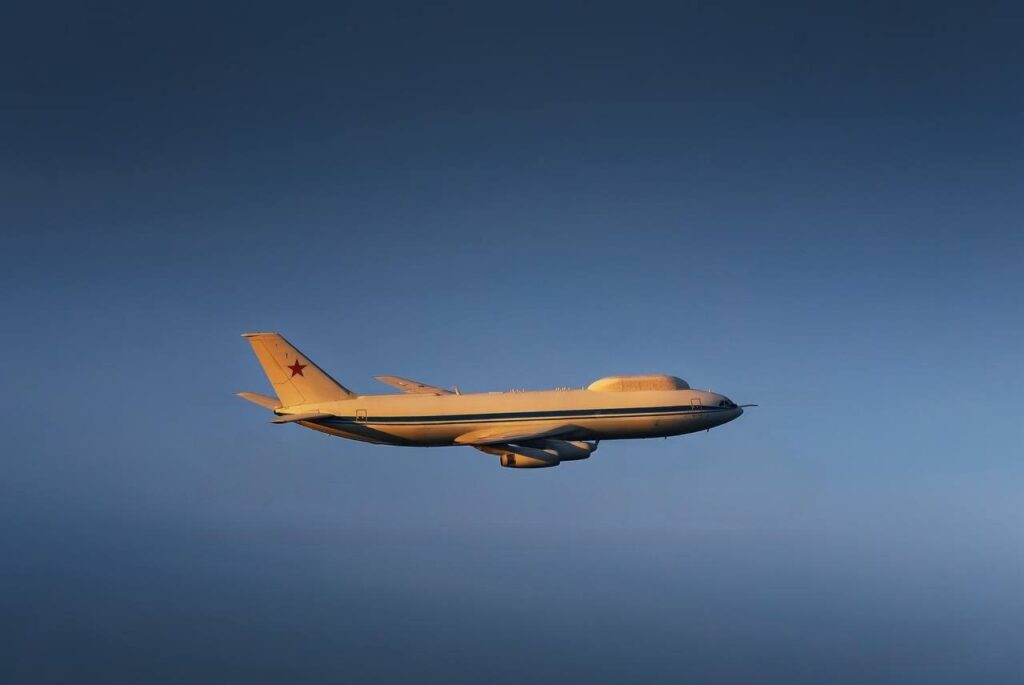
The airborne command post is a modified Il-86 wide-body commercial airliner designed to maintain command and control over conventional and strategic nuclear forces during a full-scale conflict.
The Il-80 is visually distinguished from the baseline airliner by the absence of cabin windows, a prominent dorsal SATCOM fairing, and specialised EW and communications suites. The aircraft is designed to operate autonomously and maintain secure C2 links with nuclear-powered ballistic missile submarines (SSBNs), silo-based ICBMs, and road-mobile missile launchers.
Reading now
1

70+ vacancies in Ukrainian defence tech at Ukrspecsystems, Strix Air, DoD Solution and other industry leaders
2

Swarmer acquires Ukrainian UGV and UAV manufacturer Ratel Robotics for $224m – and this is just the beginning
3
Ukrainian Skyeton secures $10.6M US army contract
4

Vluchnyk develops interceptor planned for production in Sweden and other countries: what attracted investors and what the team is working on
5
Canadian General Dynamics signs agreements with Ukrainian GreenTech
By submitting this form, you give Defender Media consent to the processing of personal data.
Надсилаючи цю форму, ви надаєте Defender Media згоду на обробку персональних даних.

Latest news
1
Speed of up to 600 km/h and AI-assisted terminal guidance: WIY showcases SPYS interceptor
2
Odd Systems demonstrates Kurbas-640β camera in action
3

Ukrainian Resist.UA fund invests in Danish deftech startup BlueShadow: what the company is working on
4
Roboneers has codified the strike SabLynx PRO MK19 UGV
5