Dorozvidka #73: Kyrylo Veres, Artem Moroz, Iryna Terekh, mid-strikes for Alpha, and AI
What international media wrote about Ukrainian defence tech, plus news that flew under Defender Media’s radar
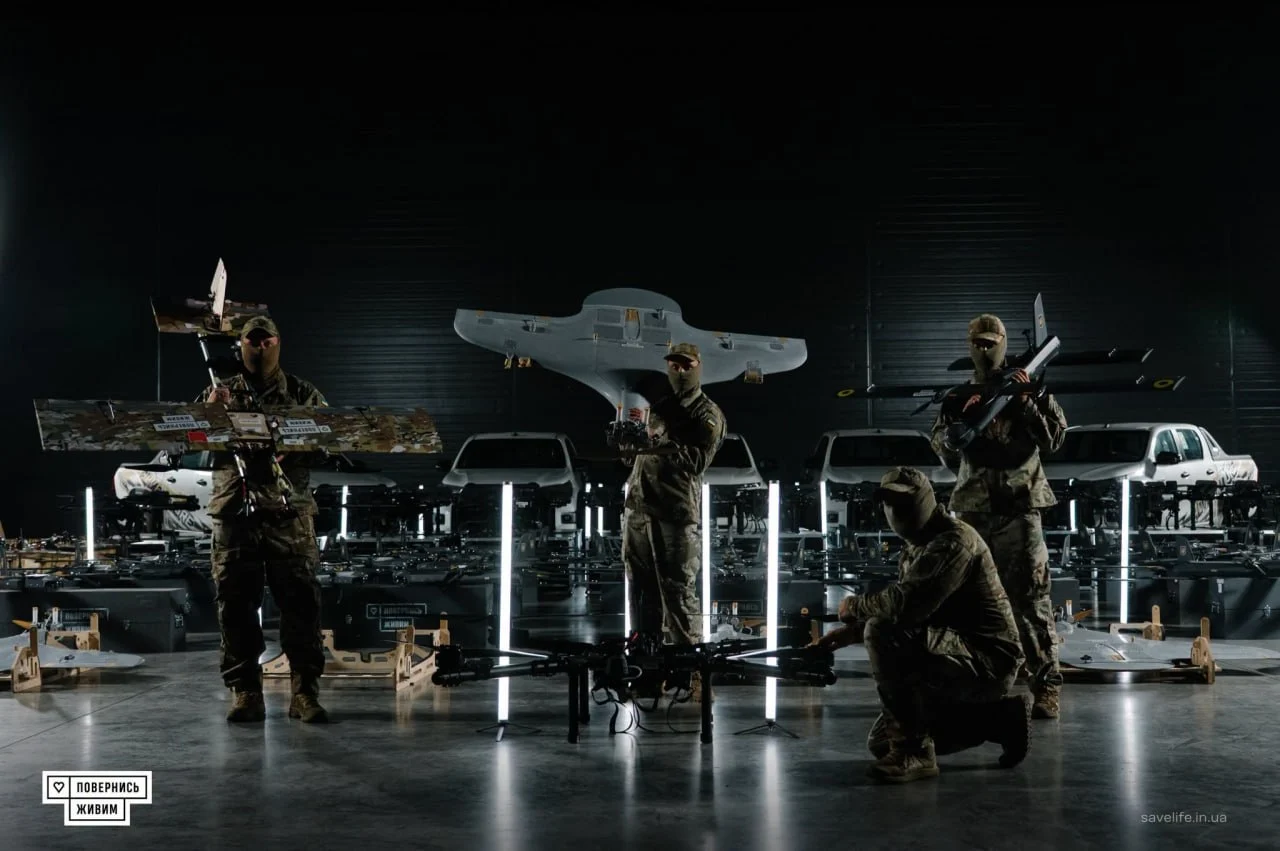
Photo: Come Back Alive
In this issue of Dorozvidka:
- Ukraine’s Defence Ministry on AI-powered developments;
- Brave1’s Artem Moroz on five of the most promising areas in defence tech;
- What’s new at Fire Point: the FP-9 ballistic missile heads to DALO 2026, while Iryna Terekh speaks to the WSJ;
- How the standoff between Ukrainian and US troops at Combined Resolve ended;
- The Come Back Alive Foundation delivered 5,400 mid-strike drones to the SBU’s Alpha unit;
- Kyrylo Veres’ major interview with K2;
- The attack on Novorossiysk: USVs, Neptune missiles and Palianytsia jet drones;
- Forbes on Ukraine’s development of AI for drones.
Ukraine’s Defence Ministry on AI-powered developments
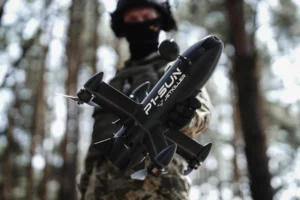
More than 70 systems using artificial intelligence and computer vision are helping the Defence Forces hit enemy targets, Ukraine’s Defence Ministry reports. The ministry also notes that more than 200 Ukrainian companies are already producing AI-powered drones.
Brave1 Market currently lists 46 developments in this field, including target recognition, optical stabilisation and automatic target-guidance modules.
The Defence Ministry says AI is changing the way unmanned systems are used:
- GPS-free navigation – the drone analyses the terrain and navigates using preloaded maps;
- Target recognition – the drone independently identifies enemy equipment and personnel;
- Target engagement – the drone maintains a lock on the target and moves towards it even after losing contact with the operator.
The Defence Ministry aims to have 100% of drones on the frontline equipped with such technologies.
Brave1’s Artem Moroz on five of the most promising areas in defence tech
Artem Moroz, head of investor relations at Brave1, appeared on the Forward podcast hosted by Valeriia Ionan. The representative of Ukraine’s state defence technology cluster said that last year Ukraine attracted 50% of all early-stage investment in the European defence tech sector. He also said that every dollar invested in Ukrainian defence tech works ten times more efficiently than in other countries.
Керівник відділу по роботі з інвесторами Brave1 Артем Мороз став гостем подкасту Forward, який веде Валерія Іонан. Представник державного кластера оборонних технологій заявив, що минулоріч Україна залучила 50% всіх ранніх інвестицій в сектор defenсe tech в Європі. Також він зазначив, що в українських оборонних технологіях кожен долар працює вдесятеро ефективніше, ніж в інших країнах.
Moroz highlighted five areas of defence tech that he believes are developing most rapidly and would recommend investing in:
- AI and data analytics;
- Components for unmanned systems;
- Autonomy;
- Air defence;
- Unmanned ground vehicles.
What’s new at Fire Point: the FP-9 ballistic missile heads to DALO 2026, while Iryna Terekh speaks to the WSJ
Fire Point announced that at DALO Industry Days 2026, taking place in Denmark on 19–20 August, it will display full-scale versions of the FP-5 Flamingo, FP-7 and FP-9. A video posted on the company’s Instagram account shows the FP-9 ballistic missile being mounted on the company’s stand.
Meanwhile, The Wall Street Journal published an interview with Fire Point CEO and CTO Iryna Terekh. She discusses what motivated her to join the company and how her role in the project has evolved.
How the standoff between Ukrainian and US troops at Combined Resolve ended
Another recent WSJ piece looks at Combined Resolve, a military exercise in which US troops faced Ukrainian drone operators. The exercise took place in Germany in early 2026 — and it did not end well for the Americans. The WSJ reports that Ukrainian unmanned systems units easily detected and “destroyed” US troops and armoured vehicles.
About 3,500 US troops took part in the exercise, mostly from the 3rd Armored Brigade, 1st Cavalry Division. Their task was to attack a position defended by opposing forces (OPFOR) at the training ground. They were reinforced by Ukrainian troops from the 412th NEMESIS Regiment of the Unmanned Systems Forces.
The Come Back Alive Foundation delivered 5,400 mid-strike drones to the SBU’s Alpha unit
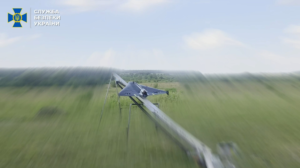
The Come Back Alive Foundation announced that it had delivered 5,400 medium-range strike drones to the SBU’s Alpha special operations centre.
The organisation did not specify which drones were delivered to the special forces. It said, however, that the systems operate at an operational depth of 30 to 300 km.
Come Back Alive noted that in July alone, SBU Alpha special forces hit more than 500 UAV crews, over 200 warehouses and 54 enemy artillery systems and self-propelled guns.
Kyrylo Veres’ major interview with K2
Colonel Kyrylo Veres has been commanding the K-2 Brigade within the Unmanned Systems Forces for almost a year. In an interview with Ukrainska Pravda, he explains the effectiveness of Ukrainian mid-strike and deep-strike capabilities and speaks openly about his views on Mykhailo Fedorov, Oleksandr Syrskyi and Mykhailo Drapatyi.
The attack on Novorossiysk: USVs, Neptune missiles and Palianytsia jet drones
On the night of 11–12 August, Ukraine’s Defence Forces carried out an operation targeting the Russian naval base in Novorossiysk. President Volodymyr Zelensky said that Ukrainian-made Palianytsia jet drones, Neptune missiles and unmanned surface vessels successfully struck designated targets. According to Zelenskyy, hits were confirmed on air defence positions, berths and infrastructure at the naval port.
Forbes on Ukraine’s development of AI for drones
US Forbes published a detailed article on how Ukraine is developing artificial intelligence for drones and why mass-scale autonomy is becoming one of the key technologies on the battlefield.
“It covers the Darts, Hornets, Lupynis’, as well as many of my comments and videos of our systems in action,” The Fourth Law co-founder and CEO Yaroslav Azhniuk said when announcing the article.
Reading now
1
SkyFall officially unveils Thor Hammer mid-strike and announces 1,000+ km version
2
Pentagon to hold Drone Dominance trials for bomber drones, with UFORCE, Gurzuf Defence, Grim Tech and others taking part
3
Terra Drone acquires 50% of Ukrainian Kurin Technologies for $3.5 million
4
British-Ukrainian Occam Industries raises €3.8m. The funds will go towards scaling drone autonomy software
5

Frontline Robotics CBDO Mykyta Rozhkov: Ukraine and Norway are working on an autonomous system to protect maritime infrastructure
By submitting this form, you give Defender Media consent to the processing of personal data.
Надсилаючи цю форму, ви надаєте Defender Media згоду на обробку персональних даних.

Latest news
1

Nataliia Mykolska to become VP of Growth and Affairs at Sine Engineering
2
Black Mirror #79: What’s inside Geran-4, unmanned tanks, balloon barrages and more of a new russian miltech
3
6,000 lives saved by replacing people with robots. “Makar” on the ground strike drone unit NC13 and its role in Operation Vivaldi
4
M-Fly and Dwarf Engineering announce partnership: what it involves
5