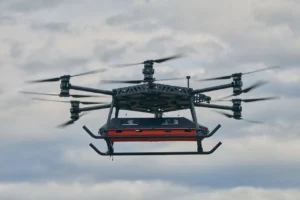
Ukrainian mid-strike drones: nine “wings” from Fire Point, Airlogix, Culver Aerospace, and other manufacturers
An overview of known Ukrainian drones capable of striking targets at ranges of more than 100 km
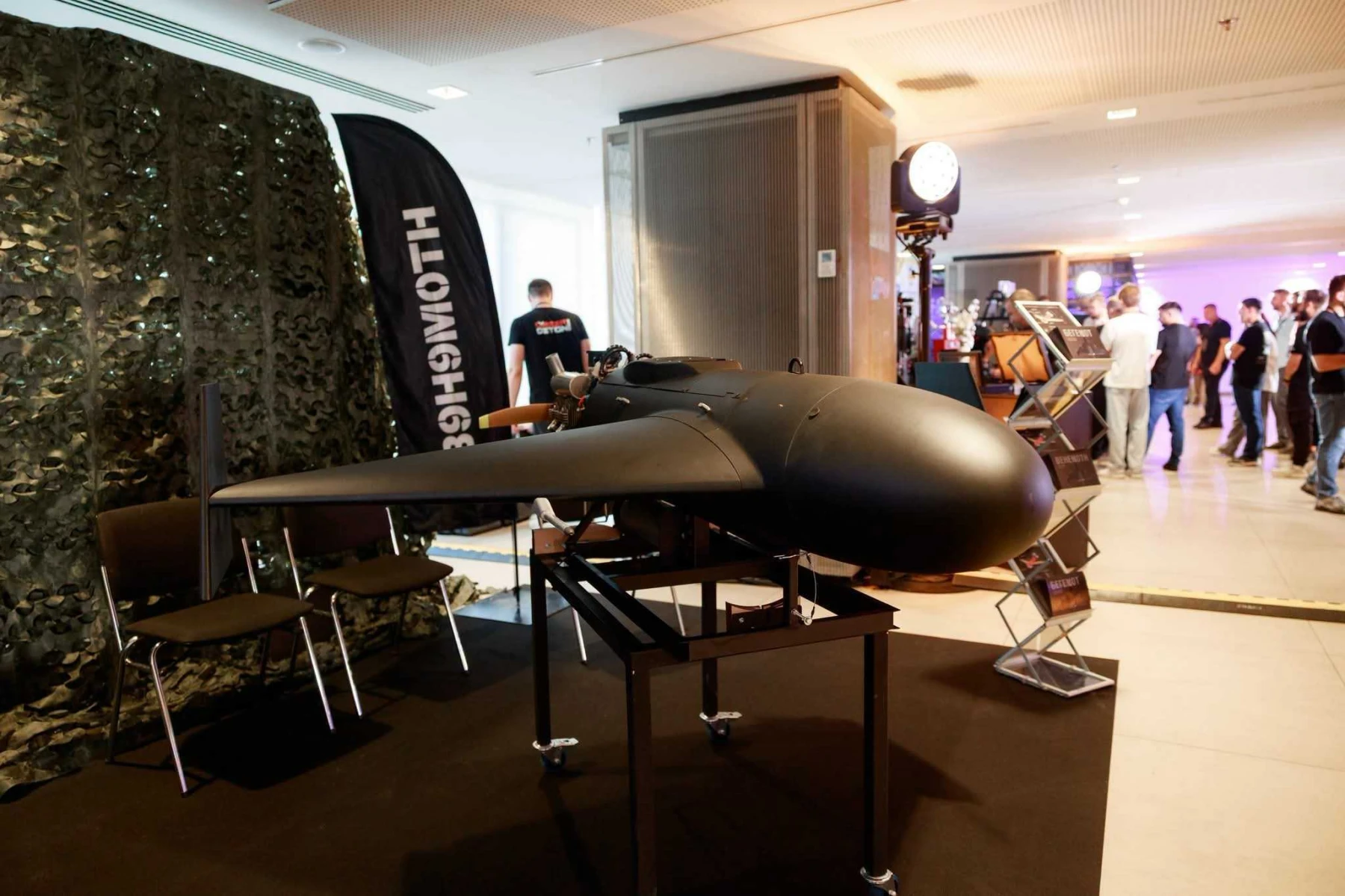
Gara Boun Midstrike. Image Credit: Brave1
The segment of medium-range strike UAVs (mid-strikes) in Ukraine is expanding rapidly. Dozens of Ukrainian companies are actively developing solutions to engage targets at ranges exceeding 100 km to disrupt Russian rear logistics and destroy sensitive military assets behind the frontline. On 16 July, during his year-end press conference, Mykhailo Fedorov stated that 59 companies had submitted bids for the state tender to procure the so-called “Crimea-strike” drones.
Mid-range strike drones have become the primary tool of the Logistics Lockdown campaign – a large-scale operation targeting Russian rear areas in southern Ukraine and occupied Crimea. The mission is to isolate the peninsula by systematically crippling Crimea’s energy infrastructure, hunting fuel tankers in the Sea of Azov, and destroying military trains supplying Russian forces.
The campaign’s effectiveness is reflected in battlefield data. According to Robert “Magyar” Brovdi, Commander of Ukraine’s Unmanned Systems Forces, traffic of Russian military vehicles along key logistics routes in southern Ukraine and near the border dropped by a record 71% during the first two weeks of the campaign’s active phase. Meanwhile, in just 12 days of operations against Russia’s fleet in the Sea of Azov, Ukrainian forces struck 159 vessels.
While manufacturers have made public announcements regarding some platforms, others have only appeared in strike footage or military reports. At the same time, a portion of these developments remains highly classified. Defender Media presents an overview of nine Ukrainian mid-strike drones known from open sources.
FP-2 by Fire Point
The FP-2 mid-strike drone developed by Ukrainian company Fire Point is built on the platform of the FP-1 long-range unmanned aircraft. First unveiled in the autumn of 2025, the drone has since received a redesigned wing configuration. In its largest configuration, the UAV will be capable of carrying a warhead weighing up to 200 kg over a range of up to 370 km.
The FP-2 is produced in two variants: one featuring an autonomous guidance system for engaging stationary targets, and another with manual radio-controlled operation for engaging moving targets.
One of the company’s UAVs has also been modified into a carrier platform capable of transporting two FPV drones on its wings. Fire Point CEO Iryna Terekh previously told Defender Media that the company had begun using the FP-1 platform as a carrier for interceptor drones.
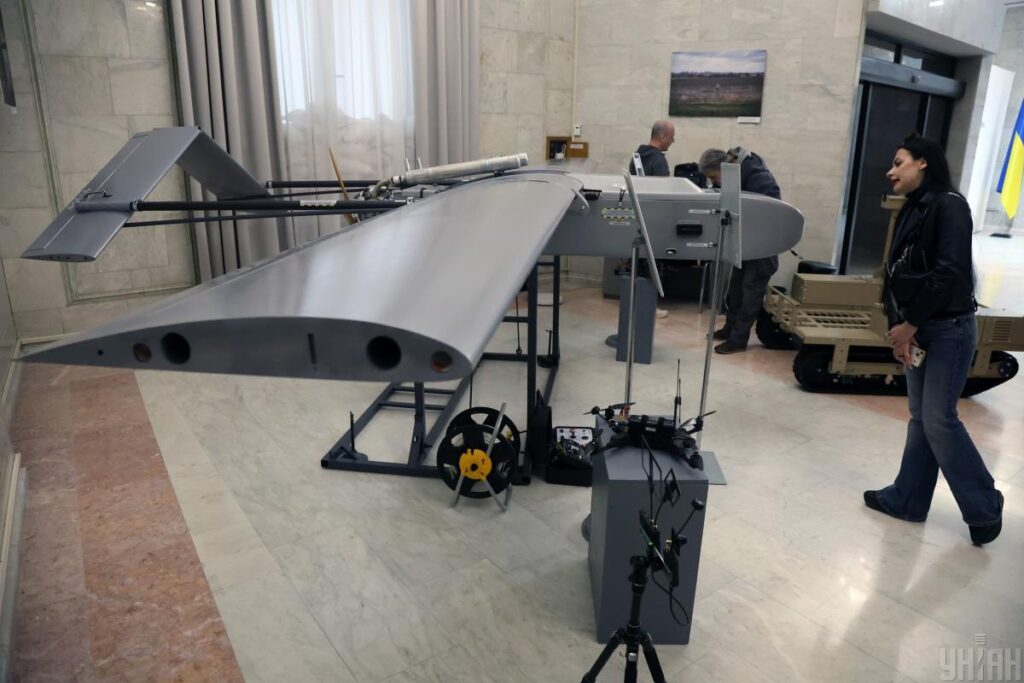
The FP-2 has already been repeatedly mentioned in combat deployment reports. In particular, Dnipro OSINT reported the use of these UAVs during a strike on the railway bridge over the North Crimean Canal near Rozdolne in occupied Crimea. Additionally, Fire Point co-founder Denys Shtilerman reported that FP-2 drones were deployed to strike an oil depot and a marine oil terminal in Feodosia. The UAV is also cited as one of the assets utilised for strikes on the Chongar Bridge.
MORRIGAN for launch from maritime platforms
The Armed Forces’ Unmanned Systems Forces officially disclosed the MORRIGAN strike UAV. According to representatives of the branch, it is a manoeuvrable mid-strike drone developed by Ukrainian engineers in cooperation with the 412th Nemesis Brigade.
The system is intended to strike targets deep behind the front line. According to the Unmanned Systems Forces, the MORRIGAN has already been deployed against targets in occupied Crimea, including air defence sites and Russian military support infrastructure. The drone has also been employed against targets along the transit route between Mariupol and Crimea.

No other technical specifications have been disclosed. It is known that the UAV is compatible with the MOBIDIK-series surface launch platforms.
Behemoth by Culver Aerospace
The Behemoth medium-range strike drone is a joint development by Culver Aerospace and GLEFA.
Its stated strike range is up to 300 km, while the warhead weighs up to 75 kg. The UAV is equipped with a tandem warhead combining an explosively formed penetrator and a thermobaric munition.
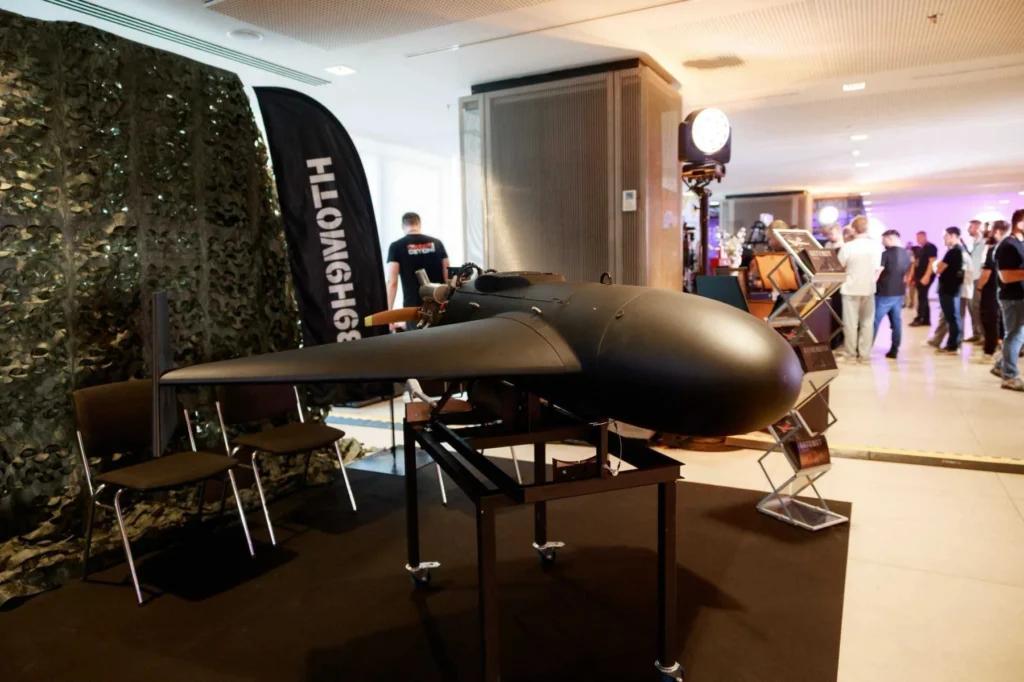
One of the platform’s distinguishing features is its low-altitude flight profile, making detection by enemy air defence systems more difficult. The drone can operate either in FPV mode or autonomously, while Starlink is utilised for communications.
The developers have also presented a Behemoth Deep Strike variant, although its specifications have not yet been disclosed.
KROOK-1 and KROOK-1T by First Parsec
First Parsec is conducting flight trials of two mid-strike platforms — the KROOK-1 and the KROOK-1T.
The KROOK-1 is powered by the SHOOM-20 engine, has a stated range of up to 200 km, and can carry a warhead weighing up to 20 kg. The estimated price of the system is approximately UAH 1.2 million.
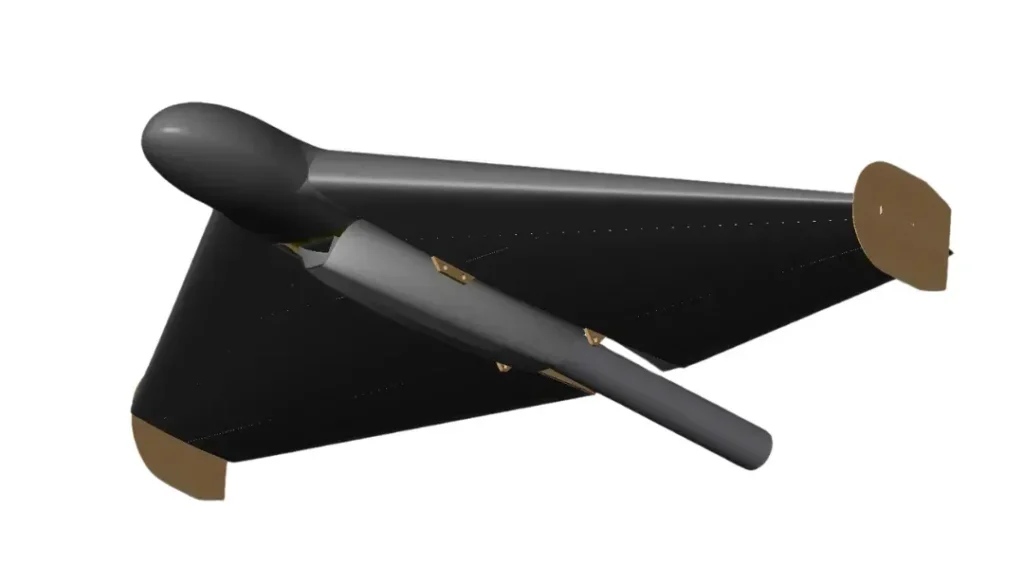
The KROOK-1T variant is equipped with a turbojet engine. Its stated range has been increased to 400 km while retaining the same warhead weight of up to 20 kg. The estimated price of the system is approximately UAH 1.6 million.
Swan-X 50
Ukrainian-Slovak company Wings&Quadro has introduced two versions of its Swan-X strike platform on the Brave1 Marketplace: the electric Swan-X 20 and the petrol-powered Swan-X 50.
The Swan-X 20 is equipped with an electric propulsion system. The UAV has a tactical operating radius of up to 250 km, extendable to 300 km, reaches speeds of up to 160 km/h, remains airborne for up to 95 minutes, and can carry payloads of up to 20 kg.

The Swan-X 50 features a petrol engine that provides extended endurance and economical fuel consumption. The UAV is intended for missions where long range and heavy payload capacity are critical. The platform can carry up to 50 kg, has a tactical radius of up to 300 km, remains airborne for up to 95 minutes, and reaches a maximum speed of up to 150 km/h. The system costs more than UAH 1.1 million.
Neither version has yet been codified.
GARA BOUN
The GARA BOUN unmanned aerial system is listed on the Brave1 Marketplace as a hybrid VTOL platform capable of vertical take-off and landing. The system consists of two UAVs and is designed for reconnaissance, artillery fire adjustment, and strike missions in all weather conditions, day and night.
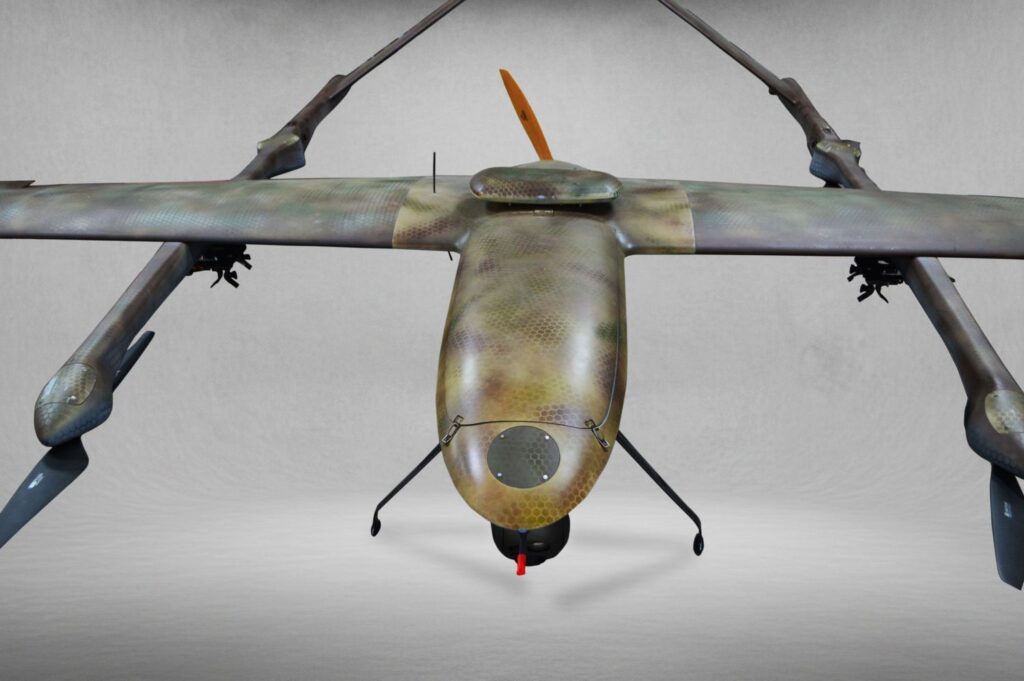
Its stated tactical operating radius is up to 150 km, while the maximum flight route reaches up to 700 km. The UAV can remain airborne for up to eight hours while carrying a payload of up to 10 kg. Its maximum speed is 130 km/h.
The platform supports both automatic and manual control modes and is equipped with daytime and thermal imaging cameras, as well as automatic take-off and landing functions.
The DARTS Lineup
An entire family of strike drones is being developed under the DARTS brand, including single-engine and twin-engine platforms across eight modifications.
The twin-engine DARTS DM is available in versions equipped with either a daytime or thermal imaging camera and a terminal guidance system. The platform can remain airborne for up to 110 minutes, has a range exceeding 120 km, and carries up to 10 kg of payload. The lineup includes eight modifications in total.
The DARTS Vi9 modification is designed to execute missions autonomously along a pre-loaded flight path without continuous communication with the operator and with minimal reliance on GPS. For navigation, the system utilizes computer vision and terrain mapping, allowing it to operate in conditions of limited GPS, unstable connection, and active electronic warfare countermeasures. The stated range of the DARTS Vi9 is up to 120 km, with a maximum speed of up to 140 km/h, a cruising speed of 75 km/h, and a payload capacity of up to 7 kg. The UAV is equipped with a payload module featuring a daytime camera and the Vi9 optical navigation system.
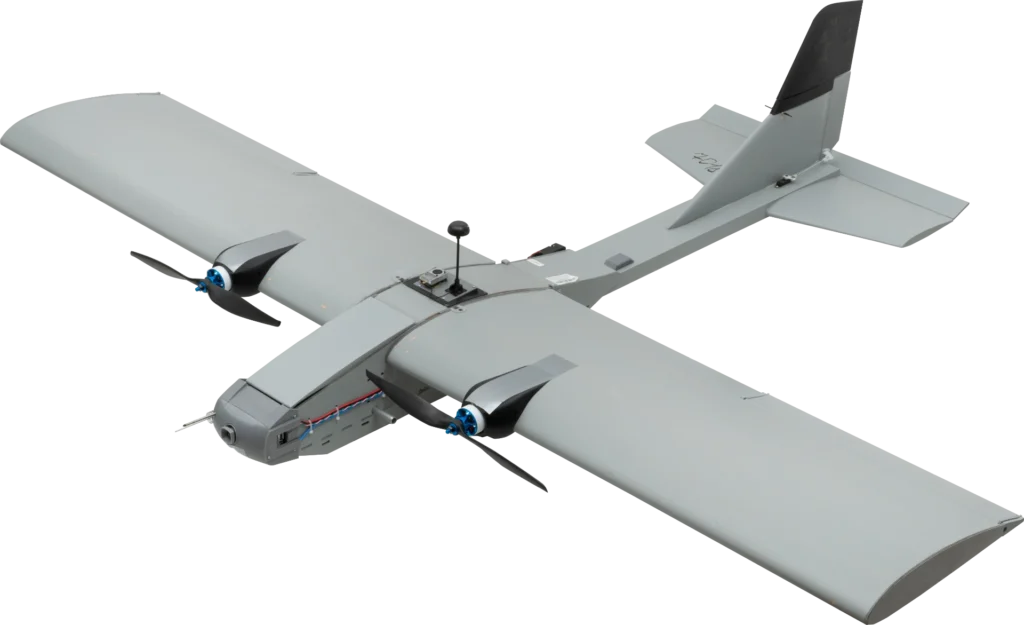
The DARTS Starlink variant is designed to strike heavy equipment and fortifications at ranges of up to 200 km. The platform reaches a maximum speed of up to 140 km/h at a cruising speed of 80 km/h and is capable of carrying a payload of up to 10 kg. The UAV is equipped with the K-Pilot terminal guidance system featuring a daytime or thermal imaging camera, along with a Starlink satellite modem that ensures uninterrupted communication with the ground control station.
Anubis by Airlogix
The Anubis is manufactured in Germany by the Ukrainian-German joint venture Auterion Airlogix Joint Venture GmbH and was unveiled at the end of April this year.
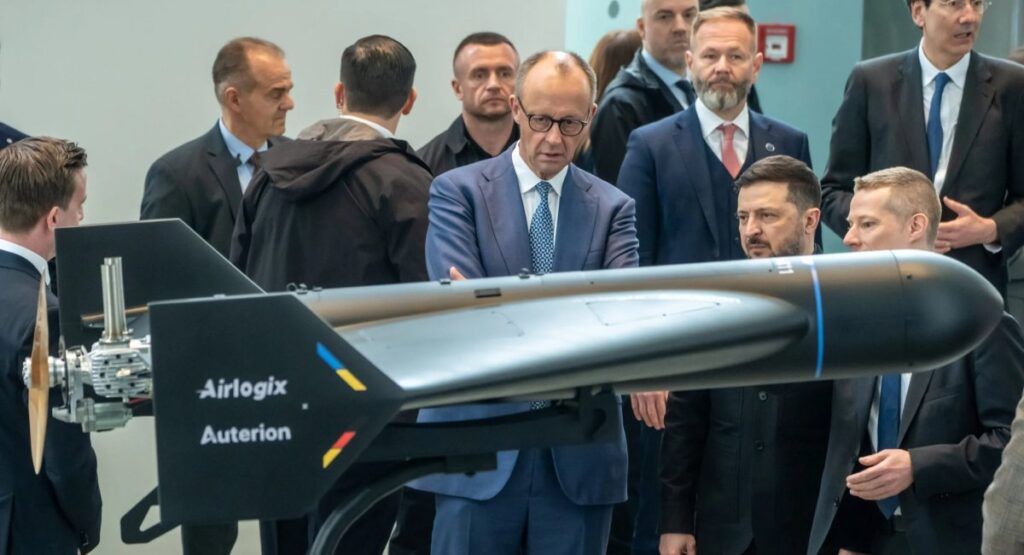
Its official technical specifications have not been disclosed. However, published materials show a Starlink satellite terminal used to control the UAV. Russian sources also claim that the drone is equipped with a high-explosive fragmentation warhead containing 30 kg of explosives, which may indicate a total warhead weight of approximately 50 kg including the casing. These claims have not been confirmed by the manufacturer.
According to claims by Russian military Telegram channels, Anubis drones have already been deployed to strike targets inside Russia. Specifically, they have been linked to attacks on defence industry enterprises and other facilities in the border and central regions of the Russian Federation. However, no official confirmation regarding the deployment of these specific drones has been published by either the Ukrainian side or the manufacturer.
Pomsta-T
The Pomsta-T unmanned aerial system is available for order through the Brave1 Marketplace and is intended for strike missions, logistics operations, and remote mine-laying.
The UAV is catapult-launched, performs conventional aircraft-style landings, and supports automatic take-off, landing, and return-to-home functions. Its maximum stated speed is up to 150 km/h, flight range reaches up to 300 km, and endurance is approximately nine hours.
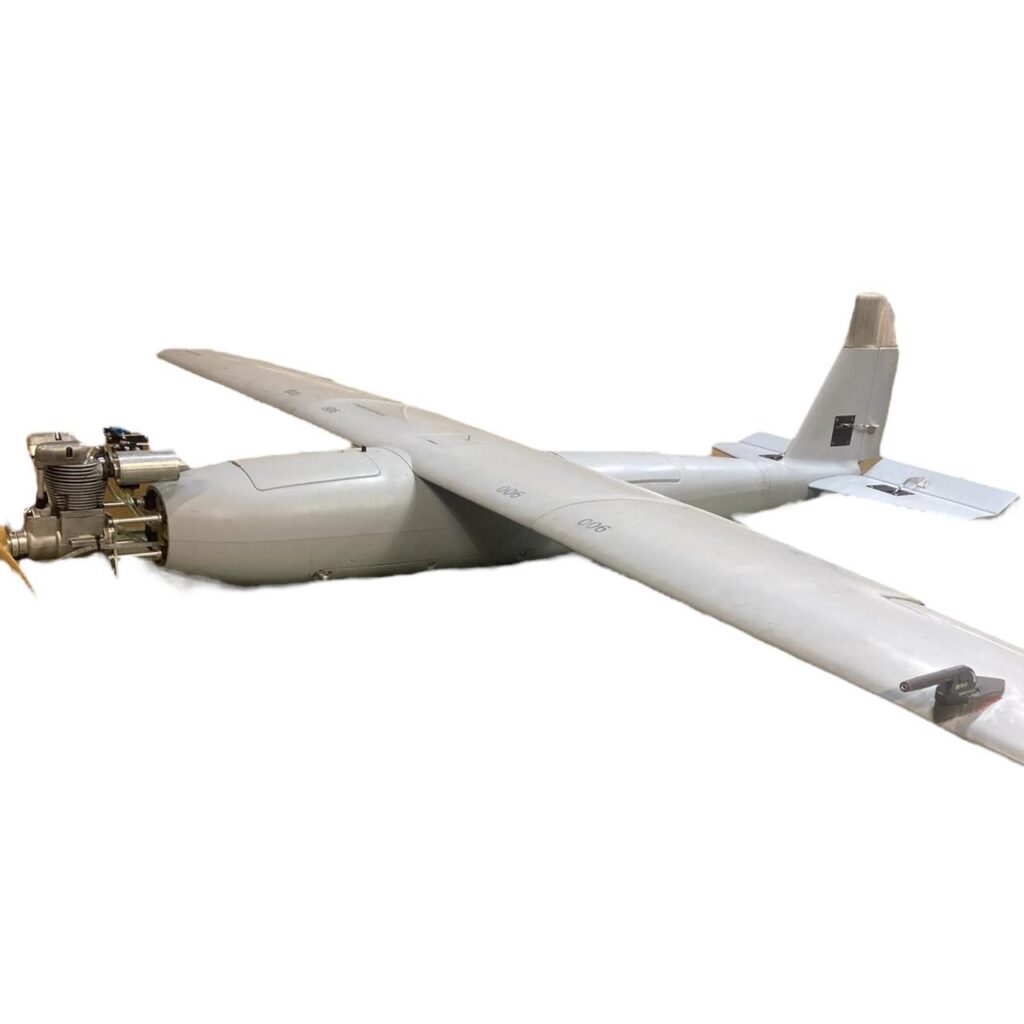
The platform is equipped with a digital video link, a thermal imaging camera, and a software-based ballistic calculator. The video link operates at ranges of up to 70 km, while telemetry reaches up to 100 km provided there is radio line of sight.
The airframe is constructed from composite materials. The UAV is powered by a four-stroke engine and features a stated protection system against electronic warfare effects.
Reading now
1

380+ vacancies in Ukrainian defence tech from Fire Point, DevDroid, UFORCE and others
2

A new Ukrainian fund, WildField Ventures, plans to invest $10-15 million in 20 dual-use startups. What areas is it interested in
3

230+ vacancies in Ukrainian defence tech from Tencore, Zvook, Airlogix and others
4
SkyFall unveils new StarGate hexacopter for casualty evacuation
5
Ukrainian units conduct “world’s first airborne evacuation from the frontline” using Audag-6 drone
By submitting this form, you give Defender Media consent to the processing of personal data.
Надсилаючи цю форму, ви надаєте Defender Media згоду на обробку персональних даних.

Latest news
1
Black Mirror #82: Filin cruise missile, Geran upgrades, new interceptor drones and other Russian miltech developments
2
Ukrainian defence firms sign 54 subsidised leasing agreements worth UAH 244.5 million
3

Himera and Danish GomSpace launch OBRIA NANO – a test satellite for the future Ukrainian communications network
4
TAF Industries and DoD Solution have integrated the Aura autonomy module into the Kolibri 10 Advance FPV drone
5