How Ukraine’s MaXon Systems built an autonomous Shahed interceptor — and what’s next
The startup recently closed a pre-seed investment round and is preparing to raise a seed round

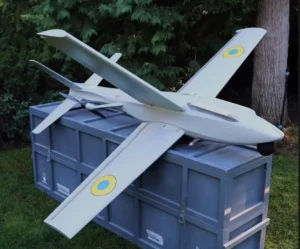
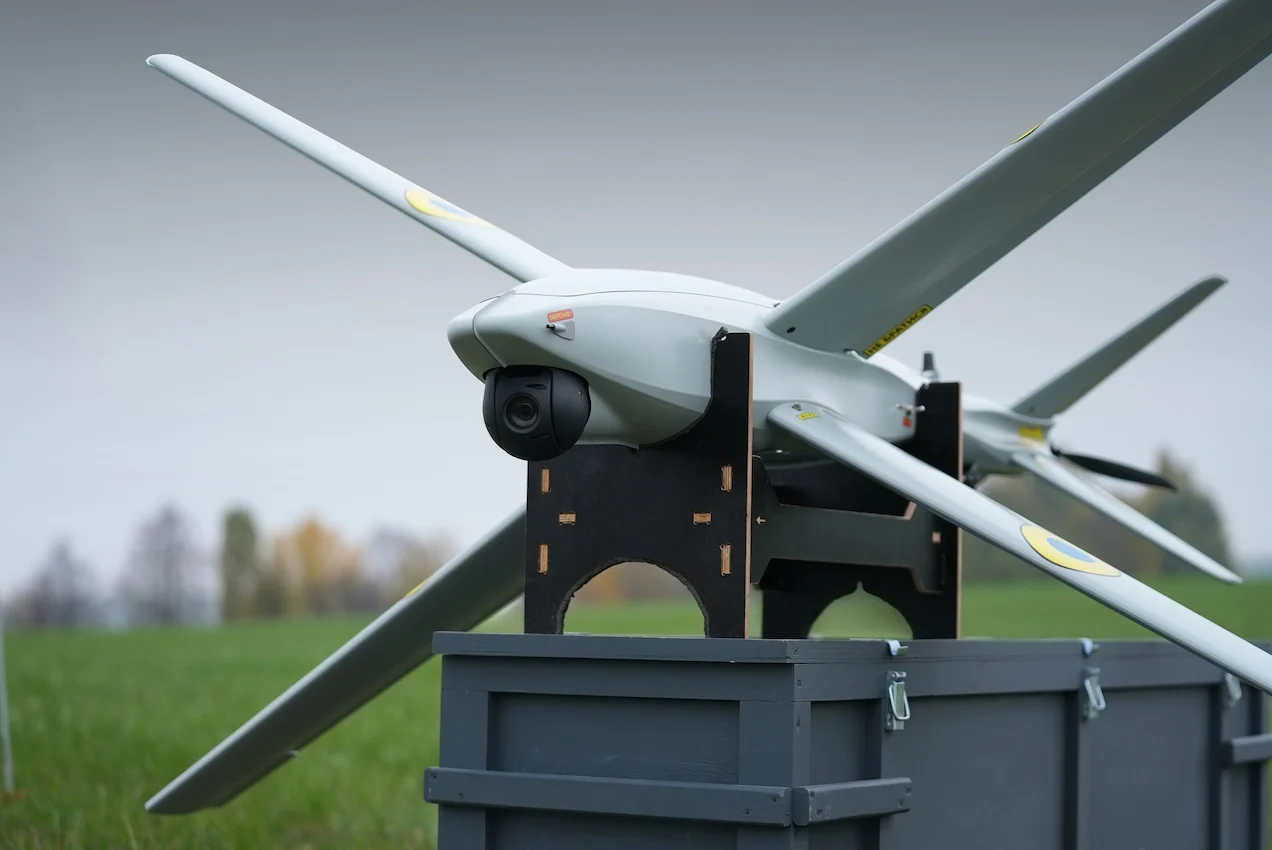
MaXon Systems interceptor drone / Illustration: MaXon Systems
Ukrainian defence tech startup MaXon Systems has developed a technology that automates 95% of the entire Shahed interception process — from interceptor launch to target destruction. The system has already successfully passed combat testing in the Kharkiv region.
The interception was carried out by the 12th Separate Special Purpose Centre (12th SSPC). Video confirmation was published today by the state defence tech cluster Brave1, of which MaXon Systems is a member.
Ahead of the video release, Defender Media spoke with MaXon co-founder and CEO Oleksii Solntsev. He explained how the project evolved over the past year, what enabled the automation of Shahed interceptions, and what the team plans next.
How MaXon has changed since last year
Defender Media first spoke with Solntsev in August 2025, when the company was developing an air-to-air interception system. In that configuration, interceptor drones were supposed to launch from aerostats. Eventually, the team postponed implementation of that concept to focus on more immediate battlefield challenges. In response, the new interceptor was essentially developed from scratch and is currently launched from the ground.
That pivot was driven by combat tests conducted last year, during which the team clearly identified the key weakness of interceptor drones. In good weather and in the hands of a skilled pilot, they deliver strong performance — but under less favourable conditions, effectiveness drops dramatically. Another growing issue is the increasing number of Shahed “swarms”, where multiple targets enter the same sector simultaneously, overwhelming even experienced crews operating manually.
That is why MaXon decided to focus on an autonomous system where hardware and software would largely eliminate the impact of weather and operator skill.

To solve this challenge, the company developed a new interceptor tailored specifically for the system. Solntsev describes the core requirements: it had to be a small autonomous fixed-wing drone capable of carrying a 1 kg warhead, flying for up to an hour, and maintaining speeds of 300 km/h for several minutes. Ultimately, the team succeeded.
“With the current version, we can stay airborne for 70 minutes in cruise mode if we simply need to patrol the area. At the same time, we can comfortably pursue a target at 200–250 km/h,” the CEO explains. “We even had situations where we chased one target, then switched to another, and still had enough performance left to go after a third one. At the same time, we can accelerate to 300 km/h and maintain that speed for several minutes.”
The interceptor currently has an operational radius of 30 km, aligned with the sector it is designed to cover.
Autonomy across three stages
The interceptor is an important part of the MaXon system, but the real breakthrough came not from the drone’s performance characteristics. According to Solntsev, the team managed to automate every stage of the interception process.
He says interceptions can be divided into three key phases: the launch, the approach to the target, and target acquisition with terminal guidance.

Many Ukrainian manufacturers have already achieved success in automating the third phase — the so-called “last mile”. Last week, Defender Media published a large overview of such systems. Commenting on terminal guidance solutions, “Pegas”, chief sergeant of the anti-aircraft drone platoon in the 413th SBS Regiment “Raid”, said:
“If you break the whole task into stages, much more time is spent reaching the target area and finding the target before auto-guidance can even begin.”
Solntsev says MaXon managed to automate all three phases.
The interceptor launches and climbs to altitude with the press of a single button. The operator does not need to manually control the drone — it independently climbs to a preset altitude. After stabilising, it waits for target assignment or another operator command.
Then comes what Solntsev describes as the most interesting stage — the same one highlighted by “Pegas” from “Raid”.
After takeoff, climb, and stabilisation, the interceptor enters an environment in which a radar system assigns targets. The operator’s task is simply to select the desired target on the control station display and press “Start”. The drone then autonomously flies toward the target. The operator can choose the speed and the attack approach.
On the last mile, the terminal guidance system activates. This stage is itself divided into three phases: AI-based detection, tracking, and terminal guidance into the detonation zone.
According to Solntsev, the system already has several confirmed Shahed kills during combat trials. He adds that pilots occasionally adjusted the interceptor’s flight path, but 90–95% of the engagement process was autonomous.
As a result, MaXon Systems created a full-chain solution in which the interceptor launches at the push of a button, autonomously flies to the selected target, locks onto it, and destroys it.
The CEO explains the importance of such a system by noting that it enables a single crew to launch multiple interceptors simultaneously and distribute available targets among them if several Shaheds enter the sector at once.
“It also significantly increases interception probability in poor weather conditions because we eliminate the role of pilot visibility and FPV piloting by automating launch and target acquisition,” Solntsev adds.
He explains that the system’s navigation works via beacons and onboard sensors. This means that even in GPS-denied environments, the crew still knows where the interceptor is and where it is heading.
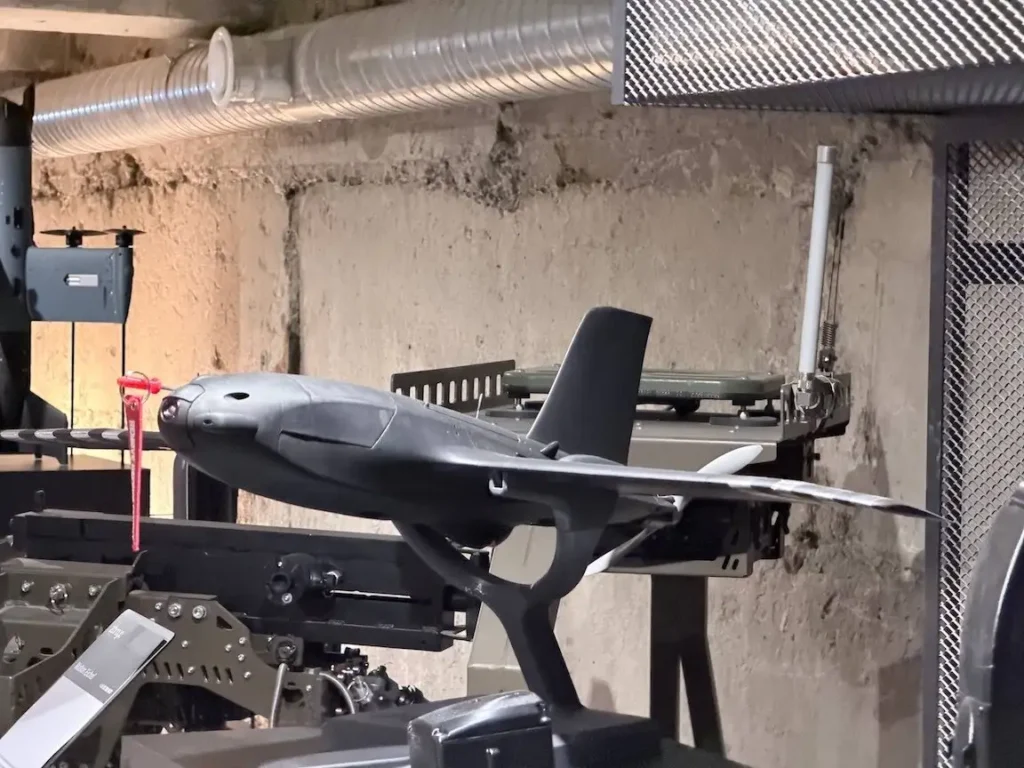
MaXon uses beacon technology from a partner company, but developed its own solution that enables autonomous flight by combining beacon data with onboard sensor inputs.
Another integrated component is an AI solution developed by a Dutch partner. It is responsible for detection and terminal guidance during the last mile phase.
What comes next
Solntsev says that MaXon now has a stable product tested together with Brave1 and combat units. The company is transitioning into an early scaling phase and preparing to fulfil its first order from a military unit. The cost of one interceptor is approximately $3,500.
The company has now started the codification process for the system and is preparing for its next investment round. MaXon recently closed its pre-seed round. In addition to previously announced investors — Defence Builder Fund, Freedom Fund and angel investors — the round later attracted participation from US-based Green Flag Ventures, Swedish fund Hede Capital and Finnish investor Big Defence.
Solntsev did not disclose the final size of the pre-seed round but noted that the company plans to raise more than $1 million at the seed stage.
The new funding will be used to scale both the team and production capacity, as well as implement a concept that Solntsev describes as even more ambitious than MaXon’s current system.
“Our R&D path lies in multi-target remote control,” he says.
In practice, this means a single operator will be able to control interceptor launch stations located in different areas.
At the same time, the crew itself may be positioned dozens or even hundreds of kilometres away from the launch sites. Solntsev compares the concept to the architecture of the US Patriot air defence systems: a single command centre connected to multiple launchers.
MaXon also plans to upgrade its interceptors to effectively counter jet-powered Shaheds.
Reading now
1

70+ vacancies in Ukrainian defence tech at Ukrspecsystems, Strix Air, DoD Solution and other industry leaders
2
Swarmer acquires Ukrainian UGV and UAV manufacturer Ratel Robotics for $224m – and this is just the beginning
3
Canadian General Dynamics signs agreements with Ukrainian GreenTech
4

Vluchnyk develops interceptor planned for production in Sweden and other countries: what attracted investors and what the team is working on
5
Unwave’s Stepovyi Viter mid-strike drone passes codification: what we know about this UAV
By submitting this form, you give Defender Media consent to the processing of personal data.
Надсилаючи цю форму, ви надаєте Defender Media згоду на обробку персональних даних.

Latest news
1
Ukrainian SkyFall again among winners of US Drone Dominance Program
2
Defence industry associations urge government to revise defence export resolution: key issues
3
60+ vacancies in Ukrainian defence tech at Sine Engineering, HIMERA, Tencore and more
4
The Pentagon has announced the results of Drone Dominance Gauntlet II – announced Ukrainian companies did not make the top 5
5