Dorozvidka #84: EW dome over Kyiv, a new head of Ukroboronprom, Hornet hunts a helicopter, plus ZIRKA, Sokil and STARK
Noteworthy news from the week that did not make it into Defender Media’s main coverage
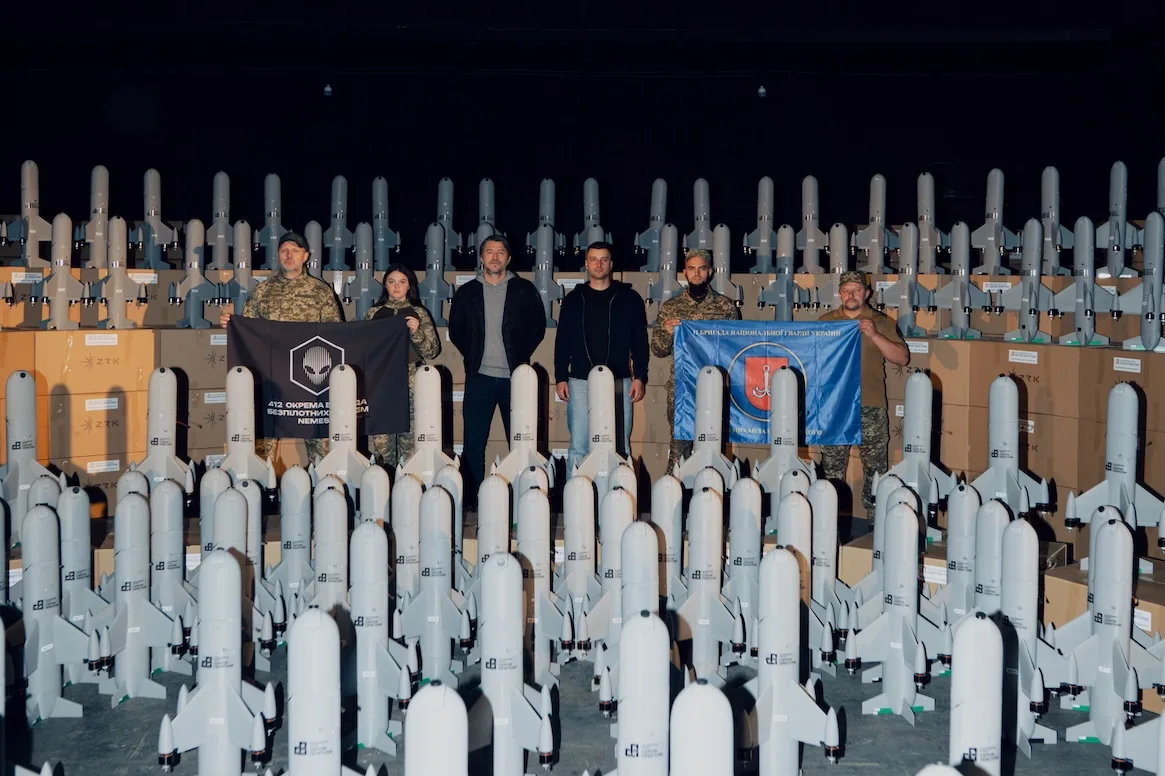
ZIRKA interceptor drones. Photo: Prytula Foundation
In this Dorozvidka:
- Third Assault Brigade destroys Russian Mi-8 helicopter with Hornet strike drones;
- Germany’s STARK develops a 24-metre USV to track Russia’s “shadow fleet”;
- Former deputy defence minister Ivan Havryliuk becomes head of Ukroboronprom;
- An EW “dome” deployed over Kyiv against remotely controlled jet-powered Shaheds;
- Prytula Foundation hands over 626 ZIRKA interceptors to the military: first batch immediately used against a Geran-5;
- Vyriy Industries trains more than 170 crews to work with the Sokil reconnaissance drone: new operators are trained in 10 days.
Third Assault Brigade destroys Russian Mi-8 helicopter with Hornet strike drones
Operators of Hornet kamikaze drones from the SKYFOM strike-wing platoon of the Unmanned Systems Battalion of the Third Assault Brigade spotted a Russian Mi-8 during a raid on enemy logistics. They began pursuing it and forced the crew to change course, even though the helicopter’s cruising speed exceeds that of the strike drones. As soon as the Mi-8 landed, the first Hornet hit the area of the fuel tanks and the second delivered a follow-up strike. According to the brigade, the helicopter burned down completely.
The Mi-8 is a multipurpose helicopter that the Russian army uses to transport personnel and cargo, evacuate the wounded and provide fire support.
Germany’s STARK, which has an R&D centre in Ukraine, develops a 24-metre uncrewed vessel to track Russia’s “shadow fleet”
German company STARK is developing VANTA 24, a 24-metre uncrewed surface vessel (USV) for operations in European waters, Bloomberg reports. The USV is meant to track tankers of Russia’s “shadow fleet”, which Russia uses to evade sanctions and export oil, protect critical underwater infrastructure, escort warships and carry out strike missions. It will be the third and largest USV in the company’s range: it will be equipped with a 30 mm cannon, a 3D radar and anti-ship missiles, and its aluminium hull will be designed for cold, ice and the waves of the Baltic Sea. Its speed will exceed 35 knots, and its autonomy will allow it to stay on mission for several weeks. The first sea demonstration is planned for 2027.
The vessel will be controlled by Minerva, STARK’s own artificial intelligence system for autonomous navigation and mission execution, which can be integrated with the combat management systems of allied navies. According to STARK CEO Uwe Horstmann, the Baltic and North Seas are becoming a “new potential battlefield”, and autonomous platforms cost a thousandth of the price of a crewed frigate and can be deployed within months. Preparations for production are already under way at consortium facilities in Germany and the United Kingdom.
Earlier, the company presented two smaller vessels: VANTA 6 with a payload of up to 750 kg and VANTA 12 with a payload of up to 2 tonnes.
STARK was founded in 2024 and has an R&D centre in Ukraine.
Former deputy defence minister Ivan Havryliuk becomes head of Ukroboronprom
Ukroboronprom has a new head. The supervisory board of the joint-stock company Ukrainian Defence Industry appointed Lieutenant General Ivan Havryliuk as chief executive. Candidates were searched for and assessed by the Ukrainian subsidiary of international recruitment company Amrop Partnership, and the choice was made after final interviews.
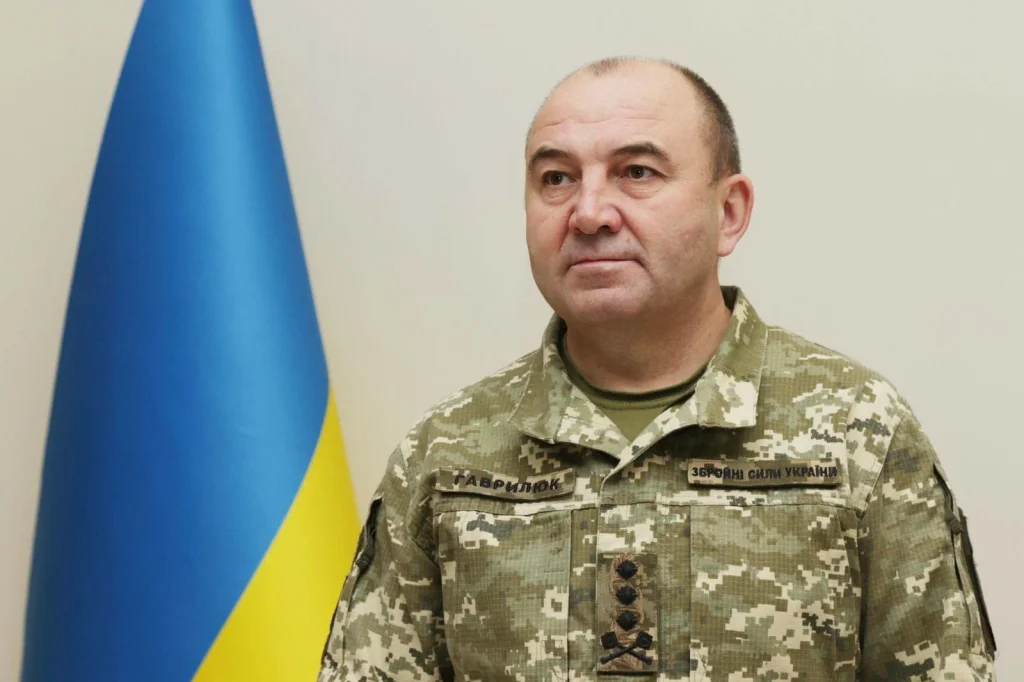
Havryliuk is a career military officer, in the army since 1988 and an artilleryman by training. He rose from platoon commander to head of a department of the General Staff of the Armed Forces, and from October 2023 worked at the Ministry of Defence as deputy minister, in charge of procurement. He left the ministry at the end of May 2026, and in early June became an adviser on the defence industry to Shmyhal on a voluntary basis.
An EW “dome” deployed over Kyiv against remotely controlled jet-powered Shaheds
Presidential adviser on technology issues Serhii “Flash” Beskrestnov said that a large-scale EW system has been created over the capital within a few weeks to protect Kyiv from remotely controlled jet-powered Shaheds. According to him, Russia controls such drones directly from its own territory through mesh radio communications and radio modems installed on them, so the task was to disrupt this connection and coordination. “Flash” calls it a “special operation” in the “war of the cities” and stresses that it was complex primarily organisationally, since it involved many hundreds of locations for antennas and equipment across the city.
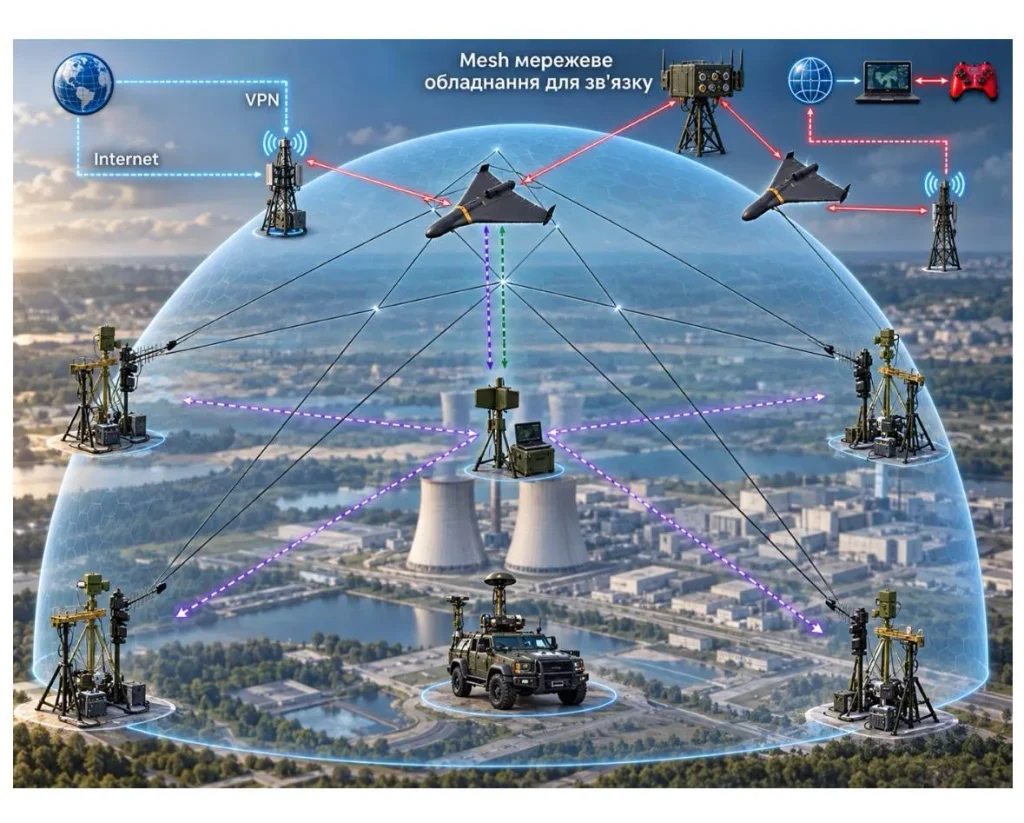
All leading Ukrainian EW manufacturers were involved, working around the clock on producing and installing the equipment, while the project was coordinated by the General Staff, the Ministry of Defence, the Ministry of Internal Affairs, the National Security and Defence Council and the Office of the President. In Beskrestnov’s assessment, as a result the enemy lost the ability to use controlled drones freely against Kyiv, was forced to pause, modernise the Shaheds and look for other solutions. He gave no details on the number and type of systems or on the results themselves, so these claims rest only on his statement for now.
Prytula Foundation hands over 626 ZIRKA interceptors to the military: first batch immediately used against a Geran-5
The Serhiy Prytula Foundation handed over to the 11th Brigade of the National Guard and the 412th Nemesis Unmanned Systems Brigade 626 ZIRKA interceptor drones with thermal imagers and automatic terminal guidance, as well as three ground control stations. The National Guard received 326 drones and Nemesis 300. The batch cost UAH 51.8 million and was bought as part of the “Edynozbir. Clean Sky” fundraiser (the fundraiser’s target is UAH 1.25 billion, and since it began the Defence Forces have received equipment worth more than UAH 690 million, including 4,831 UAVs). Bohdan Danyliv of the foundation explained that ZIRKA was chosen because of the jet-powered Shaheds: they have become faster, so an interceptor must be fast and able to work at night.
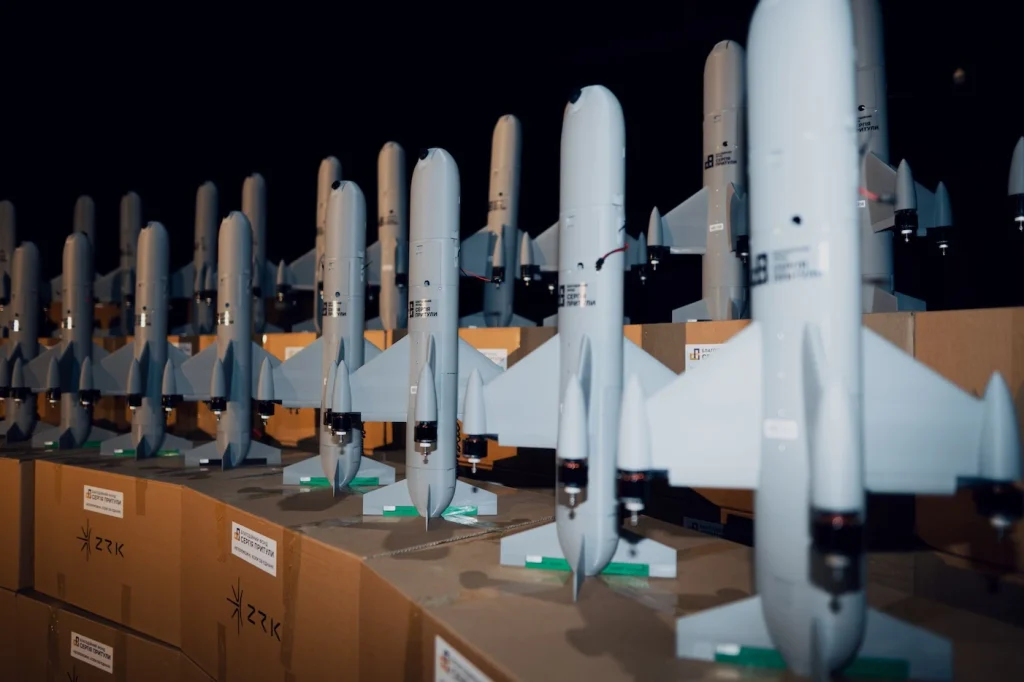
Right after the handover, the RETRO crew of the Darknode battalion from the 412th Brigade used a ZIRKA interceptor to shoot down a Russian Geran-5 drone flying at about 400 km/h at an altitude of 3,500 metres. The interceptor, developed by Noctis drawing on Darknode’s combat experience, accelerates to more than 410 km/h, works at altitudes of up to 6 km, can stay in the air for up to 20 minutes and has a range of up to 30 km. Its machine vision recognises enemy drones from up to a kilometre away, and the thermal imager makes night operations possible.
Defender Media recently published a column by Lika Volovych, battle & tech support lead at Noctis. She explains how automation in interceptor drones differs from autonomy, what role radars, software and operators play, and what is needed to move to fully autonomous interception systems.
Vyriy Industries trains more than 170 crews to work with the Sokil reconnaissance drone: new operators are trained in 10 days
Vyriy Industries, together with partners, has trained more than 500 military personnel to work with the Sokil fixed-wing reconnaissance drone. Since March 2026, more than 170 crews have completed the training, the company’s press service said. The course is included in the price of the system itself, so there is no separate fee. To reach more units, Vyriy did not limit itself to its own Vyriy Aero School and brought in six partner centres: Boriviter, Victory Drones, KillHouse, Dovzhyk, X-Hub and the Serhiy Prytula Foundation’s Training Centre.
A serviceman who has never worked with fixed-wing drones needs 10 days for theory and practice. For experienced crews, 5-7 days of flying is enough to switch to Sokil. Troops are taught to prepare the drone themselves and plan routes taking into account weather and terrain, and by the end the crew must be able to prepare the system, carry out a flight and land the aircraft safely. The company plans to go on to train troops to work with its other products, including Veresen and Slavic. Vyriy presented Sokil in September 2025 as an inexpensive drone for everyday reconnaissance: it weighs about 8 kg, is hand-launched and costs about $5,000.
Reading now
1

380+ vacancies in Ukrainian defence tech from Fire Point, DevDroid, UFORCE and others
2

Why A&D manufacturers need a coherent digital strategy now
3
Ukrainian-Japanese FPV KT-2 drones appear on Brave1 Market: key details and specs
4
Why Danes, Swedes and Norwegians invest in Ukrainian defence tech: Gardar, Final Frontier and Varangians explain
5

Sine Engineering announces launch of R&D centre in Finland and partnership with Insta
By submitting this form, you give Defender Media consent to the processing of personal data.
Надсилаючи цю форму, ви надаєте Defender Media згоду на обробку персональних даних.

Latest news
1
Dorozvidka #84: EW dome over Kyiv, a new head of Ukroboronprom, Hornet hunts a helicopter, plus ZIRKA, Sokil and STARK
2
Warbirds developed DZYGA-17S drone that struck a target 110 km away
3
Ukrainian developers unveil new SH-3 reconnaissance drone
4
Mara Drone unveils new Simar aerial photography UAV
5