Defence Builder Accelerator hosts field demo day for defence startups: key highlights
Unmanned systems, robotic platforms, and air threat detection and countermeasure systems were showcased
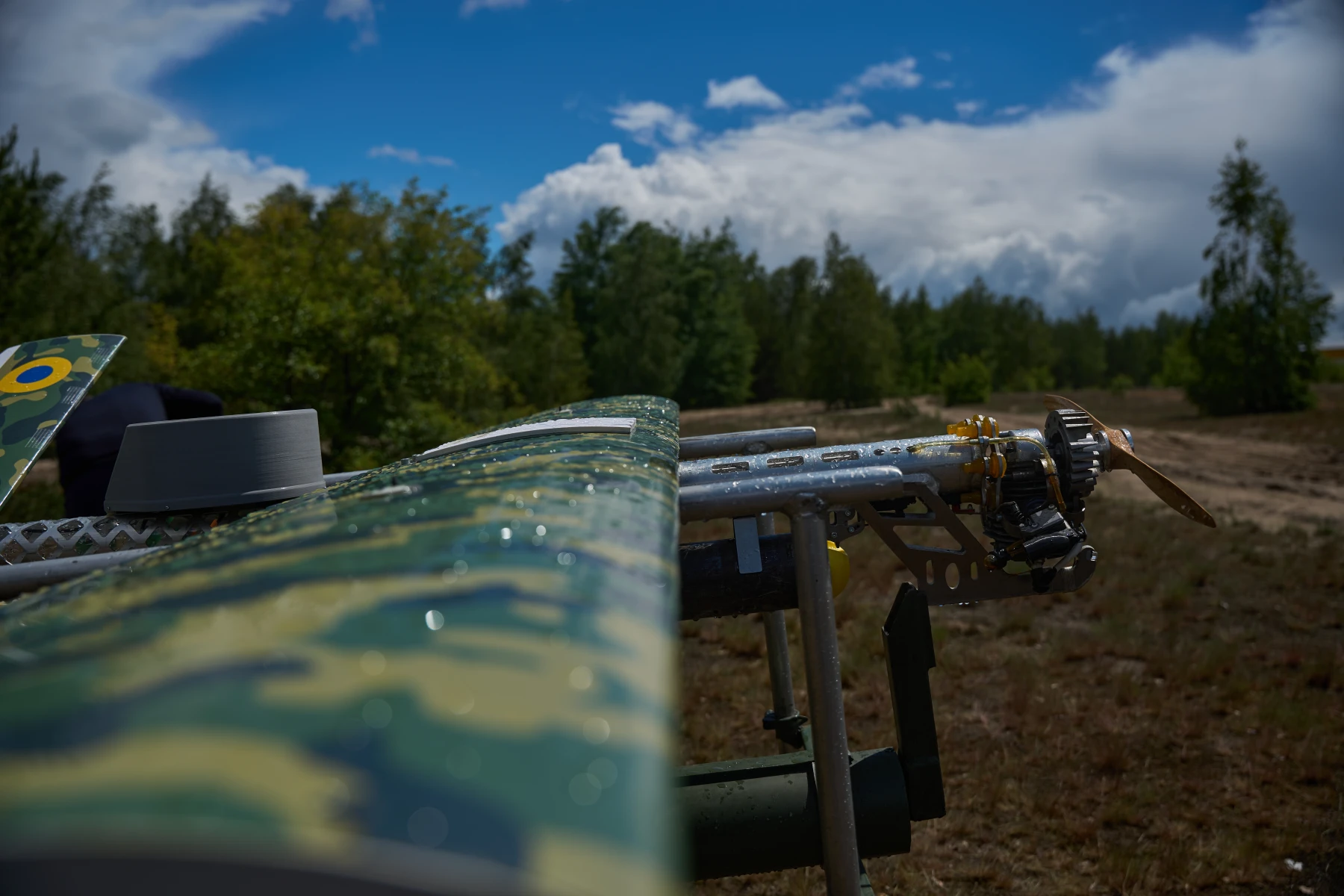
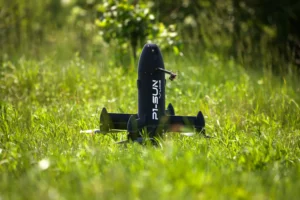
Fixed-wing unmanned aircraft. Photo by Defence Builder
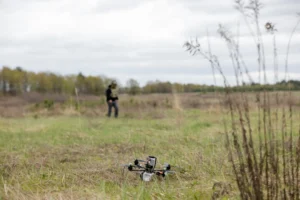
Eight defence startups presented their technological innovations to military personnel and international partners during the Defence Builder Accelerator programme. Approximately 80 military commanders from various branches of the armed forces, alongside NATO representatives, attended the event, according to the accelerator.
The demonstrations featured autonomous uncrewed systems, robotic platforms, and advanced air threat detection and countermeasure capabilities.
Wingtech showcased the HABA multi-purpose bomber drone, which features a stated operational range of up to 600 km. The platform is currently being adapted to operate as a carrier for FPV drones. According to the Brave1 Market platform, the “HABA” is available for pre-order, with a development cost of UAH 1.2 million. The aircraft can carry a payload of up to 8 kg and remain airborne for up to six hours.
The Trident team presented the 200-gram Trident LMT (Last Mile Targeting) autonomous guidance module. The system utilises artificial intelligence to guide an unmanned platform to its target in the event of a total loss of communication with the operator.
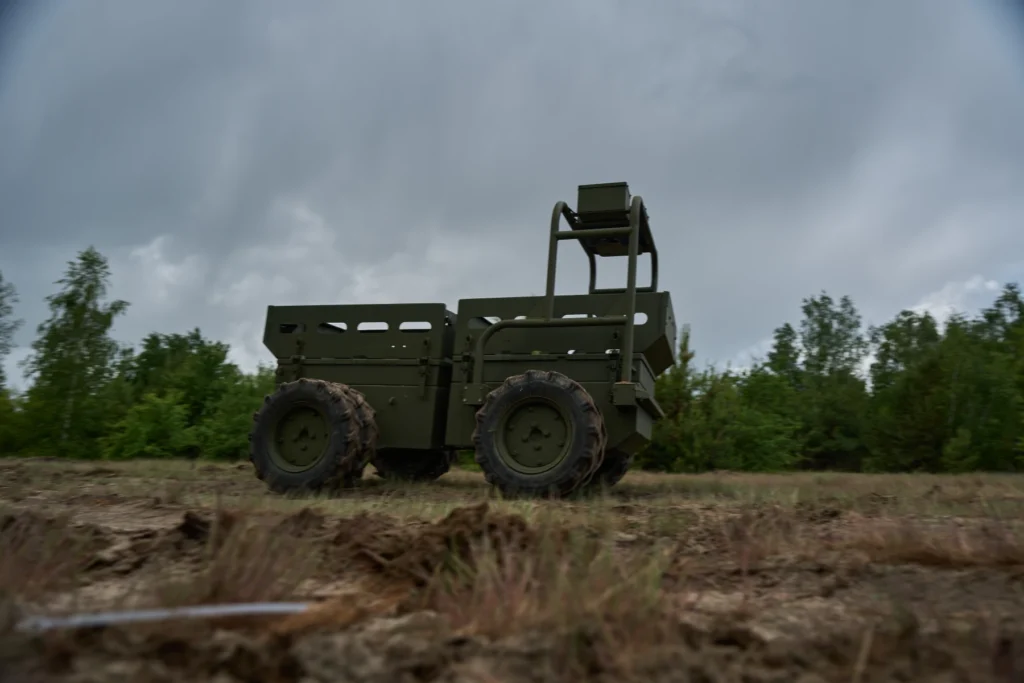
The demonstration site also featured the Taurex robotic ground platform, which can transport up to 300 kg of cargo. The vehicle is engineered with airless tyres and an articulated chassis to enhance cross-country mobility.
The Estonian-Ukrainian team Telearmy demonstrated a remote vehicle control suite integrated onto a BRDM armoured reconnaissance vehicle and a Nissan off-road vehicle. According to the developers, the system utilises parallel communication channels, has been tested at speeds of up to 157 km/h, and provides stable control at distances of up to 4,300 km.
Other accelerator participants included:
- Fremen, which presented an onboard survivability kit for heavy unmanned aerial vehicles capable of detecting RF signatures from enemy FPV drones.
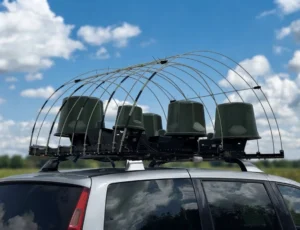
- Frostworks, which showcased the Veles system, a distributed acoustic network engineered for the early detection of low-altitude aerial targets.
- The Danish team Blue Shadow presented the Blue Dragon system, designed for monitoring air threats over the Black Sea region.
- Nebostrazh demonstrated a concept for a multi-sensor drone detection and kinetic interception architecture operating under a unified, artificial intelligence-based command-and-control system.
The third accelerator cohort has been running for three and a half months. During this cycle, the participating Ukrainian and European teams adapted their technologies to meet specific military requirements before presenting them at the final demo day.
Reading now
1
SkyFall officially unveils Thor Hammer mid-strike and announces 1,000+ km version
2

260+ vacancies in Ukrainian defence technology at BlueBird Tech, Sine Engineering, Buntar Aerospace and more
3
British-Ukrainian Occam Industries raises €3.8m. The funds will go towards scaling drone autonomy software
4

Terra Drone acquires 50% of Ukrainian Kurin Technologies for $3.5 million
5

Autonomous interceptor drones need radars to work. Why is there still a lack of them
By submitting this form, you give Defender Media consent to the processing of personal data.
Надсилаючи цю форму, ви надаєте Defender Media згоду на обробку персональних даних.

Latest news
1
Tencore launches an ecosystem to bring together UGVs and components from several manufacturers
2

Defense companies may see staff deferrals cut from 100% to 85%
3
Japan signs contract with Ukrainian company SkyFall to procure interceptor drones
4
260+ vacancies in Ukrainian defence technology at BlueBird Tech, Sine Engineering, Buntar Aerospace and more
5