Parliament proposes scrapping VAT on UGVs. What problems has the tax already caused?
“Every company was preparing for this year – we have capacity, we have people, but we had no contracts,” one of the Ukrainian UGV manufacturers comments.
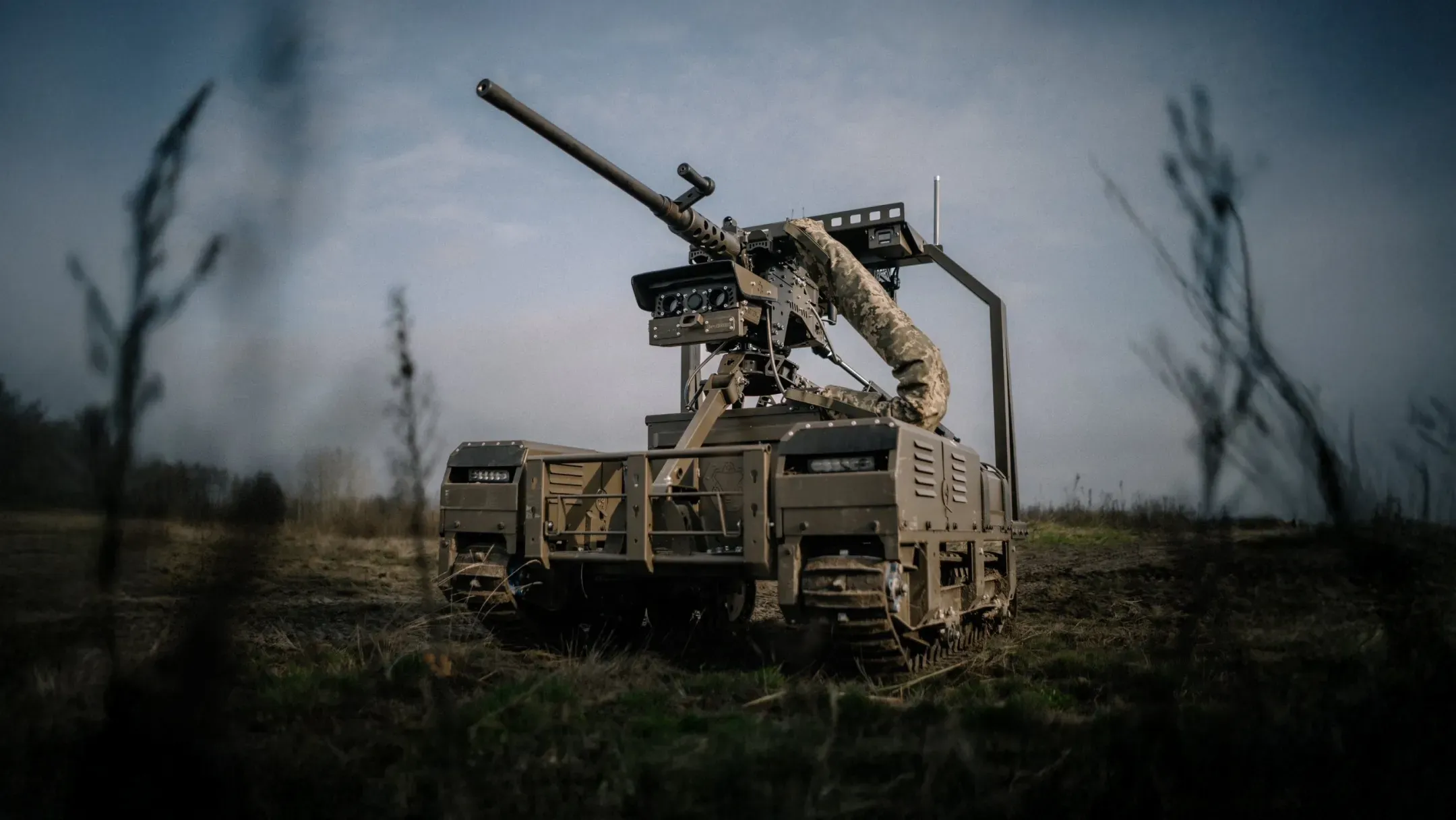
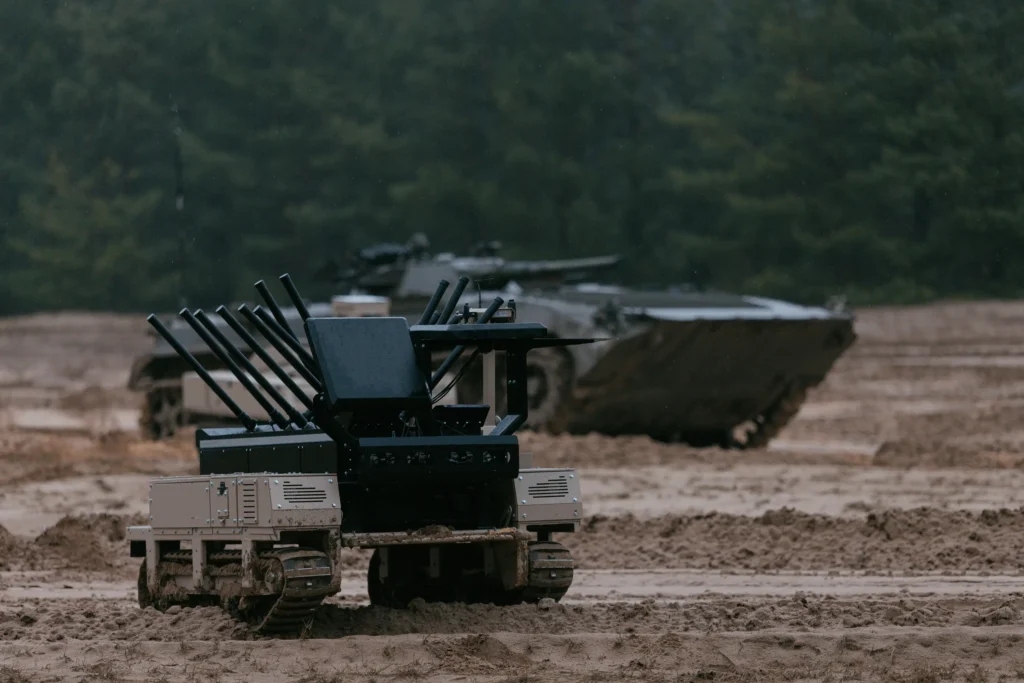
Photo: Ministry of Defence of Ukraine
When manufacturers of UGVs were obliged to pay value-added tax from 1 January 2026, weapons makers raised the alarm. For the state, this meant fewer systems procured, while for developers it meant uncertainty over how to contract.
It took five months to resolve the issue, until on 19 May a group of MPs registered a draft law that would scrap VAT for UGV manufacturers. Industry organisations welcomed the decision, but want to go further and eventually move ground systems into a separate category of goods.
Defender Media explains where VAT on UGVs came from, how it affected the stakeholders involved, and what possible solution they have now found.
What happened
Until 2026, Ukraine had an exemption on the import of electric vehicles – they were not subject to value-added tax (VAT) when brought into the territory of Ukraine. From 1 January 2026, this exemption ceased to apply, and the vehicles became more expensive for buyers. But in parallel, a seemingly unrelated change affected the unmanned ground vehicles sector.
UGVs were equated with electric vehicles and had the same code under the Ukrainian Classification of Goods for Foreign Economic Activity, a classifier of goods used by customs. This allowed manufacturers to make use of this exemption. The systems were equated with electric cars because UGVs do not exist as a separate type of equipment within the classification. Ihor Fedirko, executive director of the Ukrainian Council of Defence Industry, adds that this is a global problem, not just a Ukrainian one.
Accordingly, the abolition of the exemption also caught UGVs, with 20% VAT added to their price. This, in turn, affected both the manufacturers of the systems and the military personnel who received fewer of them.
What this led to
Owing to the rise in the cost of systems, the recalculation of requirements and bureaucratic processes, state procurement of UGVs slowed down. “The procurement budget for 2026 was drawn up back in 2025. Accordingly, the state expected to receive a certain quantity of products and allocated money for that. But then these products became 20% more expensive, and the state is receiving fewer UGVs than it had planned,” Oleksii Lytvynenko, executive director of the Association of Ukrainian Robotic Forces, explains the consequences.
Procurement was also suspended because it was unclear how a military unit could purchase equipment with VAT, Fedirko adds. After all, operations involving the import of goods needed for security and defence are exempt from VAT. “For the first three months, almost all available weaponry was bought in very limited quantities. That is why the first quarter was not packed with orders for UGV manufacturers. Now we see that the state has found the money and clearly stated the quantity it wants to procure,” the CEO of the Ukrainian Council of Weapons Makers adds.
In April, the Ministry of Defence acknowledged that changes in tax legislation had affected some contracts and led to delays. To speed up procurement, in particular, contracting was unblocked even in cases where the cost of products had changed. As a result, in the first half of 2026, the state plans to contract 25,000 UGVs.
Manufacturers, in the meantime, began looking for ways to sell their products. Some started identifying their UGV as a tank – this is one of the routes mentioned by Lytvynenko of the AURF. Some sell theirs as a special-purpose device, although this can lead to problems with the tax authorities, and some have already included VAT in the price.
That, in particular, is what Tencore did with its logistics platforms. Its CEO Maksym Vasylchenko says they could not sign contracts for five months: “Every company was preparing for this year – we have capacity, we have people, but we had no contracts. We worked through horizontal ties, contracting with military units and charitable foundations. Thanks to them, most companies survived to this day.”
Time is now required to ramp up production, since it involves many subcontractors and a large number of necessary parts – from 500 to 2,000 in a single system.
What possible solution has been found, and whether they will stop there
Representatives of industry organisations and manufacturers say they had been flagging the potential problem since last year. Nevertheless, it still took five months to resolve it before all the stakeholders involved reached an agreement.
On 19 May 2026, Danylo Getmantsev and other MPs introduced a draft law that supplements the Tax Code with a new clause and provides for the exemption from VAT of operations involving the supply of UGVs. The exemption will remain in force until the lifting of martial law and will apply if the supply of goods is carried out under state contracts for defence procurement.
The end recipients in this case must be law enforcement agencies, the Ministry of Defence of Ukraine, the Armed Forces of Ukraine and other military formations, volunteer formations of territorial communities, and enterprises that are executors of state defence contracts.
The exemption covers systems classified in the following commodity groups of the Ukrainian Classification of Goods for Foreign Economic Activity:
- 84 – nuclear reactors, boilers, machinery, equipment and mechanical appliances; parts thereof;
- 85 – electrical machinery and equipment and parts thereof; sound recording or reproducing apparatus; television image and sound recording or reproducing apparatus, and parts and accessories of such articles;
- 87 – vehicles other than railway or tramway rolling stock, and parts and accessories thereof;
- 90 – optical, photographic, cinematographic, measuring, checking, precision instruments and apparatus; medical or surgical; parts and accessories thereof;
- 93 – arms and ammunition; parts and accessories thereof.
The explanatory note to the draft states that adoption will not require additional expenditure from local and state budgets, and will instead “ensure the effectiveness of budget spending during the supply of UGVs to guarantee the needs of the defence forces.”
One of the initiators of the draft law, Nina Yuzhanina, writes that the tax committee must consider the draft during the next plenary week.
The Ukrainian Council of Defence Industry states that the new possible amendment removes a specific barrier to the supply of unmanned ground systems to the defence forces. The AURF, meanwhile, proposes not merely restoring the exemption, but singling out UGVs as a separate sector so that it exists in the legal domain.
Ihor Fedirko explains: Ukraine cannot do this on its own. The local classification of goods is based on the international Harmonized Commodity Description and Coding System. It is possible to classify UGVs as a separate category through the European Union, on the grounds that they do indeed constitute a distinct group of goods requiring separate accounting. “But this evidentiary work will take at least two years,” the CEO of the Council of Defence Industry adds.
Reading now
1
SkyFall officially unveils Thor Hammer mid-strike and announces 1,000+ km version
2
Pentagon to hold Drone Dominance trials for bomber drones, with UFORCE, Gurzuf Defence, Grim Tech and others taking part
3
British-Ukrainian Occam Industries raises €3.8m. The funds will go towards scaling drone autonomy software
4

Terra Drone acquires 50% of Ukrainian Kurin Technologies for $3.5 million
5

Frontline Robotics CBDO Mykyta Rozhkov: Ukraine and Norway are working on an autonomous system to protect maritime infrastructure
By submitting this form, you give Defender Media consent to the processing of personal data.
Надсилаючи цю форму, ви надаєте Defender Media згоду на обробку персональних даних.

Latest news
1
Ukraine’s Defence Forces hit a record number of Russian air defence systems and radars in September
2

Nataliia Mykolska to become VP of Growth and Affairs at Sine Engineering
3
Black Mirror #79: What’s inside Geran-4, unmanned tanks, balloon barrages and more of a new russian miltech
4

6,000 lives saved by replacing people with robots. “Makar” on the ground strike drone unit NC13 and its role in Operation Vivaldi
5