Over 10 interceptor manufacturers integrate remote control systems, says Mykhailo Fedorov
The technology enables operators to command interceptors at ranges of hundreds or even thousands of kilometres

Sting Interceptor. Photo by censor.net
More than 10 Ukrainian manufacturers have joined an initiative to develop remote command-and-control for interceptor drones, facilitated through the Brave1 platform. The effort aims to scale solutions in the field of “small” air defence, according to Minister of Defence Mykhailo Fedorov.
Remote control technology allows operators to manage interceptor drones over distances ranging from hundreds to thousands of kilometres. According to available data, such systems have already demonstrated the capability to engage aerial targets at significant ranges.
The solution decouples operators from specific deployment positions. Command can be exercised from fortified or protected locations, significantly mitigating risks to personnel and enabling broader operational deployment without requiring proximity to the frontline.
The initiative was launched a year ago to develop and field-test remote control technologies for interceptor drones. These systems have now been integrated into the platforms of more than ten different manufacturers.
The development is regarded as a pivotal means of scaling air defence capabilities and enhancing the overall effectiveness of aerial target interception.
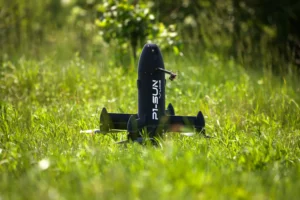
In March and April, reports emerged about F-Drones implementing remote-control systems on LITAVR interceptors and about successful trials of the HORNET VISION Ctrl system on Sting drones by Wild Hornets. SkyFall, the company behind the P1-SUN interceptors, also told Defender Media that it has integrated remote-control capabilities.
Earlier, Defender Media reported that 12 Ukrainian companies received grants of up to €150,000 to advance air defence solutions.
Reading now
1
SkyFall officially unveils Thor Hammer mid-strike and announces 1,000+ km version
2

260+ vacancies in Ukrainian defence technology at BlueBird Tech, Sine Engineering, Buntar Aerospace and more
3
British-Ukrainian Occam Industries raises €3.8m. The funds will go towards scaling drone autonomy software
4
Terra Drone acquires 50% of Ukrainian Kurin Technologies for $3.5 million
5

Autonomous interceptor drones need radars to work. Why is there still a lack of them
By submitting this form, you give Defender Media consent to the processing of personal data.
Надсилаючи цю форму, ви надаєте Defender Media згоду на обробку персональних даних.

Latest news
1

Denmark to hold first-ever Danish Defense Tech Week in four cities: what to expect
2
Forbes: Airlogix plans to raise $100m at a $2bn valuation
3
Tencore launches an ecosystem to bring together UGVs and components from several manufacturers
4

Defense companies may see staff deferrals cut from 100% to 85%
5